

Key takeaways
- Dog park turf wears fast, and mowing often falls to a crew with too many other tasks.
- A robot holds a steady cutting schedule, usually during closed hours.
- Staff still handle edging, trimming, debris, gates, and repair, so the model is a robot plus a smaller team.
- Hour savings depend on the site, so a free site assessment is the way to size them.
Can robotic lawn mowers for dog parks help?
Yes, for the right kind of dog park. Robotic lawn mowers for dog parks suit fenced turf that needs frequent cutting, where the people responsible for it rarely have the hours to keep up. A robot mows on a repeating schedule, usually while the park is closed, so the grass stays short without pulling staff off other work.
The fit is strongest where the turf is a bounded area with a predictable mowing rhythm. A large off-leash field with a fence line, a small dog section, and a few walkways is a good candidate. A park with steep slopes, many trees, or ragged edges may need preparation before a robot can run cleanly. A site assessment answers that faster than any general rule.
Service Robot Co. is a US commercial robot integrator. We pick the robot for the site, lease it through financing, deploy and integrate it, train the staff, and service it nationwide. We start with the lawn itself, not the machine.
What problem does dog park turf have today?
Dog park turf takes more punishment than most lawns. Dogs run the same paths, dig, and wear down the same spots, so grass thins and bare patches open up. The Trust for Public Land counted 810 dog parks in the 100 largest U.S. cities at the end of 2018, a 74 percent increase since 2009. The National Recreation and Park Association estimated about 1,200 dog parks in operation across the United States in a 2015 article, so the number of fields needing upkeep is large.
Mowing is the visible part of the work. The Fairfax County Park Authority dog park study recommends increasing mowing to once every two weeks to manage weeds and invasive species inside the park and along the fence line. It also notes that natural turf needs a fair amount of maintenance and a large area, 3 acres or larger, to avoid quick wear. A National Park Service turf restoration project kept grass blades at 3 to 5 inches and generally mowed every 7 to 10 days. Those intervals are where a small crew falls behind, especially when mowing competes with trash pickup, gate repairs, and fountain work.
Some operators respond by closing the field. The City of Addison, Texas closes its dog parks one day a week for turf health, according to the city. A separate city planned closures in March and August to reseed, aerate, and fertilize, according to a local newspaper. Closures protect the grass but cut access, and they generate complaints the staff then has to answer.
What are the main benefits?
The main benefits are consistency, quiet operation, and crew time. Each one matters differently at a dog park, so it helps to see them one by one.
None of these replaces seeding or aeration. They keep the cutting work steady so that larger jobs are scheduled on purpose rather than squeezed in.
- Steady height: the robot cuts on a set schedule, so the grass does not swing between long and scalped from one visit to the next.
- Off-hours work: a mower running while the park is closed avoids the noise and debris of a machine working around dogs and owners.
- Crew time: staff spend hours on edging, trimming, and repair instead of pushing a mower across the field.
- Field access: mowing no longer waits for a free afternoon, which helps keep the field usable on more days.
How does the robot work day to day?
A robot mower works from a boundary and a schedule. Installers define the mowing area and its edges, and the robot follows that perimeter in passes, returning to its base to charge. Between cuts it runs without someone pushing it. The daily job is mostly checking that the robot finished, that the base is clear, and that no toy or dropped debris blocks its path.
Scheduling is where a dog park differs from an ordinary lawn. Mowing typically runs during closed hours or early in the morning, when no one is in the field. Some dog parks close after rain, and the schedule should skip wet days so the turf is not cut into mud or ruts.
Staff keep a short routine: clear toys and debris before the cut, check the fence line and gates weekly, and report bare patches or drainage problems. The robot handles the repeating cut, and people handle what a map cannot show.

Which areas of a dog park does the robot work in?
A robot works where the grass is uniform and the path is clear. In most dog parks that means the open turf and the margins around it. Hand work still covers features that need judgment, such as gates, trees, and low spots.
The six areas below show where the robot fits and where the crew still does the work.
How does it work alongside existing staff?
A robot does not replace a dog park team. It takes the repeating cut, while the team does edging, trimming, debris removal, gate and fence repair, and anything the robot cannot read. A park with a robot plus a smaller team still needs people, and those people do the work nobody can schedule ahead.
The labor pool these parks draw on is large. The U.S. Bureau of Labor Statistics reports 1,192,500 jobs in the group that includes landscaping and groundskeeping workers, according to its Occupational Outlook Handbook. That is the same kind of mowing and upkeep a robot can take over in part, so the real question is how the remaining hours are spent.
Handoffs matter. Staff should know how to pause the robot, lift it off the field, clear a jam, and call for service. Training is part of the deployment, so the team knows the routine before the robot goes live.
What drives the savings in hours and labor?
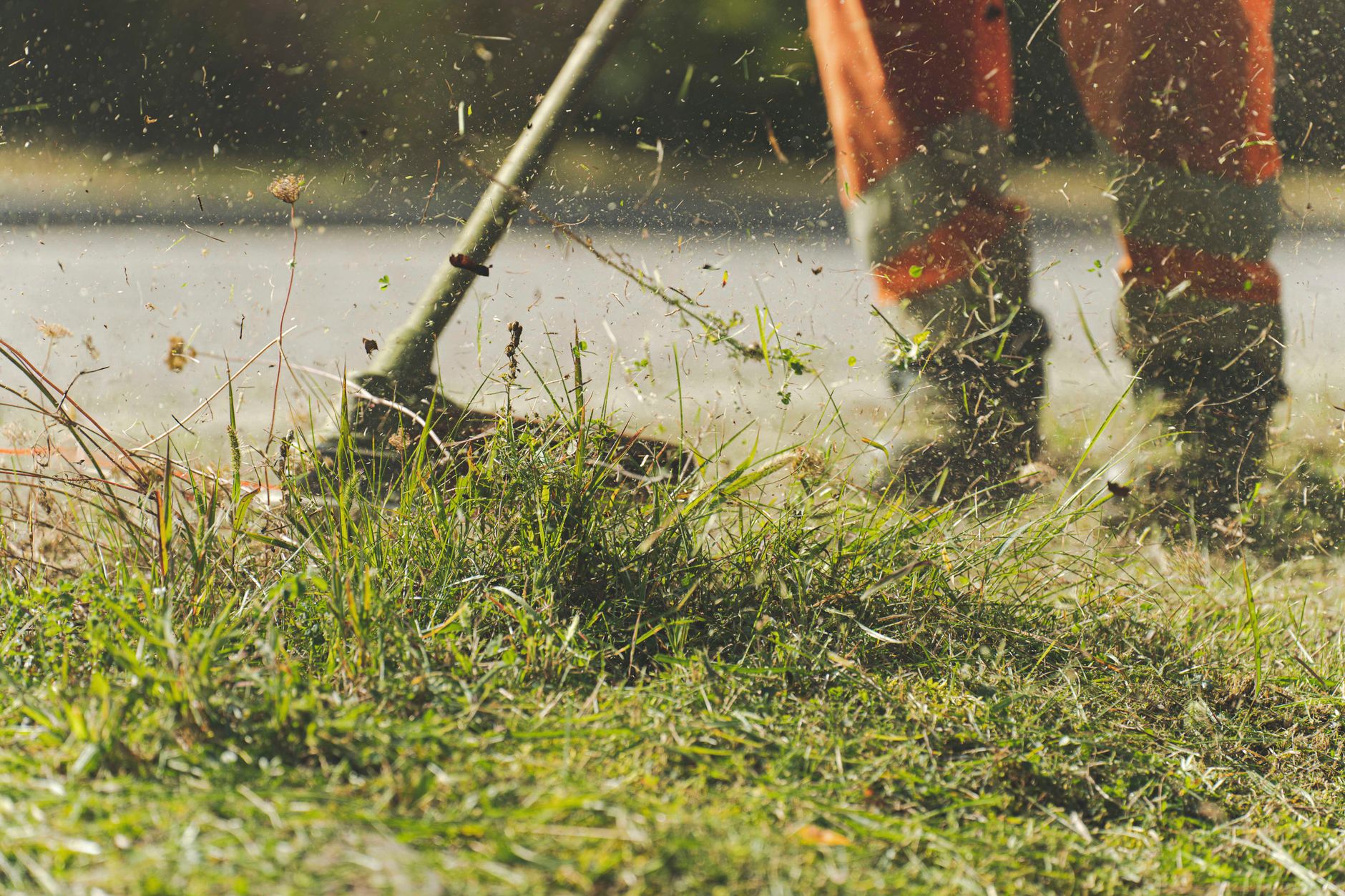
Savings come from mowing hours that move off the crew calendar, and then from the trimming and edging time that opens up. The clearest published figure is an estimate, not a measurement. Turf magazine reports that a Dallas-area landscaping company estimated robotic mowers save two to four man-hours per job, and that the crew then handles trimming and edging. The same article describes a three-acre commercial site where mowing labor moved to weekly manicuring and edging, with no hour figure given.
We found no rigorous independent study of weekly labor hours saved by commercial robotic mowers, so treat hour savings as a site question. The main drivers are the area mowed, how often the turf needs cutting, how many passes a job takes, how much edging and trimming remains, and how far the crew travels between sites. The Fairfax every-two-weeks recommendation and the National Park Service interval of every 7 to 10 days show how often the job repeats. The more often it repeats, the more the schedule can return time to the crew.
Vendor white papers compare costs per acre, but they often leave out equipment, installation, and maintenance. Ask any comparison for the same inclusions before you use it to plan labor.
What can a robot mower not do?
A robot mower is not a full grounds crew. It does not fix bare patches, reseed compacted soil, aerate, fertilize, pick up waste, or repair fencing and gates. It also cannot see a dog hole or a dropped object the way a person can, so staff must clear those first.
The site sets limits too. Steep slopes, deep ruts, heavy roots, and very irregular edges can stop a robot, and some fields need preparation before they suit one. Heavy rain adds another limit, since a wet field can make a poor cut and damage the soil under it.
Those limits do not rule a park out. They shape the scope. Most operators keep seeding, aeration, and repair on the crew calendar, which is the same work the closure schedules are trying to protect.
How do you get started?
Start with a free site assessment. We measure the area, map the boundary and obstacles, note slope and drainage, and review the mowing schedule the park needs. From there we send a quote for the lease. The fixed robot lease payment comes in that quote, so you can compare it against your present crew hours.
Robots are only leased, through lease financing programs, and the quote follows the site assessment. Once a lease is signed we handle deployment and integration, go live support, and training for your staff. We service units nationwide, and many operators begin with one leased unit as a pilot before expanding. Robotic lawn mowers for dog parks make a good first project because the boundary is clear and the schedule is easy to measure.
Bring the acreage, mowing dates, closure history, and crew hours to the assessment. Those details turn a general idea into a plan for your park.
Frequently asked questions
Want a robotic mower at your dog park?
Tell us about your site. We will recommend the robot, quote the lease, and keep it serviced.
Sources
- U.S. Bureau of Labor Statistics, Occupational Outlook Handbook
- Trust for Public Land
- Fairfax County Park Authority, Dog Park Study Operations and Maintenance
- National Park Service, Turf Restoration at Lincoln and Stanton Parks
- Turf magazine, Robotic Mowers
- City of Addison, Texas
- Oakdale Leader
- National Recreation and Park Association, Parks and Recreation magazine