

Key takeaways
- Museum mowing competes with gallery and visitor work for the same people, so a set schedule frees staff time.
- One university estimated its mowing at 120 man-hours a week across nearly 150 acres.
- A public school district reported that its robotic mowers eliminated no staff positions.
- Staff set the boundary, check each run and hand trim what the robot cannot reach.
- Start with a free site assessment, then a lease quote through financing.
Read the commercial robot lawn mower guideSee what a robotic mower costsRun the numbers in the ROI calculator
How can robotic lawn mowers benefit museums?
Robotic lawn mowers for museums take the routine cutting of lawns, sculpture garden paths and building edges off the staff schedule that should be going to galleries and visitors. A robot follows a mapped boundary, mows on a set timetable and returns to its charging spot. The grounds stay presentable without a groundskeeper leaving the galleries for an afternoon.
The benefit is not only hours. Grounds are the first thing a visitor sees, and a lawn cut on a fixed schedule looks cared for in a way that a lawn cut whenever someone has a gap in the day rarely does. Staff keep their time for the work that only people can do, from conservation support to visitor questions to repairs nobody else is free to make.
Most of the value comes from predictability. Mowing that runs on a timetable can be planned around openings, events and school groups, and that planning is where staff time comes back. The rest of this page covers the typical day, the areas the robot works in, what it cannot do, and how a site assessment sets the plan.
What does grounds care look like at a museum today?
Museums are more numerous than many operators assume. According to the Institute of Museum and Library Services, as reported by Artnet, there are 35,144 active museums in the US, more than double the 1990s working estimate of 17,500. Many of those sites have lawns, sculpture gardens and long walkways that need cutting every week in season, and the grounds crew is often the same small group that handles the building.
Staffing makes grounds hard to keep up. In the AAM COVID-19 snapshot of the museum field from 2022, the hardest positions to fill were guest services, admissions, frontline and retail at 56%, and facilities, maintenance and security at 40%. That is a 2022 picture, so treat it as a snapshot of the field at that time rather than a measure of today, but it shows where the pressure sat.
Maintenance is also piling up. According to NASAA, citing a GAO-based report, about 85% of museums report a deferred maintenance backlog, and 38% report the backlog increasing since 2022. When building repairs and grounds upkeep share one budget and one crew, mowing is often the task that slips to the bottom of the list, and the lawn starts to show it.
What are the main benefits for a museum?
The first benefit is steady presentation. A mowing schedule means edges, paths and lawns look much the same on a weekday morning as they do before a holiday weekend, rather than swinging between neat and overgrown depending on who had a free hour. For a museum, the approach is part of the visit, and a set schedule keeps that approach consistent.
The second benefit is staff time returned to the building. A groundskeeper who is not pushing a mower can help with loading, support a conservator, answer visitor questions or cover a gap at the front desk. The robot handles the repetitive cutting, and the team handles everything that needs judgment.
The third benefit is timing. Because the robot runs on a timer, cutting can happen before opening or after closing rather than in the middle of a busy visitor day. For a museum that hosts outdoor events or school groups, that flexibility matters as much as the hours saved, because it keeps the grounds crew out of the way.

How does the robot work there day to day?
A typical day starts with the boundary, not the mower. During the site assessment, staff map the lawn and garden areas, mark keep-out zones around sculptures, benches, pedestals and planted beds, and set the cutting schedule. After that, the robot runs on its own inside those limits, and staff check the results.
The day is built around visitors. Runs are placed in times and zones that are closed or quiet, so the robot is not working across a tour route at peak hours. Staff walk the grounds after each run, clear debris, and trim the few edges the robot should not reach.
The schedule below shows a typical day in season.
Which areas of a museum site does the robot work in?
Not every part of a museum site is a candidate. The best areas are open lawn and mowable edges that a robot can cover on a set route, without crossing paths that visitors use at peak times. Those are the areas where scheduled cutting saves the most staff trips.
Sculpture gardens need the most planning. The robot has to stay clear of fragile art and pedestals, so keep-out zones are set during the site assessment and checked by staff. Entry walkways and building perimeters are usually predictable, which makes them strong candidates for a fixed schedule.
The six areas below are the types of space that most often suit the work. Each one still needs a site-specific check.
Does the robot replace staff or work alongside them?
A robot does not replace the people on your grounds crew. It changes what they spend their hours on. A public school district that adopted robotic mowers reported that the robots did not eliminate any staff positions, and its goal was to cut mowing hours for groundskeepers and custodians so they could focus elsewhere. The usual result is a robot plus a smaller team, not a robot in place of a team.
A university that ran a robotic mower pilot first estimated its mowing at 120 man-hours a week across nearly 150 acres, then planned to evaluate the pilot before adding units. That sequence is worth copying. Start with a bounded area, measure the hours that actually come back, and expand only when the numbers hold.
Training matters as much as the hardware. We pick the right robot for the site, lease it through financing, deploy and integrate it, train the staff who run it and service it across the US. The team learns the boundary, the daily check routine and the basic fixes, so they know what to look for and when to call for service.
What drives the savings in hours and labor?
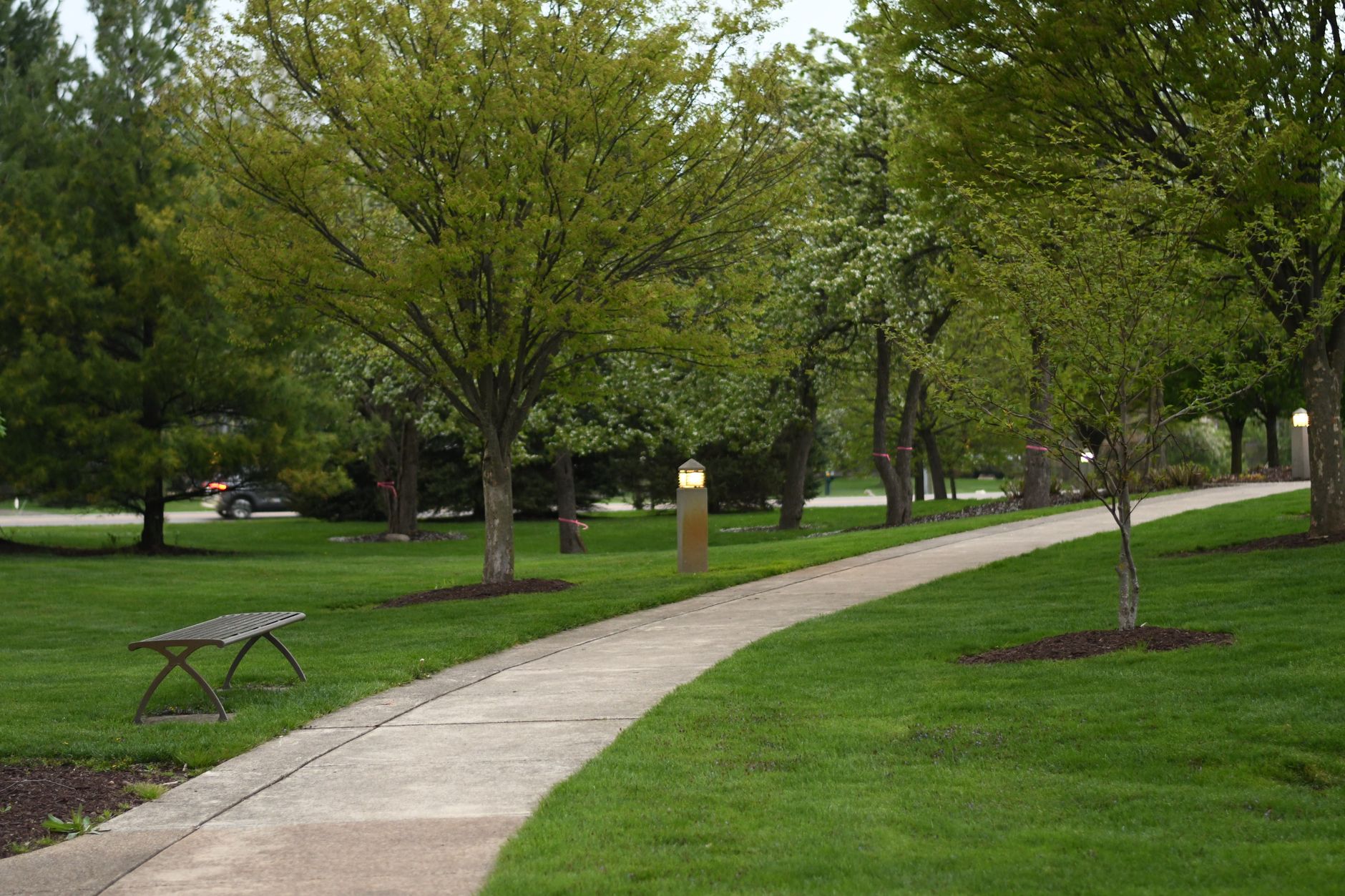
Savings come from hours that no longer go to routine mowing. The published figures give a range rather than one number. A university estimated its mowing at 120 man-hours a week across nearly 150 acres, a large campus scale. A campus services provider reports that one mower saves about 100 hours of labor per year, a figure from the provider rather than an independent test. A university news release describes roughly a couple of hours of labor per week freed up for other campus work.
Several things move the number on your site: how much open lawn you have, how many separate zones the robot must reach, how many obstacles and beds need hand work, and how often you mow in season. Map those in the site assessment and the hours follow from the map rather than from a guess.
Hiring is part of the picture. According to the Bureau of Labor Statistics, employment of grounds maintenance workers is projected to grow 4% from 2024 to 2034, about as fast as the average for all occupations. A crew that is already stretched gets real value from hours returned to work that needs a person.
What can a mowing robot not do?
A mowing robot works inside a boundary and a set of rules. It does not do tree work, hedge sculpting, planting or large-scale leaf cleanup. It needs keep-out zones around sculpture, pedestals and beds, and staff still hand trim the edges the robot cannot reach.
Terrain and weather set limits too. Steep slopes, uneven ground, standing water and wet grass can stop a run, so the schedule needs room to skip a day. The robot is a tool for regular cutting, not a substitute for a groundskeeper who notices a problem in the garden, a drainage issue or a damaged piece of art.
Expect the robot to change the routine, not remove the need for judgment. Someone still has to watch the lawn, check the boundary after changes to the garden and decide when a zone is not ready to mow.
How do you get started with a leased robot?

Start with a free site assessment. We map the lawns, walkways and garden edges, identify keep-out zones and recommend the right robot for the ground it will cover. The lease is quoted through financing after the site is known, and the payment comes in that quote.
Robots are leased through financing and are not sold to you. We handle deployment, integration, staff training, go-live support and nationwide service. Many museums begin with one bounded area as a pilot, with a backup unit available for coverage while a robot is serviced.
The useful next step for robotic lawn mowers for museums is a conversation about your site. We can walk through the mapped areas, the hours they take now and what a scheduled robot would cover.
Frequently asked questions
Upcoming museums & cultural venues events
Want a robotic mower at your museum?
Tell us about your site. We will recommend the robot, quote the lease, and keep it serviced.
Sources
- Artnet, citing the Institute of Museum and Library Services
- NASAA, citing a GAO-based report
- AAM COVID-19 Snapshot of the Museum Field (2022)
- Bureau of Labor Statistics, Occupational Outlook Handbook
- University news release on robotic mower pilot
- University news release on mower labor
- Campus services provider report
- Public school district news coverage