
The question, in the buyer's words
I run a 9-house mushroom farm outside Kennett Square, Pennsylvania, and during peak flush we run short of pickers, so could autonomous mobile robots carry full harvest totes from the growing rooms to the cooler without anyone pushing carts through the beds?
Key takeaways
- Mobile robots fit the tote haul to the cooler, not the picking itself.
- No commercial mushroom room deployment was confirmed in the sources, so plan a pilot first.
- Harvest labor runs 15 to 30 percent of production value, so the stakes are real.
- Aisle width, floor drainage and tote staging decide whether a route works.
- A free site assessment comes before any lease quote.
Can mobile robots carry mushroom totes out of Kennett Square growing rooms?
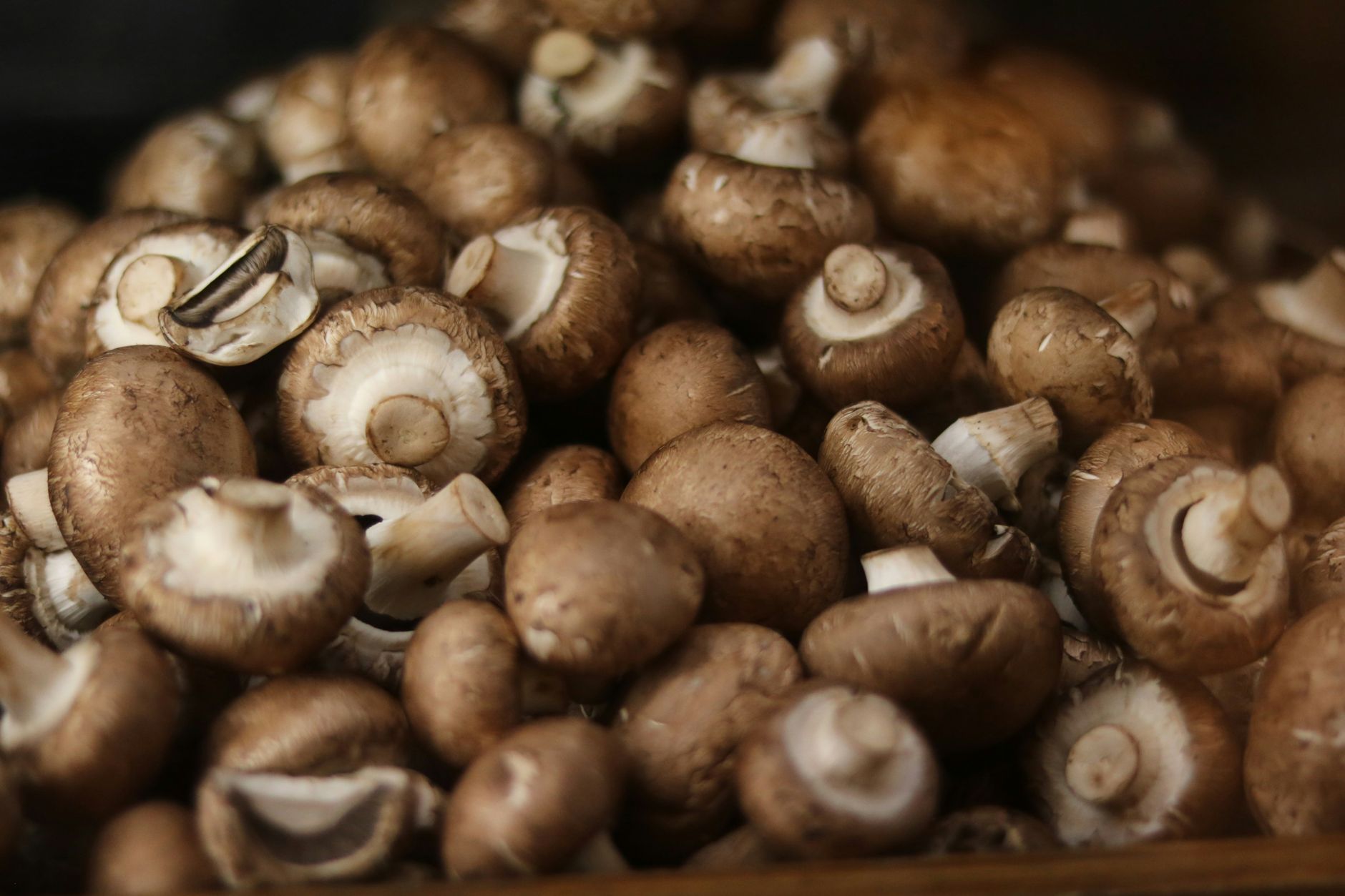
Most of the work in a mushroom house is picking, but in peak flush the trip after picking can drain a crew as fast as the picking itself. Pickers fill totes at the bed, then a cart is pushed through the beds, down the corridor and to the cooler. Every trip takes a worker off the picking line, and short crews make that worse. A mobile robot that carries full totes on a fixed route could take over that haul, provided the totes are staged at the edge of the room and the robot never has to enter a bed.
Kennett Square sits at the center of this industry. According to WHYY, Chester County dominates U.S. mushroom output, and the sources it reviewed put the regional share at roughly half to two-thirds, with one citing the American Mushroom Institute at 60 percent of U.S. mushrooms. The same reporting gives conflicting volume figures, 317 million pounds of white button mushrooms in one account and more than 500 million pounds a year in another. Treat these as regional context, not as a benchmark for your own houses.
Mobile robots are a fair question for this job because the haul is the piece that can be routed. Picking, judging ripeness and trimming have not been shown as commercial automation in the sources we reviewed. A first project should be scoped around transport, not around the pickers themselves.
How short are picking crews around Kennett Square?
The labor pool around Kennett Square is large and still short. According to WHYY, the industry directly employs almost 10,000 workers, mostly from the area's Hispanic community. A 2021 industry figure put the labor shortage at approximately 25 percent, according to The Packer, and one Pennsylvania grower told the same outlet that it lacked enough people to pick its crop for the first time in more than 35 years.
The seasonal fix most farms reach for is not open to them. According to the American Mushroom Institute, as reported by The Packer, mushroom operations are not eligible for H-2A visas because production runs year-round. A bill called the Securing Agriculture's Workforce Act of 2026 would expand H-2A access, and WHYY reports that Chester County growers are hopeful about it. We did not confirm that the bill has passed, and Farmworker Justice opposes expanding H-2A to year-round operations, so do not build a staffing plan around it.
For a nine-house operation in peak flush, picking capacity is the limit that matters. When a shift runs short, carts and totes wait, and pickers who should be on the bed end up pushing carts instead. A robot that removes the haul does not replace a picker, but it can keep the pickers you have on the bed for more of the shift.
What does harvest labor represent in the value of your crop?
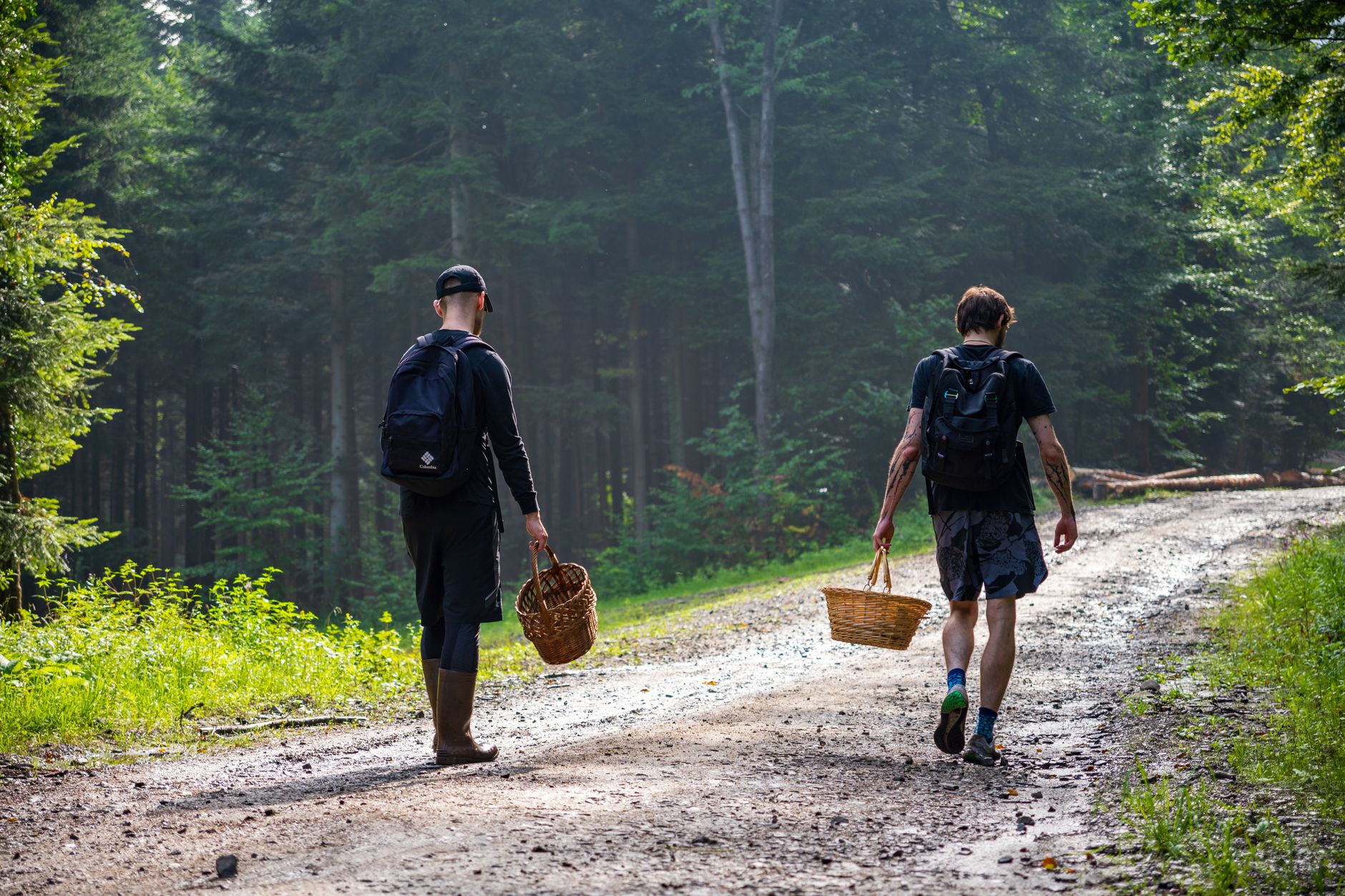
A USDA-funded project summary from Penn State puts labor costs for harvesting at 15 to 30 percent of production value. That range is wide, but it makes clear that labor is a large share of what each harvest costs you. Any change that frees pickers has to be measured against that share.
The picking robotics work is promising but early. A 2021 Penn State prototype used a suction-cup picker and machine vision on shelf-grown button mushrooms, reporting 90 percent first-pick success for the picker and 97 percent overall success for the trimmer, according to the university. Those are results from the research team, not from a commercial deployment. The follow-up project under USDA SARE plans field demonstrations for Pennsylvania growers.
For your decision, the useful reading is this. Picking automation is still a research and demonstration question in Pennsylvania. Hauling totes is a question of route design, aisle layout and how the robot fits your staffing, which is a more immediate problem and the one a pilot can test.
- Route consistency
Autonomous Mobile Robot
Follows the same mapped path every trip, as long as the aisle stays clear
Staff
Adapts the route on the spot, but shortcuts through the beds creep in when the crew is rushed
- Peak flush surge
Autonomous Mobile Robot
Repeats trips at a fixed pace, limited by battery and the number of staging points
Staff
Stacks and redirects carts quickly when a sudden surge hits a single room
- Handling tote contents
Autonomous Mobile Robot
Carries totes only if the load and rack fit the unit
Staff
Spots a problem tote, pulls it and reroutes without stopping the line
- Wet, humid rooms
Autonomous Mobile Robot
Depends on floor condition and sensor cleanliness, so test before committing
Staff
Adapts to wet floors with footwear and care
- Night or weekend running
Autonomous Mobile Robot
Can run unattended on a mapped route when a service plan stands behind it
Staff
Needs a supervisor on shift and staff willing to work those hours
- Layout changes
Autonomous Mobile Robot
Needs remapping after bed or aisle changes
Staff
Adjusts to a new layout without any setup
- Labor availability
Autonomous Mobile Robot
Does not depend on the seasonal labor pool
Staff
Depends on a labor pool that the sources describe as short
What do the injury numbers say about cart work and crop labor?
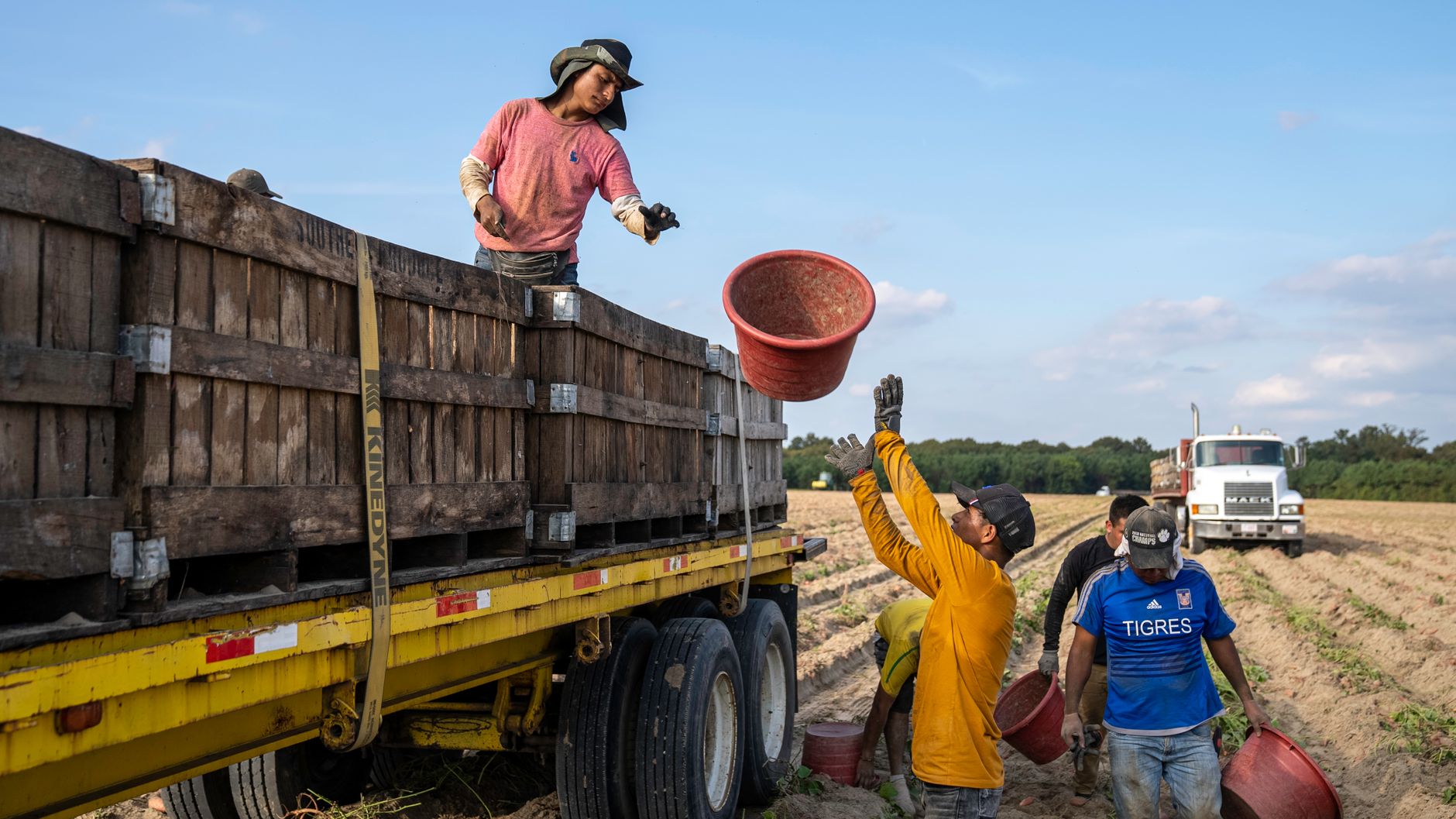
The Bureau of Labor Statistics reports that crop production, NAICS 111, recorded 4.1 total recordable cases per 100 full-time workers in 2024. Of those, 2.5 cases involved days away, restriction or transfer, and 1.4 cases involved days away from work. These are the figures to compare your own incident log against.
The fatality figures are more serious. According to CDC's NIOSH, agriculture, forestry, fishing and hunting had a fatal injury rate of 20 deaths per 100,000 full-time workers in 2021, compared with 3.6 for all U.S. industries. NIOSH research on fatality data from 2005 to 2012 found 15.9 per 100,000 workers in crop production against 10.8 in animal production. That research is dated, so use it for direction rather than as a current rate.
Robots do not remove those risks, but they can change them. A robot that carries the loaded tote cuts the number of loaded carts a person pushes over uneven floors and past bed edges, which reduces strain. It also adds exposure around moving equipment in tight corridors. Your own incident log and a written risk review for the route should drive the decision more than any national rate.
What does Kennett Square's climate mean for a mobile robot route?
Kennett Square has a humid continental climate. A Plantmaps summary citing NOAA data lists an annual average temperature of 54.2°F, a January average of 31.6°F, a July average of 76.7°F, annual precipitation of 45.6 inches and about 21.5 inches of snowfall. Other summaries give precipitation of 45 to 49 inches, so treat the summary as a range and check local records during planning.
The seasonal swings sit at the edges of the route. A January run between a dock and a cooler means cold batteries, sensors that may fog or frost, and a wet, salted floor. A July run means humidity and condensation near the cooler door. Neither is a reason to skip robots, but both belong in your site test, and you should ask any vendor for the operating temperature range in writing.
Bad weather can also change when people can get to the farm, so a route that runs with fewer hands on the shift is worth testing for those days too. Run the route on a wet day and a dry day before the lease starts, so you know how the floors and doors behave in both conditions.
Can a robot take the route without anyone pushing carts through the beds?
Yes, if the route is designed for it, and no if the aisles and floors are not controlled. A mobile robot follows a mapped path and stops at a staging point, so the cleanest design has pickers load full totes onto a rack or pallet at the edge of each room. The robot carries them from there to the cooler. It should never drive through the beds, where people are working and where contamination control matters most.
Before you talk to any vendor, check the points a robot cannot solve for you. Four of them tend to decide whether a route works:
Aisle width and clearance at every turn, measured with a loaded tote on the cart
Floor evenness and drainage, since standing water and worn joints stop robots and create slip risks
Doors, thresholds and the cooler entry, where a stopped unit blocks the whole route
One staging point per room, so totes are not parked at random along the aisle
Mushroom houses are not standard warehouses. Growing rooms carry humidity and wet floors, and the layout changes with each crop cycle. A route that works in one house may need remapping after a bed or aisle change. Budget that remapping as recurring work, not as a one-time setup.
- Aisle width and clearance at every turn, measured with a loaded tote on the cart
- Floor evenness and drainage, since standing water and worn joints stop robots and create slip risks
- Doors, thresholds and the cooler entry, where a stopped unit blocks the whole route
- One staging point per room, so totes are not parked at random along the aisle
When is a robot the wrong answer for a mushroom farm?
Skip the robot if the bottleneck is the picking itself. Hauling does not fix a short picking crew, and the sources we reviewed do not show a commercial picking robot ready for a mushroom bed. If no one is on the bed, a robot on the aisle cannot make up the difference.
Be cautious if your houses are not standardized. Bed heights that vary, narrow or irregular corridors, and rooms that change layout each cycle make mapped routes harder to keep accurate. A single house with a short haul may be better served by one more cart and a second picker, since that adds nothing to maintain.
A simpler test is whether the route can run unsupervised for a full shift. If the answer depends on someone correcting it every hour, the pilot will fail for staffing reasons, not technical ones. That is worth knowing before anything is leased.
How would a Kennett Square pilot work with us?
We are an OEM-neutral integrator for US businesses. We pick the right robot for your site across manufacturers, lease it through financing, deploy and integrate it, train your staff, and service it under our service plan, backed by regional service engineers in every state we service. Our first step is a free site assessment, and the lease is quoted after that assessment, so the number reflects your own route and houses.
For a nine-house farm, a useful pilot starts with one house, one route and one unit. Measure cart and tote wait times during peak flush for a full week before the assessment, so you have a baseline to compare against. Ask how spare unit coverage and emergency replacement work during a flush, since a stopped unit in peak season is the situation you most need to plan for.
The honest outcome of a site assessment may be that a route is not worth it yet, and that is a fair result. A narrow pilot that proves the route is more useful than a fleet the layout cannot support. The data from one house will tell you whether the rest of the farm is worth the effort.
Frequently asked questions
Upcoming events in Pennsylvania
No events are listed in Kennett Square yet. These are elsewhere in Pennsylvania.
- ExpoConstructing Industry Connections Symposium & ExpoNov 18, 2026Pennsylvania Farm Show Complex, Harrisburg, PA
- Trade showAPC/PennDOT/PA Turnpike Fall SeminarNov 18 to 20, 2026Hershey Lodge, Hershey, PA
- ExpoPittsburgh Remodeling ExpoFeb 5 to 7, 2027Acrisure Stadium, Pittsburgh, PA
- ConferenceASCE 2027 Annual ConferenceMar 1 to 5, 2027Pennsylvania Convention Center, Philadelphia, PA
Put a robot to work in Kennett Square.
We walk your site, learn the job, and recommend the unit that fits. Then we quote the lease, deploy it, and keep it serviced.
Sources
- WHYY, Chester County mushroom capital
- The Packer, labor woes and supply shortages in the mushroom world
- WHYY, House bills and Chester County mushroom farmers
- USDA SARE project GNE24-338
- Bureau of Labor Statistics, crop production injury rates
- CDC NIOSH, agriculture injury topics
- Plantmaps, Kennett Square climate data
- Penn State News, mushroom picker and trimmer prototype