
The question, in the buyer's words
We manage 38 apartment communities across several states and want mowing robots on every site, but how do we roll out in waves so our crews still cover the sites we haven't reached yet?
Key takeaways
- Convert communities in waves, and cut crew hours on a site only after its robot run is stable.
- Keep every unconverted site on its existing route, mowing frequency and crew lead.
- Pilot with one to three communities that have simple, open lawns.
- Expect some steep, tight or heavily trafficked lawns to stay on crews.
- Use freed crew time for edging, service checks and the next wave, not for early headcount cuts.
How does a multi site apartment mowing robots rollout start?
A multi site apartment mowing robots rollout works best when you treat your 38 communities as a set of waves, not one switch. Each wave converts a small group of sites, runs for a stable period, and becomes the baseline for the next group. Every site not yet in a wave keeps the mowing schedule it runs on today.
The existing crew schedule is your safety net. Until a site has completed a full stable period on a robot, its route, mowing frequency and crew assignment stay exactly as they are. Crew time comes off that site only after the lead signs off, and the freed people move to the sites still waiting.
Write the plan down before any hardware arrives. Name the wave for every community, the crew lead responsible for each unconverted site, and the date each site's crew hours change. Rollouts stall most often because nobody owns the sites in between.
Why does a 38 community portfolio need a phased plan?
Apartment mowing sits inside a very large sector. A private tracking estimate counts more than 140,000 properties, with about 16 million units in 128,000 properties that are leasing. It is not an official count, but it shows how many lawns operators manage together.
No single official federal count of apartment communities was found, so you cannot benchmark your 38 sites against a government list. What you can see is how large one operator's footprint can get. An SEC filing from one multifamily real estate investment trust lists 175 communities with 59,921 apartment homes as of December 31, 2025, which is one company's portfolio rather than a national figure.
For you, the rollout is a scheduling project across many lawns with varied access rules, irrigation setups and maintenance histories. Plan it as a scheduling problem first and a hardware problem second.
Which apartment communities should go in wave one?
The first wave should prove the process rather than maximize the count. Pick communities with open, predictable lawn: rectangular or gently curved turf, few isolated obstacles and clear access for a service vehicle. A pilot that goes well on easy sites teaches you the mapping, boundary and scheduling steps before you meet the hard lots.
Avoid making wave one the sites your crews complain about most. Those usually have the tightest gaps, the most resident traffic and the least predictable irrigation. Put them in a later wave, once your team has learned how the robots behave on your property types.
Map what the robot may not handle well before the site is assigned: low cords, hoses, toys, pet areas and garden edging. A note on the map is cheaper than a stuck unit in the middle of a wave.
- Open lawn with few islands, beds and posts
- Gentle, consistent slopes your crew already mows without trouble
- Power near a practical charging spot
- A site manager who reports problems the same day
- A crew lead who stays on the route during the pilot
How do crews keep covering sites that have not converted?
Keep the crew assignment on paper for every unconverted community, including mowing frequency, route and lead. When a robot goes live on a nearby site, the crew does not vanish from the unconverted sites. Their routes stay intact, and any time freed from converted sites goes to the next site in the queue.
Think of crew time in blocks rather than sites. A crew that loses one converted site should pick up work on the next community in its queue instead of standing by. Set a rule that a site's crew hours change only after its robot has completed scheduled runs without a missed cut and the lead signs off.
The timetable matters as much as the headcount. Robots can run on a set schedule, often outside resident hours, but that schedule must fit your mowing frequency and the site's irrigation timer. Sprinklers running during a robot cycle waste the run, so align them before go live.
What wave order works across 38 communities?
Group the 38 communities into four stages. Stage zero is a pilot of one to three communities with simple lawns. Stage one clusters sites in the same maintenance area, so one lead can supervise the robots while the remaining crew work nearby. Stage two covers the bulk of the portfolio that fits well, and stage three holds exceptions that get a separate plan.
Two grouping rules help. Group by crew supervisor as well as map distance, so the person who owns the route also owns the robot. Keep each wave to a size your lead can check properly, because an oversized wave turns every problem into a backlog.
Build a gate between waves. Do not start the next wave until the previous one has run its full stable period, the crew lead has signed off and service response for that region is confirmed in writing. Skipping the gate is how a rollout ends with robots and crews both overloaded.
What does the rollout do to crew safety and staffing?
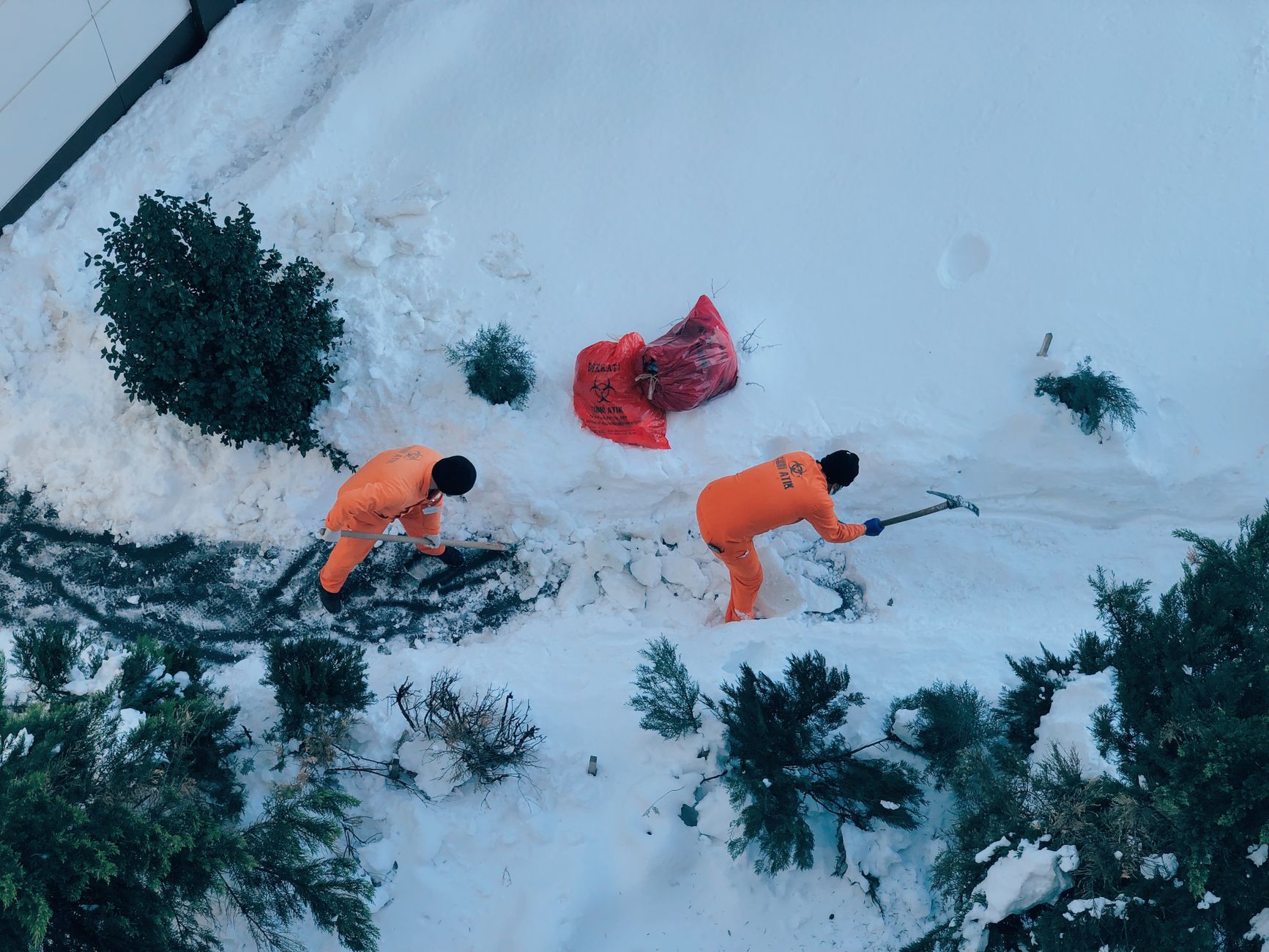
Grounds work carries real injury risk, and the crews you keep on unconverted sites face it. According to NIOSH, citing 2019 Bureau of Labor Statistics data, grounds maintenance workers were more than twice as likely to be injured as all workers, at 189 vs 87 per 10,000 full-time workers. The fatal rate was about 20 per 100,000, roughly five times the all occupations rate of 4.
A CDC study citing 2018 Bureau of Labor Statistics figures put the nonfatal rate at 89.7 for all private industry against 176.8 for landscaping services. Bureau of Labor Statistics data for landscaping and groundskeeping workers in 2019 reported 12,380 nonfatal cases with days away from work, an incidence rate of 185 per 10,000 full-time equivalent workers. Fatal injuries were 124 in 2019, down from 142 in 2018, and these are the latest figures in the notes, so check for newer releases before citing them.
Turnover is the practical risk. A landscaping trade blog survey found national quit rates fell from 37% in 2022 to 30% in 2023, while operations role turnover at larger firms was 35%, compared with 23% for all respondents. Those figures cover landscaping roles broadly, not apartment mowing crews specifically, but a crew lead leaving mid rollout can still stall a wave. Name a backup lead for each wave and cross train at least one person per site on the robot's basic checks.
Which apartment lawns should stay on crews?
Not every site is a good fit, and some units will stay on crews for a long time. Steep banks, deep ravines, dense ground covers, tight fenced pockets and heavy resident traffic at mow time are poor candidates for a first wave. A robot needs a mapped boundary and a clear path, and if a site cannot offer those, the crew keeps it.
Adoption signals are mixed. A robotics trade article estimated that commercial and industrial units made up about 15% of robotic mower sales in 2025, up from about 12% in 2024, though its source is unclear, so treat it as a weak signal. A small poll on a landscaping company's blog found 41.67% of property managers would use commercial robotic mowers, 33.33% would not and 25% were indifferent, with no sample size given.
The notes found no dedicated 2025 survey of apartment operators adopting mowing robots, so there is no reliable benchmark for your sector. Your own site assessment and pilot results are better evidence than any published percentage. A site that fails the pilot is useful information, and keeping the crew on it is a sound plan.
- Coverage hours
Robotic Lawn Mower
Runs on a set schedule, often outside resident hours, if the site is mapped and the battery and charging point work.
Staff
Works in daylight and adjusts on the spot to rain, resident requests and irregular lawns.
- Edges and trimming
Robotic Lawn Mower
Cuts within mapped boundaries and cannot trim around every bed, post or cord.
Staff
Trims edges, beds and tight corners by hand and handles one-off obstacles.
- Problems on the lawn
Robotic Lawn Mower
Stops and alerts when it meets an obstacle or a boundary it does not expect.
Staff
Clears a fallen branch, a toy or a hose as it appears and reports what it sees.
- Consistency on mapped turf
Robotic Lawn Mower
Repeats the same route and cut height each cycle, which keeps mowing lines even.
Staff
Varies from day to day with fatigue, weather and individual habits.
- Staffing risk
Robotic Lawn Mower
Does not resign mid rollout, but still needs someone to check and service it.
Staff
Can leave or move, which is why each wave needs a backup lead.
- Steep or irregular ground
Robotic Lawn Mower
Often a poor fit, and some banks cannot be mapped safely.
Staff
Still the default for steep, awkward and tight areas.
How do service and backup work when a robot is down?
A rollout stalls fast if one failed robot holds up a whole wave. Our service plan covers every unit we lease, with remote triage first and on-site dispatch from regional service engineers in every state we service. One partner handles the whole lifecycle, so the same team that deploys a wave also answers the repair call.
Ask for spare unit coverage and loaner units in writing, and confirm response times for each state in your portfolio before you commit a wave to it. Your crew should know who to call, what the unit's status signals mean and when to fall back to the route. Post that contact on each site log so no one has to search for it.
Track downtime per site from the first day. Repeated downtime at one community usually points to the site, such as boundary gaps, a poor charging spot or a sprinkler spray pattern, rather than the machine. Fix the site before you widen the wave.

How does a lease for mowing robots work with us?
We start with a free site assessment that maps each community and sorts it into the waves described above. The lease payment comes in a quote after that assessment, so you see terms for the first wave before you commit to anything beyond it. We pick the right robot for each site across manufacturers, then lease the units through financing, which avoids a large upfront capital commitment.
We deploy, integrate and train the crew leads on each wave, then service every unit under our service plan. For a multi site portfolio, ask for wave one, the later waves and the exceptions in one quote with each stage shown separately, so you can approve stages one at a time.
Bring the 38 site list, the mowing schedules and the crew roster to the assessment. Those three documents let us draw the waves and the crew routes in one pass.
Frequently asked questions
Upcoming property management events
- Trade showMinnesota Buildings & Facilities Management Trade ShowNov 19, 2026Minneapolis Convention Center, Minneapolis, MN
- WorkshopIREM Boston Chapter No. 4 Fair Housing Corporate OfferingDec 2, 2026The Simon Companies, Braintree, MA
- ExpoMontana Green EXPO 2027Jan 5 to 7, 2027Hilton Garden Inn, Missoula, MT
- ExpoPittsburgh Remodeling ExpoFeb 5 to 7, 2027Acrisure Stadium, Pittsburgh, PA
Want a robotic mower at your apartment communities?
Tell us about your site. We will recommend the robot, quote the lease, and keep it serviced.
Sources
- U.S. Bureau of Labor Statistics, landscaping and groundskeeping workers 2015 to 2019
- NIOSH bulletin on heat illness in landscaping, citing BLS 2019 data
- CDC study citing 2018 BLS figures for landscaping services
- Private multifamily tracking estimate (not official)
- SEC EDGAR filing, one multifamily REIT portfolio disclosure
- Landscaping trade blog survey on quit rates and turnover
- Robotics trade article on commercial mower sales (source unclear)
- Landscaping company blog poll of property managers (sample size not given)