
The question, in the buyer's words
I run grounds at a rural gas peaker plant, and mowing the fenced yard around transformers and gas skids takes two crew members a day all summer; could robotic mowers handle that yard without a rider working near energized equipment?
Key takeaways
- Open turf in a fenced gas peaker yard is the part robotic mowers can take over.
- The strip inside the approach distance around transformers and gas skids stays with trained people.
- Peakers run few hours, but the yard needs cutting all season, so mowing is a steady workload.
- A lease is quoted only after a free site assessment that maps the yard and marks no-go zones.
- Taking the rider out of the energized area removes a hazard that riding mower data documents well.
How many gas peaker yards have this mowing job?
The Government Accountability Office counted 999 peaker plants in the United States. According to GAO, 698 of them, about 70 percent, are gas-fired, while 267 are oil-fired and 33 are coal-fired. These figures are from the 2021 era as reported in secondary coverage of the GAO table, so treat them as a snapshot rather than a live count. Plant-level counts were not found in this review, so size the mowing job from your own site's acreage and the fence line you actually maintain.
Run hours matter to the plant, but much less to the grass. According to The Conversation, peakers generally run only 2 to 7 percent of hours in a year, a range that page attributes to EIA-based analysis. That original EIA material was not confirmed here, so use the figure as context only. Mowing does not follow that run pattern. The yard needs cutting through the season whether or not the unit is dispatched, so a robot on a set schedule suits the job better than a crew that gets pulled to plant work.
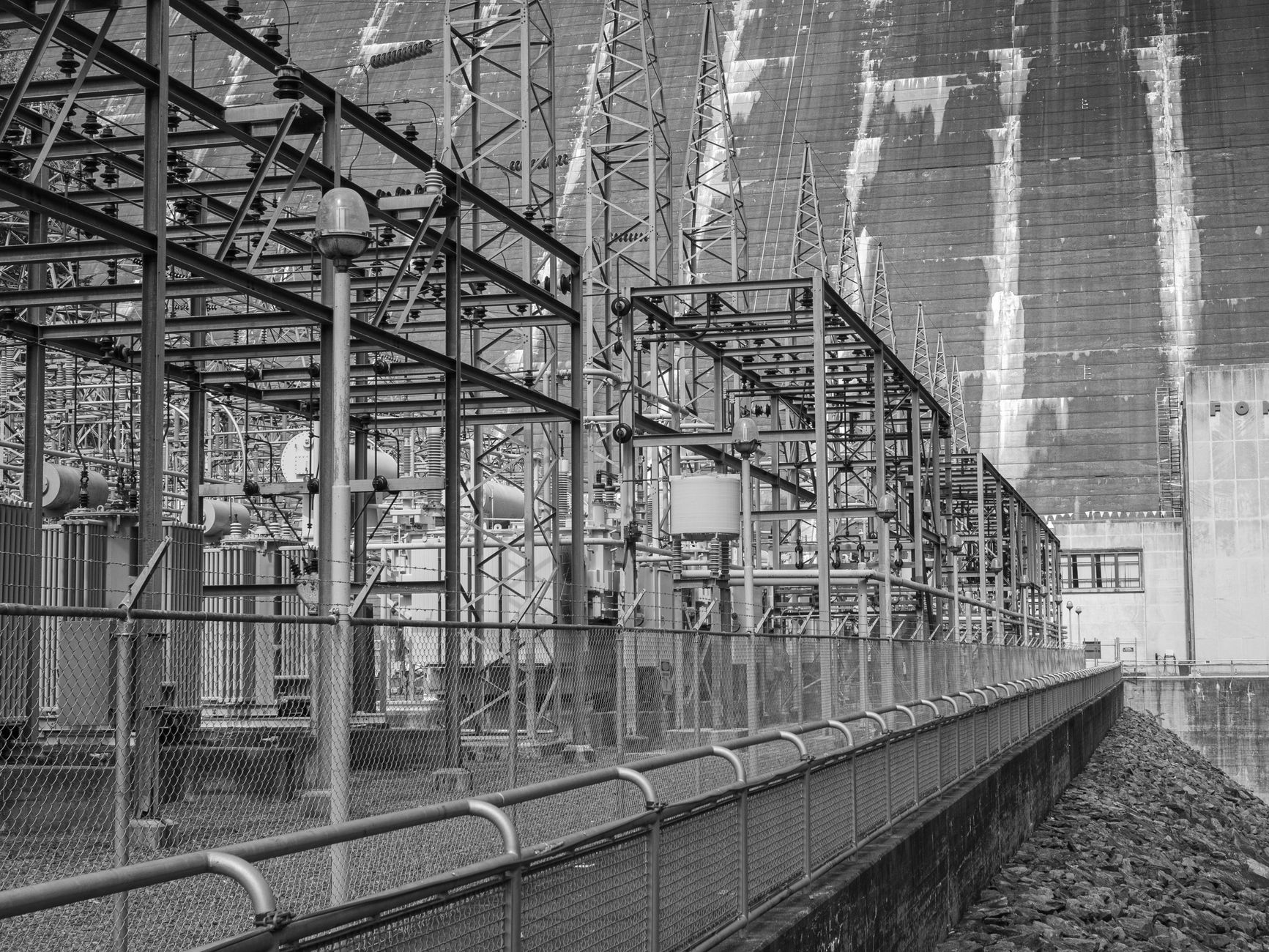
For a gas peaker yard, robotic mowers handle the open ground well. The harder question is the ground near transformers and gas skids. The grass is a simple problem. The equipment around it is not.
Why does mowing around transformers and gas skids need its own rules?
Energized equipment sets the rules, not the mower. OSHA's electrical standard, 29 CFR 1910.269, sets minimum approach distances from energized parts by voltage class, and its tables and appendix give the exact figures. Do not take a distance from a secondary safety supply summary. Confirm the number for your substation's voltage against the regulation and your own electrical safety program before anyone enters the zone.
For this yard, the working rules are simple to state. A rider should not operate close to pad mounted transformers or gas skids. Anyone with a trimmer should stay outside the approach distance unless they have the training and controls to work there. Gas skids add a second concern beyond electricity, because piping, valves and gauges can be struck by a moving mower or a dragged cord.
Permits and clearances matter as much as distances. Many plants require a work order or a clearance before a person enters a restricted zone, and the robot's cut windows should be set around those clearances so the two never overlap. Your plant's procedures may set stricter limits than the general rules here.
This is why a robot is a poor fit for the strip near equipment, even though it is good at open ground. A machine cannot judge a cable run, a valve handle or a loose ground strap the way a trained person can, and it should never be the only thing between a blade and an energized part.
What can a robotic mower do in the fenced yard?

A robotic mower works inside a boundary, set by a perimeter wire or by satellite positioning with mapped zones, and it returns to a charging station on its own. In a fenced yard, it can cover open turf between the fence line and the equipment pads, provided the ground is reasonably level and the grass is not badly overgrown at the start. Map the transformers, pads and skids as hard exclusion zones so the mower stays out of them even if a sensor misreads an edge.
Gravel, concrete and bare ground should be mapped as no-go areas, and the cutting path should avoid drains, cable trenches and sprinkler heads. Fence corners and post bases are where a robot's path often ends up tight or uneven, so plan a short manual pass there. The site assessment checks slope, obstacles, grass height, charging location and signal before any unit is recommended. That step decides whether your particular yard fits.
What the robot will not do is the edge. Fence lines, post bases, cable runs and the ground under and around pipes still need a person with a hand trimmer, usually on a short pass after the robot finishes. Service follows the unit under our service plan, with on-site dispatch and remote triage, so a stuck mower or a worn blade gets attention without a crew member standing guard all day.
How does a robot compare with a rider and two crew members?
The setup today is a rider and two people for a full mowing day, all summer. A robot changes the labor pattern more than it changes the total job. One person can supervise, check the run and handle faults, while the other is freed for plant work that needs hands. The comparison below is honest about where the crew still wins.
The rider does more than cut grass. It hauls, clears debris and moves between tasks in a way a fixed robot cannot. A rider also gives a person direct control in the moment, which matters when something unexpected happens near equipment. A robot gives steady, repeatable coverage and takes the rider out of the energized area.
- Open turf in the fenced yard
Robotic Lawn Mower
Runs on a set schedule within mapped boundaries, with no operator on a seat.
Staff
A rider and two crew members for the full mowing day.
- Ground near transformers and gas skids
Robotic Lawn Mower
Kept out by mapped exclusion zones and never trusted inside the approach distance.
Staff
A trained person with a hand trimmer, working under your electrical rules.
- Edges, fence lines and post bases
Robotic Lawn Mower
Needs a person for the final pass.
Staff
Handled well by someone who can see the detail and adjust on the spot.
- Hauling, clean up and odd jobs
Robotic Lawn Mower
Does not do this work.
Staff
A crew member can haul clippings, clear debris and handle whatever comes up.
- Faults and stuck units
Robotic Lawn Mower
Needs on-site dispatch or remote triage, and can be out of service until repaired.
Staff
Can fix a jam or move a stalled rider immediately.
- Summer hours and availability
Robotic Lawn Mower
Can run unattended in set windows if faults are handled quickly.
Staff
Works the full shift and can be pulled to plant work when needed.
How many crew hours could a robot give back?
No hour figure for mowing at peaker yards was verified in this review, so your own timesheets are the only reliable starting point. As you describe it, the job takes two people for the full mowing day all summer. A robot cannot remove the edge work, so the realistic gain is the open turf share of that day, not all of it.
Break the day into three parts: open turf, the energized edge, and fault handling. The open turf is where a robot earns its place, because it can run on a schedule once mapped. The energized edge still goes to a person, working outside the approach distance. Fault handling is new work, but it is short, and it is handled by on-site dispatch or remote triage if the unit is leased with our service plan.
Measure before deciding headcount. Run a pilot on one section, log the time spent on each part of the day, and compare that with the crew's time before the robot arrived. Those are two people your plant may need elsewhere, so the decision is worth measuring properly.
Is a rider the bigger hazard than a robot here?
The national figures on riding mowers are old, but they show the exposure. According to the CDC Stacks record of NIOSH data, riding mowers were attributed an average of about 90 deaths a year from 2007 to 2009. The CPSC data summary in the same record reports about 90 riding mower deaths a year from 2008 to 2010, and about 35,000 emergency room treated riding mower injuries a year from 2012 to 2014.
A 1994 CPSC news release said one in five riding mower deaths involves a young child. That release is decades old and is not specific to industrial yards, so treat it as background only. It does show that riding mower deaths are not limited to the operator.
These figures cover riding mowers generally, not power plants, and no post 2010 federal death estimate was found in this review. Still, a rider operated close to transformers and gas skids combines the rollover and striking risks of the machine with the electrical and gas hazards already on site. Taking the rider out of the energized area removes that combination.
The robot does not make the site safe on its own. It removes the rider, and it still needs the exclusion zones and the training described above.
What would a lease look like at your site?
The process starts with a free site assessment. We map the fenced yard, mark the energized and gas zones, and check slope, grass height, charging location, signal and fence access before any unit is recommended. The lease payment is quoted after that assessment and set through financing, so the number reflects your yard rather than a generic offer.
We are vendor neutral. We pick the robot that fits the yard across manufacturers, then lease it through financing, deploy and integrate it, train your staff, and service every unit under our service plan, backed by regional service engineers in every state we service. One vendor covers the whole lifecycle, so the yard does not depend on several companies answering different calls.
Starting with one leased unit for a season gives you measured hours for the pilot and a clear answer on the energized edge before any larger commitment.
Who staffs and services the robots after deployment?
The Bureau of Labor Statistics Occupational Outlook Handbook is the right place to check grounds and landscaping staffing trends. Counts quoted by secondary sites conflict, and this review did not verify the official occupation figures, so do not quote one from a third-party page. What matters for your yard is who responds when a unit stops during the season.
One trained staff member can supervise a fleet on a set schedule, but they need a written fault procedure and a service contact. Our service plan covers on-site dispatch and remote triage, so many faults can be diagnosed from a distance before a technician drives out. Maintenance included means blade, battery and sensor care is scheduled, not left to the crew.
Schedule the robot's cut windows so the robot and the energized edge work never occupy the same ground at the same time. That single rule removes most of the risk of a person and a moving machine meeting near equipment.
How do you start with one unit before going further?
A pilot on one section of the yard is the safest first step. Choose a stretch of open turf between two fence lines, map it, and set the exclusion zones before the robot runs. Run it for a full season, record the crew hours, and list the edge work that still needs a person.
If the pilot holds, add a second unit for the larger open areas, and plan spare unit coverage for summer faults so the yard stays mowed while a unit is serviced. Decide headcount only after the measured hours are in hand, not on a figure from another site.
Ask for a free site assessment first. It will show whether your yard has enough open turf to justify a robot, and where the energized edge must stay with your people.
Frequently asked questions
Want a robotic mower at your gas peaker plant yards?
Tell us about your site. We will recommend the robot, quote the lease, and keep it serviced.