

The question, in the buyer's words
Our 18-acre hospital campus has helipad berms and retention swales that the grounds crew can't reach safely on a riding mower; could robotic mowers handle those steep slopes without tipping or leaving ruts?
Key takeaways
- Robotic mowers can cover many berms, but only within each model's rated slope.
- Rated slopes are manufacturer figures, so test your steepest berm before you commit.
- Riding mower rollover case reports justify keeping crews off the worst faces.
- Put percent and degrees on the same scale before you compare any spec sheet.
- Wet swale floors and drop-offs need mapped no-go zones and a hand crew backup.
Can robotic mowers handle hospital campus helipad berms at all?
Yes for part of the job, and the part depends on each slope rather than on the campus as a whole. A hospital campus with helipad berms and retention swales usually has a mix: flat lawn around the buildings, gentle drainage swales, and steeper berms built up beside the landing pad or an access road. The American Hospital Association counts 6,120 hospitals in the US in its Fast Facts on U.S. Hospitals, 2024 edition, so this berm problem is common across the sector and not unique to one site.
Your question has two parts: whether a robot can climb the slope, and whether it will tear up the turf when it turns on it. The first depends on the rated slope of each model. The second depends on turf type, soil moisture and how the unit runs on the grade. Neither can be settled from a brochure, so the rest of this page focuses on what to measure and test before any lease decision.
Why do berms and swales keep riding mowers off the slope?
Riding mowers on slopes carry a rollover risk that shows up in case investigations, not only in theory. A NIOSH FACE report on a 2025 death in Washington describes a 67-year-old worker whose zero-turn mower overturned on an embankment, with the rollover protective structure not raised and no seat belt worn. The same report recommends a buffer zone at least as wide as the mower between hazards and the mowing area.
Earlier NIOSH reports describe the same pattern. In a 2015 death, a 22-year-old operator mowing across a 30-degree slope was pinned when the mower slid and rolled, and that mower had no rollover protective structure. The report says never to exceed the manufacturer's slope limit. These are case reports, not a national count, and this review found no multi-year national statistic for riding mower slope deaths, so each case is a warning rather than a rate.
A robotic mower takes the operator out of the seat, which removes the crush hazard these reports describe. It does not remove the slope itself. Traction, stability on the grade and the way the unit turns still depend on the ground, so the rating and the site test still matter.
What slope can a robotic mower actually climb?
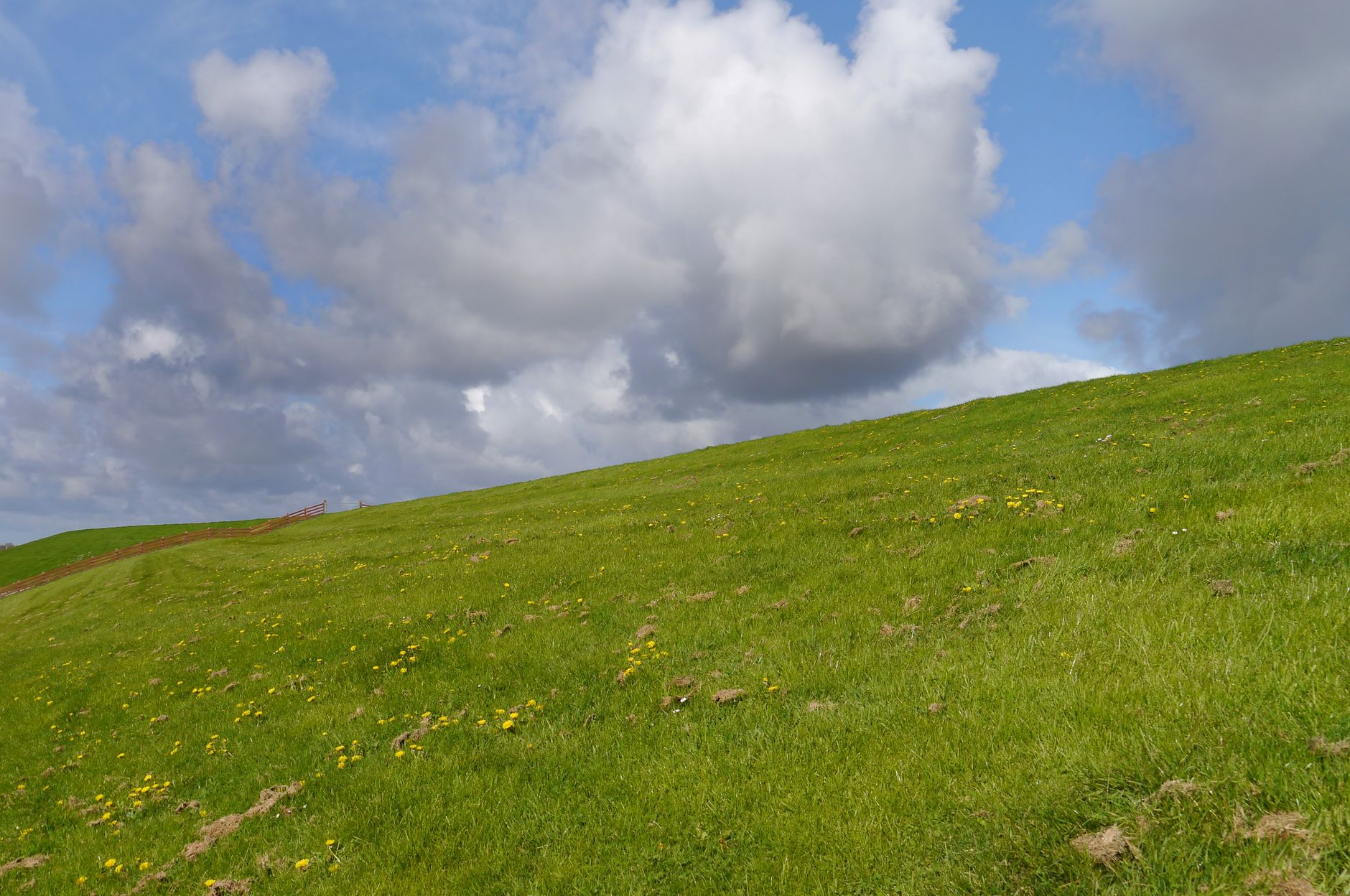
Manufacturer figures are the starting point, and they vary by model. A manufacturer's owner manual for one model lists a working slope of 45 percent and says that accessibility on steeper slopes cannot be guaranteed. A manual for another model gives upward slopes of 0 to 40 percent, and 0 to 25 percent for some terrain. That spread is why you need the rating for the exact model and the exact ground type, not a general claim about robotic mowers.
Units also get confused in comparisons. Percent is rise over run and degrees are a separate measure, so a 100 percent grade is a 45 degree angle, and the two scales cannot be read as the same number. A retailer page says most entry-level units top out around 20 to 25 percent, but that is a vendor-reported claim, not a test result. None of the ratings in this review came from independent testing, so read each one as the manufacturer's stated limit.
Wet grass is where the ratings say least. Sources warn that wet grass reduces grip, and that daily work should stay below the maximum rated slope. A berm that is within rating on a dry day can be outside safe working conditions after a storm, which matters on a campus with patient and staff traffic all day.
How do you test a berm before you commit?
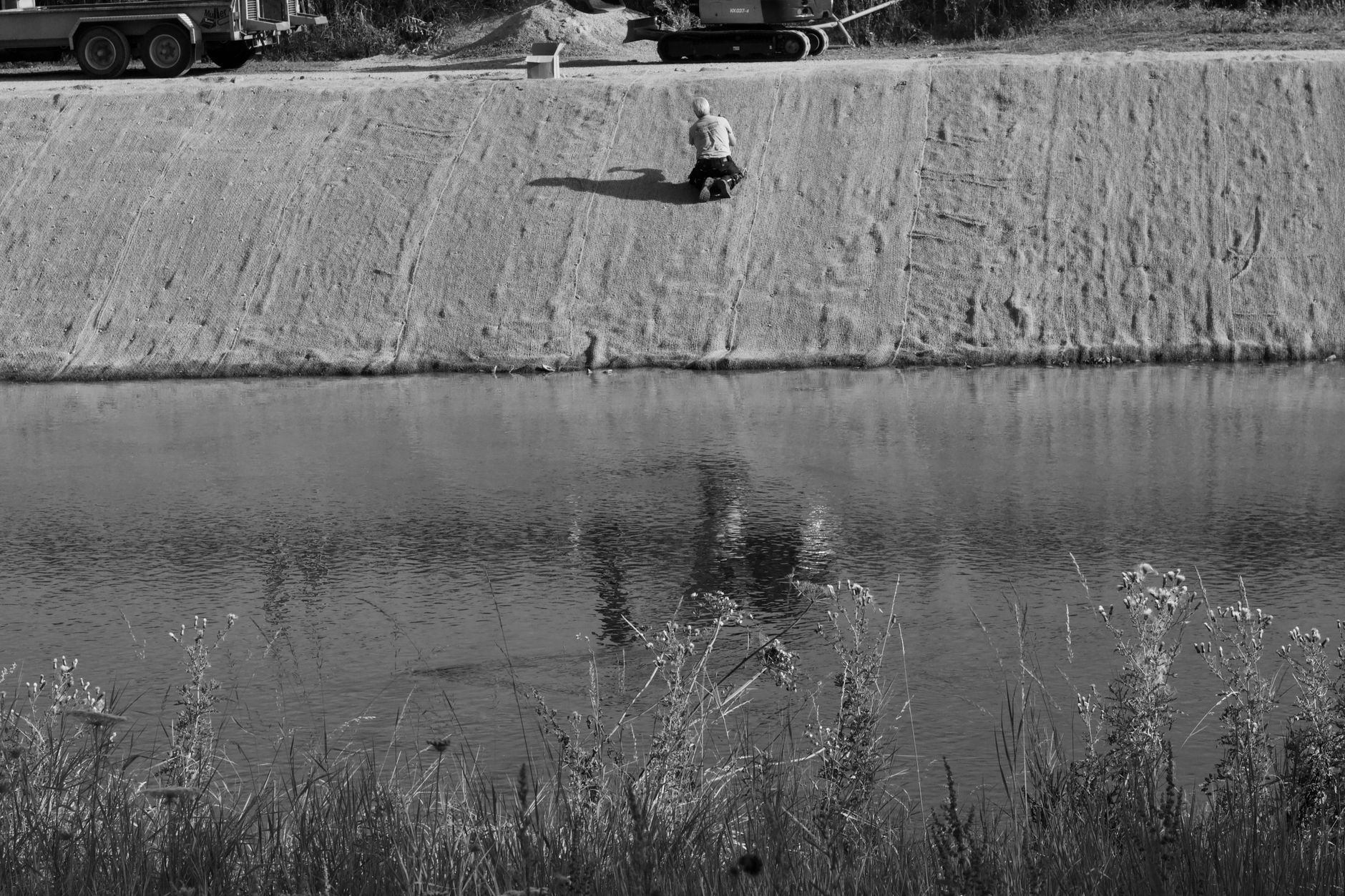
Start with a slope survey. Measure your steepest berm, the swale banks and the approach to the landing pad with a digital inclinometer, and record the grade in percent for each zone along with the grass type. Mark any edge with a drop, a headwall, a pipe inlet or a light base, since those need a physical or mapped boundary rather than an assumption that a unit will stop in time.
Then run a dry test and a wet test if the site allows it. In the dry test, check traction on each grade, turning marks and whether the unit stops cleanly at the boundary. In the wet test, run the same route after rain or irrigation, and look for turf damage and ruts on the grade. Keep a written record of each result so the decision rests on your own data, not on a sales summary.
Bring facilities, safety and aviation staff in early for the helipad zone. Landing pad approaches and their clearances are set by site rules, not by grounds preference, so confirm which areas can be mowed without an operator present before drawing any boundary on a map.
Where on the campus does a robot fit, and where does it not?
Flat lawn around the buildings, gentle drainage swales with firm floors and moderate berms inside the tested slope are the strongest candidates. Those areas are where routine mowing time goes, so moving them to a unit frees people for the steep and wet work that needs a human eye.
The poor candidates are the steepest faces past the rating, swale bottoms that stay soggy after storms, and edges at landing pad perimeters or drop-offs. Keep these on hand trim, and say so in writing, so the crew does not expect a unit to finish them.
How much of the crew's time does this really change?
No verified hour figure for hand trimming on hospital berms was found in this review, so the honest way to size the change is to time your own crew for a normal week. Time the berm trimming, the edge work and the flat mowing separately, because that split decides which zones a unit can take.
The labor base is large but not idle. The Bureau of Labor Statistics Occupational Outlook Handbook reports about 1.3 million grounds maintenance workers in 2024 and projects 4 percent employment growth from 2024 to 2034, about as fast as the average for all occupations. The BLS OEWS estimate for the all other grounds maintenance subcategory was 11,980 workers in May 2023.
This review found no BLS turnover rate for the occupation. Without that figure, the practical risk is simple: a hand crew member who knows the steep berms may be hard to replace quickly, so the berms should not depend on one person's routine.
How would a leased robotic mower work with our team?
We pick the right unit for the site, lease it through financing, deploy and integrate it, train your staff, and service every unit under our service plan, backed by regional service engineers in every state we service. One partner covers the whole lifecycle, so your grounds team works with one contact instead of coordinating several vendors.
We start with a free site assessment that maps the berms, swales and helipad boundary and measures the slopes as described above. The lease figure comes in a quote after that assessment. If the survey shows that only the flat lawn and firm swales fit, the quote can be scoped to those zones, and the crew keeps the rest.
What should you check before a robot goes on the berms?
Check the model's rated slope against your measured steepest zone, and check whether the rating applies to the grass type you have. Ask the manufacturer for the stated limit in writing, and confirm what the manual says about wet ground and daily working limits.
Check the edges next. Pads, drop-offs, pipes, lights and signs need mapped no-go zones before the first run, and the crew needs a clear way to stop a unit by hand. Check the service side too: who responds when a unit stops on a berm, how a backup unit covers the zone while it is down, and what the response plan says in writing.
Last, check the turf. Ask whether the unit's turning pattern on the grade will leave marks on the swale and berm faces you care about, and judge that from your wet test, not from a demo lawn that is flatter than your site.
When should the riding mower and the hand crew stay on the job?
Keep the riding mower for open lawns where the slope sits well inside any rating and the surface stays firm. Keep the hand crew for the steepest faces, the wet swales and any zone where helipad or facility rules call for a person on site.
A robot does not finish the berms that matter most on its own. It takes the routine slope work off the crew, so people can spend their hours on the hard edges, the wet ground and the zones that need judgment.
Frequently asked questions
Upcoming hospitals & healthcare events
- ConferenceNew England College Health Association (NECHA) 2026 Annual MeetingNov 11 to 13, 2026Newport Marriott Hotel & Spa, Newport, RI
- ConferenceHLTH USA 2026Nov 15 to 18, 2026The Venetian Expo, Las Vegas, NV
- ConferenceIndiana Safety and Health Conference & Expo, 2027Feb 8 to 10, 2027Indianapolis, IN
- ConferenceHealthcare Project Delivery Conference 2027Feb 10 to 11, 2027Manchester Grand Hyatt, San Diego, CA
Want a robotic mower at your hospital campus lawns and berms?
Tell us about your site. We will recommend the robot, quote the lease, and keep it serviced.
Sources
- AHA Fast Facts on U.S. Hospitals, 2024 edition
- NIOSH FACE report, Washington 71-270-2025
- NIOSH FACE report, 2015 riding mower death
- Manufacturer owner manual, working slope specification
- Manufacturer owner manual, upward slope specification
- BLS Occupational Outlook Handbook, grounds maintenance workers
- BLS OEWS May 2023, grounds maintenance workers all other
- Retailer slope guide (vendor-reported)