

The question, in the buyer's words
I run a 40-acre pumpkin and corn maze farm, and our maze lanes grow shaggy in September, so visitors get lost on busy weekends; could robotic mowers keep those lanes cut between weekends?
Key takeaways
- Robotic mowers suit the lane floors and field edges of a corn maze, not the standing corn walls.
- Map the lanes and measure the widths first, since a narrow lane pushes the work back onto the crew.
- Between weekend mowing is the job a robot repeats well, but a confusing layout needs a design fix.
- Keep visitors out of any lane being worked, and confirm the stop behavior on your own ground.
- The lease starts with a free site assessment, and the payment comes in a quote after that visit.
Which parts of a corn maze can robotic mowers cut?
A corn maze has three kinds of ground that get mowed, and they need separate handling. The first is the standing crop that forms the walls. A mower cannot take that down between weekends, and you should not plan a robot around it. The second is the lane floor, the strip of bare soil, grass or weeds that visitors walk on. The third is the headland and field edge around the maze, the mown border that keeps the crop from creeping into the path system.
Robotic mowers fit the second and third kinds of ground. A mapped path that is wide enough for the machine can be repeated between weekends, and a field edge is usually open ground with few obstacles. Whether your own lanes qualify depends on width, surface and how much of each path is still crop, so the site visit matters more than the machine's brochure.
For a 40 acre farm, the honest read is that a robot takes the repeat work off the crew, not the whole job. The crew still sets the layout, clears what the robot cannot reach, and does the first cut of the season. The robot then holds the lanes open on the days when nobody has time to walk them.
Why do corn maze lanes get shaggy in September?
Lanes go shaggy for ordinary reasons. Weeds and grass keep growing on the lane floor through the late summer, and the crop edges creep into the open strip. A lane that looked clean in July can be a tangle of growth by September, and visitors read that tangle as a dead end, so they turn back or wander.
Extension guidance treats this as routine maintenance. According to Mississippi State University Extension, maze paths should be mowed periodically to keep them clear of weeds. That is exactly the kind of repeat job a robot can carry, because the cut is the same each time and the path is already known.
Before you assume the robot is the fix, check which part is shaggy. If the lane floor is the problem, a mower helps directly. If mature corn has leaned into the lane, that is a crew job with hand tools, and the robot can only follow behind once the lane is open.
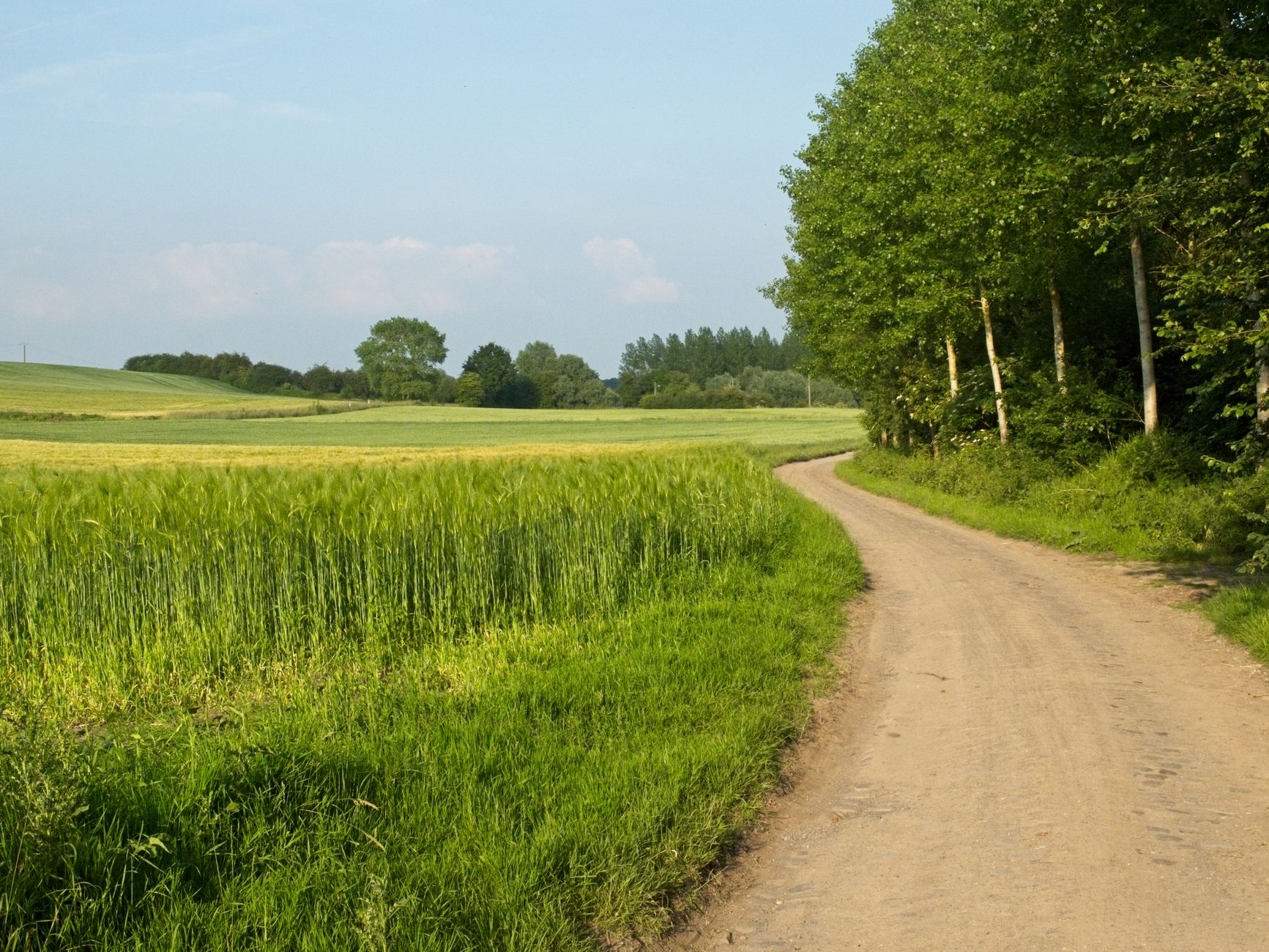
How much ground can a robotic mower cover on a 40 acre farm?
A market research report says professional robotic mowing platforms can maintain up to 50,000 square meters per installation in 2025. That is roughly 12 acres. It is a market claim rather than a measured field result, and it describes what a single professional installation may handle, not what your maze needs.
You do not need a robot for all 40 acres. The maze paths and their edges are a fraction of the farm, so the real question is whether one unit can cover that footprint on the repeat schedule you need. Sketch the maze on a map, add up the path length and edge length, and compare that with the working area the vendor quotes for the machine.
No official national count or acreage survey of commercial robotic mowers in maze or agritourism use was found. Treat market figures as directional. The useful test is to measure your path widths, total the path length on the map, and time one full crew repeat cut. Those three numbers will tell you more than any industry average.
- Repeat cut between weekends
Robotic Lawn Mower
Runs the same mapped path on a schedule, with no crew hours spent on the repeat pass
Staff
Can respond to a lane that needs attention right now and adjust the cut on the fly
- Standing corn walls
Robotic Lawn Mower
Does not cut mature corn, so it cannot take down a lane blocked by crop
Staff
Clears leaning corn with hand tools or a crop suited mower
- Narrow or irregular lanes
Robotic Lawn Mower
Needs a clear working width and can stall or leave strips on tight turns
Staff
Works around corners, dead ends and narrow sections by hand
- Visitor contact
Robotic Lawn Mower
Predictable path when the work zone is closed off and the run is scheduled
Staff
Reads a crowd, steps aside and speaks to visitors who wander into the work
- Changing a lane layout
Robotic Lawn Mower
Needs remapping and a site test before the new path is run
Staff
Can adjust a path layout on the spot without a remap
How accurate is robot positioning in a corn field?
Robotic mowers steer by satellite positioning. According to an independent accuracy guide from 2026, plain GPS without corrections is roughly meter level, while real time kinematic correction, called RTK, typically brings that to a few centimeters. Manufacturers often quote 1 cm plus 1 ppm horizontal accuracy, which means the error grows with distance from the base station.
Corrections come from an on-site base station or a network RTK service over Wi-Fi or 4G. Tree canopy and reflections are the usual weak points. When the signal drops from fixed to float status, the guide notes that boundary hesitation and missed strips can follow. That matters most where lanes run close to tree lines or buildings.
The same guides point out that accuracy figures come mostly from garden and consumer mowing, not from maze lanes or row crops. We have not verified how standing corn affects the signal, so test it on your own ground. Some guides say a boundary wire can be more dependable where signal is poor, and that is a choice to weigh at the site visit.

What does mowing a maze take today?
Maze operators have long used zero-turn mowers and tractors. One farmer who cuts mazes with a GPS-equipped zero-turn mower, modified for corn about 2 to 3 ft tall, reports a 5 ft minimum cutting width as the main equipment limit. The same account reports that a tractor cut the time to mow a maze from about a month to about one day, a figure that is reported and not independently verified.
Smaller operators take another approach. They mark the field like graph paper and mow paths section by section, sometimes with a 3 ft deck, a 5 ft deck and hand hoes for detail. That method shows where the time really goes: the layout is worked out first, then the straight cuts, then hand finishing at the corners and dead ends.
Any robot has to fit that same sequence. A robot can run the straight cuts between weekends if the layout is already mapped and the working width clears the lane. It cannot replace the layout work, and the corners and dead ends still need someone with a hand tool.
Are robotic mowers safe around visitors on busy weekends?

Mowers injure people, and a maze crowd is a reason to take that seriously. According to a 2018 study indexed on PubMed, covering 2005 to 2015 emergency department visits for lawn mower injuries, laceration was the most common injury at 23.1%, followed by sprain or strain at 18.8% and soft tissue injury at 14.8%. Ride-on mowers were identified in 18.8% of cases, and for 72.3% the mower type was not specified.
Those figures describe mowers in general, not robots, and the study does not measure visitor contact in maze settings. The lesson still applies to any mowing near people. Schedule robot runs for times when no visitors are on the lane, close off the work zone with signs or fencing, and confirm exactly how the machine stops when a person or object blocks its path.
Ask for a live demonstration of the stop behavior on your own lanes before the first busy weekend. Treat that test as part of the site assessment, not a box to tick on a brochure.
How does a robot lease work for a corn maze farm?
Service Robot Co. is a full service integrator for US businesses. We pick the right robot for the site across manufacturers, lease it through financing, deploy and integrate it, train your staff, and service every unit under our service plan. Regional service engineers cover every state we service, so one partner handles the full lifecycle rather than several vendors.
The process starts with a free site assessment. We map the lanes, measure widths, check the ground and the satellite signal, and note where visitors walk on busy weekends. The payment comes in a quote after that assessment, so no figure is given before we have seen your site.
A lease spreads the cost of the machine over a fixed term and bundles service into the agreement, which suits a seasonal operation with a short working window. A pilot on one lane zone is a sensible first step. It tests the layout, the signal and the crowd behavior before you commit to the whole maze.
What does the wider market say about maze and mowing work?
The sector is real. According to the 2024 Penn State data brief built on the 2022 Census of Agriculture, 28,617 agricultural operations had earnings from agritourism or recreational services in 2022. Gross receipts from these activities rose 33% from 2017 to 2022. The brief also notes that the census definition does not capture all agritourism on working farms, so the count is a floor.
There is no official count of corn mazes. A 2014 industry article said no one has an accurate count and estimated up to 800 mazes in North America. That is an old figure, and it is not US specific, so use it only to show how little hard data exists. Your own maze is a better measure of the job than any national estimate.
On the robot side, a market research report estimates a 10.20% compound annual growth rate for commercial robotic lawn mowers, though that estimate has not been verified against a primary source. A trade article reports more professional landscapers switching to robotic mowing because of staffing challenges, without giving a figure. That is the same pressure a seasonal maze crew feels when weekends come fast.
When is a robotic mower the wrong fit for a maze?
Be honest about the cases where it does not fit. If the lanes are narrower than the machine working width, the robot will stall or leave strips uncut, and a crew will end up finishing by hand. If mature corn has leaned into the path, the lane needs clearing before any repeat cut makes sense.
A robot will not fix the design. Lanes that visitors cannot follow are a layout problem, and no mower corrects a confusing map, missing signs or a dead end that looks like a path. Keep the crew for the first cut, the corners, the dead ends and any repair after storms, and let the robot handle the repeat work on the mapped lanes.
The fit is strongest when the maze has wide, mapped paths and the farm already mows field edges on a schedule. If that is not true yet, start with one lane zone and check the results on a busy weekend before you widen the scope.
- Lanes narrower than the machine working width
- Mature corn leaning into the path
- Weak satellite correction across the site
- A confusing layout that the mower cannot fix
Frequently asked questions
Want a robotic mower at your corn maze farms?
Tell us about your site. We will recommend the robot, quote the lease, and keep it serviced.
Sources
- 2024 Penn State NERCRD agritourism data brief
- Farm show article on GPS maze mowing
- Mississippi State University Extension corn maze page
- Market research report on robot lawn mowers
- Independent RTK accuracy guide for robot mowers
- PubMed study of lawn mower injury emergency visits
- 2014 industry article on corn mazes
- Green Industry Pros trade article on robotic mowing