

The question, in the buyer's words
Our 14-acre retail shopping center has landscaped islands and berms that the crew can't keep up with between April and October; could robotic mowers handle those islands around light poles, planters and curbs?
Key takeaways
- Robotic mowers suit the open turf on a retail center's islands and berms, not planting beds.
- Light poles, curbs and planters need boundary setup, and the layout drives how much work stays by hand.
- Slope ratings decide which berms are workable, so measure every berm before any quote.
- Your crew keeps trimming, edging, bed work and steep ground, while the mowing passes move to the robot.
- A free site assessment maps the islands and sets the lease quote.
Can robotic mowers handle landscaped islands at a retail center?
A retail center with landscaped islands and berms has a mowing problem that comes back every year. Grass grows fastest from April through October, and each island adds edge work around light poles, planters and curbs, so the same spots fall behind season after season. Robotic mowers can take a real share of that load, but only on the turf portions of the islands and only when the site is set up for them.
We will be direct about the fit. Robotic mowers do well on open lawn, moderate slopes and clear boundaries. They do not replace hand trimming around fixed objects, shrub and planter beds, or mulch, and they do not repair thin turf or bare soil. Your crew still matters, and the useful question is which hours move to a robot and which stay with people.
Most of the answer depends on what your islands are made of. Two islands with the same footprint can need entirely separate work if one is open turf and the other is dense planting with a light pole in the middle. The sections below walk through each part of the job, from the grass itself to the edges, slopes and safety.
How many retail centers have this mowing problem, and how tight is the labor?
According to the International Council of Shopping Centers, the US has 113,309 shopping centers with 7,483 million square feet of gross leasable area, a figure its infographic gives without a date. Many of those centers have landscaped islands and berms that need regular mowing, so the problem you describe is common rather than unusual. A 14-acre center is mid-sized, and the mowing share of that acreage depends on how much of it is turf and how much is beds.
Labor is the constraint behind most complaints like yours. The US Bureau of Labor Statistics reports about 1.3 million grounds maintenance jobs in 2024, including 1,192,500 in landscaping and groundskeeping, and projects employment growth of about 4 percent from 2024 to 2034, which it describes as about as fast as average. Steady growth in the field does not make hiring easier, because landscapers and groundskeepers compete with every other grounds employer in your area for the same people.
Trade data points the same way. In the 2025 State of the Green Industry report from Green Industry Pros, 29 percent of 424 respondents named labor as their most pressing concern. A crew that falls behind every growing season is a common failure, and that is the gap a robot can narrow, though it does not fill it alone.
- Open turf passes
Robotic Lawn Mower
Runs on a set schedule, including early hours when shoppers are gone, and holds grass at a steady height
Staff
Works daytime shifts, adjusts to weather and can mow uneven ground with the right machine
- Trimming around poles and planters
Robotic Lawn Mower
Stops at the boundary and cannot trim the base of a pole or a planter wall
Staff
Trims tight to fixed objects by hand with precise results
- Steep berms
Robotic Lawn Mower
Limited by the rated slope and by how the boundary is set up
Staff
Can work steeper ground with the right machine, though fall risk rises on slopes
- Setup effort
Robotic Lawn Mower
Needs mapping and boundary installation before the first pass, and layout changes mean rework
Staff
Needs onboarding and a route plan, with little fixed setup
- Wet grass and weather
Robotic Lawn Mower
Performance varies with conditions, and the unit may pause
Staff
Cuts when conditions allow and decides when to stop
- Noticing damage or litter
Robotic Lawn Mower
Does not reliably spot litter, broken sprinkler heads or debris
Staff
Spots litter, damage and broken heads on each pass
Which parts of the islands suit a robotic mower?
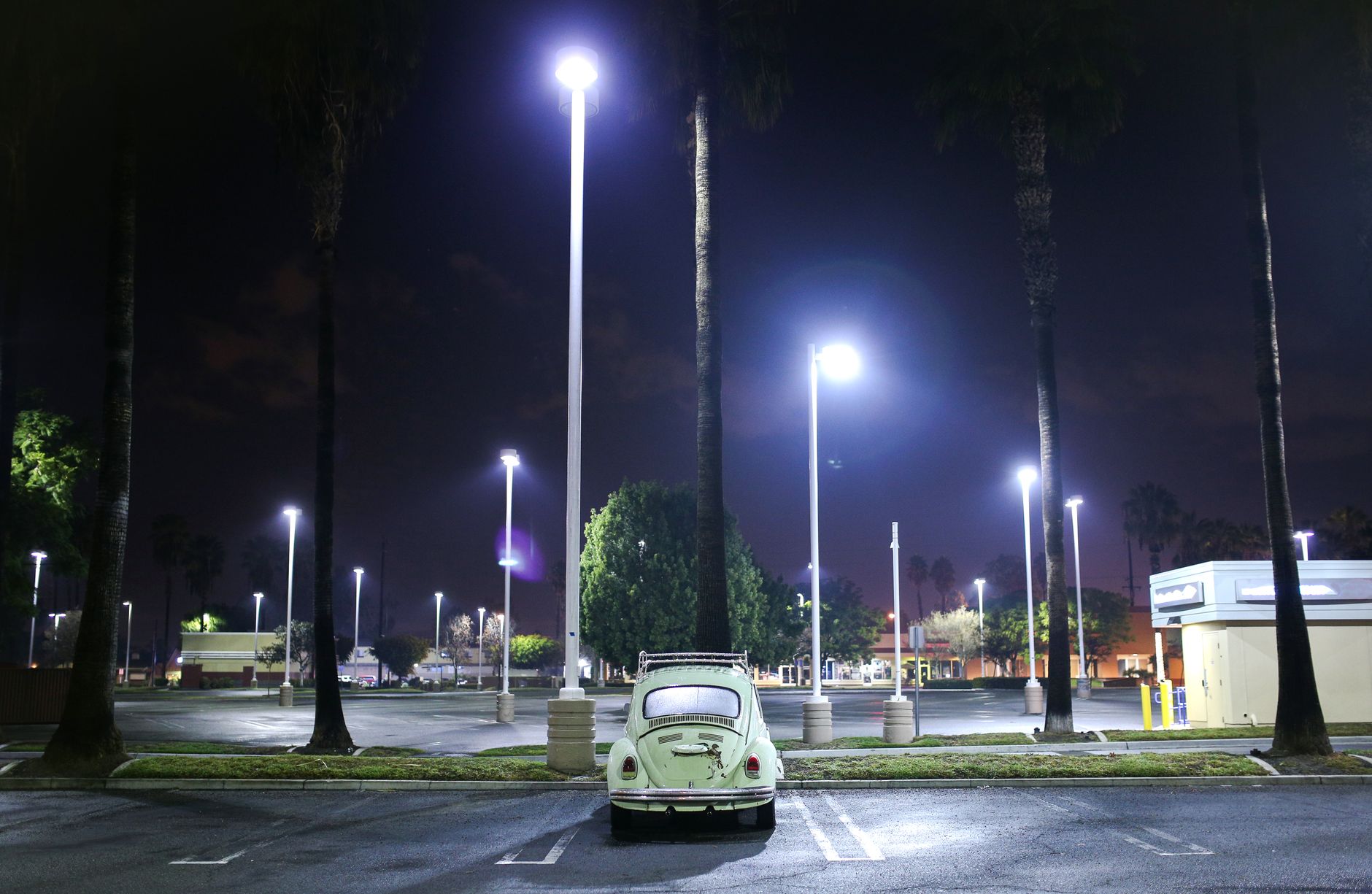
Start with the turf. A robotic mower works best on open grass that it can cover in a regular pattern, with clear edges and few small obstacles. Flat islands and gentle berms fall in that group. Islands that are mostly shrubs, perennial beds or mulch fall outside it, because the mower cuts grass and does not trim around plants.
Light poles and curbs are workable but need planning. The mower needs a boundary that tells it where the grass ends, and each light pole is a fixed object that needs clearance and often hand trimming at its base. Curbs are usually the easiest edge to define, because the hardscape gives a firm line, while a planter on a plaza or storefront sits in paving that needs its own boundary or a person with a trimmer.
Walk each island with a list. Mark which edges are curb, which are pole, which are planter wall and which are open grass. The mix tells you how much of the work will be robot work and how much stays hand work, and it is the first input we need for any quote.
How are boundaries set up around light poles, planters and curbs?
Most commercial robotic mowers rely on a boundary, either a buried perimeter wire or a satellite positioning system with mapped zones. A University of Florida IFAS study at the West Florida Research and Education Center in 2018 tested turfgrass quality under a robotic mower guided by a buried perimeter wire, and the authors reported only preliminary observations. That shows the method has been tried on turf, not that it has been proven on a particular retail site.
Installation is where much of the labor sits. An industry article on commercial robotic mowing says perimeter-wire installation is reliable but labor-heavy, that the wire must be re-run when the layout changes, and that the approach pays off least for accounts mowed infrequently. Islands with many light poles, planters and curbs have more boundary runs to route, and each change to a bed means reworking part of the wire.
Satellite-based setups avoid some of the wire work but bring their own limits, which the next section covers. Either way, the boundary is what makes a light pole island workable, so the boundary map should match the poles, planters and curbs as they actually sit, not as drawn on an old plan. Our site assessment maps the islands before anything is installed, and we check the map against the ground.
How well do robotic mowers handle berms and slopes?
Slope is where most berms get decided. Vendor-reported ratings for consumer wire-free units run as high as 80 to 84 percent slope, about 38 to 40 degrees, while some are rated 45 to 57 percent, according to an aggregated review page. Those are consumer units and vendor figures, so treat them as a starting point, not a promise for your berms.
Ratings also depend on conditions. A reviewer observed occasional satellite signal dropouts, and most units pair satellite positioning with LiDAR or vision so the mower can work near tree canopy and building edges. Ask any supplier for the slope rating on your grass, wet or dry, and whether the unit holds its path on the berm side you care about.
Berms that exceed the rated slope stay with people. A walk-behind or ride-on machine, handled by a trained operator, still makes sense for those sections, and the robot takes the flatter turf around them. Measure each berm with a level or survey tool before you decide, because a berm that looks gentle from the parking lot can have a steep face on the side toward traffic.
What stays with the crew after a robot is installed?
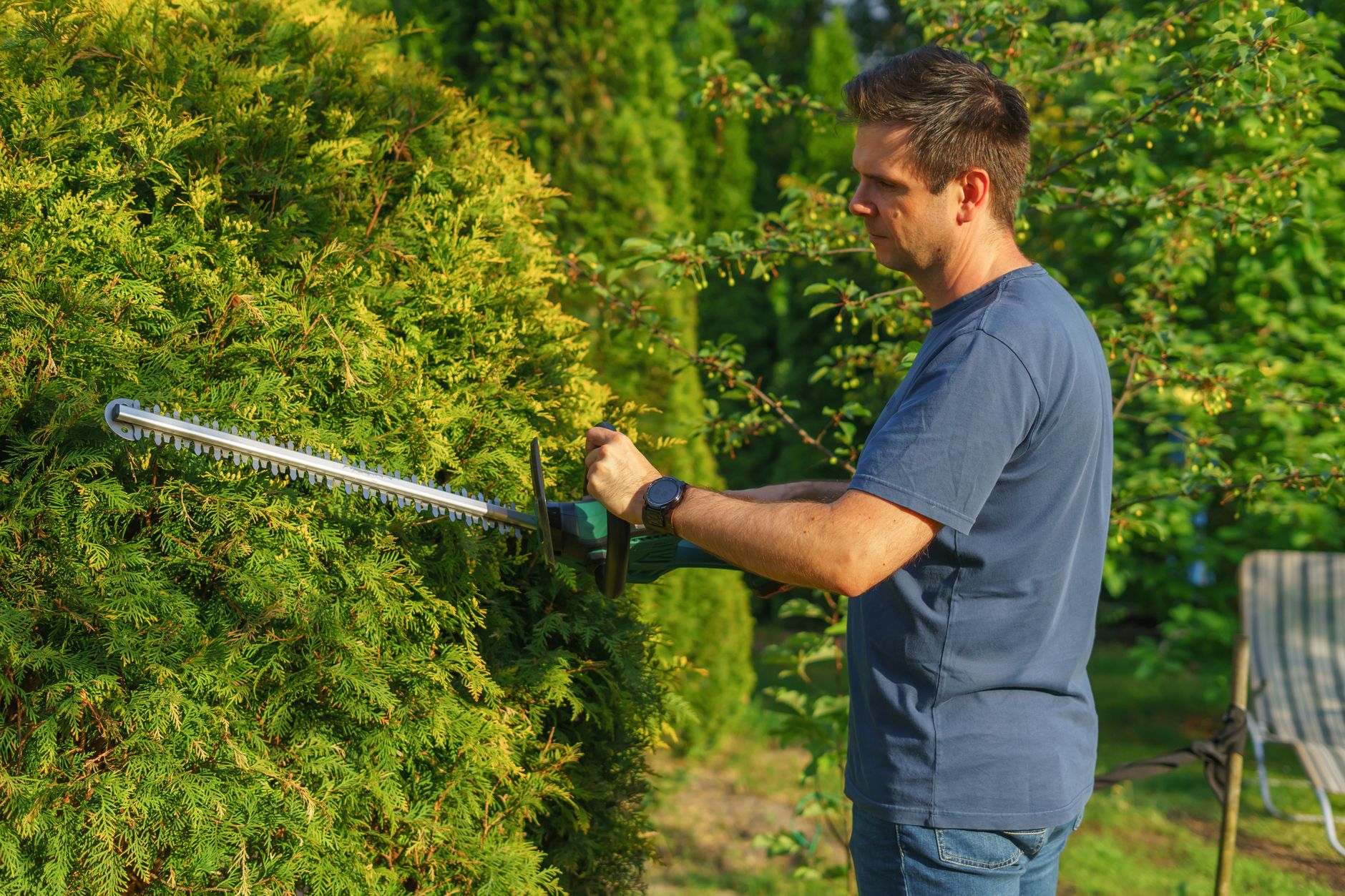
Robotic mowers take the mowing passes and not much else. Hand trimming around poles and curbs, edging at hardscape, bed weeding, pruning, leaf and litter pickup, and sprinkler repair all stay with people. That list is where islands usually look neglected, so the crew's time shifts rather than disappears.
Plan the schedule around the robot rather than against it. Put people on trimming and bed work during the spring rush and let the mower keep the turf at height, so the grass stays even while the edges get attention. Wet days and slope work also need a plan, since the crew has to cover the berms and any turf the mower skips.
A useful way to frame the split is by who does what on each island. The mower handles open turf on a schedule, people handle the edges, beds and steep ground, and the site manager checks the boundaries after storms. Each role is small, but together they keep the islands from falling behind.
Is the labor and safety case strong enough to justify a robot?
Grounds work carries real injury risk, and that is part of the case for less hand mowing. According to CBS17, reporting on federal data from the US Bureau of Labor Statistics, 239 grounds maintenance workers died on the job in 2024. The fatal rate was 20.9 per 100,000 workers, up from 13 per 100,000 in 2014. Deaths split roughly evenly among transportation incidents, falls, and contact with heavy equipment.
A mower reduces the time a worker spends on slopes and around running equipment, but it does not remove the hazards on its own. Berm work, traffic near parking lot edges and the setup of boundaries all still need a trained person. Treat the safety gain as real but conditional, and write it into the site plan rather than assuming it.
Staff who work near a robot also need a plan. Keep foot traffic out of the mowing path, especially along parking lot edges, and make sure everyone knows how to stop the unit. These steps take little effort, and they matter most in the first weeks of operation.
How do we get a robotic mower on the islands?
We begin with a free site assessment. We map the islands, measure the berm slopes, note every light pole, planter and curb, and separate turf from beds. The assessment tells you which islands suit a robot, how many units the site needs and what the boundary setup will involve.
After the assessment we send a quote. The robot is leased through financing, and we handle deployment and integration, train your crew, and service every unit under our service plan, with regional service engineers in the states we cover. The quote depends on the site, so it is the number that should drive the decision.
Start small if you are unsure. One or two islands run for a full season will show how the mower handles your grass, your slopes and your boundaries, and will give you real hours to compare with the crew's time. Measure it on your own grounds rather than relying on a general figure from anywhere, including us.
Frequently asked questions
Upcoming property management events
- Trade showMinnesota Buildings & Facilities Management Trade ShowNov 19, 2026Minneapolis Convention Center, Minneapolis, MN
- WorkshopIREM Boston Chapter No. 4 Fair Housing Corporate OfferingDec 2, 2026The Simon Companies, Braintree, MA
- ExpoMontana Green EXPO 2027Jan 5 to 7, 2027Hilton Garden Inn, Missoula, MT
- ExpoPittsburgh Remodeling ExpoFeb 5 to 7, 2027Acrisure Stadium, Pittsburgh, PA
Want a robotic mower at your shopping center landscaping?
Tell us about your site. We will recommend the robot, quote the lease, and keep it serviced.
Sources
- ICSC shopping center infographic
- US Bureau of Labor Statistics, Occupational Outlook Handbook: Grounds Maintenance Workers
- Green Industry Pros, 2025 State of the Green Industry
- UF/IFAS West Florida REC, robotic mower turfgrass field day
- Applause, robotic mowing in commercial landscaping
- CBS17, grounds maintenance deaths and federal data
- Cleveland Heart, consumer robotic mower review aggregator