
The question, in the buyer's words
I manage 22 apartment communities, and summer growth on our retention pond berms is outrunning a two-person crew; could robotic mowers handle steep berm edges without rutting the banks after a heavy rain?
Key takeaways
- Robotic mowers suit berms under the model's rated slope, not the steepest banks.
- Published slope limits run from 25 percent on sudden drops to 45 percent on the most capable listed models.
- Wet ground is the real rutting risk, so hold the robot until the soil firms.
- County minimums of two or three cuts a year are floors, and summer growth will often exceed them.
- Keep a person on steep edges, outlets and storm repairs, and let the robot cover the moderate bands.
Can robotic mowers handle apartment retention pond berms at all?
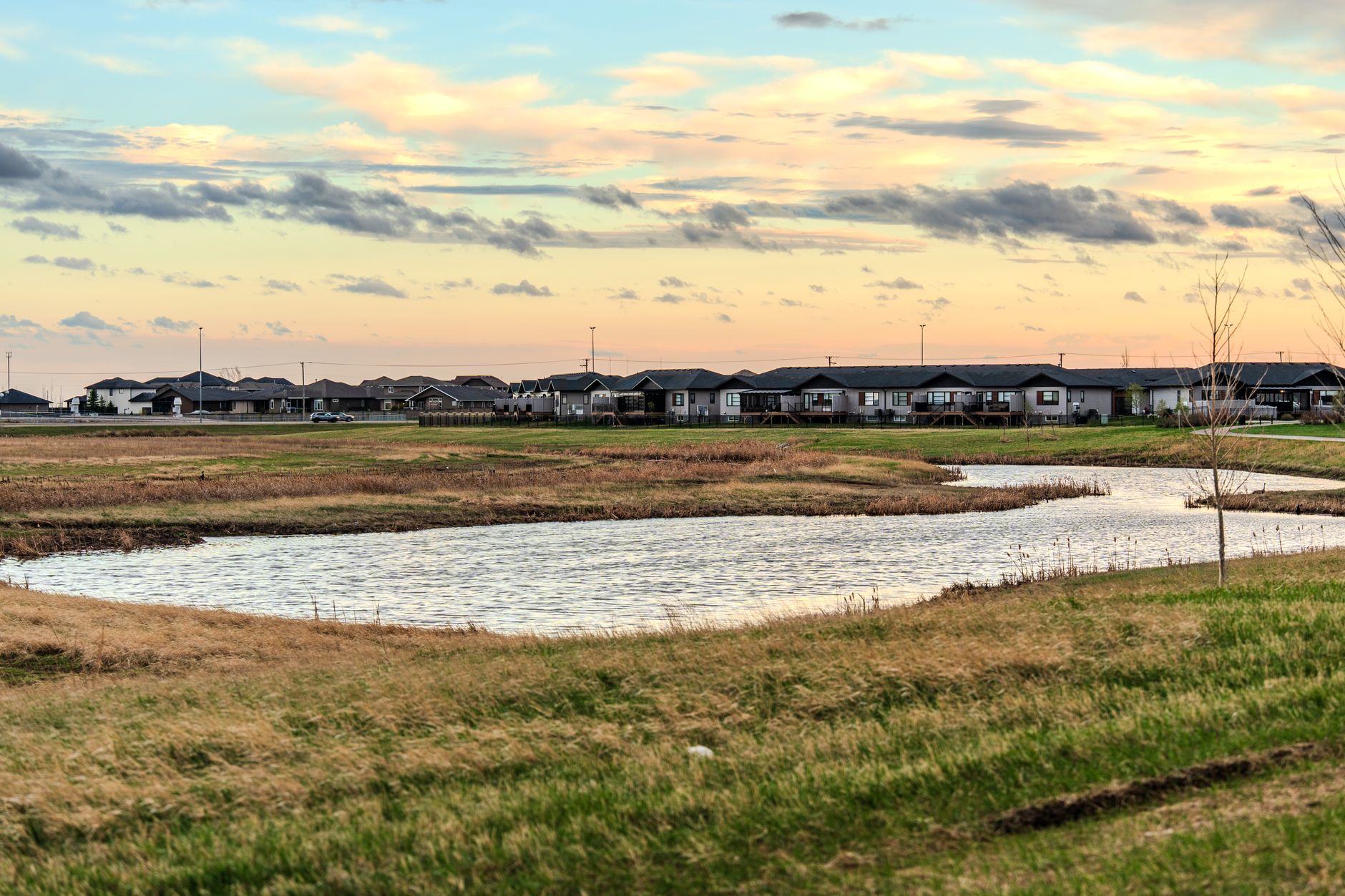
Partly, and the split is useful for planning. A retention pond berm is a raised bank of mown turf between the pond and the parking lot, lawn or walking path. The flat top and the gentler side bands are the same kind of grass a robotic mower already handles well. The steep side that drops toward the water is where slope limits, traction and rutting decide what a robot can safely do, and where your two-person crew still earns its keep.
Your question has two parts that need separate answers. The first is whether the mower can climb and hold a line on the bank. The second is whether repeated passes on wet soil will leave ruts and bare channels that then erode. The evidence is much stronger on the first question than on the second, so plan to test rather than assume.
Pond banks also carry a regulatory side. Stormwater rules often treat the embankment as maintained infrastructure rather than ornamental lawn. That means the mowing has to happen on schedule, and erosion repairs have to happen once the ground slips. A robot that cuts on time is useful only if it does not create the erosion the rules are meant to prevent.
What slope can a robotic mower climb on a berm?
Slope is the first gate. Manufacturers publish a maximum working slope for each model, and the figures do not all describe the same condition. One owner manual lists a specified working slope of 45 percent and warns that accessibility on steeper ground cannot be guaranteed. Another manual lists a 40 percent limit for climbing upward, and a separate 25 percent limit for ground that drops off suddenly.
Other models publish lower figures. A product page lists an incline limit of 35 percent, and a separate robotic mower manual shows a lawn-slope table topping out at 35 percent. Retail listings across several models show maximums of 35, 27 and 45 percent. The spread matters more than any single number, so read the limit in the manual for the exact model you lease.
Slope is measured as rise over horizontal run. A 25 percent grade means one unit of rise for every four units of run, and percent and degrees are not interchangeable. Measure with a level and tape or a digital inclinometer on the actual bank, not on a site plan. Measure the steepest line the mower would have to climb, from the crest down to the waterline.
Wet ground lowers the effective limit. A vendor blog warns that running at the top of the rated slope for long periods strains the motor and increases wheel slip, and that wet grass reduces traction even within the rated limit. Treat the manufacturer figure as a ceiling for dry, firm turf, not a safe working value on a soaked bank.
Will a robotic mower rut a pond bank after heavy rain?
Rutting is the risk that matters most after a storm. Wheels pressed into saturated soil can cut grooves that channel runoff and expose bare soil, and bare soil on a berm can erode quickly. The honest answer is that the evidence here is thin. No peer-reviewed study measuring robot rutting on wet pond banks turned up in this research pass.
What exists is a single trial. A small Norwegian field test on moist soil after rain found the robot left no substantial marks. One trial on one soil type is a reason for hope, not a result you can plan a portfolio around. Manufacturer statements that robot mowers are usually light enough not to compact soil are vendor claims. Weight helps, but soil moisture and slope matter more.
The field check matters more than the spec sheet. Before any robot pass after rain, walk the bank and look for these signs. If you see them, hold the robot until the ground dries.
- Spongy footing that gives under a boot
- A squelch with each step
- Water or mud standing at the surface
- Deep footprints where you walked

How often do county rules require pond embankments to be mowed?

Local rules set a floor on the work, not a ceiling. In Howard County, Maryland, private pond embankment top and side slopes must be mowed at least twice a year, in June and September. Leon County, Florida, mows its stormwater ponds three times annually and leaves the clippings on site. Your communities may carry their own association or permit conditions, so read each stormwater agreement rather than relying on one county's schedule.
Summer is where the schedule breaks. Growth outruns a twice-a-year minimum, and a two-person crew working to a fixed calendar will run short of hours before the grass stops. A robot changes the math only if it can hold a steady cadence across the banks. Set the cadence from measured growth first, then count the passes it requires.
Erosion sets a second threshold. Pierce County, Washington, treats erosion damage more than 2 inches deep, with an active cause, as the point where repair is required, and its listed repair methods include rock reinforcement, grass planting and compaction. A bad pass that leaves a rut or bare channel can start that clock, so a rut is a maintenance cost, not a cosmetic issue.
Inspect the banks regularly as well. Lincoln, Nebraska, asks that side slopes be checked for sparse cover, erosion or slumping, with repairs made immediately once a problem is found.
How does a robotic mower compare with a crew on steep berms?
A robot is better at repetition, and a person is better at judgment on a bank. The robot runs on schedule over the flat and moderate bands, does not tire, and can work outside the crew's hours. A person can see a washout forming, stop before a drop, trim around an outlet or inlet, and decide whether the ground is firm enough to proceed.
The comparison below is deliberately even-handed. The robot's advantage is steady coverage across many communities. The crew's advantage is the exceptions, and on pond banks the exceptions carry most of the risk.
- Steep bank near the water
Robotic Lawn Mower
Limited to the rated slope and needs mapped stay-out zones at the drop
Staff
Can work the edge with a trimmer and read the footing, with fall risks managed by training
- Wet ground after rain
Robotic Lawn Mower
Can rut unless a footing check holds it back
Staff
Can also rut, but can judge footing and stop before damage
- Off-hours coverage
Robotic Lawn Mower
Runs on a timer without a crew on site
Staff
Needs scheduled staff or overtime to match
- Pattern across cycles
Robotic Lawn Mower
Repeats programmed routes exactly unless the route plan changes direction
Staff
Varies the pattern by feel, which can help or add inconsistency
- Storm inspection and repair
Robotic Lawn Mower
Cannot judge erosion or slumping
Staff
Spots sparse cover, slumping and washouts early
- Coverage across 22 communities
Robotic Lawn Mower
Steady, frequent light cuts on moderate bands
Staff
Limited by hours, fatigue and crew size
Where does a robotic mower fit a two-person crew schedule?
Start by deciding which work to hand off. Put the robot on the moderate, dry berm bands that repeat every cycle. Keep the crew on steep edges, drop-off lines, outlets, wet days and any spot that needs a trimmer. That split lets two people cover the exceptions across the whole portfolio rather than spending their days on routine bands.
A robot does not remove the need for inspection. Someone still has to look at the banks after storms, check for sparse cover, erosion or slumping, and repair it while the damage is small. A schedule that drops inspection will miss the damage that stormwater rules were written to prevent.
Roll out community by community. Begin with a few sites that have moderate berms, learn how the robot handles your grass and soil, and expand only after the wet-day rule has held through a full storm season. Confirm that each pond's slope fits within the limits before committing the whole portfolio.
What safety rules apply to robotic mowers near pond edges?
Safety starts with the people on the bank. Secondary sites citing federal data report that landscaping services had about 3.0 total recordable cases per 100 full-time equivalent workers in 2024, compared with 2.3 for all private industry. Verify that figure in the BLS Survey of Occupational Injuries and Illnesses table before you put it in a board memo.
The occupation as a whole carries real risk. A BLS snapshot of landscaping and groundskeeping workers for 2015 to 2019 recorded 185 days-away cases per 10,000 full-time equivalent workers in 2019. That measure differs from the total recordable rate above, and the years do not match, so treat the two as separate signals rather than one trend.
A robot removes a worker from some hazards and adds others. Pond edges have drops, and a mower that stalls or gets confused near the water is its own hazard. Manufacturer support guidance describes stay-out zones around areas steeper than the mower's limit. Set mapped zones at the waterline, keep people off the bank while the robot runs, and do not rely on the mower alone to sense a drop.
How do you lease and service robotic mowers for apartment communities?
We are a full-service integrator, so we pick the robot for each site, lease it through financing, deploy and integrate it, train your grounds staff and service it. We are not tied to one manufacturer, which matters here because slope limits, boundary methods and drop handling vary from model to model.
The process starts with a free site assessment. We measure each berm's steepest line, note drops and outlets, check signal coverage and soil drainage, and map the zones. The quote follows that assessment and includes a fixed lease payment, so it reflects your specific banks rather than a generic lawn.
After the lease is in place, we deploy and integrate the units, train staff on the wet-day rule and the zone map, and keep each robot serviced under our service plan. Regional service engineers in each state we service handle on-site dispatch and remote triage, and spare units can cover downtime so a bank is not left unmowed at the summer peak. Ask for a pilot on a few communities before you commit all 22.

Frequently asked questions
Upcoming property management events
- Trade showMinnesota Buildings & Facilities Management Trade ShowNov 19, 2026Minneapolis Convention Center, Minneapolis, MN
- WorkshopIREM Boston Chapter No. 4 Fair Housing Corporate OfferingDec 2, 2026The Simon Companies, Braintree, MA
- ExpoMontana Green EXPO 2027Jan 5 to 7, 2027Hilton Garden Inn, Missoula, MT
- ExpoPittsburgh Remodeling ExpoFeb 5 to 7, 2027Acrisure Stadium, Pittsburgh, PA
Want a robotic mower at your apartment community retention ponds?
Tell us about your site. We will recommend the robot, quote the lease, and keep it serviced.
Sources
- Robotic mower owner manual, specified working slope
- Robotic mower owner manual, slope limits and drop-offs
- Howard County, Maryland, private pond guidance
- Leon County, Florida, stormwater maintenance practices
- Pierce County, Washington, stormwater pond maintenance
- BLS injury and illness snapshot, landscaping and groundskeeping workers, 2015 to 2019
- Landscaping services injury rate, 2024 (secondary, citing BLS SOII)
- Norwegian field test on robot mower soil marks after rain (abstract)