
The question, in the buyer's words
Our intermodal rail yard has weedy strips along the tracks and around fuel islands that crews can't reach with riding mowers between train moves; could robotic mowers work those strips without damaging ballast or the signal boxes?
Key takeaways
- Robotic mowers suit the outer strips and fuel island edges, not the ballast.
- Ballast needs chemical treatment by certified applicators, because mowing leaves roots alive.
- Map signal boxes, cable runs and sight lines as no-go zones before any run.
- No US commercial rail deployment or rail-specific mower safety rule was found, so start with a limited pilot.
- Bring on-track safety staff into the approval step from day one.
Can a robotic mower work intermodal rail yard strips and signals?
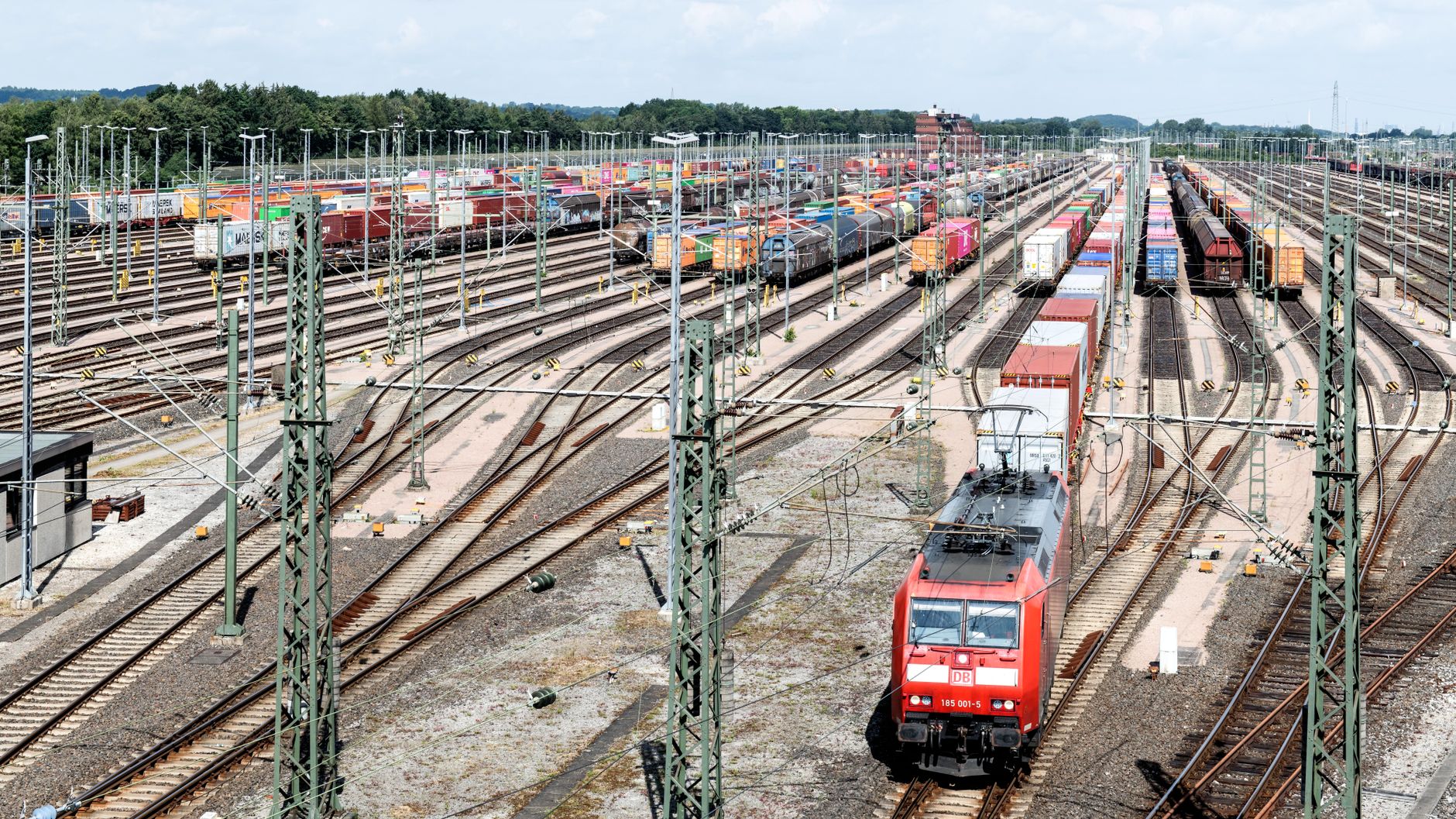
An intermodal rail yard has more kinds of weedy ground than most sites, and each kind needs a different method. The ballast is the crushed stone under and between the rails. Beyond it lie the shoulder and right-of-way strips, the switch areas, the grade crossings, the signal equipment and the fuel island edges. A robotic mower has a realistic job only on the open outer strips and edges where the ground is reasonably level and free of equipment that crews must still reach by hand.
Railroad vegetation plans give a sense of scale. According to a Class I railroad's US vegetation management FAQ, which is a company document rather than a regulator standard, the ballast section is 28 feet wide, with about 36 feet of right-of-way on each side. The mowable strip therefore sits in the right-of-way beyond the ballast, and the robot's route has to stop at the ballast edge every time.
The yard type itself is less common than many people assume. According to a 2015 transport geography analysis, not a federal count, about 2,270 US rail facilities perform some form of intermodalism, about 20% handle significant intermodal volume, and fewer than 10% are true intermodal container terminals. No current federal count was available to check, so treat those shares as a rough guide to how specialized your yard is.
Why can't a mower clear the ballast?
The ballast carries the track, so it is the zone railroads treat most strictly. According to a Class I railroad's Canadian vegetation management FAQ, another company document, the ballast section is the most critical area because it supports the track and must stay free of vegetation. The same FAQ says chemical treatment is the only proven way to fully clear it.
Mowing alone does not solve the ballast problem. The same FAQ says mowing or weed cutting does not remove roots and tends to encourage regrowth. A mower that cuts the top off ballast weeds leaves the root system that feeds the next flush, which may match what your crews see between mowing cycles.
Herbicide programs are usually structured around state rules. According to a 2026 Massachusetts operational plan for a railroad, the roadbed program aims to keep the ballast, shoulder, yards, switches, signals and highway grade crossings weed free. The state's regulation, 333 CMR 11.00, promotes Integrated Vegetation Management, and applicators must hold MDAR certification in Right-of-Way Pest Control. Your state may set different terms, so confirm the applicator's certification and the program scope with your environmental team.
How do robots work around signals, sight lines and cable runs?
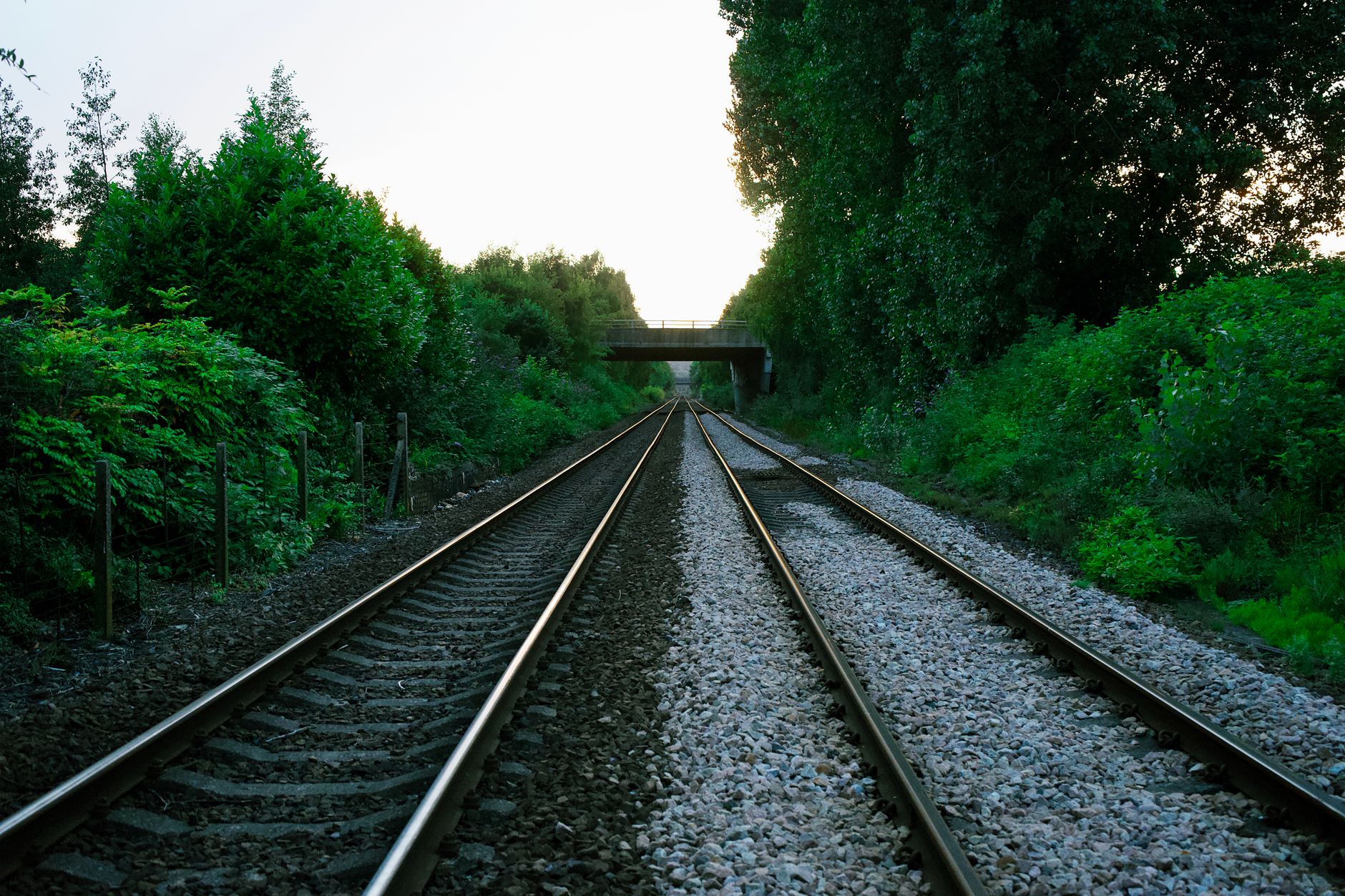
Signal boxes, cable runs and sight lines are where a robotic mower can cause the most trouble. According to the same Canadian FAQ, a Class I railroad trims vegetation outside the ballast to protect train crews' sight lines to signals and road crossings. A mower that cuts too low, runs too close to a signal foundation or lets growth creep into a sight line can damage equipment or leave a crew without the view it needs.
Setup starts with a map. The mower must know the boundary of every signal box, cable route, switch and crossing, and it must stop short of each one. Mapping and no-go zones are part of the deployment, not a feature to switch on later. Add buffers around crews, parked equipment and the fuel island, and set cutting heights that match what your engineers expect for those strips.
Sight-line rules are less formal than the ballast rules. No federal or industry engineering guideline on mower clearances around signals was found in this review, so the limits must come from your railroad's own engineering and signal staff. Ask them to write clearance limits for signals, crossings and cable runs in advance, and treat those limits as the baseline for every route the robot will run.
- Ballast weeds
Robotic Lawn Mower
Cannot clear ballast, and mowing leaves roots that feed regrowth.
Staff
Crew cannot clear ballast by mowing either, but certified applicators can apply treatment where the program requires it.
- Signal boxes and sight lines
Robotic Lawn Mower
Stops at mapped no-go zones but cannot judge an obstacle that is not on its map.
Staff
Sees changes in the field, reads signals and recognizes unmapped hazards.
- Gap-time coverage
Robotic Lawn Mower
Can run unattended in short gaps once mapped and scheduled.
Staff
Must be present for every gap and often moves between other tasks.
- Slopes and embankments
Robotic Lawn Mower
Tracked units exist for slopes in trials, but limits must be verified for your grades.
Staff
Riding mowers carry tip-over and slope risk, and walk-behind work is slow on steep ground.
- Rail worker safety
Robotic Lawn Mower
Adds equipment on or near track that needs its own on-track procedure.
Staff
Crew members are exposed to track risk themselves and need protection under the existing program.
- Wet turf and weather
Robotic Lawn Mower
Verified data for wet yard performance was not found, so check the unit's stated limits.
Staff
Can stop, judge conditions and adjust the job in rain.
Has anyone run robotic mowers in rail corridors?
Yes, but mostly in trials. According to a 2026 Russian news report, a railway tested three remote-controlled robotic lawnmowers with tracked chassis that move on slopes and cut grass and shrub growth. Tracked units are built for embankments, which is a different job from the flat, open strips in a yard.
Dutch rail work shows the same pattern. According to Dutch rail tender notices, a 2025 market consultation sought an autonomous mowing robot to mow inspection paths next to tracks. A 2026 tender listing also describes a mulching arm for a robotic mower that works in rail zones tractors cannot reach, and that mower is 1.35 metres wide.
The honest picture is that robotic mowing near live track has been tested in pilots. No US commercial deployment was found in this review, and no safety regulation specific to robotic mowers near live track was found either. A limited pilot on your own strips is the sensible first step, because it tests your grades, your signal layout and your crew's stop procedures against real conditions.
How much crew time could a robot free up in a rail yard?
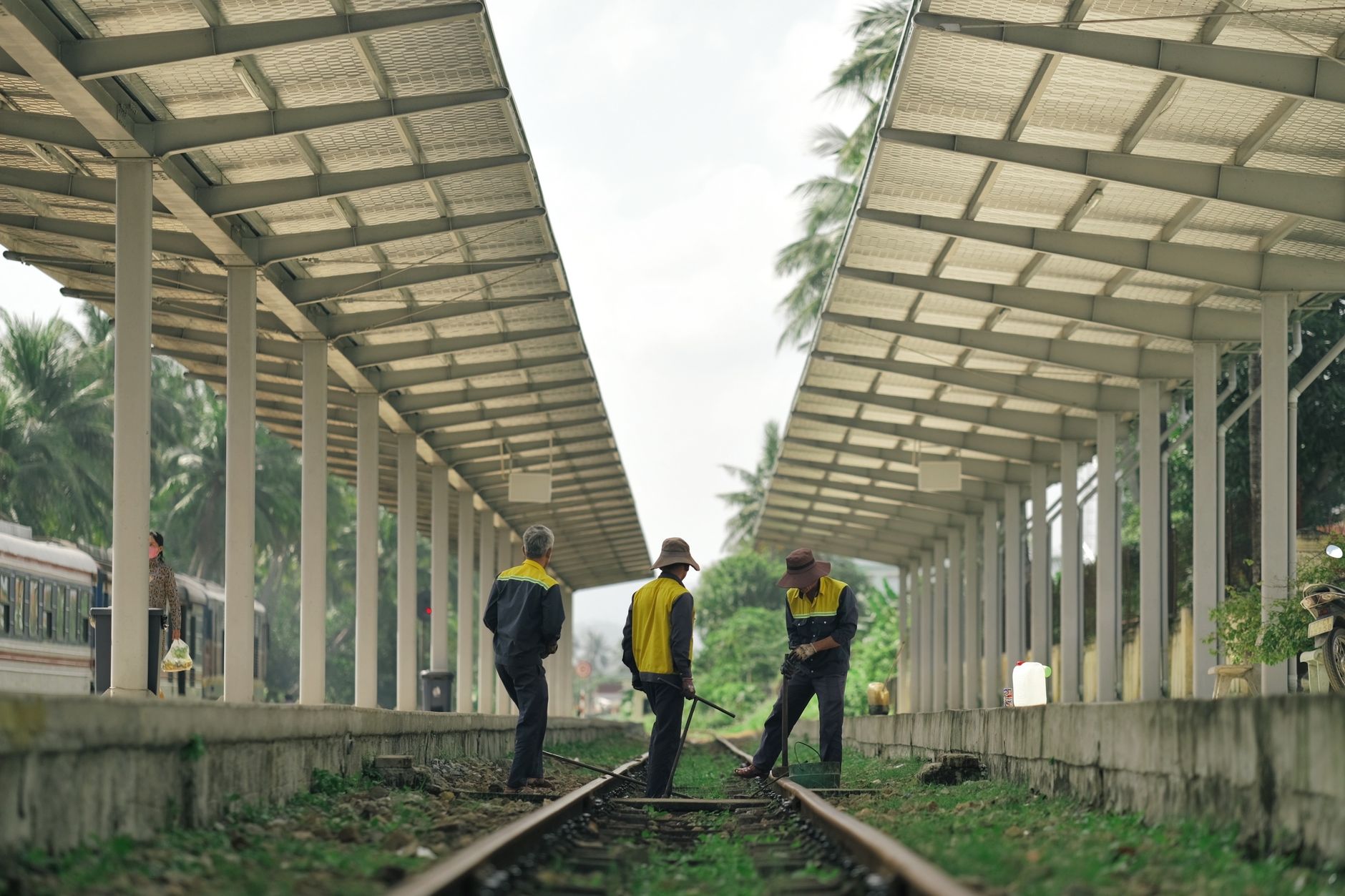
Your crews already work in short windows, mowing only in the gaps between train moves. That makes the real question less about total hours and more about whether the strips get cut often enough to stop regrowth from establishing. No published hour figure for rail yard mowing was found in this review, so the numbers you need will come from your own crew logs.
The closest published evidence comes from grounds work rather than rail. No rigorous study of labor hours saved by commercial robotic mowers was found in this review, and the anecdotal claims that exist come from individual contractors. Treat any hour estimate for your yard as a hypothesis to test in the pilot, not a number to budget on.
The larger payoff is probably coverage. A robot can run in the same gaps your crew uses, and if it runs on a fixed schedule, the outer strips are cut before weeds set seed. Track the weeks between cuts, the crew-hours spent on the strips each week, and the number of gaps missed, so the pilot shows the difference clearly.
What safety risks come with mowers near live track?
Riding mowers carry known hazards. According to the US Consumer Product Safety Commission's riding lawnmower fact sheet, riding mowers caused about 35,000 emergency-room-treated injuries a year from 2012 to 2014, and about 90 riding mower deaths a year from 2008 to 2010. The same fact sheet lists tip-overs, falls under or run over by the mower, and slopes as major hazards. A robot removes the operator from the seat, but it does not remove the slope or the site.
On a rail yard the bigger risk is the track itself. According to an FRA safety alert from January 2025, the Roadway Worker Protection rule at 49 CFR Part 214 Subpart C requires railroads to run on-track safety programs that protect workers from being struck by trains or on-track equipment. The same alert describes a January 2025 strike on a roadway worker at a California station by a passenger train. A robot on or near track counts as on-track equipment, so it belongs inside that program.
A robot will not substitute for the program. Plan hold or lockout steps for when the robot is active near a track, make sure remote operators can stop it immediately, and make sure crews can see and recognize the unit at a distance. Ask your safety office to rule on whether any robot on rail property needs its own on-track procedure before the first run.
What should you check before you decide?
Most of the decision depends on what grows in each strip. If ballast weeds dominate, a mower will not solve the problem, and you will need a chemical program run by certified applicators. If the outer strips and fuel island edges are open and reasonably level, a limited pilot has a realistic chance of working.
Check the physical site before any vendor visit. Grades, obstacles, cable routes and charging access all change what can run and when. Bring your railroad engineering and safety staff in early, so that clearance limits and on-track procedures are settled before a demonstration rather than after one.
Keep the herbicide program and the mowing program separate in your planning. The chemical team owns the ballast and the robot owns the outer strips, and both need to share the signal and crossing map so that neither crew works in an area the other has treated or mapped differently.
How would leasing and deploying a robot work for a rail yard?
We are an OEM-neutral integrator, so we select the robot that fits your yard rather than one a single manufacturer happens to sell. Our process starts with a free site assessment that maps the strips, the ballast boundary, signal boxes, cable routes, slopes and access points. The lease is quoted after that assessment, so you see the fixed payment with the scope attached.
Robots are leased through financing programs. The lease covers the unit, and the payment is set in the quote after the site assessment, not before anyone has seen your yard. Deployment is phased, so you can start with one leased unit on the outer strips and fuel island edges, run it in limited gaps, and expand only after the pilot numbers support it.
Our team trains your crew on supervision, stop procedures and the boundary map, and integrates the robot with your yard routine. Our service plan covers on-site dispatch and remote triage, backed by regional service engineers in every state we service, so a unit that stops in the field does not wait on a distant depot.
Frequently asked questions
Want a robotic mower at your intermodal rail yards?
Tell us about your site. We will recommend the robot, quote the lease, and keep it serviced.
Sources
- CN US vegetation management FAQ
- CN Canada vegetation management FAQ
- Massachusetts CSX railroad 2026 operational plan
- Transport geography analysis (2015, third-party)
- Russian news report on railway robotic lawnmowers (2026)
- Dutch rail tender notice 381604
- US CPSC riding lawnmower fact sheet
- FRA FAMES safety alert, January 10, 2025