
The question, in the buyer's words
Our farm equipment parts warehouse in Peoria, Illinois goes from 200 to 500 orders a day between February and May, and we can't hire enough seasonal drivers; could autonomous forklifts run the staging lanes during that surge?
Key takeaways
- Autonomous forklifts fit repeatable staging lanes, not the whole seasonal surge.
- The latest Peoria count I could verify is 5.8 thousand transportation, warehousing, and utilities jobs in 2024, down from 6.4 thousand in 2020.
- Forklift injuries cluster around people on foot, so zones and retraining come before go live.
- Size the fleet from measured cycle times, and treat any hour figure without floor data as a guess.
Can autonomous forklifts handle a Peoria farm parts warehouse surge?
A Peoria farm parts warehouse that climbs from 200 to 500 orders a day between February and May faces a volume rise of 2.5 times, and the staffing problem is the familiar one: seasonal drivers are hard to find and harder to keep through the whole peak. Autonomous forklifts can take over part of that load. Their strongest use is the repeatable move, pulling pallets or totes from the pick area and staging them in fixed lanes for the dock, which is where a surge tends to pile up first. They are not a full replacement for a surge crew, and the rest of this page explains why.
The local labor pool is not growing. According to FRED, the Federal Reserve Bank of St. Louis series for Peoria metro transportation, warehousing, and utilities employment, the count was 5.8 thousand in 2024, not seasonally adjusted, down from 6.4 thousand in 2020. That is a whole-sector figure, so it does not isolate warehouse drivers, but it points the same direction as your hiring problem. I could not find a 2025 or 2026 value in that series, so 2024 is the latest verified count.
Peoria's manufacturing base also shapes your demand. The Greater Peoria EDC reports, as its own count, 356 manufacturing locations across more than 21 NAICS classifications. That is a self-reported figure from an economic development group, so use it as context for local customers, not as a market size. Spring demand for farm equipment parts is tied to the planting and equipment calendar, which is why the surge arrives on a schedule you can plan around.
Which parts of staging work can a robot take over?
Staging lanes are where autonomous forklifts do their best work, because the moves repeat. The origin is the same, the destination is the same, the pallet footprint is the same, and the route can be mapped once and run every shift. Ask your team to split a normal day's staging moves into two lists: moves with an identical origin and destination, and moves that change by order. The first list is the robot candidate, and the second list is where people stay.
Robots struggle with exceptions, and farm parts orders produce plenty of them. A damaged carton, a mixed pallet that needs a person to read labels, a trailer not spotted where the lane expects it, or a part that needs a second look all stop a robot and call for help. Many parts orders are small mixed items, so much of the labor sits in picking and checking, not in the forklift travel. The robot removes travel. It does not remove judgment.
Lanes must stay clear for the route to work. Pallets staged at random, floor wrap left in an aisle, or a dock door open across the path will block a robot the same way they block a person on a forklift. Plan charging locations at the same time, since a unit that has to leave its lane to charge takes time away from the surge. A site assessment maps the floor, measures lane width and turning room, and notes where people walk on each shift, and it is free to you.
How many robots does a 2.5 times surge need?
The unit count should come from measured cycle time, not from a rough guess that one robot equals one driver. Take the number of staging moves in a shift, multiply by the time one move takes, add the time a unit spends waiting in a queue or returning for its next load, and compare the total to the shift length. Count three shifts, not one, since second and third shifts often carry different staging volumes. Run the calculation for an average spring day and for the busiest week, because the busiest week sets the fleet size.
Your own numbers are the input, and the table below lists the work to measure. I did not find verified hour figures for this kind of staging work in the sources I could check, so the table gives no hour counts. Pull the hours from your timesheets and lane logs, and let the site assessment time the robot side on your floor. Any hour figure that arrives without data from your own building is a guess.
Timing matters too. According to the Illinois State Water Survey, Peoria's average annual snowfall is about 26 inches, based on 1901 to 1990 records, and a snowfall of 6 inches or more is expected about once every 3 years. A February or March storm on the dock apron blocks the same path a robot uses, so the apron clearing plan belongs in the surge calendar, not in a separate facilities list.
| Task | Today | With a robot |
|---|---|---|
| Staging moves from pick area to dock lanes | Hours logged by your team, from timesheets and lane logs | Route time timed on your floor at the site assessment |
| Waiting and repositioning between moves | Idle time per shift, from lane logs | Queue time set by fleet count, confirmed at go live |
| Dock and trailer checks | Person hours per shift, from shift records | Still done by people, so not removed |
| Exception handling and relabeling | Person hours, from exception logs | Still done by people, and the robot calls for help |
| Shift start map check and zone walk | Not measured today | New step, timed in training |
No hour counts are given here because I did not verify them for this kind of staging work. Every today figure should come from your own timesheets and lane logs, and every withRobot figure from the site assessment and go live data.
Is it safe to run autonomous forklifts near seasonal staff?
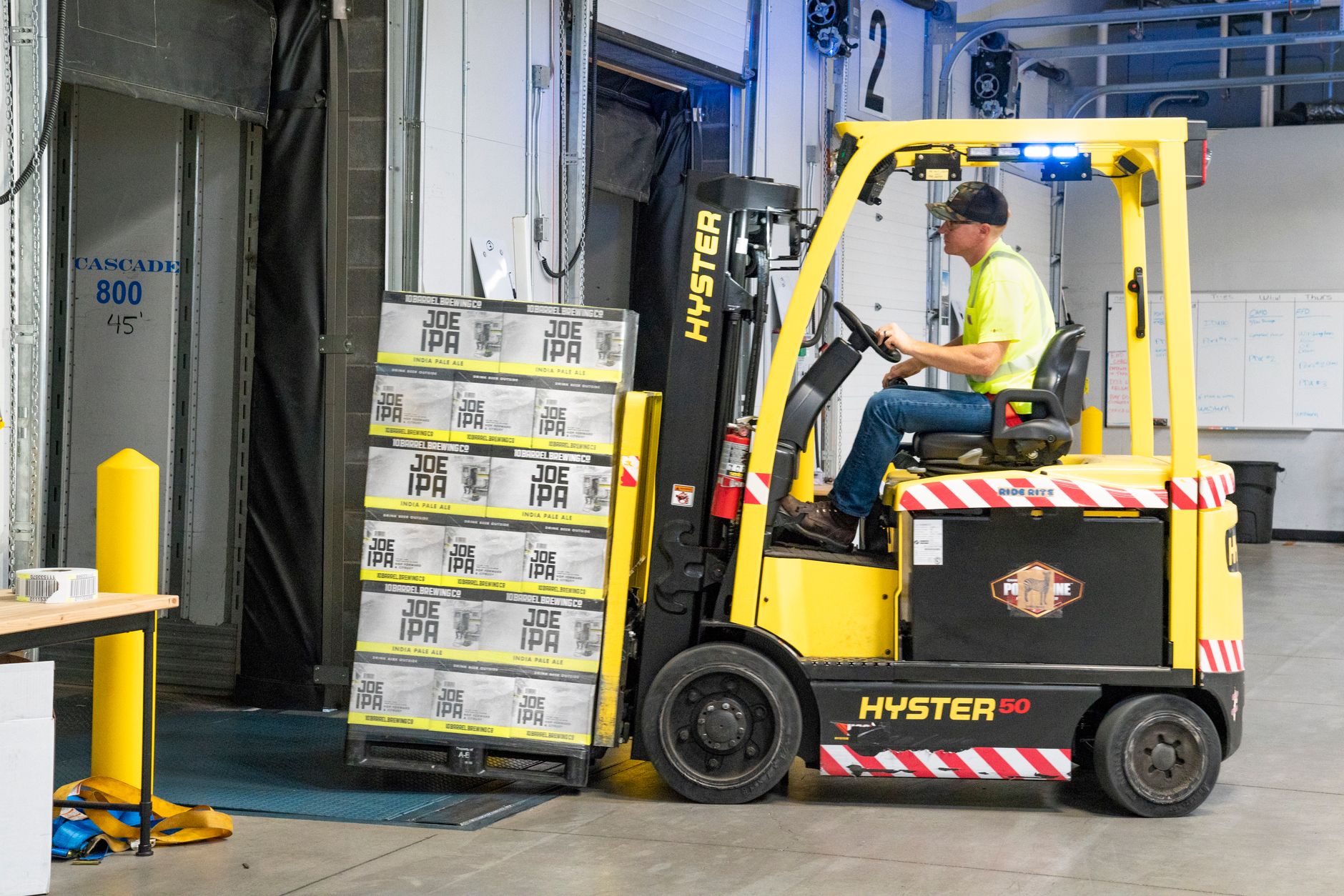
Forklifts are a serious hazard, and the fatal injury record is the first thing to understand. According to the U.S. Bureau of Labor Statistics, 74 fatal work injuries involved forklifts in 2017, and forklifts were involved in 9,050 nonfatal injuries or illnesses with days away from work that year. Those figures are dated, but the pattern they show still applies to any staging floor where people walk through the lanes.
The BLS breakdown of the fatal cases is useful for planning. Nonroadway incidents led with 20, followed by struck by powered vehicle, nontransport, at 13, and pedestrian vehicular incidents at 9. A robot removes the operator from the seat, but it does not remove people from the floor, so the staging design needs marked walkways, no-walk zones, and robot routes that keep clear of the spots where staff pick and check. Seasonal staff are the people most likely to step into those gaps.
OSHA requires an evaluation of each powered industrial truck operator's performance at least once every three years, under 29 CFR 1910.178. That rule is an evaluation, not full retraining. Refresher training is triggered by events such as an accident, a near miss, a changed truck type, or changed workplace conditions. A new staging layout counts as changed conditions, so your people need refresher training on the new routes and zones before go live.
Robot or seasonal drivers: how do they compare?
Neither option is free of cost or risk, and the right answer is usually a split. A person handles exceptions, reads labels, works the dock, and changes plans as the surge shifts from one product line to another. A robot repeats the same staging move without fatigue, follows the same route each shift, and does not have to be recruited again each February. The comparison below is about which work each should do.
The strongest version of the plan puts the repeatable staging moves on the robot and keeps judgment work with people. Be honest about the hiring plan, though. Robots do not take over checking, exception picking, or dock supervision, so you still need enough staff for those tasks in the busiest weeks.
A practical split for a Peoria site might look like this: robots cover fixed-lane staging, while people cover exceptions, dock checks, and the first hour of each shift when new seasonal hires learn the zones. The mix changes as the surge grows, and the mix that works in February rarely holds in May without adjustment. Plan a review at the end of each month of the surge so the split follows the volume.
- Repeatable staging moves
Autonomous Forklift
Runs fixed routes between mapped lanes on the same schedule every shift
Staff
Follows the same route, but tires and needs breaks through a long shift
- Changed routes or blocked lanes
Autonomous Forklift
Stops and calls for help, then waits for a person to clear the path
Staff
Reroutes right away and clears the lane
- Reading labels and checking damage
Autonomous Forklift
Does not do this
Staff
Does this as part of the job
- Hiring for the surge
Autonomous Forklift
No recruiting each season, but deployment and training take planning before go live
Staff
Can be recruited for the peak, though the local sector count is shrinking
- Peak above plan
Autonomous Forklift
Capacity grows by adding units, sized from measured cycle time
Staff
Can add shifts and overtime if people accept them
- Operator training and evaluation
Autonomous Forklift
Staff still need training on the zones and the exception steps
Staff
Each operator needs an OSHA evaluation every three years, plus refresher training when conditions change
- Safety near pedestrians
Autonomous Forklift
Removes the operator from the seat, but still needs zones and walkways
Staff
Operator must watch for people on foot at all times
Are other warehouses already running autonomous forklifts?
Adoption is growing but still uneven, which matters for how you plan. A Peerless Research Group outlook survey, fielded in December 2024 with 110 respondents, reported that about 10% of companies use AGVs or AMRs, and that 30% expect to evaluate them within one to two years. Those figures describe what companies say in a survey, not measured results on a floor.
A separate January 2025 survey of 217 robotics-involved professionals, reported by Material Handling 247, found that 48% of companies already use robots, counting all types and not only mobile units. Read that number carefully. It counts robots of any kind, so it does not mean many warehouses run autonomous forklifts. It does show that robots are a normal part of the warehouse planning conversation.
A sensible way to start is one staging lane, measured across the early weeks of the surge, before any fleet size is set. A single lane tells you cycle time, exception rate, and how seasonal staff respond to the zones. It does not prove that a 2.5 times rise is covered, so the fleet count still has to come from measured data across the whole peak.
What should I check before committing to a robot lease?
Some checks decide the answer more than any robot model does. Start with the floor and the work, because those are fixed before any vehicle arrives. Then check the surge calendar and the service commitments, since a deployment that goes live late misses the peak it was meant to cover.
Each item below can change the answer. If the first two come back weak, the right move may be a narrower pilot or a different plan for picking, not a larger fleet.
Ask for the lease quote in writing after the site assessment, with setup, training, go live, and service listed as separate lines. That layout makes it easier to compare the robot plan with your present seasonal staffing plan in the same terms. Ask what happens if a unit stops in the middle of April, and get that answer in writing too.
How does getting a robot lease with us work?
We are an integrator, not a single-brand seller. We pick the robot that fits your floor across manufacturers, then lease it through financing, deploy and integrate it on your floor, train your staff, and service it under our service plan, with regional service engineers in the states we cover. One partner handles the whole lifecycle, which matters when the surge is only about four months long and setup has to finish before it starts.
The first step is a free site assessment. It maps the floor, measures lane width and turning room, notes pedestrian paths on each shift, and records the staging work so the fleet count rests on your numbers. The lease quote comes after that assessment and sets out the fixed lease payment with the deployment, training, and service terms together.
Ask during the assessment whether your Peoria site is inside the service area we cover and what response times to expect. Ask whether one leased unit on one lane is enough to measure a full cycle before you size a larger fleet. Those two answers will tell you more about fit than any general claim on a web page.
Frequently asked questions
Upcoming warehouses & 3pl events
Put a robot to work in Peoria.
We walk your site, learn the job, and recommend the unit that fits. Then we quote the lease, deploy it, and keep it serviced.