Key takeaways
- In stand-alone imaging centers, the first wins are usually back-of-house transport and night floor care, not patient-facing novelty.
- MRI access control and contrast supervision rules set hard boundaries on where autonomy can operate and where humans must stay in the loop.
- Waste, linen, and supply moves are repetitive enough to automate, but only if routes avoid patient bottlenecks and clean-soiled crossover.
- A small center should design robot traffic around appointment peaks, charging windows, and one or two exception-handling staff roles.
- A full-service, vendor neutral robot integrator matters more in imaging than in many other settings because uptime, training, and site rules are unforgiving.
Where do robots actually fit in a stand-alone imaging center?
They fit in the nonclinical miles that wear out a small staff. In a typical outpatient imaging center, that means linen replenishment, contrast and general supply runs, soiled and regular waste transport, and after-hours floor care. Those are repetitive trips, they pull licensed staff into low-value work, and they can usually be separated from direct patient care without changing the clinical model.
The key is restraint. A robot should not be the star of the lobby, and it should not create a new supervision burden for technologists already juggling prep, positioning, and throughput. In this setting, the right deployment is quiet, route-based, and tucked behind the patient experience. If a patient notices it at all, it should feel orderly rather than experimental.
That matters because independent imaging centers live in a narrow operating band. According to the American College of Radiology, freestanding imaging centers and physician offices are paid differently from hospital outpatient departments and sit inside a site-of-care environment that is under active reimbursement scrutiny. That makes missed appointments, clogged corridors, and failed pilots more expensive than they look on paper.
- Best first use cases: linen restock, packaged supply replenishment, empty-bin pickup, regulated waste transfer to the holding area, and overnight floor scrubbing
- Usually poor first use cases: anything requiring patient interaction, anything that crosses MRI restricted areas casually, and anything that depends on elevator integration in a single-site clinic without a clear transport volume
Why is the labor case so strong in imaging operations right now?
Because the work is growing while the staffing base stays tight. The U.S. Bureau of Labor Statistics projects 15,400 openings a year for radiologic and MRI technologists from 2024 through 2034. That is not an abstract workforce talking point. It means imaging leaders are operating in a market where replacement hiring remains a real burden.
The strain is sharper by modality. In its July 24, 2025 staffing survey, ASRT reported a 19.4 percent vacancy rate in computed tomography and a 17.4 percent vacancy rate in MRI, both higher than many operators would consider comfortable for a schedule-driven outpatient service line. When your CT or MRI bench is short, every nonclinical errand assigned to a technologist or lead aide becomes more costly.
Robots do not solve the professional shortage itself. They do something narrower and still valuable. They reduce the number of times trained staff leave the scanner neighborhood to fetch linen, chase supplies, or push waste at the wrong moment. In an imaging center, minutes matter because the day is built from tightly sequenced appointment blocks, not broad inpatient windows.
- Use automation to protect scanner-adjacent labor, not to replace licensed staff
- Measure success in trips removed per shift, interrupted scans avoided, and late-start reduction, not just labor hours
How should you choose the first transport workflows?
Start with routes that are boring. The best first route has fixed pickup and drop points, predictable payloads, no chain-of-custody ambiguity, and low need for one-off judgment. That usually pushes linen, packaged consumables, empty hampers, and nonurgent waste to the top of the list.
Map the center by traffic texture, not just floor plan. A hallway that looks clear at 8:15 p.m. may be chaotic at 10:30 a.m. after a contrast-heavy wave, and a doorway that seems wide enough may become a choke point when wheelchairs, stretchers, family members, and portable carts stack up. The route design should be built around patient-flow peaks, not average conditions.
A practical rule is to separate robot work into three bands: always-on back-of-house trips, time-windowed daytime moves, and after-hours autonomy. Most centers get better results from one or two narrow workflows that work every day than from a grand fleet concept that needs constant human babysitting.
- Score each candidate workflow on trip frequency, urgency, payload uniformity, path complexity, and consequence of delay
- Reject any first-wave workflow that forces robots through prep bottlenecks during patient intake surges
- Keep manual fallback carts and written reroute rules from day one
How do linen and supply runs work without disrupting patient flow?
Treat replenishment like a milk run, not a call button service. The robot should operate on a schedule tied to known depletion patterns: opening stock, late morning refill, midafternoon top-off, and close-down reset. Imaging centers are small enough that ad hoc delivery sounds tempting, but scheduled loops are usually easier to govern and easier for staff to trust.
Linen is especially well suited because it is visible, repetitive, and not clinically complex. The robot can move clean linen from a central closet to modality-specific staging points, then return with empties or soiled bags if your infection-control workflow allows a cleanly separated loop. The same logic works for gloves, table paper, contrast disposables, wipes, and packaged patient-care items that do not require clinical verification at handoff.
The design detail that makes or breaks these runs is staging discipline. Do not send a robot to a room with nowhere to park and no clear unload zone. Mark a transfer rectangle, keep it outside the patient swing path, and make the human handoff task take seconds. If the robot arrives and staff need to rearrange stools, hampers, or crash their way around a door, the route is not ready.
- Use fixed replenishment windows around the appointment template
- Create one staging point per modality cluster, not one stop per room unless volume truly requires it
- Separate clean and soiled payload containers physically and procedurally
What about contrast and other sensitive supply runs?
This is where centers need discipline. Contrast support can be a good robot use case, but only for the nonclinical portion of the workflow. Moving sealed supplies, packaged tubing, warmers, blankets, and noncontrolled ancillary items from storage to a supervised prep area is reasonable. Handing off actual contrast administration steps is not.
The American College of Radiology states that direct supervision is required whenever contrast material is administered. That means the robot belongs upstream of administration, not inside the act itself. It can reduce fetch time, but it cannot erase the need for on-site clinical oversight, reaction readiness, or local policy compliance.
For MRI, boundaries get tighter. The 2024 ACR MR safety update emphasizes controlled access to Zone III and Zone IV and recommends restricted access technology for direct entry toward the magnet room. In practice, that means many centers should keep routine robots outside the restricted MRI environment unless the site has built a very specific, safety-reviewed process. A robot that is perfectly acceptable on a CT side corridor may be a bad fit near MRI access points.
- Good candidates: sealed consumables, packaged prep materials, blankets, paperwork, and replenishment totes to a human-controlled handoff point
- Use extra controls for any route adjacent to MRI screening, gowning, or magnet access
- Write a hard rule that no robot enters a contrast administration sequence or overrides MR access control
Can waste transport be automated safely in a small center?
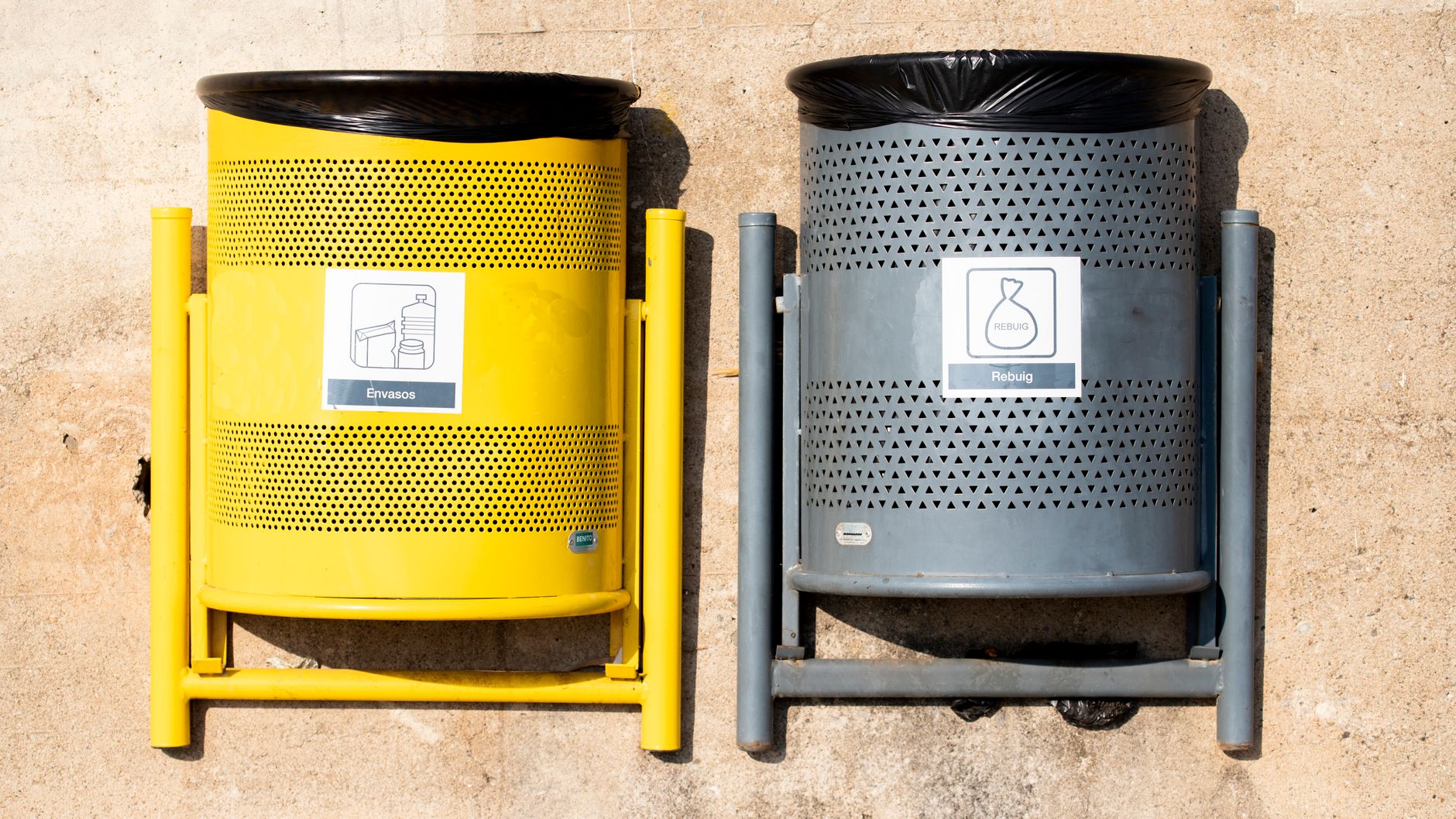
Yes, but only after segregation is already clean. According to the World Health Organization, about 85 percent of health-care waste is general, nonhazardous waste and 15 percent is hazardous. The operational lesson is simple. The robot program should not be expected to fix sloppy sorting. It should move clearly identified streams that staff already separate correctly.
For imaging centers, the sensible first step is usually regular trash, linen returns, and closed soiled loads moving to a designated holding room on low-traffic windows. Sharps, leaking materials, and any load that creates uncertainty should stay manual until the center has strong SOPs and a clear exception process. Waste automation fails when people try to automate ambiguity.
Route hygiene matters as much as payload hygiene. Keep waste movement off the front corridor during patient peaks. Use one directional logic where possible, and avoid passing clean staging areas on the return leg. If the building is tight, a short after-lunch waste window and an end-of-day consolidated run often work better than continuous daytime movement.
- Automate only clearly labeled, closed, and policy-approved waste streams first
- Use separate containers and cleaning SOPs for regular waste versus soiled material
- Define spill response, rejected-load handling, and who takes over when a bin is overfilled or contaminated
When does after-hours floor care make sense?
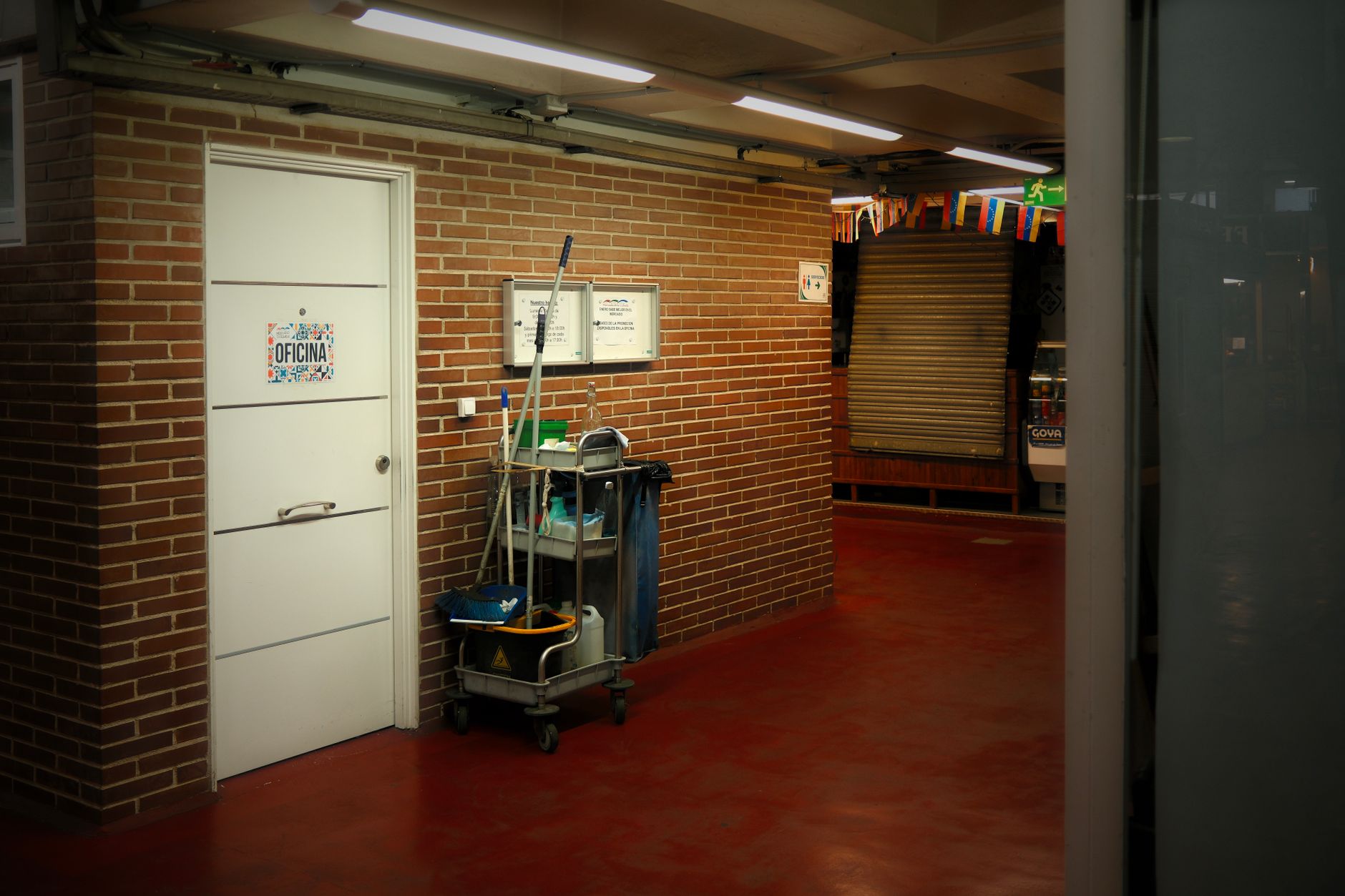
Usually earlier than operators expect. CDC guidance on environmental services distinguishes high-touch surfaces from minimal-touch surfaces such as flooring, and it stresses risk-based cleaning schedules. That makes floor care an attractive robot job in imaging centers because the work is repetitive, visible, and best done when patient traffic is light.
Night operation is the sweet spot. It keeps scrub cycles out of waiting-room traffic, avoids awkward encounters around prep bays, and lets the center reset floors before the first appointments. It also suits the geometry of imaging facilities, which often have long predictable runs through reception backbones, modality corridors, and support zones.
The trap is overspecifying the machine and underspecifying the workflow. The center needs a close checklist: lift stray stools, clear extension cords, stage floor mats, close the rooms that should be excluded, and define what happens when a cleaner arrives to a blocked path. Overnight cleaning no operator is only real when the building is prepared for autonomy, not just when the brochure says it is.
- Run floor-care robots after the last patient and before opening-prep staff arrive
- Exclude contrast prep rooms, active charging alcoves, and any MRI-adjacent area that local policy flags for special handling
- Audit coverage by actual square footage cleaned, edge misses, and morning-ready condition, not just run time
What does a good deployment model look like for a center with no room for mistakes?
It looks smaller and more operationally specific than most first proposals. One site lead, one backup lead, one service number, a route map, a charging plan, and a short exception playbook. The center should know exactly who clears blocked routes, who restarts a job, who signs off on daily readiness, and who reviews the weekly trip and uptime report.
This is also where Service Robot Co. fits naturally. Imaging operators rarely want to assemble a robotics stack vendor by vendor, then own financing, mapping, integration, training, support, and break-fix dispatch themselves. A full-service, vendor neutral robot integrator can choose the right robots across manufacturers, then finance, deploy, integrate, train, and service every unit through one nationwide U.S. engineer network. One partner and one number is not marketing fluff in a center that cannot tolerate multi-vendor finger-pointing.
The financing shape matters too. Many imaging groups prefer commercial robot rental, robot leasing for business, or a robot as a service structure because it preserves capital for scanners and tenant improvements. The right program can pair robot deployment and integration with maintenance included, go-live support, and a practical service plan. In a stand-alone imaging center, that often matters more than owning the hardware outright.
- Pilot one transport loop and one floor-care workflow before expanding
- Require written SOPs for route blockage, infection-control exceptions, and MRI boundary enforcement
- Favor lifecycle support, remote triage, and on-site dispatch over a bare equipment transaction
Frequently asked questions
Sources
- ACR on Site-Neutral Imaging Payments
- ASRT 2025 Staffing and Workplace Survey
- BLS Radiologic and MRI Technologists Outlook
- WHO Health-Care Waste Fact Sheet
- CDC Environmental Cleaning Procedures
- ACR Manual on Contrast Media
- ACR Supervision of Contrast Material Administration
- Radiology Review of the 2024 ACR MR Safety Manual