Key takeaways
- Use an AMR tug when the route repeats, the cart is standardized, and the handoff points are disciplined.
- Keep runs manual when staff must make constant judgment calls, hunt for inventory, or improvise around blocked routes and elevator delays.
- Mixed operations usually win on live casino properties because robots absorb the long predictable miles and people handle exceptions and guest-adjacent work.
- The real labor gain is redeployment, not magic headcount reduction, especially in housekeeping, EVS, banquet, and supply support.
When should a casino automate the cart run and when should it keep people on it?
For most casino back-of-house transport, the line is fairly clear. Shift repetitive, cart-based miles to an AMR tug workflow when the route is predictable, pickup and drop points are fixed, and the load does not need constant human judgment. Keep the work manual when the runner is doing more than transport, especially when they are hunting for missing stock, negotiating crowded elevators every trip, or making room-by-room decisions that change by the hour.
That matters because the casino footprint is large and still growing. According to the American Gaming Association, U.S. commercial gaming revenue reached 78.62 billion dollars in 2025, and 493 commercial casino locations across 27 states produced 51.06 billion dollars from traditional casino games alone. Big properties generate an enormous amount of non-glamorous internal motion: linen, banquet setup, rollaway equipment, EVS replenishment, paper goods, and food-support carts moving through service corridors all day.
The best operating model on a live property is usually not labor or automation in the abstract. It is labor plus automation, with people owning the exceptions and the guest-facing edge cases while the robot handles the long, dull, repeatable pulls. That is the narrow answer casino operators usually need.
What kinds of casino runs are strongest AMR tug candidates?
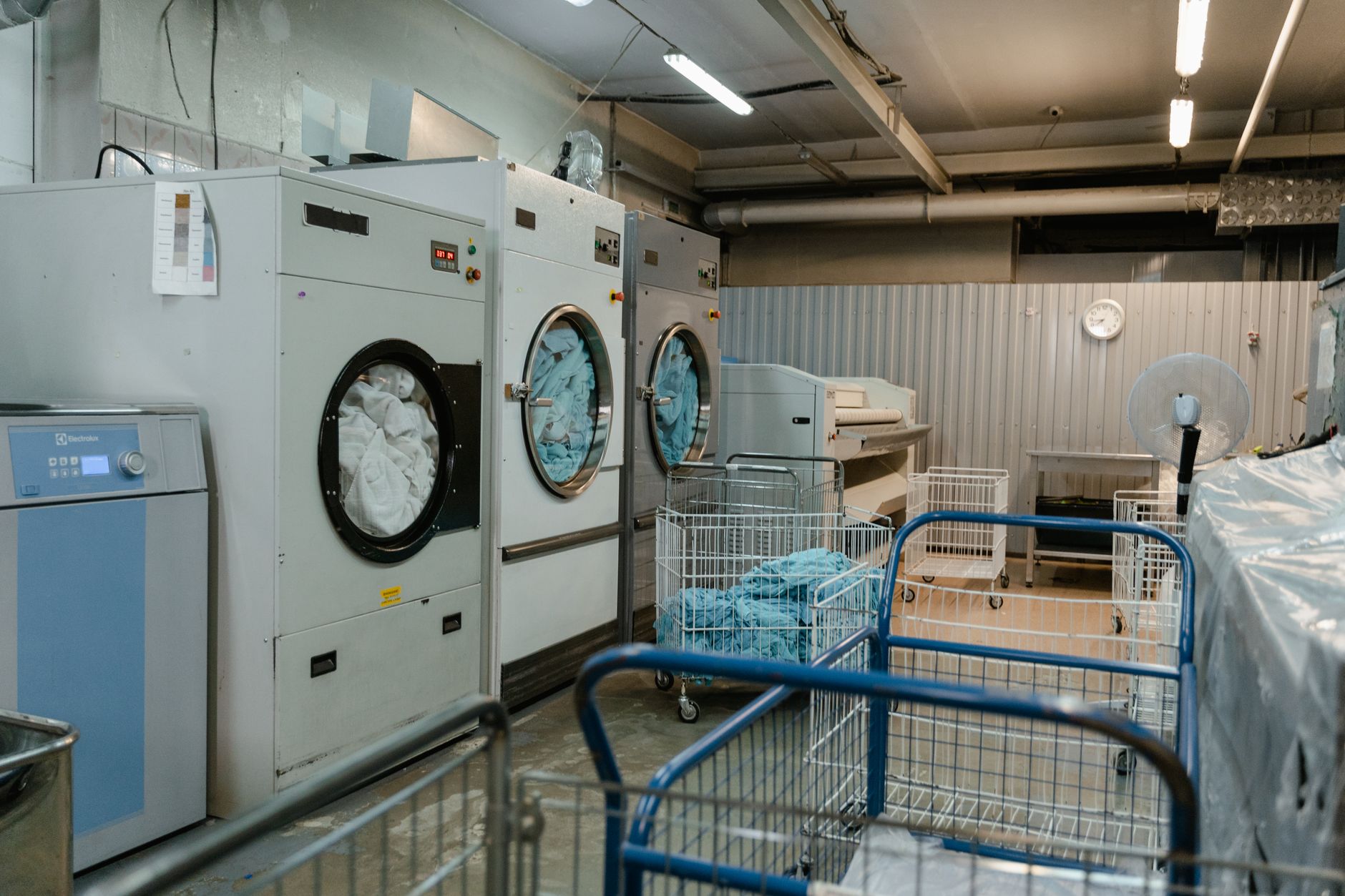
The strongest fit is a closed loop. Think housekeeping replenishment from central storage to tower pantries, banquet chair or linen moves between a staging room and a ballroom back corridor, EVS supply replenishment on a fixed hourly cadence, or kitchen support carts that move from one prep zone to another without menu-by-menu variation.
A good AMR tug route behaves like a timetable, not a scavenger hunt. If the load is staged on time, the path is known, and the drop point has someone ready to receive it, the tug has a real job. If not, the robot is just arriving at the next bottleneck more punctually than a person would.
- Fixed corridor loops with 4 to 12 repeated stops per shift
- Standard carts with consistent hitching, weight, and brake condition
- Back-of-house traffic separated from guest queuing and gaming floors
- Handoffs where staff can swap carts in under a minute
- Runs that can be shifted into off-peak windows without service risk
What work should stay with a manual cart crew?
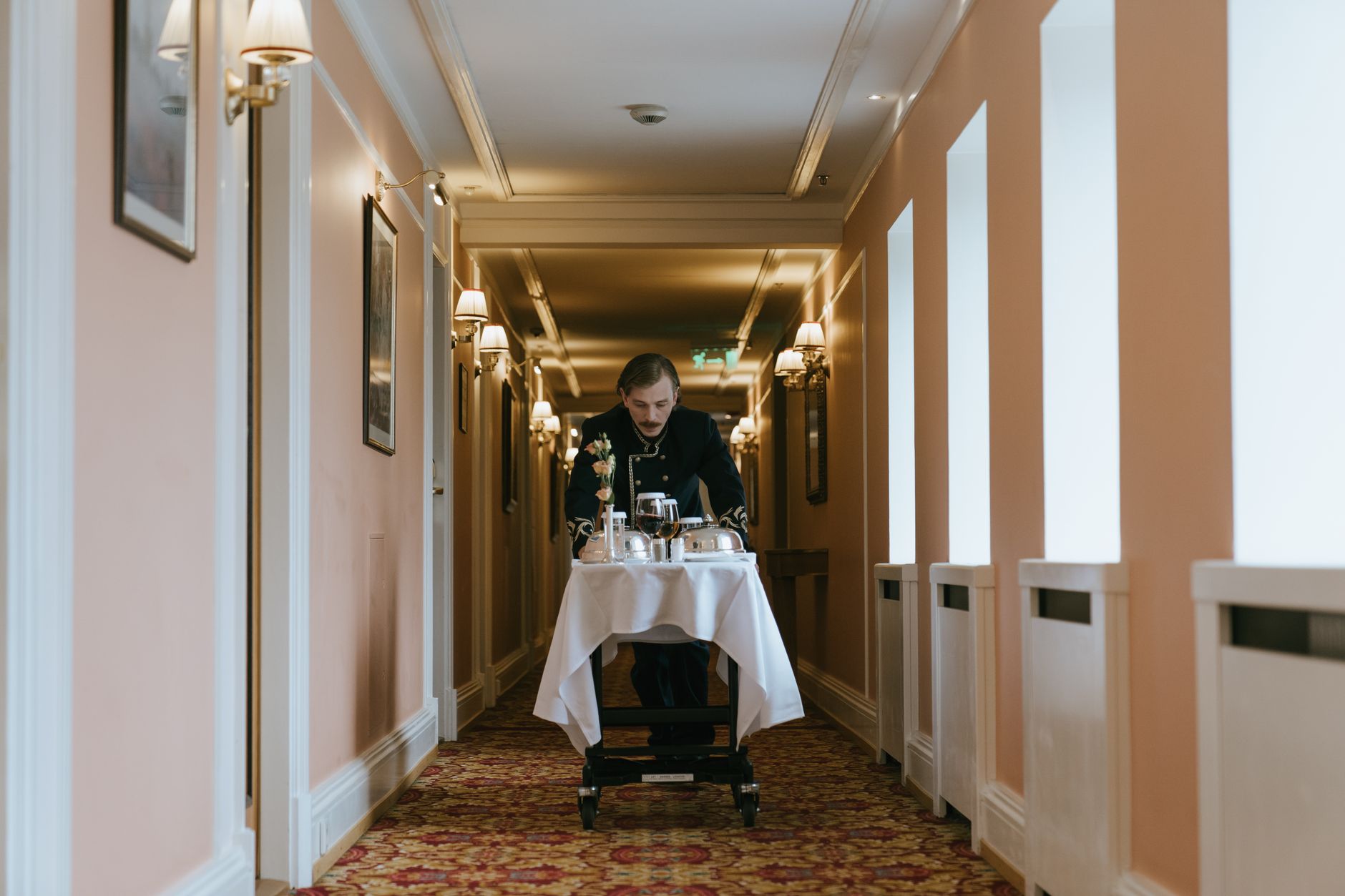
Manual crews still win when the task includes inspection, prioritization, or recovery from disorder. A house runner who notices a stockout, swaps an odd cart, answers a radio call, reroutes around a blocked service hall, and resolves an elevator issue is not just transporting goods. That person is absorbing operational variance.
Manual handling also stays ahead when cart quality is poor and origins are unstable. OSHA notes that pushing and pulling carts increases strain risk when wheels are clogged or loads force awkward postures, but the same point also explains why automation fails on messy processes. If every cart rolls differently, every route is partly blocked, and every pickup is late, the first fix is process discipline, not a robot.
- Rush banquet resets with last-minute layout changes
- Housekeeping supply runs where room-status changes constantly alter priorities
- Service routes that depend on unsecured or manually called elevators every trip
- Moves involving fragile, irregular, or badly stacked payloads
- Any loop where staff must inspect the load before deciding where it goes next
How much route predictability is enough?
More than most teams think. Casinos often say a run is repetitive because it happens every day, but AMR tug workflows need tighter repeatability than that. The robot wants the same cart geometry, the same pickup pocket, the same corridor clearance, and the same drop behavior, not just the same general destination.
A useful field test is this: can a supervisor sketch yesterday's linen or EVS route on paper with the same start points, stops, and timing that will likely happen tomorrow? If yes, you may have a tug workflow. If the answer is, It depends who is on shift, what event is in the ballroom, and which dock lane is jammed, then you are still looking at a staffing and process problem first.
Do elevators make or break the case?
Often, yes. Single-floor or same-podium loops are the easiest AMR tug wins in casinos because they remove the most brittle part of the trip. Once a route depends on a shared service elevator, you are no longer just automating horizontal motion. You are automating a queue.
OSHA's hospital-laundry guidance highlights how carts need to roll across mixed flooring and gaps between elevators and hallways with low-resistance wheels. That small detail maps directly to casinos. If the elevator sill is rough, call timing is inconsistent, and carts vary in wheel quality, the robot will expose the friction your staff has been quietly compensating for. Multi-floor automation can still work, but only when elevator integration, waiting rules, and fallback procedures are treated as part of the project rather than an afterthought.

What happens at peak-time congestion?
Peak congestion is where casinos either gain confidence in automation or reject it. Morning tower turns, pre-function banquet setup, receiving surges, and changeovers before major events all compress back-of-house traffic into the same windows. An AMR tug does well when those peaks are planned and lanes remain disciplined. It does poorly when every peak becomes free-form improvisation.
That is why many live properties start with off-peak loops first. Move linen, paper goods, or EVS replenishment in the quieter shoulder periods, then let manual crews absorb the tightest crush windows. Mixed timing is not a compromise. It is usually the operationally mature answer because it reserves human flexibility for the hours when it is worth the most.
Where is the labor payoff actually real?
The labor case is not that robots erase a department. It is that they reclaim hours from the least valuable portion of the shift: the long push, the return trip, the deadhead mile, and the routine supply chase. The BLS puts 2024 median pay for janitors and building cleaners at 35,930 dollars a year, and still projects about 351,300 openings annually over the next decade. In other words, facilities work remains hard to keep fully staffed even without rapid job growth.
The physical case matters too. In the BLS Occupational Requirements Survey, maids and housekeeping cleaners spent an average of 95.2 percent of the workday standing in 2025, and work in low postures was required for more than 95 percent of them. That is exactly why casinos should be selective about which miles stay manual. Every avoided cart pull preserves energy for room recovery, detail cleaning, setup accuracy, and response work that actually needs a person.
Hospitality still feels the staffing strain. In a February 20, 2025 survey, the American Hotel and Lodging Association said 65 percent of hotels reported staffing shortages, 71 percent had open roles they could not fill, and housekeeping was the most cited shortage at 38 percent. Casino hotels are not identical to the broader hotel market, but they live in the same labor pool. The point is redeployment: fewer wasted miles, more useful minutes on the floor.
What does mixed human-plus-robot operation look like on a live property?
In practice, the robot becomes the scheduled carrier and the crew becomes the control layer. A lead house runner or EVS supervisor releases a cart, confirms the lane is clear, and takes exceptions by radio. Staff at the destination unload, swap, or re-stage the cart, while the tug either returns empty, grabs the next load, or pauses for the next dispatch window.
That operating model is why an OEM-neutral integrator matters. Service Robot Co. is built for operators who do not want to force a property into one manufacturer's view of the world. The company selects the right machines across manufacturers, then handles finance, deployment, integration, training, and service through a nationwide U.S. engineer network. For a casino, that means one vendor for the whole lifecycle instead of a patchwork of robot seller, software layer, local contractor, and service guesswork.
It also means the commercial structure can match the pilot. Some properties want an autonomous mobile robot rental or a tug robot rental for a defined trial. Others prefer robot leasing for business, a lease rental or sale path, or monthly payment programs with maintenance included. The operational question comes first, but the commercial format still shapes how quickly a property can move.
How should a casino pilot this without disrupting the property?
Start with one route, one department, one shift window, and one cart standard. Do not begin with the busiest tower, the most politically sensitive ballroom, or the nastiest elevator stack. Begin where the route is boring. Boring is good. Boring is where AMR tug workflows prove themselves.
A sound pilot measures five things before expanding: trip completion rate, average wait time at pickup and drop, elevator delay if any, number of human interventions, and hours of labor redeployed into higher-value work. Service Robot Co. typically fits best when the property wants a turnkey robot deployment, site assessment mapping, go-live support, and on-site service without managing multiple vendors. For casinos, that kind of discipline is what separates a commercial robot demo from a workflow that survives month three.
Frequently asked questions
Sources
- American Gaming Association State of the States 2026
- U.S. Bureau of Labor Statistics Janitors and Building Cleaners OOH
- U.S. Bureau of Labor Statistics Transportation and Material Moving OOH
- U.S. Bureau of Labor Statistics ORS Maids and Housekeeping Cleaners
- U.S. Bureau of Labor Statistics Workplace Injuries and Illnesses 2024
- U.S. Bureau of Labor Statistics 2024 Area Employment Chart
- American Hotel and Lodging Association Staffing Shortages Survey
- OSHA Hospital Laundry Musculoskeletal Disorders eTool