Key takeaways
- Drones give fast, whole-shell visual and thermal coverage but cannot measure wall loss inside piping.
- Crawling robots suit steel and concrete surfaces up close, yet they struggle with tall shells and debris.
- Ultrasonic crawlers measure wall thickness that cameras and drones cannot see.
- Confined-space rules apply to fill bays and basins whichever method you choose.
- Pilot both methods on one tower before you commit to a fleet.
Which method should a plant engineer pick?
Drones are the faster route to a first look at a cooling tower shell. Crawling robots earn their place once you need close contact with steel, concrete or measured wall condition on nearby pipework.
Most plant teams need three things: a shell survey, a look inside the fill and basin, and measured condition of the piping. A drone handles the first well. A crawler or wheeled robot handles much of the second and third, if the surface and access allow it.
How do drones reach a cooling tower shell?
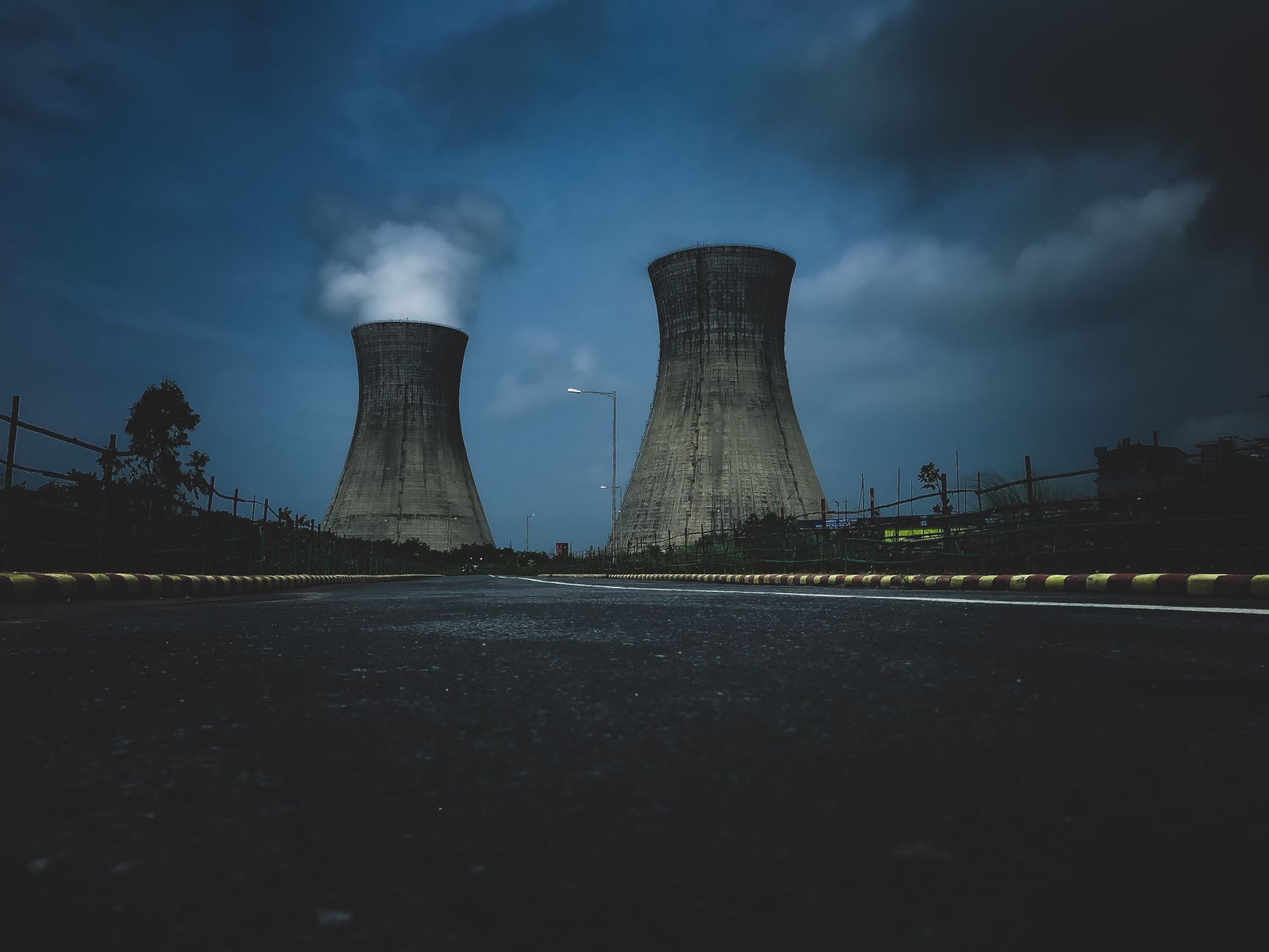
According to CEZ, the Dukovany plant in the Czech Republic will use drones and AI for cooling tower inspections, which the utility describes as faster and more accurate. CEZ gives a total internal and external shell area of 424,000 square metres. That is a surface a drone can survey without a scaffold crew, though the announcement is the utility's own statement, not an independent measurement.
Vendor material from Oxmaint describes a thermal-equipped aerial unit flying a programmed pattern around the shell, plus a confined-space drone for fill and basin. Its time comparisons against scaffolding are unverified, and our research found no independent source for them. Treat those figures as claims to test on your own tower.
Where do crawling robots still earn their place?
Vendor material says magnetic crawlers suit steel structures and wheeled robots suit concrete column rows. A trade article from Electrical Trader adds a limit: quadruped robots handle complex multi-level structures but cannot inspect high-altitude cooling tower shells. The crawler's real strength is contact work, close to the surface and inside reachable sections.
Ultrasonic crawlers do something a camera cannot. A technical blog on ultrasonic pipe inspection says these robots measure wall loss from corrosion, erosion or scaling without excavation. For pipework feeding the tower, that reading often decides whether a line stays in service or gets replaced.
What does confined-space law mean for each method?
OSHA's permit-required confined space standard, 29 CFR 1910.146, describes a confined space as one large enough for a worker to enter and work in, with limited entry or exit, and not designed for continuous occupancy. A permit-required space also has a hazardous atmosphere, an engulfment hazard, an entrapment configuration or another serious hazard. Fill bays and basins can meet that test depending on tower design and conditions.
The DOL's OSHA Confined Spaces Advisor says employers must evaluate the workplace, keep a written permit-space program where entry is allowed, and issue an entry permit for each entry to do work. Remote methods reduce how often someone must go in. They do not remove the evaluation duty for spaces people still enter. Check the current standard text before writing your program, since our summary came from secondary sources.
What does each method miss?
A drone sees the outside of the shell and whatever shows on the surface. It does not measure wall thickness inside a pipe and cannot judge what sits behind insulation. A patent disclosure notes that insulation layers can block visual inspection and that some failures are internal and invisible to a camera. Those disclosures concern pipelines, so read them as a warning for cooling tower piping rather than a direct finding.
A crawler misses ground it cannot reach. A patent disclosure states that wheeled or narrow-track robots often meet debris they cannot pass, which is a real risk in towers with fallen fill or sludge. Crawlers also do not give a whole-shell picture in one run, so the two methods often complement each other.
How much does data quality depend on the operator?
Visual data from either platform depends on the sensor, the lighting, the flight or crawl path and the reviewer. Thermal and ultrasonic data depend on calibration and on someone who reads the trace correctly. Vendor side-scan material argues that crawler video depends on operator skill, and that point is worth testing on your own equipment.
Before a pilot, ask every vendor for the following.
- A reviewed sample from your own piping, not a demonstration clip from another site.
- The sensor, calibration record and reviewer qualifications behind each data set.
- Stated access limits for fill, debris and tight basin corners.
- The file format and review time you will receive for each inspection.
How Service Robot Co. approaches a mixed inspection program
Service Robot Co. is an OEM-neutral integrator. We can compare drone, crawler and wheeled platforms from different manufacturers against the access and data your tower needs. Robots are leased through financing, with one fixed lease quote set after a site assessment, and then deployed, integrated, trained and serviced under RoboCare™, backed by regional service engineers.
For plants that want to start small, an inspection robot lease on one unit lets the team test a single method before expanding. The decision then rests on reviewed data rather than a vendor summary.
How to run a pilot that proves the method on your tower
Start with one tower and one question, such as whether the basin can be inspected without a permitted entry. Record access limits, data quality and the time each method takes, including review time. Score the results against the reviewed sample, not the vendor's own summary.
Frequently asked questions
Want a robot working for you?
Tell us the job and the site. We will recommend the robot, quote the lease, and keep it serviced.
Sources
- CEZ, Dukovany drones and AI for cooling tower inspections
- Oxmaint, cooling tower inspection drones and robots guide
- Electrical Trader, smarter robots for power plant inspections
- OSHA 29 CFR 1910.146 Permit-Required Confined Spaces
- DOL OSHA Confined Spaces Advisor, definitions
- US patent 9739792 disclosure
- US patent 7594448 disclosure
- Industrial Monitor Direct, ultrasonic pipe thickness inspection