
Key takeaways
- Central supply restock is often a better first AMR lane than patient-facing hospital workflows.
- Gloves, PPE, linens, and boxed consumables are strong first payloads. IV poles fit only when they are empty and standardized.
- The real gain is less nurse walking, less supply chasing, and fewer overflow errands pulled into clinical time.
- Smaller hospitals can be excellent AMR sites if the route is frequent, the handoff is tight, and the drop points stay consistent.
- Service coverage, elevator and door integration, and staff training matter as much as the robot itself.
Is this one of the better first AMR routes?
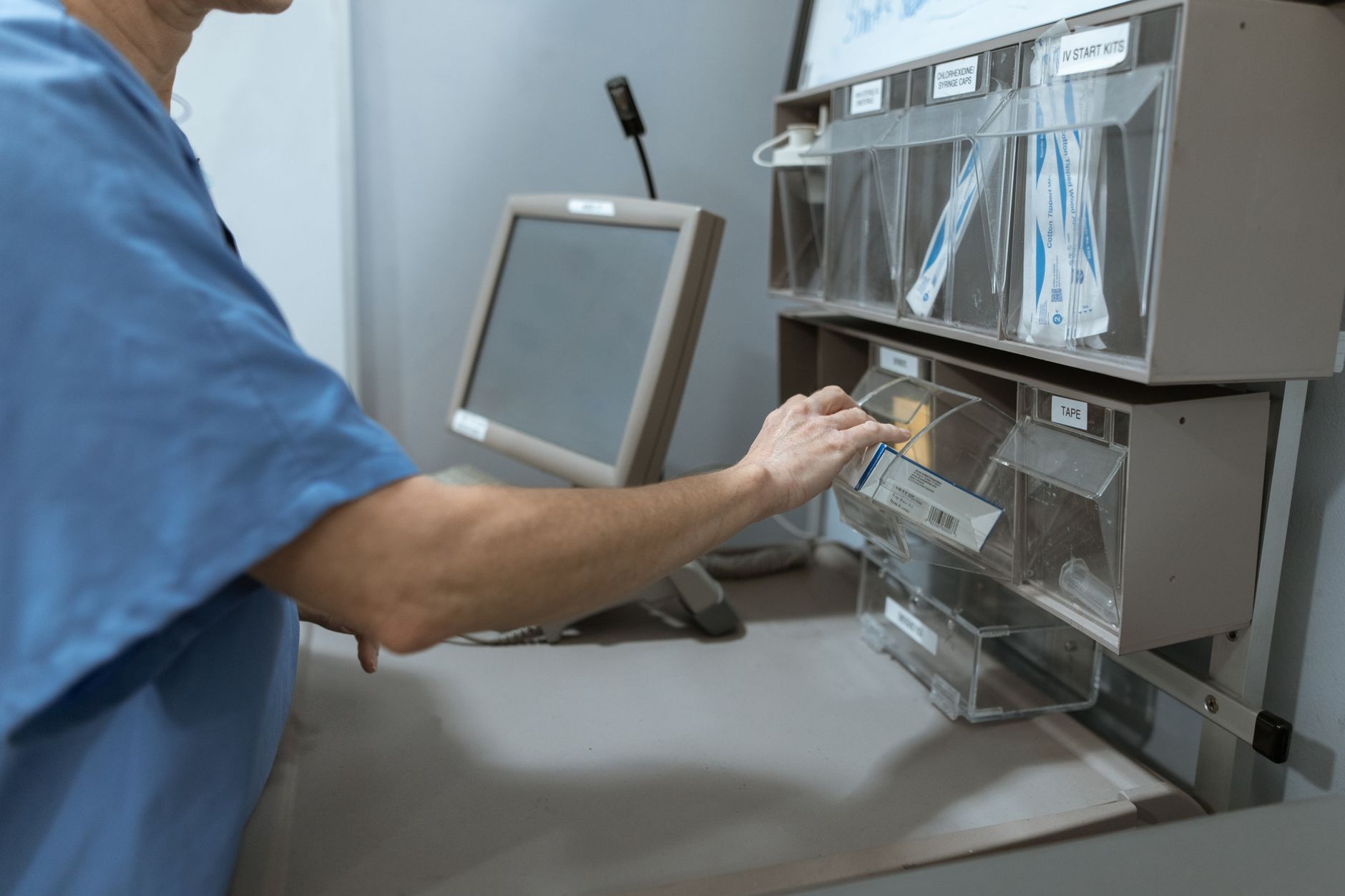
Yes. For a community hospital, moving gloves, clean linens, empty IV poles, PPE, and other boxed consumables from central supply to nursing unit stock rooms is often one of the cleaner first AMR use cases. The work is repetitive, the payloads are predictable, and the handoff usually happens at a supply alcove or nurse station rather than at the bedside.
That matters because the robot is not being asked to make clinical judgments. It is being asked to run a closed loop that already exists, usually many times per shift, with low urgency and little variation. That is a much safer starting point than patient transport, bedside tasks, or anything that depends on nuanced human escalation.
It is not automatic. The route still needs stable pickup and drop points, disciplined cart or tote prep, and a clear split between scheduled restock and truly stat requests. But the American Hospital Association said in its February 2026 fast facts that the United States has 5,121 community hospitals, including 1,797 rural community hospitals, and its March 11, 2026 Costs of Caring release said total hospital expenses rose 7.5 percent in 2025, with supplies up 9.9 percent and drugs up 13.6 percent. In that environment, quiet internal errands deserve more scrutiny than they usually get.
What does the central supply loop actually look like?
Picture the loop in plain operational terms. A unit burns through gloves, wipes, tubing, underpads, dressing kits, pillowcases, and the occasional empty IV pole. Someone notices the par is low, calls or enters a request, central supply picks the items, stages them in a tote or cart, and the load travels to a unit supply room or receiving point. Then the cycle repeats.
UC Davis Health's distribution department shows how structured this work already is in hospitals. It says distribution never closes, that its in-house supply room carries more than 1,600 line items, and that medical and surgical supplies are supported through daily exchange-cart rotation and weekday par-cart replenishment. A smaller hospital runs the same playbook at a smaller scale. The nouns change. The workflow does not.
That is why AMRs can fit this lane so well. Central supply runs are routeable, measurable, and easy to time-stamp. You can count requests, map endpoints, standardize containers, and decide exactly what counts as a completed delivery. That is much harder in messier hospital work.

Where does the labor drain show up now?
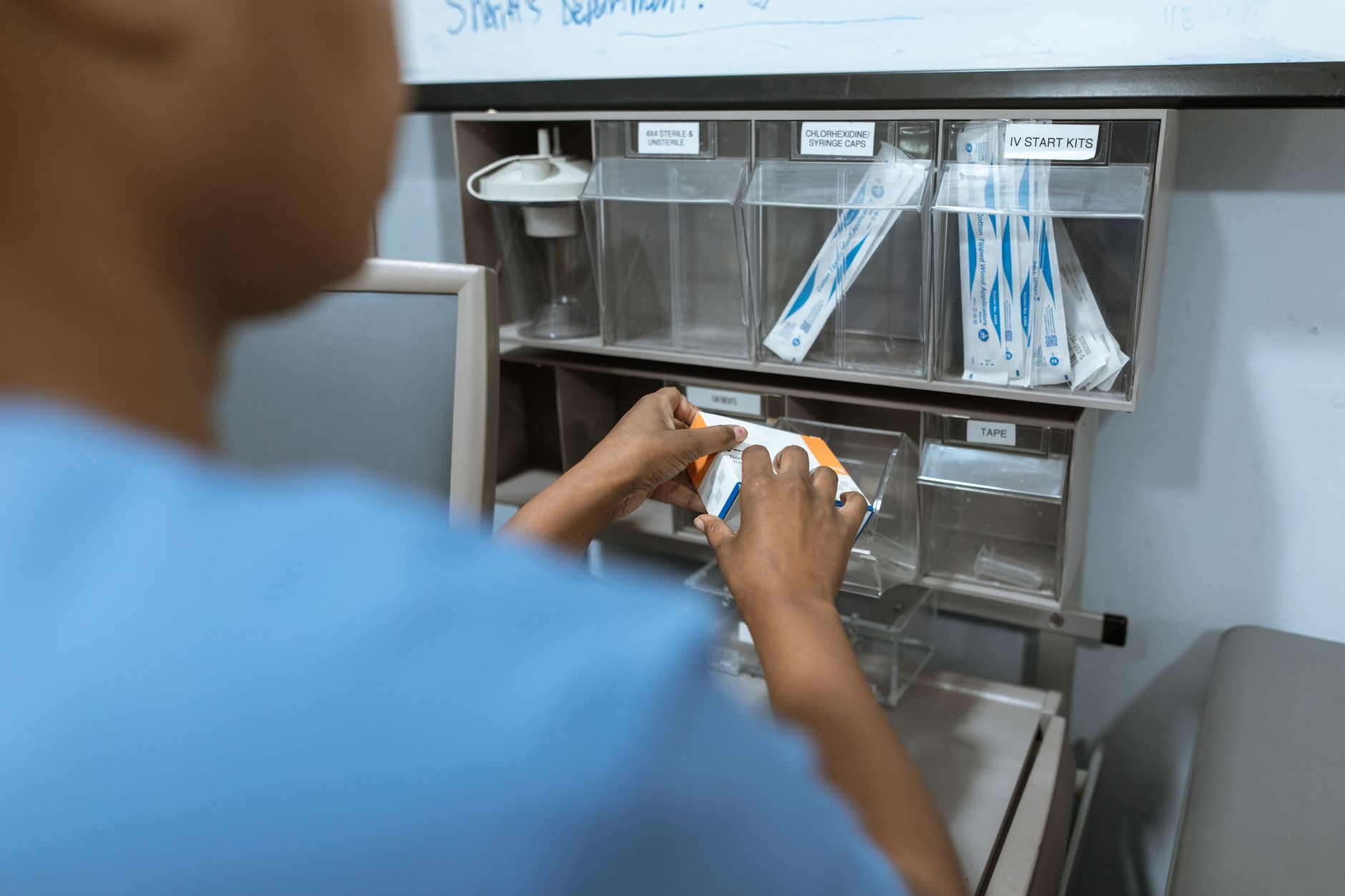
The labor bleed here is real, even when it hides inside short walks. In the 36-hospital time and motion study published in The Permanente Journal, 6.6 percent of nurses' reported time was classified as waste, much of it tied to what the authors described as hunting and gathering behavior. The picture they drew was blunt: nurses moving from room to station to supply closet and back.
A BMJ Quality and Safety study on operational failures found something even sharper. Nurses spent 14 percent of their time working around failures tied to equipment and material readiness between departments. That is the exact territory where central supply friction lives. A missing glove size, an empty linen shelf, an unavailable pole, or a cart that never arrived does not look dramatic on paper. It still steals clinical time.
A Lean study in an emergency department tracked how often nurses left patient rooms to seek supplies. Before point-of-use redesign, the median was 11 trips per 8-hour shift. After redesign, it dropped to 2.5. The lesson is not that every hospital should redesign carts the same way. The lesson is that supply chasing is measurable waste, and it can be reduced.
AHRQ makes the patient care link explicit. In its missed nursing care primer, the agency says a well-organized and reliable supply chain for medications, clinical supplies, and equipment may help nurses complete required care. That pushes AMRs out of the novelty bucket. On the right route, they are a tool for protecting bedside time.
Which items belong on the first routes?
The best first AMR payloads are boring, standardized, and forgiving. Glove cases, PPE, dressings, IV start kits, suction canisters, wipes, tubing, underpads, and clean linen bundles all fit that description. They are easy to pack, easy to verify, and rarely need a clinician standing next to the robot to interpret what just arrived.
IV poles are more conditional. Empty, standardized poles that stage cleanly at a known pickup point can work well. Loaded poles, poles mixed with pumps, or anything tied to a patient should stay out of scope for an early pilot. The same goes for loose mixed items, oversized specialty equipment, or stat clinical deliveries that can turn one failed handoff into a unit problem.
- Best first loads: glove cases, PPE, clean linens, dressing kits, wipes, tubing, underpads, and other boxed consumables
- Good with standardization: empty IV poles, telemetry boxes, and other nonurgent support items that stage cleanly
- Poor first loads: loaded IV poles, loose mixed supplies, oversized devices, sterile sets with exception-heavy handling, and urgent bedside needs
Why can smaller hospitals be a better fit than people assume?
Smaller hospitals often have one underappreciated advantage. The map is simpler. There are fewer department pairs, fewer vertical moves, and fewer places for the route to dissolve into edge cases. A community hospital can often prove a central supply lane with less change management than a giant academic campus needs.
The tradeoff is trip density. If central supply requests are sporadic, the economics soften fast. AMRs do not win because the building is large. They win because the same lane keeps firing. A 140-bed or 220-bed hospital with steady replenishment to med-surg, telemetry, and ED support areas can be a better fit than a much larger site with messy, irregular demand.
Real hospital deployments are moving in that direction. Odessa Regional Medical Center said on June 9, 2026 that its 211-bed hospital would use robots to retrieve items from supply rooms, deliver patient supplies, move medications between nursing stations, the lab, pharmacy, and hospital supply areas, and ride elevators while staying out of patient rooms. That is exactly the kind of bounded, support-side task mix smaller hospitals should study first.
What has to be true before go-live?
The go-live work is less about the robot than about the lane. You need a named pickup point in central supply, a named drop zone on each nursing unit, one approved tote or cart format, and a rule for what happens when the robot arrives and no one unloads it. If those details are fuzzy, the robot will expose the fuzz immediately.
You also need to decide what the robot will not do. It will not fix poor par settings, missing shelf labels, or a supply room that changes shape every week. It will not rescue a unit that treats every request as urgent. Good repetitive transport automation starts by separating scheduled replenishment, predictable top-ups, and true exceptions.
- One standard tote or cart footprint for every target route
- Named drop zones outside patient rooms, usually at a unit supply room or nurse station
- Clear rules for scheduled restock, on-demand top-ups, and stat calls
- Door, badge, and elevator behavior defined before go-live
- Downtime fallback, including who runs the errand if the unit is unavailable
- Cleaning and infection-prevention ownership for totes, carts, and touch points

How should a community hospital pilot this?
A practical pilot is narrower than most committees first imagine. Start with one central supply origin, two or three destination units, and a short list of SKUs that are requested constantly. The goal is not to automate the whole hospital. The goal is to learn whether one lane can hold without daily babysitting.
Measure the current state before the robot moves. Count trips per shift, minutes from request to shelf, how often nurses or techs cover overflow, how often a unit hits a stockout, and how many deliveries fail because the receiving point is not ready. Those numbers will tell you more than a hallway demo ever will.
If the lane proves itself, then widen the mix. Add more destinations, more dayparts, maybe a multi floor delivery robot route if elevator behavior is stable. If the lane does not prove itself, the hospital has still learned something useful. The problem may be stocking discipline, not transport.
- Completed deliveries per shift
- Minutes from request to stocked shelf
- First-attempt handoff rate
- Nurse or tech interruption minutes avoided
- Stockout events on target units
- Manual recovery calls after robot exceptions
Where does Service Robot Co. earn its keep?
This is where Service Robot Co. can matter more than the hardware brochure. Community hospitals rarely need another vendor chain. They need one accountable partner that can assess the route, select the right platform across manufacturers, finance the program, integrate doors and elevators, train staff, and keep the unit working after launch.
Service Robot Co. is a full-service commercial robot integrator for US businesses. We are OEM-neutral, so the workflow decides the robot, not the other way around. We can structure hospital delivery robot leasing, autonomous mobile robot leasing, or robot leasing for business, then handle robot deployment and integration, training, remote triage, on-site dispatch, and service through a nationwide US engineer network.
For hospitals that want RoboCare™ service and one partner for the whole lifecycle, that operating model matters. A central supply AMR project is not won at procurement. It is won in uptime, adoption, and how little extra thought the nursing unit has to spend on the system once it is live.
Frequently asked questions
Sources
- AHA Fast Facts on U.S. Hospitals 2026
- AHA Costs of Caring press release
- AHRQ PSNet missed nursing care primer
- BMJ Quality and Safety study on hospital operational failures
- 36-hospital nursing time and motion study
- PubMed study on reducing RN supply-seeking time
- UC Davis Health distribution department overview
- Odessa Regional Medical Center robot workflow announcement