
Key takeaways
- Treat every AMR trip as a documented custody transfer, not a generic delivery.
- Protect slides with restrained, cushioned carriers and validate vibration on actual hospital routes.
- Urgent cases need explicit priority, preemption, escalation, and manual fallback rules.
- Locked compartments, authenticated handoffs, and limited metadata reduce privacy and access risk.
- A failed delivery must end in secure custody, rapid notification, and documented reconciliation.
How do AMRs fit the pathology slide workflow?
Secure autonomous mobile robots can carry pathology slides among accessioning-linked work areas, staining benches, whole-slide scanners, specialist review rooms, and archives. The right workflow places labeled slides in a restrained carrier inside a locked compartment, records every custody event, and releases the payload only to an authenticated recipient.
The robot is the controlled transport layer, not the clinical decision-maker. The laboratory information system remains the source of case identity and status, while the fleet system manages routing, priority, compartment security, arrival alerts, and exceptions. Staff still verify that the expected slides and case identifiers match at pickup and receipt.
This distinction matters because a pathology slide is both fragile evidence and patient-linked material. The College of American Pathologists recommends two patient identifiers on blocks and slides. The Joint Commission's 2026 laboratory goals likewise call for at least two patient identifiers when providing laboratory services, and say physical location must not serve as an identifier.
Where can automated transport remove clinical friction?
Pathology work rarely follows one straight corridor. Slides may leave a staining line for coverslipping, move to a scanner, divert to a subspecialist, return for deeper sections or an additional stain, and finally enter archive storage. Manual runners absorb that variability, but they also spend valuable time waiting for elevators and locating recipients.
An AMR is most useful on frequent, repeatable routes with clear endpoints. Typical missions include stained-slide delivery to scanning, completed scan batches to review areas, consultation sets to another laboratory suite, and signed-out cases returning to controlled storage. Separate mission profiles should govern urgent intraoperative material, routine batches, teaching sets, and archive retrievals.
Do not mingle incompatible payloads simply because one robot has spare capacity. Dry, finished slides have different containment and contamination concerns from fresh tissue, formalin containers, blood tubes, medications, or waste. Each payload class needs an approved carrier, cleaning procedure, access rule, and exception path before shared-fleet operation begins.
What does defensible chain of custody require?
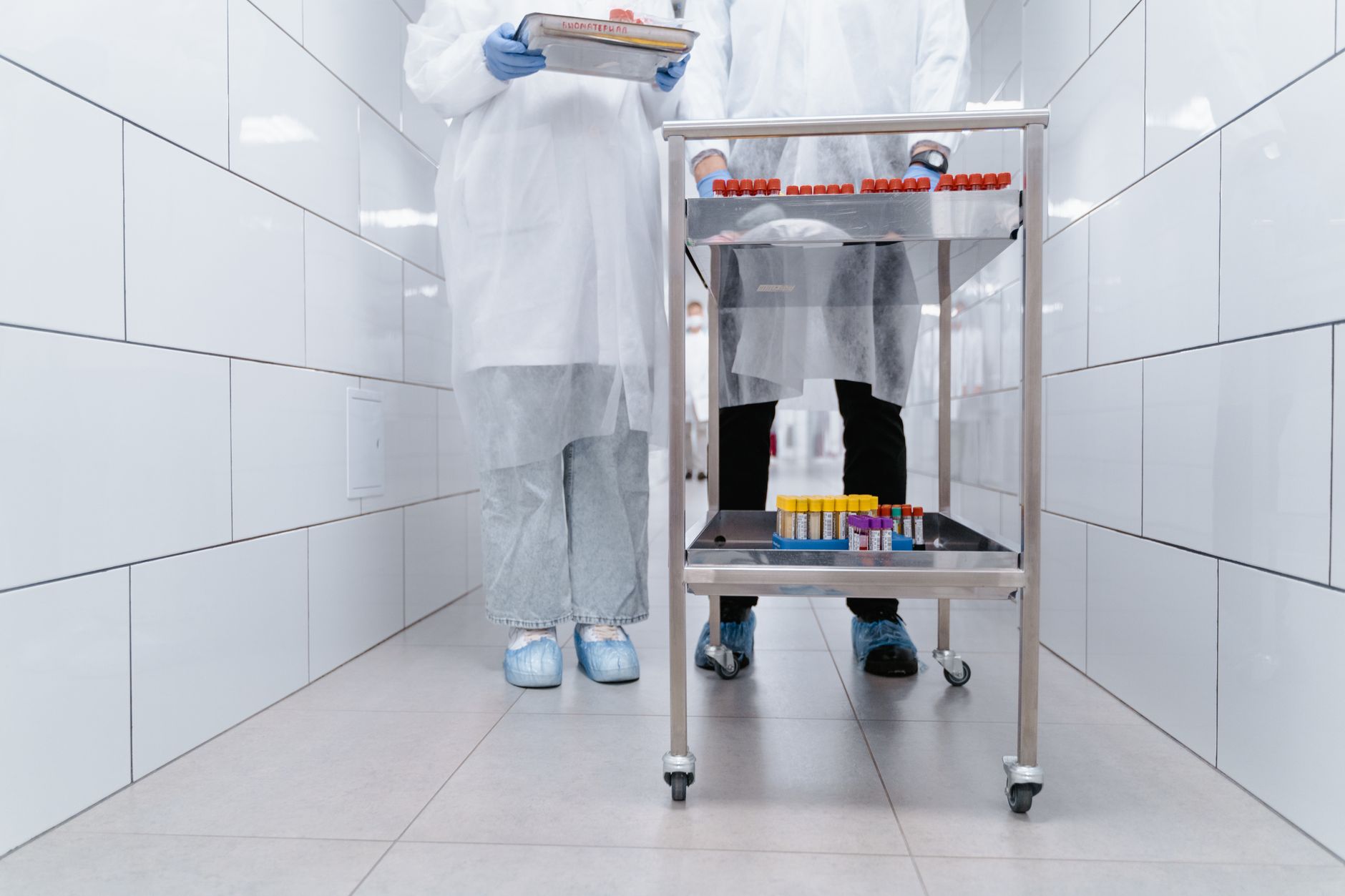
A timestamped location trail is helpful, but location alone is not custody. A defensible record connects the case, slide set, sealed carrier, robot compartment, releasing employee, receiving employee, destination, and mission outcome. Scanning the tote without verifying its contents can preserve the wrong association with great precision.
The College of American Pathologists advises that barcode or RFID systems used for specimen chain-of-custody tracking be validated and maintained, with intelligent location capability. Its remote sign-out guidance also stresses tracking slides sent away from the primary laboratory, confirming their return, and reconciling missing patient material promptly.
A practical custody record captures new evidence at each control point:
- Case and slide identifiers verified before loading
- Carrier or tote ID bound to the electronic manifest
- Named staff member, workstation, time, and pickup location recorded
- Compartment closure and lock state confirmed before departure
- Route exceptions and unauthorized opening attempts logged
- Recipient authenticated before the compartment opens
- Received contents checked against the manifest
- Completion, discrepancy, return, or incident status written back to the laboratory workflow
How should the payload resist vibration and breakage?
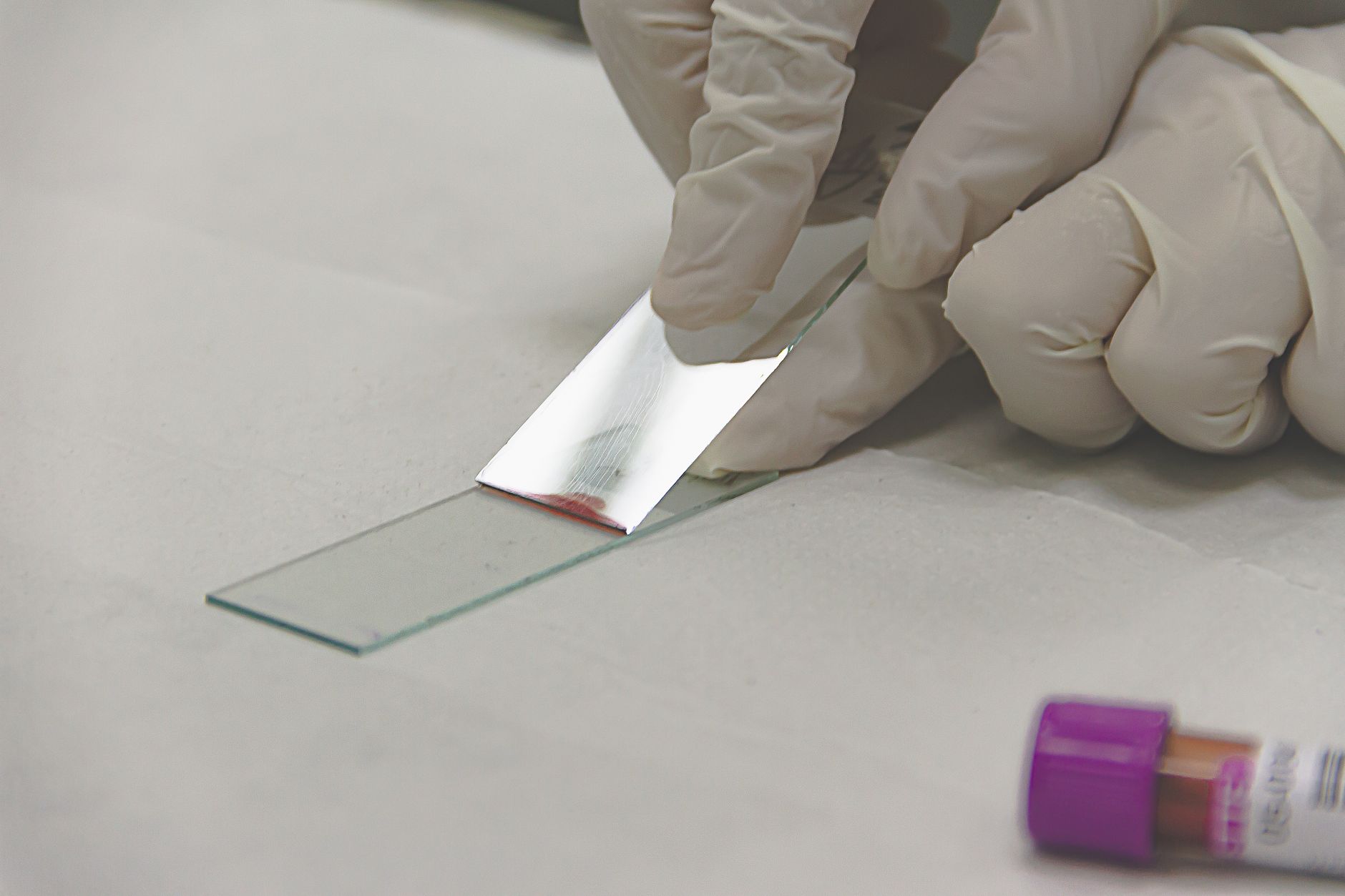
Navigation accuracy does not protect glass from a threshold strike, elevator sill, abrupt stop, or rough expansion joint. Slides should sit in individual grooves or restrained slots inside a rigid inner carrier. That carrier should latch closed, fit tightly within the robot compartment, and use cushioning that prevents rattling without shedding fibers or contaminating clean work.
The CDC's instructions for shipping blood-smear slides provide a useful minimum principle: put labeled slides in a grooved slide box, then place that box inside another cushioned box to guard against breakage. An internal hospital route is shorter than parcel shipment, but the same nested protection principle remains sound.
Validate the full route with instrumented test loads before carrying clinical material. Measure shock and vibration across door tracks, floor transitions, ramps, elevator entries, turns, and emergency stops. Then inspect test slides for chips, cracks, coverslip movement, label damage, and rack displacement. A smooth demonstration in an empty hallway is not evidence that a route is safe during normal operations.
Route design can reduce exposure further. Set conservative acceleration, turning, and braking profiles for slide missions. Mark damaged transitions for facilities repair, avoid known construction paths, and require revalidation after flooring, elevator, carrier, suspension, or navigation changes.
How should priority missions work?
Clinical urgency must come from the laboratory, not from whoever taps an urgent button. The laboratory information system or an authorized workstation should assign a validated mission class, such as intraoperative, expedited consultation, routine production, or archive return. Each class needs a hospital-approved target and escalation path.
The Joint Commission's 2026 laboratory goals require organizations to establish written procedures and timeframes for communicating critical results. That requirement concerns results rather than robot trips, but it illustrates the governing principle: the hospital defines the clinically meaningful clock. Robot dispatch metrics should support that clock without pretending transport time is the entire turnaround interval.
Priority also needs disciplined preemption. An urgent mission may move ahead of queued routine work, but the fleet should not abandon a loaded routine carrier in an open or uncontrolled location. The system must finish a safe handoff, park the secured payload in an approved zone, or transfer responsibility through a documented manual procedure.
If all robots are occupied, an urgent job should alert designated staff immediately. The fallback might be a trained runner, a reserved robot, or a manual hand-carry protocol. Automation is useful only when the exception is faster to recognize, not harder to see.
How do access control and privacy fit together?
The compartment should remain locked from verified loading until verified receipt. Badge, secure PIN, or another hospital-approved credential can identify the releasing and receiving users. Permissions should be role-based and destination-specific so a valid badge does not automatically grant access to every pathology payload.
Keep patient information off public-facing displays and voice announcements. A robot can show a neutral mission number while the protected case mapping remains inside approved clinical systems. Store only the metadata needed to execute and audit the trip, and define how long robot and fleet logs are retained.
HHS says the HIPAA Security Rule requires appropriate administrative, physical, and technical safeguards for electronic protected health information. It also requires access to be appropriate to a user's role. If the robot platform stores or transmits ePHI, unique user identification and audit controls should be part of the security design, not optional extras added after go-live.
Cybersecurity review should cover identity management, encryption, network segmentation, software updates, remote support, log export, device retirement, and downtime operation. Physical controls still matter. A locked drawer, tamper event, camera-free screen design, and restricted waiting zones reduce exposure even when the network controls perform correctly.
What should happen when delivery fails?
A failed mission is not merely a fleet alert. It is an unresolved custody event. Common causes include a blocked corridor, unavailable elevator, locked destination, absent recipient, full receiving station, low battery, network loss, damaged carrier, or a mismatch between the manifest and received slides.
The robot should keep the compartment locked, stop in an approved safe location, preserve its audit trail, and notify the correct laboratory role. After a limited, policy-defined retry, it should return to the releasing station or await trained recovery staff. It should never leave slides outside a door, transfer them to an unverified person, or silently mark arrival as delivery.
Recovery requires two records: the operational exception and the specimen disposition. Staff should document who took custody, which slides were present, their condition, where they went next, and the effect on the case. Missing, broken, mislabeled, or temperature-compromised material should enter the laboratory's existing incident and quality-management process.
Reconciliation must remain open until every expected item is located or formally escalated. That discipline aligns with College of American Pathologists guidance for remote sign-out, which calls for timely reconciliation of missing patient materials rather than treating dispatch as proof of receipt.
How should a hospital validate an AMR program?
Start with workflow observation and site assessment mapping. Record actual origins, destinations, handoff behavior, peak traffic, elevator delays, badge-controlled doors, wireless gaps, floor defects, environmental restrictions, and manual recovery routes. The best first lane is repetitive enough to measure but bounded enough to supervise closely.
Run dry tests, test carriers, simulated case manifests, and staff drills before live slides. Acceptance testing should examine custody-record completeness, delivery-time percentiles, urgent dispatch behavior, first-attempt handoff rate, shock exposure, slide damage, unauthorized access attempts, network-loss behavior, and recovery time. The laboratory should set thresholds based on clinical risk.
Service Robot Co. can manage this work as an OEM-neutral, vendor neutral robot integrator. Rather than forcing one machine into every corridor, the team can select the robot that fits the floor, then handle robot deployment and integration, go-live support, staff training, financing, and service through a nationwide US engineer network.
Procurement can include outright purchase, robot leasing for business, monthly payment programs, autonomous mobile robot leasing, or a leasing structure when available and appropriate. For a hospital delivery robot lease or AMR leasing, the contract still needs clear responsibility for validation, remote triage, on-site dispatch, software changes, preventive maintenance, spare coverage, and emergency robot replacement. Service Robot Co. provides one partner and one number across that lifecycle.
Retention rules raise the value of reliable transport
Glass slides remain important long after the first trip to a scanner or pathologist. Under 42 CFR 493.1105, laboratories must retain cytology slide preparations for at least 5 years from examination and histopathology slides for at least 10 years. Pathology test reports also carry a minimum 10-year retention period.
Those timelines make loss prevention more than a daily productivity concern. A slide may be needed for later comparison, consultation, quality review, or legal and regulatory purposes. Every trip to review, remote sign-out, teaching, or archive retrieval should therefore preserve the same identity, custody, and condition controls used during initial diagnosis.
The strongest AMR program does not merely shorten walking. It gives the laboratory a repeatable movement process in which fragile patient material remains protected, traceable, and recoverable from accession-linked production through staining, scanning, specialist review, and final storage.