
Key takeaways
- Treat the AMR as a controlled courier, with authorization, scanning, locked transport, and acknowledged handoffs.
- Sequence deliveries against live case readiness, not the original operating-room schedule alone.
- Give urgent implant missions managed elevator priority without overriding fire service or patient transport rules.
- Keep the robot outside the sterile field and define a validated handoff point with infection prevention staff.
- Escalate every custody, route, elevator, or package exception to a named human role.
What should the automated workflow look like?
Hospitals can automate scheduled and urgent implant movements by connecting secure storage, the operating-room schedule, access control, elevators, and an autonomous mobile robot. The safe pattern is simple: authorize the release, scan the implant and case token, lock the load, dispatch the robot, and require an authenticated handoff at the operating suite.
The AMR acts as a controlled courier, not a clinical decision-maker. It should never choose an implant, substitute a size, or infer that a case is ready. Those decisions remain with authorized perioperative and supply-chain staff, while the hospital delivery robot executes a recorded movement between approved custody points.
Scheduled loads can be staged against the live case sequence. Add-on and urgent cases enter a priority queue, but urgency must not erase custody checks or sterile-package inspection. The objective is faster movement with fewer unobserved handoffs, not speed at any cost.
How is chain of custody preserved?
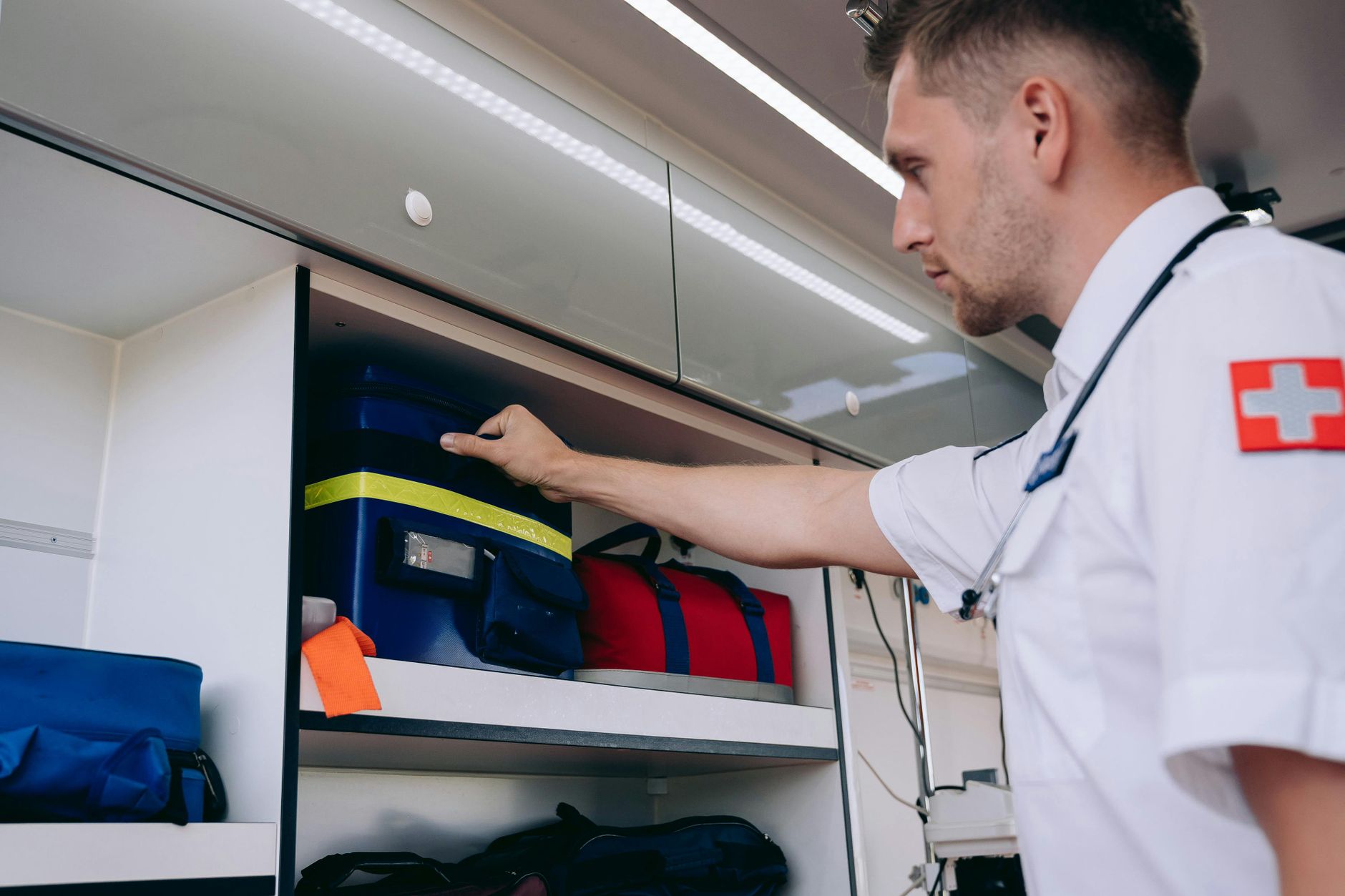
Each mission should begin with positive identification of the item and destination. The FDA says a unique device identifier generally contains a fixed device identifier and, when present, production information such as the lot, serial number, and expiration date. It also requires UDI information in plain text and a machine-readable form, giving hospitals a dependable scanning anchor.
A custody record should capture who released the implant, what was scanned, the source cabinet, case token, robot compartment, seal state, departure time, route events, recipient, and final disposition. Avoid displaying patient names on the robot. HHS guidance calls for role-based access and reasonable efforts to limit protected health information to the minimum necessary when that standard applies.
At the destination, an authorized employee scans a badge and confirms receipt before the compartment opens. Unused implants follow the same controlled path in reverse. Tissue implants need additional attention: the Joint Commission says records must support bidirectional tracing between the donor source and recipient for reporting and investigation.
Case sequencing matters more than the printed schedule
Operating-room schedules move. Cases finish early, run late, change rooms, or acquire a different implant plan. Dispatch logic should therefore consume live milestones such as case confirmed, room assigned, implant approved, clean core ready, and recipient available. A scheduled time alone is too brittle for case sequencing.
The operational risk is measurable. In one prospective orthopedic study, a just-in-time coordination process identified 163 potential instrument shortages, compared with 41 without the process. Staff resolved 150, or 92.5 percent, before disruption. Thirteen operating-room disruptions occurred, and all but one had been detected by the process.
Another single-institution orthopedic study found that 33 percent of reported cases in its second phase began without essential equipment available or operational. That result should not be generalized to every hospital, but it shows why a completed checklist cannot replace active readiness data. The AMR queue should release a load only when its case passes locally defined gates.
What does elevator priority actually require?
A delivery robot for elevators needs more than permission to press a button. The integration should request a car, identify the destination floor, confirm arrival, hold the doors for safe entry, verify that the robot is fully inside, select the floor, and release the car after exit. Every step needs a timeout and a known recovery state.
Priority should be tiered. An urgent implant mission may move ahead of routine logistics, but it must yield to fire recall, emergency controls, and hospital policies for patient movement. The building team should also prevent two robots from reserving the same car indefinitely and define what happens when a passenger blocks the doorway.
A multi floor delivery robot should not report success merely because it reached the correct floor. Success means arrival at the approved handoff point and receipt by the intended role. If the elevator interface, network, or destination reader fails, the mission should pause and alert a human runner instead of wandering or abandoning the load.
Where should the sterile boundary sit?
The robot chassis is not a sterile surface. In most layouts, the clean-core entrance, restricted corridor checkpoint, or staffed operating-suite desk is the defensible handoff boundary. Infection prevention, perioperative nursing, sterile processing, and facilities teams should approve that location together.
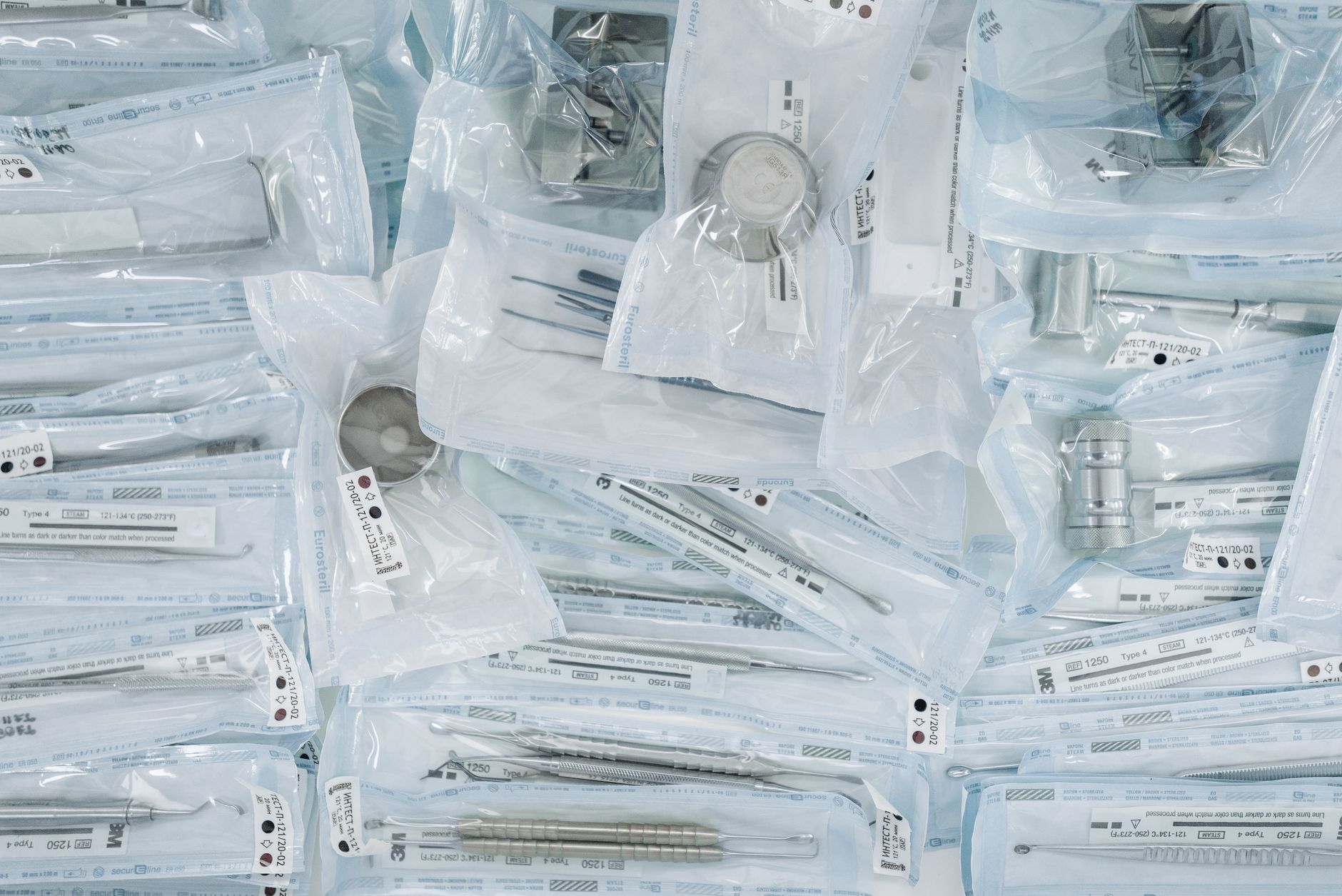
Implants should travel in a closed, cleanable carrier that protects the labeled sterile package from crushing, moisture, puncture, and unnecessary handling. CDC guidance says sterile shelf life depends partly on transport and handling conditions, and packages that are wet, torn, or punctured must not be used without appropriate reprocessing.
At receipt, staff inspect package integrity before the item moves deeper into the restricted area. An urgent request does not justify opening the robot inside the operating room or bypassing inspection. The WHO Surgical Safety Checklist has 19 items and calls for confirmation of sterility and discussion of equipment concerns before incision. Automated delivery should feed that checkpoint, never replace it.
How should exceptions reach the right person?
Duplicate dispatch deserves special protection. When an urgent request is reissued, the system should reveal any implant already moving for that case and require a human decision before sending another. The audit trail must preserve the original request, override, alerts, acknowledgments, and final disposition.
- Wrong-item or expired-item scan: block release and notify secure storage staff.
- Compartment opened or seal state changed in transit: quarantine the load and alert perioperative leadership.
- Case moved, canceled, or implant plan changed: stop the mission and require explicit reassignment or return.
- Elevator unavailable or route blocked: retry within policy, then dispatch the designated human runner.
- Recipient does not accept the handoff: retain custody, alert the operating-suite coordinator, and start a return timer.
- Network loss, localization fault, or low battery: move to a safe state without marking the delivery complete.
How should a hospital validate the operation?
Start with workflow observation, not a robot demonstration. Map secure storage, badge-controlled doors, elevators, restricted corridors, handoff points, charging locations, wireless dead spots, pedestrian surges, and manual runner paths. Include scheduled cases, add-ons, cancellations, room changes, rejected packages, and after-hours staffing.
Safety validation must reflect the actual operating zone. ISO 3691-4:2023 covers safety requirements and verification for driverless industrial trucks, including AMRs, and states that operating-zone conditions significantly affect safe operation. Its scope excludes public zones and specific hygienic requirements, so a hospital needs a site-specific risk assessment beyond simple standards conformance.
Run dry missions with representative locked payloads, followed by supervised clinical pilots. Measure request-to-release time, travel time, elevator wait, first-attempt handoff rate, exceptions by cause, manual rescues, package-integrity failures, and custody-record completeness. Go-live approval should come from clinical operations, infection prevention, facilities, information security, and safety stakeholders.
One partner should own the operating seams
The difficult part of hospital robot delivery is rarely navigation alone. It is the seam between inventory records, case scheduling, identity systems, doors, elevators, staff workflows, infection controls, and service coverage. Buying an isolated machine leaves the hospital to reconcile those seams on its own.
Service Robot Co. operates as a full-service, vendor neutral robot integrator for U.S. businesses. The team assesses the site, selects equipment across manufacturers, arranges purchase or lease structures and monthly payment programs, then handles robot deployment and integration, training, and service through a nationwide U.S. engineer network.
That model gives a hospital one partner and one number across the lifecycle. It can support an autonomous mobile robot lease or AMR leasing pilot, elevator and workflow integration, remote triage, on-site dispatch, maintenance planning, and later fleet expansion without forcing every campus into a single manufacturer’s catalog.