Key takeaways
- No single robot is the best for 100,000 sq ft. The right one matches your aisle width, turning room, overnight window and forklift traffic.
- Gausium publishes practical coverage of 5,382 to 15,069 sq ft per hour for two models, so one full pass of 100,000 sq ft takes roughly 7 to 19 hours of scrubbing on one machine.
- Check the tank, not just the battery. Tennant lists a 20 gallon tank lasting 40 minutes to 2 hours 10 minutes on conventional flow, against a battery rated up to 4 hours.
- A dock that refills, drains and charges, or a battery swap routine, decides how many hours per night the robot actually cleans.
- Measure cleanable floor, narrowest aisle and clear overnight hours first. Then run the shortlisted machines on your own floor.
Which floor cleaning robot fits a 100,000 sq ft warehouse?
The best floor cleaning robot for a 100,000 sq ft warehouse is the one that fits your aisles, your overnight window and your forklift traffic, not the biggest machine on a spec sheet. Service Robot Co. compares robots across manufacturers after a site assessment, then leases, deploys and services the one that suits your floor.
Manufacturers publish very different numbers for this job. Cleaning paths run from 18 inches to about 30 inches, tanks from 7.9 gallons to 35.7 gallons, and run times from 3 hours to 6 hours. Each figure suits a different building, so a ranking would only tell you which spec sheet someone liked.
A 100,000 sq ft floor is also more than one robot covers in a night at the rates makers publish. The real question is how the machine, the dock and the schedule share the work, and the sections below take those pieces one at a time.
How wide a cleaning path and how much aisle does the robot need?
Path width and turning room pull in opposite directions. A wider path covers more floor per pass, but it needs more clear aisle and a bigger space to turn around at the end of a lane.
Tennant's spec sheet shows the trade. Its T380AMR has a 20 inch scrubbing path and is described as best for narrow aisles, hallways and mid-size areas. The T7AMR has a 26 inch path and is described as best for wide aisles and larger open areas. Gausium lists the Scrubber 50 with a 460 mm disc brush, or 780 mm with side brushes, a minimum passage of 800 mm (31.5 inches) and a minimum U-turn of 1,100 mm (43.3 inches). Its Scrubber 75 has a 750 mm path, a minimum passage of 1,400 mm (55.1 inches) and a minimum U-turn of 2,000 mm (78.7 inches).
Read those as examples of a range, not a contest. In a racked warehouse the number that matters is your narrowest aisle plus the tightest turn at a cross aisle or a dock lane. Pallets staged at the end of a row can shrink that turn faster than the racking itself.
How big should the tank and battery be for a night shift?
Whichever runs out first sets your cleaning cycle, and it is often the tank. Tennant's sheet for the T380AMR lists a 20 gallon clean-water tank and a battery run time of up to 4 hours. On conventional flow, that tank lasts from 40 minutes at high flow to 2 hours 10 minutes at low flow. The larger T7AMR carries 29 gallons and lists up to 4 hours on flooded lead acid batteries or 6 hours on lithium.
Other makers sit in the same range. Avidbots says its Neo runs up to six hours on one charge, with a 28.8 gallon clean-water tank and a 35.7 gallon recovery tank, and runs longer with a battery swap. Avidbots recommends two battery sets and a dual battery cart so one set charges while the other works. Gausium lists the Scrubber 50 at 3 hours of scrubbing with a 7.9 gallon tank and a 2 hour charge, and the Scrubber 75 at 4 to 6 hours with a 20 gallon tank and about 5 hours to charge.
The practical lesson is to ask for run time at the flow setting your floor needs. A greasy dock lane wants more cleaning fluid than a dusty back aisle, and a test on your own concrete will show which limit ends the shift first.
How much of a 100,000 sq ft floor can one robot clean in a night?
Less than the headline numbers suggest. Avidbots states a cleaning productivity of up to 42,000 square feet per hour, and Gausium lists a theoretical maximum of 32,292 sq ft per hour for the Scrubber 75. Treat both as ceilings.
The practical ranges are lower. Gausium lists 5,382 to 13,993 sq ft per hour for the Scrubber 50 and 7,535 to 15,069 sq ft per hour for the Scrubber 75, and notes that real performance varies by site. Divide 100,000 by those figures and one full pass takes roughly 7 to 19 hours of pure scrubbing on one machine. That is our arithmetic, not a manufacturer claim, and it leaves out turning, refilling and charging.
Tennant lists estimated coverage of up to 33,440 sq ft for the T380AMR and up to 45,760 sq ft for the T7AMR, so 100,000 sq ft is about three times the smaller figure. For most buildings the answer is a mix of tactics: a larger machine, more than one robot, or a plan that cleans traffic lanes nightly and back aisles on a rotation. Cleanable floor is also smaller than the footprint, because racking and staging areas come out of the total.
How do docking, charging and refilling work on a large floor?
Docking removes the walk to the utility closet. Gausium sells a workstation for its Scrubber 50 and 75 series that lets the robot charge, refill and drain water on its own, and its catalog listing gives a power rating of 85 to 264 V and a footprint of 450 by 355 mm. RobotLAB's page for the Kärcher KIRA B 200 describes an optional docking station that handles auto refill, auto drain and charging without operator intervention. A 2021 Unite.AI report on LionsBot's Rex describes auto-docking after each cleaning cycle, with automated rinsing and water exchange.
Not every robot docks. Avidbots lists swappable batteries for the Neo, and Tennant specifies an off-board charger for the T380AMR and T7AMR, so a person handles the water and the battery. That is a fine plan with a crew member on shift, and a poor one if the point is to run unattended overnight.
The dock needs a home. It wants power, a water source and a drain close to the route, and a spot where it does not sit in a forklift lane. The Gausium listing does not state water or drain requirements, so ask any maker for them before you choose the corner.
What does forklift and pallet traffic do to a cleaning robot?
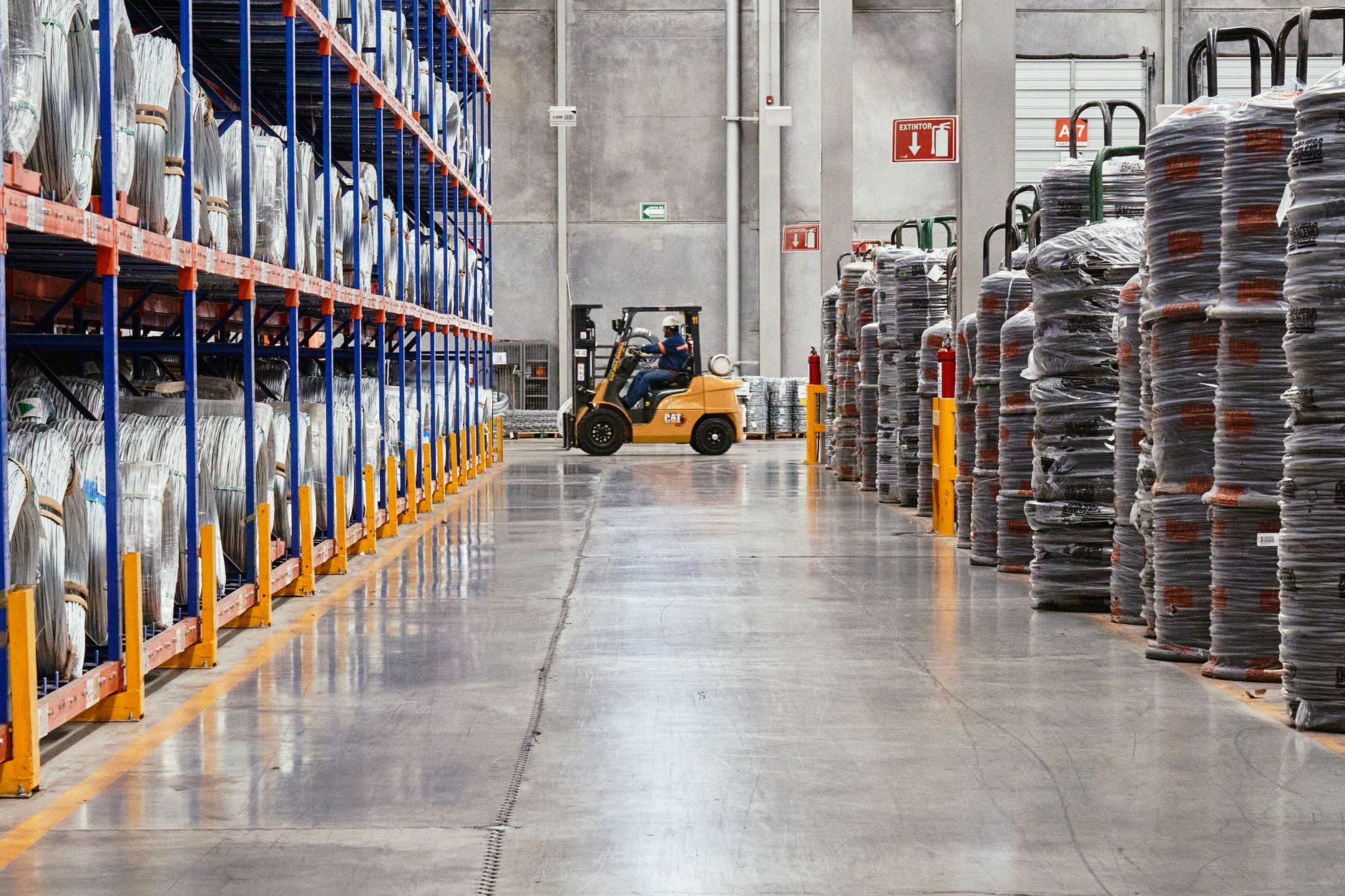
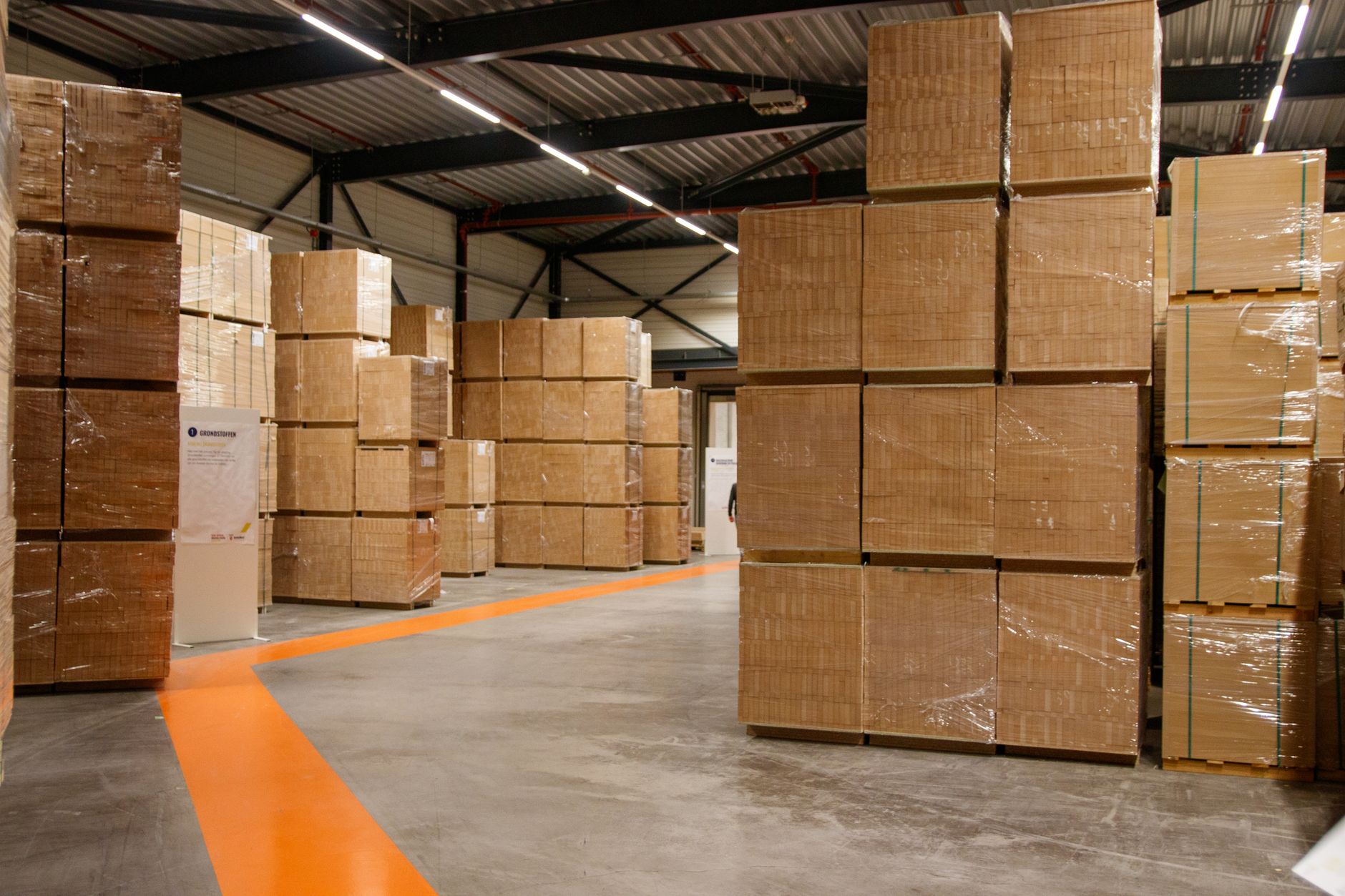
Warehouses are harder than stores for a robot. Avidbots notes in its warehouse guide that most operate around the clock, racks stay fixed while products and equipment move constantly, and there are narrow passages, blind intersections and low obstacles such as pallets.
Makers answer with specific features. Avidbots describes slow-down zones at intersections where forklifts may approach, a light that shows the direction the robot is heading, and sensors that detect low objects. For its Neo 2W, it says obstacle detection identifies pallets and forklift or pallet mover tines. The same guide reports a 400,000 sq ft warehouse with floor-stacked product and 25 forklifts running, where the operations supervisor said the robot avoided collisions. That is a vendor-reported account, not an independent test.
Software is moving the same way. Brain Corp says its SelfPath AI, released in March 2026 for Tennant X-series robots, reroutes around blocked aisles and unexpected obstacles without stopping. You still own the traffic plan. Clear lanes, defined no-go zones and a cleaning window after the last forklift leaves do more for results than any sensor.
How is a warehouse mapped and how long does it take?
Mapping is the first job after delivery. Avidbots says that when a Neo is deployed, the facility is mapped and a cleaning plan is generated, and at the start of each clean the robot compares what it sees to the original plan. Gausium says its robots build a map on first deployment without location tags, a laptop connection or a professional engineer. Tennant's sheet lists Teach and Repeat and Area Fill as learning types, which in plain terms means showing the robot a route or marking a zone for it to fill.
Timing varies and is worth asking about. A Tennant blog post says facility mapping can take several weeks before a machine can run, and that staff need to prepare areas by moving mats, signs and carts. Brain Corp reports that SelfPath AI delivered deployments more than 3 times faster, 22 percent more unique coverage and 55 percent more autonomy across initial deployments. Those are company-reported figures with no stated baseline.
Layouts in a warehouse do not stay put, so plan for remapping. Avidbots lets managers adjust maps and cleaning plans remotely through its Command Center, and Tennant's blog notes that robots need retraining when furniture or fixtures change. Clear floor markings help a robot and a crew read the same lanes.
How does Service Robot Co. pick the right robot for your warehouse?
We start with the building, not a product. A site assessment measures cleanable floor, aisle and turn widths, floor condition, where forklift lanes cross cleaning routes, the hours your floor is truly clear, and where a dock could go. Then we shortlist machines across manufacturers, and we walk the route with you on your own floor before you commit.
Service Robot Co. is OEM-neutral, so the shortlist is not shaped by one maker's catalog. We lease the chosen robot on a 3-year lease with a $1 buyout at the end, deploy it, train your crew and service it. If you have already looked at a specific manufacturer, tell us. We will say plainly if its machine fits your aisles.
Want help picking the right robot? Talk to us
Book a free site assessment with Service Robot Co. and bring your floor plan, your narrowest aisle and your overnight hours. We will tell you how many machines your 100,000 sq ft needs and what the plan looks like.
Every robot we lease comes with 24/7 support with 10-minute specialist triage, regional service engineers in every serviced state, three check visits a year and a 12-month warranty.
Frequently asked questions
Want a robot working for you?
Tell us the job and the site. We will recommend the robot, quote the lease, and keep it serviced.
Sources
- Tennant: T380AMR and T7AMR specifications (PDF, 2022)
- Tennant blog: robotic cleaning machine considerations
- Avidbots: Meet Neo
- Avidbots: Boosting Warehouse and Supply Chain Productivity with Floor-Scrubbing Robots (PDF)
- Avidbots: first floor-scrubbing robot built for industrial spaces (Neo 2W, April 2023)
- Gausium: Scrubber 50 specifications
- Gausium: Scrubber 75 specifications
- Gausium workstation for Scrubber 50 (ASBIS catalog)
- RobotLAB: Kärcher KIRA B 200 product page
- LionsBot launches king-size autonomous cleaning robot (Unite.AI, October 2021)
- Brain Corp: BrainOS Clean 2.0 with SelfPath AI (March 2026)