Key takeaways
- Robots fit large, open turf that needs frequent cuts. Crews and ride-ons still win on trim, beds, tight gates and greens.
- Contractors and course managers quoted here describe a crew supervising two to three robots while the rest of the team does detail work.
- Dense tree canopy and shaded corners are where the field reports describe lost signal and stalled mowers.
- Quality, noise and night mowing claims come from makers and course managers, so check them on your own site before you promise a client anything.
- Use your own numbers: count the crew hours spent on open turf, because that is the share a robot could take.
Which is better, a robotic mower or a ride-on mower?
For large, open turf that needs frequent cuts, such as HOA commons, office parks and golf roughs, a robotic mower is worth a hard look. Crews and ride-ons still win on trim, beds, tight spaces and greens. Service Robot Co. matches robots to sites like these and leaves the detail work with your crew.
The honest answer depends on three things you already know: how many acres of your contract are open turf, how many obstacles sit inside them, and how many people you can put on the job. This guide uses published field reports from contractors, golf course managers and independent reviewers, and it leaves price comparisons out on purpose. Your own hours and acres will say more than any average.
How does a robotic mower change the labor picture?

The National Association of Landscape Professionals says labor shortages are one of the most frequent concerns for landscape companies. That is why the crew question comes first for most contractors. In a 2023 NALP report, a Scythe representative described landscape companies sending a crew with two to three autonomous mowers while the team works on other tasks, and a Greenzie representative said customers can drop from three crew members to two by adding a mower. Both are maker statements, not audited results.
A 2026 NALP article quotes a contractor whose goal is a two-person crew running two robots across 20 to 25 acres a day. Another contractor in the same article had not reduced crew size at all. His staff now has time for hand pruning and cleaning landscape lighting lenses. A third described the robot as a way to make people more efficient, not a replacement for them.
MowScout's July 2026 guide to the Scythe M.52 says the mower is supervised, not unattended: it runs its pattern on its own, stops and sends an alert when it meets an obstacle it cannot clear, and a crew is expected to be nearby. One worker can supervise it while trimming and doing detail work.
For a crew that is short on labor, the useful sum is simple. Add up the hours your people spend each week on open turf, the long straight passes. That is the work a robot could take. The hours spent on trim, beds and gates stay with your crew.
Where does a robotic mower beat a ride-on?
Open expanses and frequent cuts. MowScout lists large, open commercial turf with long uninterrupted stretches of grass as the best fit, and names office parks, HOAs, sports complexes, cemeteries and municipal grounds. A ride-on needs a driver for every hour it runs. A robot runs its mapped pattern while your driver does something else.
Frequency is the other advantage. At a 27-hole course in Aberdeenshire, a course manager told a BIGGA round table that robot mowers were cutting rough and semi-rough about three times a week, against once or twice before. The same manager said the robots leave no clippings to collect, and that a member of staff had been added since the robots arrived, with freed time going to edging, weeding and hand-cutting greens.
That last point matters for your own planning. In the field reports, the time a robot frees does not disappear. It moves to the detail work that clients and members notice.
Where do crews and ride-on mowers still win?

Trim, beds and tight spaces. MowScout's M.52 guide says the mower struggles with tight beds, narrow gates, heavy ornamentation and obstacle-dense properties. Its CEORA guide says edging, trimming, bunker surrounds and fine detail still need people. Greenzie's own documentation, last dated April 2023, says that in autonomous mode a mower may struggle on slopes, may run over low objects in the grass and leaves an unmowed strip around obstacles.
Greens are the clearest line. A Husqvarna segment manager told the same BIGGA round table that greens remain beyond the capabilities of automated machines. Nobody in the sources quoted here suggests otherwise.
Ride-ons also keep their place on cramped properties, awkward corners and any site where a crew is already on the lawn for other work. The question is not robot or ride-on across the whole contract. It is which parts of the contract suit which tool.
What about cut quality, noise and night mowing?
On quality, one parkland course manager in the BIGGA round table said a robot mower trial was bullet-straight and the quality of cut was fantastic. The same manager found that it scalped contoured ground and left a thinner stripe pattern than a cylinder mower. Quality depends on the ground and the machine, so test on a representative corner of your own property.
On noise, a 2023 Husqvarna survey of 1,005 US adults found that 65 percent wish lawn care equipment was quieter. In the same release, Husqvarna said gas mowers average 95 to 100 decibels and its Automower averages 58 to 69. Those are the maker's figures for its own residential product, not independent measurements of commercial machines, so ask for the sound level of the specific machine you are considering and the distance it was measured at.
On night mowing, the BIGGA round table is the most useful read. One course manager said mowing is the area most disruptive to golfers in the daytime and wished fairways could be cut overnight. Another said the robots ran almost around the clock last season with no negative feedback from members. Local noise rules and your client's own rules still decide what is allowed, so check them before you schedule a night run.
Do robotic mowers make sense for golf course roughs?
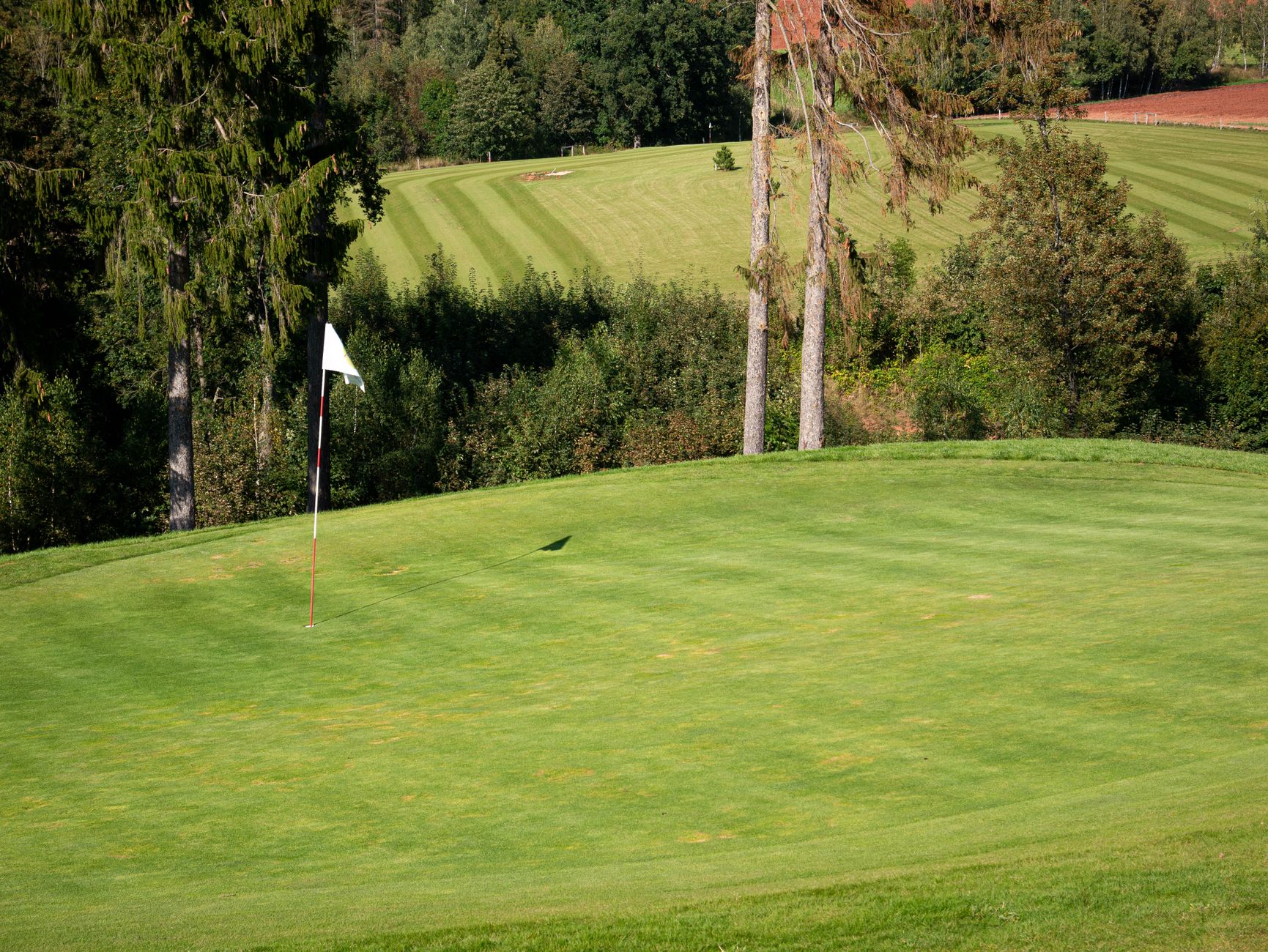
Roughs are large, forgiving and cut often, which is why they come up first in course manager reports. The Aberdeenshire manager's three cuts a week on rough and semi-rough is one example. A parkland manager in the same discussion said fairway cutting takes two staff about four hours, three times a week, and estimated that automating it could free roughly 24 hours a week.
The limits are just as specific. The Aberdeenshire manager said dense trees cause machines to lose satellite signal and get stuck, and that the machines do need some looking after. Course set-up, detail work and paperwork stay with staff. If your question is robotic mower versus traditional mower on roughs, the sources suggest robots for the open stretches and people for the edges, the tree lines and the greens.
What should I check before moving a contract onto robots?
Three field limits come up again and again, each from a named source. MowScout's M.52 guide says the machine is supervised, so plan for a person nearby. A contractor quoted by NALP in 2026 said his team maps properties several times before getting a good workflow, that not every shop has the electrical capacity to charge a growing fleet, and that dense tree canopies are inefficient for robotic mowing.
A German test of the Husqvarna CEORA 544 EPOS, published by smartgeber.de in March 2026, found that a reference station that was not rigid enough caused positioning offset, and that the system ran stably after firm mounting. The same test says satellites need open sky. MowScout's CEORA guide adds that heavy tree canopy, tall building shadows and dense overhead structure degrade the satellite fix.
NALP's 2023 integration article describes two ways to organize the crew: one crew with two to three autonomous mowers, or a dedicated robot crew followed later by a maintenance crew. Either way, start with one property, keep your ride-on crew available for the first weeks and tell your client what is changing. The steps below put the order in one place.
How does Service Robot Co. help with robotic mowing?
We start with a site assessment. We look at open sky, tree canopy, slopes, gates and charging power at each property, then pick the right machine for it, whichever manufacturer makes it. We lease it to you on a 3-year lease with a $1 buyout at the end, deploy it, train your crew and service it.
Service means 24/7 support with 10-minute specialist triage, regional service engineers in every state we service, three check visits a year and a 12-month warranty. The lease is one fixed payment, quoted after the assessment, so you can set it against your own labor hours and contract terms.
Want help picking the right robot? Talk to us
Bring us one contract and your current crew hours. We will tell you which parts look like open turf, which parts will stay with your crew, and what we would check on site first. Book a free site assessment with Service Robot Co. and we will walk the property with you.
Frequently asked questions
Want a robot working for you?
Tell us the job and the site. We will recommend the robot, quote the lease, and keep it serviced.
Sources
- NALP The Edge: How to Integrate Commercial Autonomous Mowers in Your Operations (July 20, 2023)
- NALP The Edge: What Contractors Need to Know Before Going All-In on Robotics (May 15, 2026)
- NALP The Edge: How NALP Is Helping Grow the Workforce (March 17, 2026)
- MowScout: Scythe M.52 robot mower guide (updated July 2, 2026)
- MowScout: Husqvarna CEORA commercial guide (updated July 2, 2026)
- smartgeber.de: Husqvarna CEORA 544 EPOS test (March 2026)
- BIGGA: The rise of the mow-bots, is autonomy the future? Your Course robotics round table (April 2, 2025)
- Greenzie University: Limitations and gotchas (as of April 2023)
- PR Newswire: Husqvarna survey on noisy lawn equipment (March 7, 2023)