Key takeaways
- No single patrol robot is best for every lot. Pavement, curbs, lighting, route, charging and alert routing decide the fit.
- Ask for an IP rating and a temperature range, then test them against your own worst month. IP65 means dust-tight and resistant to low-pressure water jets, while IP54 only resists splashing.
- One published K5 datasheet lists 2.5 to 3 hours of patrol per charge and 20 to 30 minutes of charging, so every cycle leaves a gap to plan around.
- Cameras cannot fix a dark lot. Parking BOXX says footage from under-lit lots is often unusable as evidence.
- Settle who receives each alert, who confirms it and how plate data is stored before any robot arrives.
What is the best security patrol robot for a parking lot?
There is no single best patrol robot for a parking lot. The right one depends on your pavement, curbs, lighting, cameras, patrol route, charging spot and who reads the alerts. Service Robot Co. picks the machine for each site, leases it on a 3-year lease with a $1 buyout, deploys it and services it.
Ranking products would not help you anyway. A robot that suits a flat retail lot may stall at a drainage swale, and one that climbs steps may be slower than you need across a wide asphalt field. The lot sets the demands first, and the machine follows.
Parking is already where most outdoor patrol robots work. Knightscope said in an April 2025 post that nearly three quarters of its deployed K5 units patrol parking lots or parking structures. That shows the use is established in the category. It tells you little about your own lot, which is why the checks below matter more than any brand name.
Is the robot built for your weather?
Ask for an ingress protection rating and learn what it means. IP codes come from the IEC 60529 standard. AMC explains that IP65 means the enclosure is completely dust-tight and resistant to low-pressure water jets from any direction, tested with a 6.3 mm nozzle for at least 15 minutes. The same explainer says IP54 gives only partial dust protection and resists splashed water.
A rating is a lab result, not a weather forecast. Knightscope lists an operating range of 0 to 115 degrees Fahrenheit outside ambient for the K5 in its brochure, and its 2025 post says units work in rain, snow and extreme heat, with well over 3 million hours logged across the country. An independent IPVM review from 2016 was more cautious and said areas with snow or ice might find robots limited to fair-weather patrols. That review is a decade old, so treat it as a reason to ask questions and not as a verdict.
Write down your worst month: the lowest overnight temperature, the highest afternoon, the longest stretch of snow cover and the heaviest storm you remember. Ask the maker, in writing, which of those the machine is rated for and what it does when conditions fall outside the range.
Can it handle your surface, curbs and ramps?
Walk the route before you call a vendor. Knightscope says in its 2025 post that the K5 is designed for solid surfaces such as concrete, asphalt, marble and commercial carpet, and it describes dirt, grass, loose gravel and light off-road use as future development. The brochure lists patrolling around speed bumps, ADA compliant ramps and garage ramp inclines up to a 20% grade.
Curbs are the quiet deal breaker. A wheeled machine normally crosses at a curb cut, and the US Access Board guide sets a maximum running slope of 1:12 for curb ramps, so a lot that follows that standard gives a wheeled robot a workable route. A raised island with no cut does not. Boston Dynamics lists a maximum step height of 300 millimeters (11.8 inches) and a maximum slope of 30 degrees on its public safety datasheet for the legged Spot, which is why legs come up when a route has steps or broken ground.
Legs bring their own tradeoffs. The same datasheet lists an average runtime of 90 minutes and a recharge time of 60 minutes. Short runtimes mean more dock time, so the route and the number of units matter more. Survey the lot with this list before any machine is shortlisted.
- Curb cuts and ramps along the route, with their slope
- Speed humps, drain grates, potholes and expansion joints
- Painted crosswalks, one-way aisles and cart corrals
- Any gravel or grass edge the route would touch
- Low spots that flood after a heavy storm
Do cameras and plate reading work in a parking lot?
Most outdoor patrol robots carry several cameras and a thermal sensor. Knightscope lists four HD cameras with wide angle lenses and one infrared thermal camera on the K5 in its brochure, and its 2025 post says the robot can read license plates from all four onboard cameras. Ask any maker how plate reads are scored and what happens at a bad angle, speed or light level. A vendor read rate is a claim until you test it on your own lot.
Test it the plain way. Park ten known vehicles along the edges of the route, once at dusk and once after midnight, and count how many plates come back right. Mark the misses on a map and show the maker.
Plate data also needs its own policy. The Electronic Frontier Foundation said in a November 2025 one-pager that plate readers turn plates into searchable vehicle location data and gather it in centralized databases, and it argues that this invites misuse. You do not need to share that position to ask the practical questions. Who can see your lot data, how long is it kept, can it be shared outside your company and can you ask for deletion? For reference, Knightscope states that 30 days of raw video storage comes with the K5.
How much does lighting matter at night?
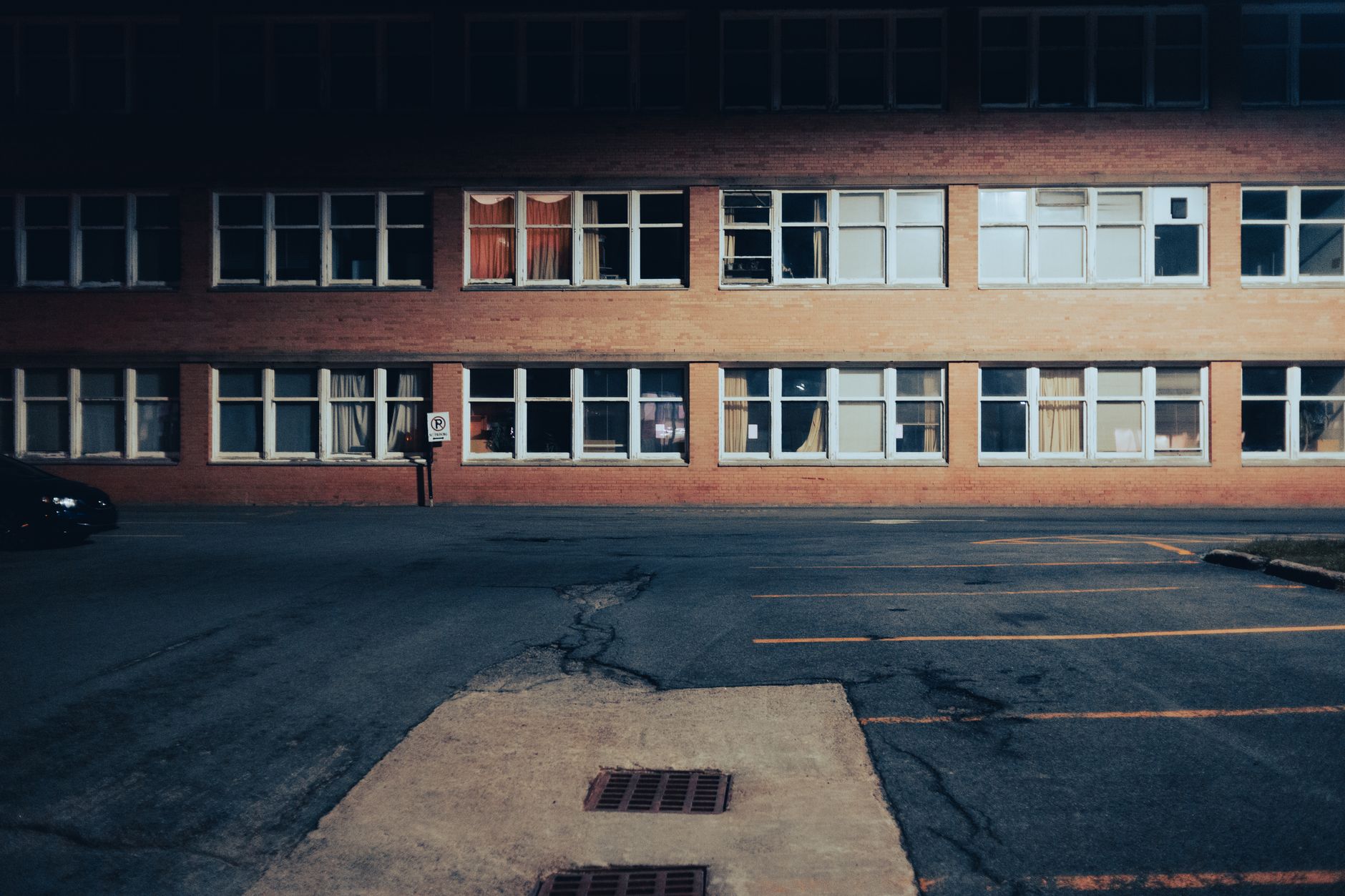
More than the robot does. A Parking BOXX guide from October 2025, describing IES RP-20 recommendations, gives 0.2 to 1.0 maintained footcandles as the minimum range for open surface lots, with 1.0 recommended for higher security facilities. It adds that cameras in under-lit lots produce footage that is often unusable as evidence, and that dark spots between fixtures can make individual spots unsafe even when the average looks adequate.
Thermal imaging helps where light is poor. FLIR said in a 2017 announcement that its fixed thermal camera detects potential intruders in total darkness and through sun glare, smoke, dust and light fog. Thermal sees heat and not faces, though. GIT SECURITY wrote in a 2020 status report that thermal cameras are not a tool for identifying individuals, so a warm shape in a dark corner is a detection and not an identification.
Fix the dark gaps first. A lot with long unlit stretches needs better lighting or a fixed camera at those stretches whichever robot rolls past. A good integrator will tell you that before it talks about machines.
How should patrol routes and charging be planned?
Think in cycles, not hours. Knightscope says in its brochure that the K5 patrols 2.5 to 3 hours between charges on average and charges autonomously in 20 to 30 minutes on average. By our arithmetic that puts roughly 10 to 17 percent of each cycle on the dock, a stretch of the night when that robot is not watching your lot.
The dock needs power and a sensible home. The same brochure lists a 120 volt, 20 amp outlet and says the docking station can be installed outdoors on a wall or the ground. Put it where an electrician can reach it, away from drive aisles and inside the cellular signal. Then shape the loop so every cycle covers the entrances and the far edge, even when a robot has to cut a patrol short to dock.
People and cars share the lot. Knightscope says in its 2025 post that when someone approaches, the K5 pauses, plays a preset message and routes around the person. Walk the route at your busiest hour and mark every place a robot would meet a driver or a shopping cart. Patrol timing, quiet hours and speed limits belong in a written route plan, not in a vendor's head.
How do alerts reach your guards?
A robot that sees a problem and tells no one has done nothing. Knightscope's product page lists real time alerts with continuous recording and incident documentation for the K5, and describes structured escalation from autonomy to human command. Its brochure says the interface runs in a browser with live streaming to PC, Mac, tablet and phone, and that the unit connects over 4G LTE, 5G or private LTE cellular.
Other makers split the work differently. Cobalt AI says on its site that non-critical events are auto-cleared and that confirmed threats go to its own robot specialists at a command center, who verify the alert and coordinate the response. Knightscope also offers monitoring to customers without their own team, according to its brochure. Compare who looks at an alert first: your guard, your control room or the maker's staff.
Settle in writing who gets the text at 2 a.m., who confirms it, who calls the police and how long each step should take. IPVM reported in 2016 that Knightscope acknowledged most campuses lack reliable outdoor Wi-Fi, which is one reason cellular links matter. Test the signal at the far corner of your lot.

How does Service Robot Co. pick a robot for your lot?
We start with a site assessment, not a catalog. We walk the lot, measure curbs and ramps, check the lighting after dark, test cell coverage and ask how your guards work today. Then we pick a machine across manufacturers, or tell you plainly that a fixed camera or a guard shift fits better.
When a robot fits, we lease it on a 3-year lease with a $1 buyout at the end, deploy it, train your people and service it. One fixed payment is quoted after the assessment, so you compare options with your own numbers in hand and not with a brochure.
Pictures of a lot are never enough. Two lots with the same square footage can need different machines because one has a shallow ramp and the other has a raised island. We would rather find that on a walk than after delivery.
Want help picking the right robot? Talk to us
Book a free site assessment with Service Robot Co. and bring a lot plan if you have one. We will tell you which robot fits, which gaps a robot cannot fill and what the patrol route should look like.
Every robot we place comes with 24/7 support with 10-minute specialist triage, regional service engineers in every state we service, three check visits a year and a 12-month warranty.
Frequently asked questions
Want a robot working for you?
Tell us the job and the site. We will recommend the robot, quote the lease, and keep it serviced.
Sources
- Knightscope: K5 product page
- Knightscope: Autonomous Security Force overview
- Knightscope: Built for the Real World, How the K5 Robot Handles Weather, People, and Parking Lots (April 2025)
- Knightscope: K1H and K5 brochure (PDF)
- IPVM: Knightscope Security Robot Examined (2016)
- AMC: IP65 rating explained
- US Access Board: Chapter 4, Ramps and Curb Ramps
- Boston Dynamics: Spot Defense and Public Safety Kit datasheet (PDF)
- Electronic Frontier Foundation: Automatic License Plate Readers one-pager (November 2025)
- Parking BOXX: Parking lot lighting standards (October 2025)
- FLIR: New series of fixed thermal security cameras (2017)
- GIT SECURITY: Status Report on Thermal Cameras (2020)
- Cobalt AI: Cobalt Security Robot
- Cobalt AI: Human-in-the-Loop Robotics
- Stand for Security: summary of the UC Berkeley Labor Center security workforce report (2026)