Key takeaways
- Robot passes shrink only the open-turf mowing line, while trimming, edging and cleanup stay as crew hours.
- On robot days, give supervision its own hour line, measured on your own route.
- The fixed lease cost goes on the equipment or overhead line, never inside the crew labor rate.
- Most published robot mower labor savings are vendor-linked or single-site anecdotes, so test them before you bid.
- Keep vendor projections and residential test results out of a commercial bid.
Where robot passes go in the build-up
A robot mowing pass belongs in the open-turf mowing line of a landscape labor build-up, as a reduction in crew hours for that line only. Trimming, edging, cleanup and supervision stay in the build-up, each on its own line, because a robot does not remove them from the day.
The fixed lease cost goes on the equipment or overhead side of the worksheet, not into the crew labor rate. Service Robot Co. leases robots through financing on a 3-year lease, with one fixed lease quote issued after a site assessment, so the estimator has a single stable number to place.
What does the labor evidence actually show?
Independent measurement of robotic mower labor savings is thin. The most cited piece in trade coverage is a manufacturer-sponsored white paper summarizing a Virginia Tech Turfgrass Research Center comparison of a robotic mower with a gasoline push mower over the 2018 and 2019 seasons. That test used residential-style turf, not commercial sites, so read it as a direction rather than a commercial benchmark.
Operator accounts are more useful for forming a hypothesis. Lambert's Landscape in Dallas reports through its fleet director that robotic mowers save 2 to 4 man-hours per job. That is one contractor's account, and a Turf Magazine account of a three-acre site is another single-site anecdote. Carry both as assumptions to test, not as bid facts.
Aspire's 2025 survey, run by Thrive Analytics with 1,015 commercial landscape contractors between May 2 and May 23, 2025, shows where the pressure sits. Aspire's GM of landscaping, Eli Zevin, says the hiring challenge is finding quality talent, not only headcount. The person supervising a mower is a skilled hire, and the build-up has to price that hour honestly.
How to split the crew hours before any robot enters
Start with five separate lines. A combined mowing rate hides the one thing you need to see, which is what the robot removed and what it left behind.
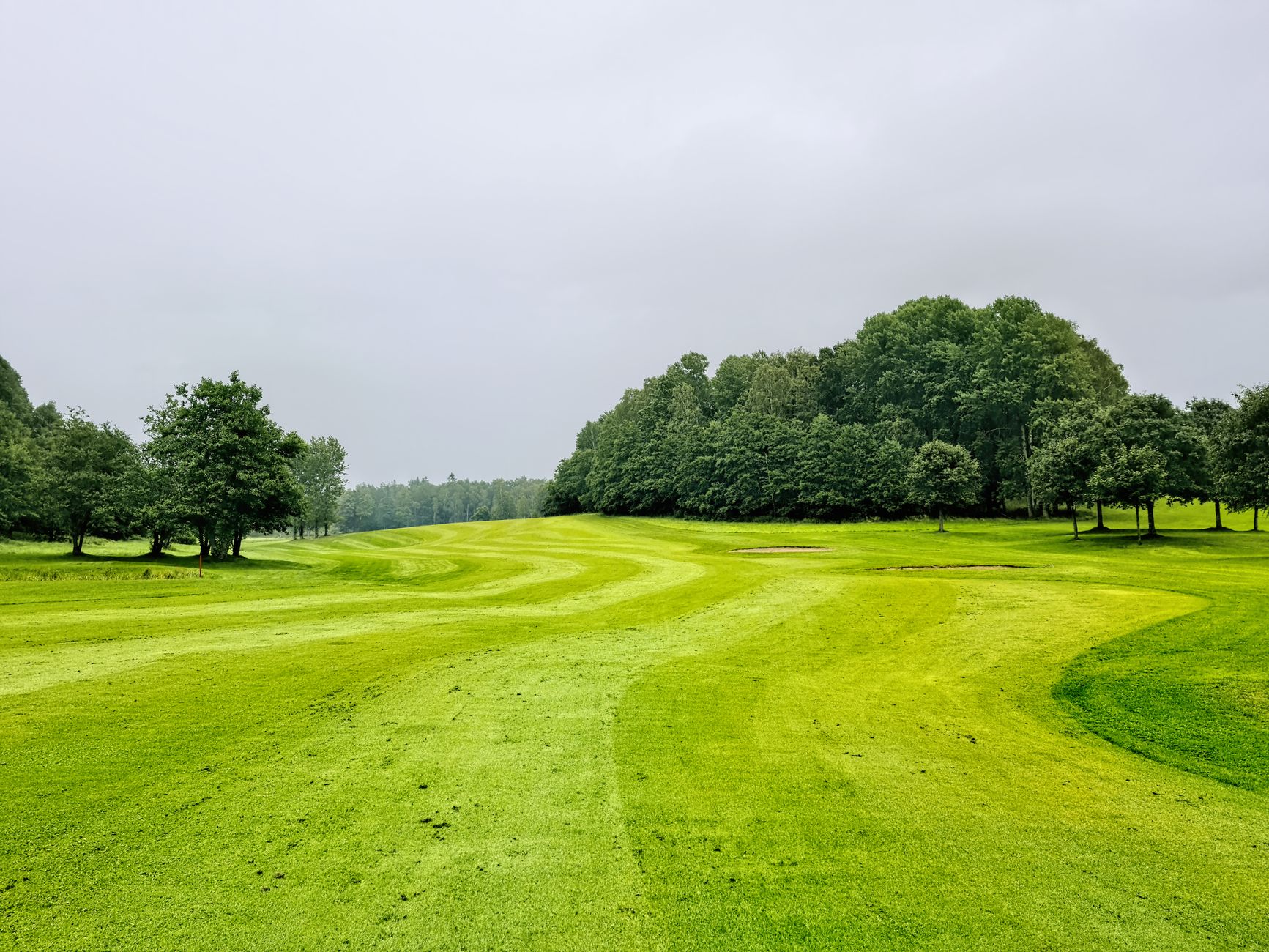
- Open-turf mowing: unobstructed grass where a robot can run. This is the only line a robot shrinks.
- Trimming: string work around trees, beds, signs and fixtures. Crew hours stay here.
- Edging: hard-surface and bed edges along walks, drives and curbs. Crew hours stay here.
- Cleanup: clippings removed from walks, drives and drains after any pass. Crew hours stay here.
- Supervision: the crew lead's pre-pass check, pauses, restarts and end-of-day log review. This line exists only on robot days.
How does the open-turf line change when a robot runs?
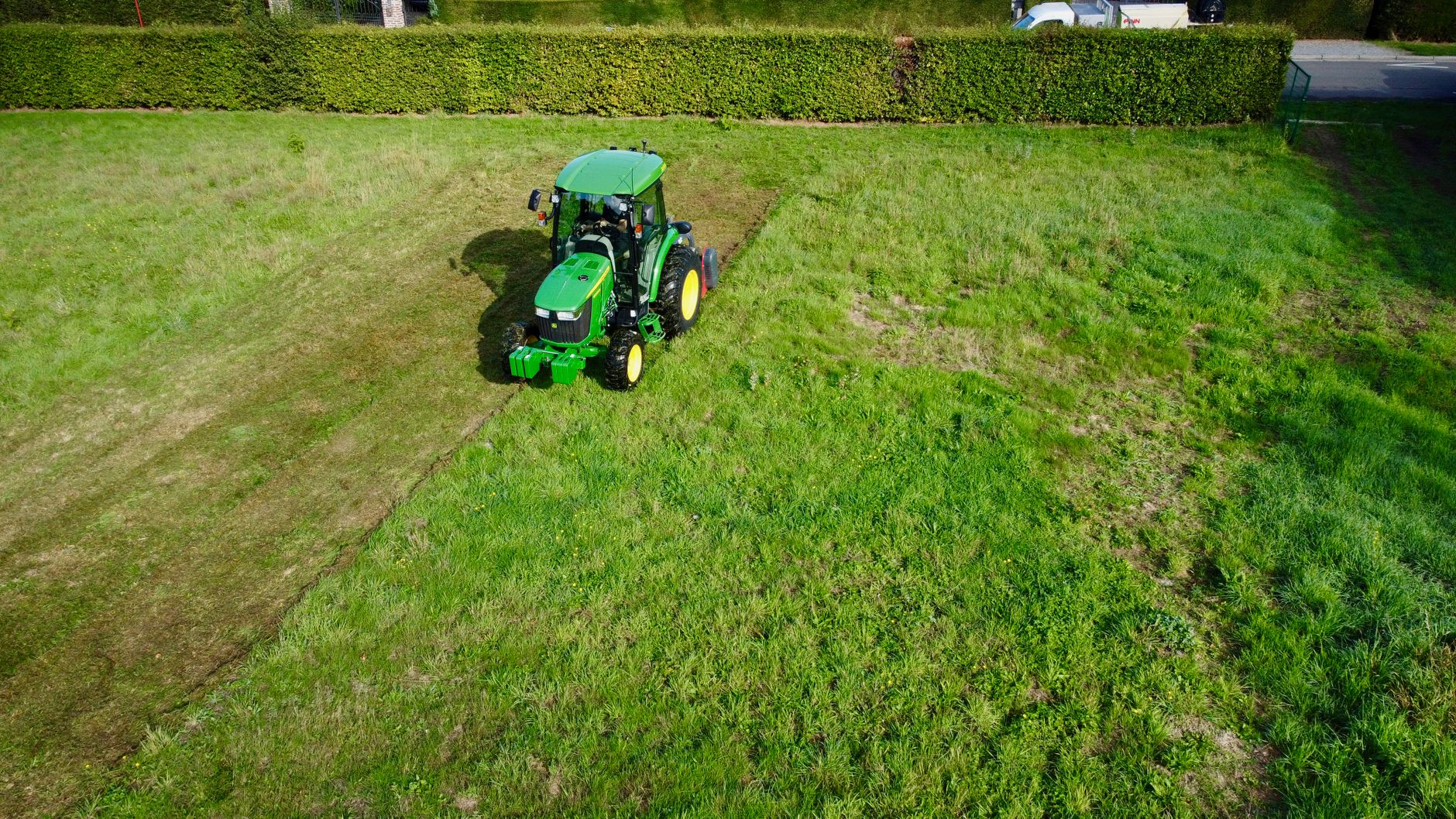
Begin with the open-turf hours a crew would spend on the site without a robot. Call that the baseline. After the site assessment and mapping, decide what share of that open turf a robot can cover on this particular site. Only that share comes off the mowing line.
Write it as a formula your reviewer can follow. If the baseline open-turf hours are H and the robot covers a fraction f of that open turf, the mowing line drops by H times f, and the supervision line rises by the hours the crew lead actually spends watching the unit. Do not let the robot absorb the difference silently inside a mowing rate.
Where does the fixed lease cost belong?
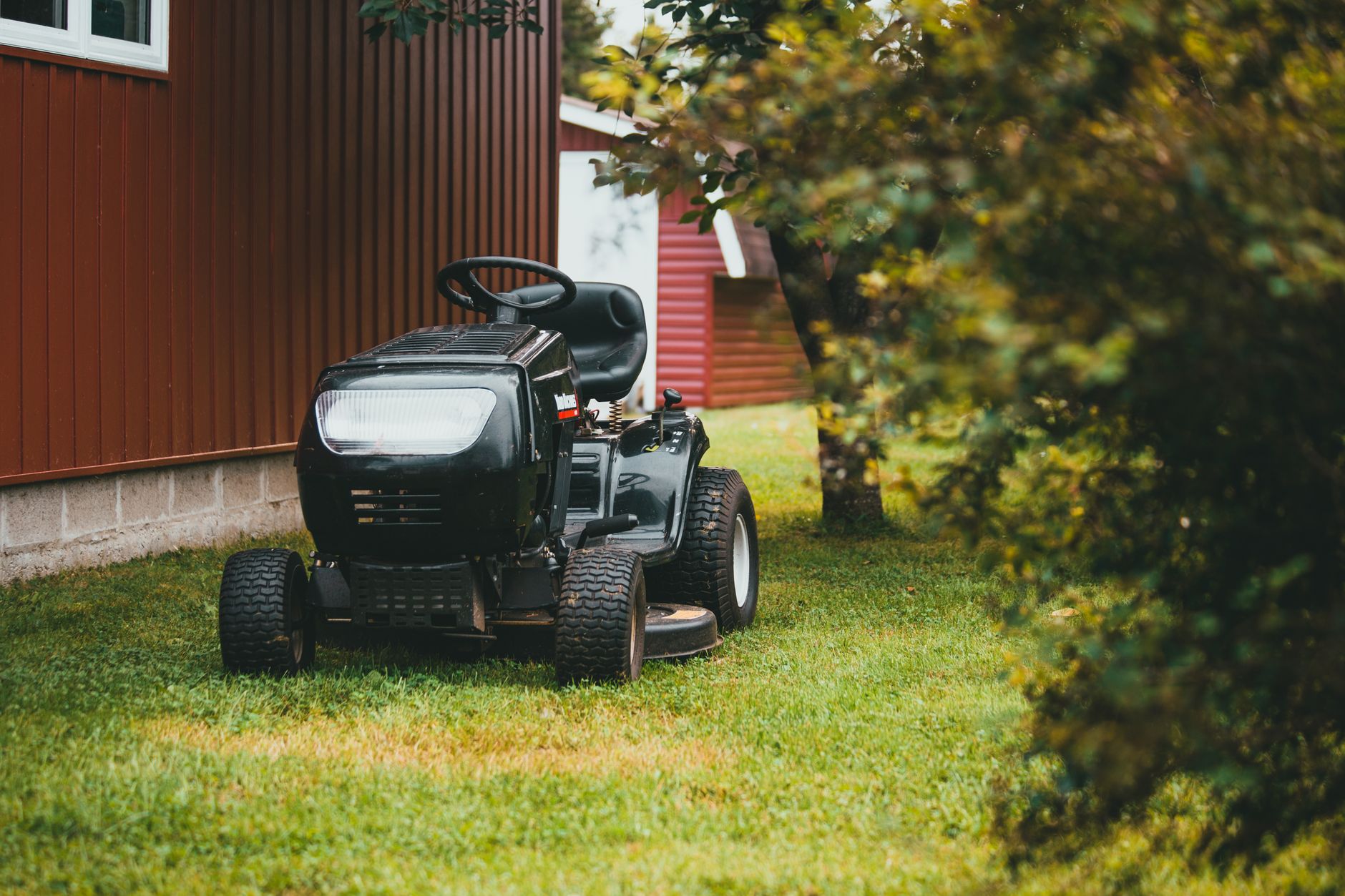
The lease is an equipment-side cost. It does not belong in the crew labor rate, and it does not reduce mowing hours. Place it on its own line in equipment or overhead, next to the rest of the mower fleet, and tie it to the site it serves.
Service is part of what that line buys. RoboCare, our service program, covers every unit we deploy through service engineers in the states we serve. Keep service inside the equipment line rather than spreading it across crew hours, so a repair day appears as a cost on the robot, not as a missing crew member.
What to leave out of the bid
Several common entries weaken a build-up and fail a renewal review. Leave these out, and be ready to explain why if a client asks.
- The robot's own run time entered as crew hours. The unit does not clock in or supervise itself.
- Vendor projections of avoided labor. A modeled savings figure for a multi-mower property is an illustration, not a measurement.
- Residential study results carried onto commercial sites, where turf, obstacles and routes differ.
- Trimming and edging savings that no source measured on your type of site.
- Electricity or charging costs you have not priced for the site in question.
How do you test the split on your own timecards?
Before the next bid, pull three to four weeks of crew timecards for a site a robot would cover. Sort the hours into the five lines above. Then run a limited zone trial and record what the crew actually does on those days, including every supervision interruption.
Build the crew schedule from the split hours, not from the robot's cut window. Aspire's survey points to retention and efficiency as contractor priorities, and a worksheet that shows its assumptions is one way to prove the bid holds up when the client asks.
Frequently asked questions
Want a robot working for you?
Tell us the job and the site. We will recommend the robot, quote the lease, and keep it serviced.
Sources
- Turf Magazine: Aspire's 2026 Commercial Landscape Industry Report is now live
- Barchart: New Aspire Software data shows commercial landscape contractors focus on client retention, operational efficiency and smarter tech investments
- Rural Lifestyle Dealer: Robotic mowers save landscapers time and money, study shows (summary of STIHL-sponsored Virginia Tech study)
- Turf Magazine: Robotic mowers (Lambert's Landscape fleet director account)
- Turf Magazine: Robotic mowers, robots are here (three-acre site account)