
Key takeaways
- Every fairway pass takes seat hours that could have gone to greens, tees and bunkers.
- Two weeks of logged seat hours, interruptions and displaced work beats a guessed number.
- Published autonomous fairway recoveries are manager estimates, so measure your own course.
- Label labor gaps separately from mower savings so the numbers stay honest.
- Pilot a few holes before any lease decision, then compare the log against your baseline.
What does a fairway crew actually give up?
A riding fairway mower is a seat, and a seat holds one person who cannot be doing anything else. Every morning spent cutting fairways is a morning not spent rolling greens, freshening bunker faces, trimming tee surfaces or doing the detail work members notice first.
The cost rarely appears on a line item, so it stays invisible until a green misses its cut or a bunker goes ragged for a week. The fix is measurement. Log the seat hours over a fixed period, sort them by what the crew would otherwise have done, and the tradeoff becomes a figure you can debate instead of a feeling you carry from the maintenance barn to the clubhouse.
Why does labor make this tradeoff sharper?
Golf maintenance has struggled to fill crew seats for years. In a 2022 GCSAA labor survey, as summarized by Golfdom, 63 percent of respondents rated the labor market bad or very bad. That was up from 45 percent in 2016 and 19 percent in 2012.
The most recent GCSAA labor survey we could find is from 2022, so treat it as a dated snapshot rather than a current reading. A Golfdom article from April 2025 still describes the labor shortage and collects strategies superintendents use to fill gaps.
When you cannot hire, seat hours do not simply move from one task to another. They can decide whether work gets done or quietly goes undone, which is why the count matters most in an understaffed season.

How many hours have autonomous fairway mowers returned?
Some courses that moved fairway mowing to autonomous units report large recoveries, but these are manager estimates, not audited records. Gullane Golf Club in Scotland is one example. Course manager Paul Armour estimates that four autonomous Toro Turf Pro 500 mowers recovered 30 to 40 hours a week during the growing season, and says staff moved to more detailed work, as reported by Pitch Care.
A club's figure reflects its own acreage, mowing windows, terrain and staffing. A course with more tree shade, more irregular fairways or a different mowing schedule may land far from those numbers, in either direction. That is the reason to build your own log before citing anyone else's.
What should the tracking log record?
Keep the method simple enough that a crew lead can run it without a spreadsheet specialist. A clipboard or a shared phone note works as well as a dashboard, as long as every pass is captured the same way from opening to close.
- Start and stop time for each fairway pass, to the minute, including the trip from the shed to the first hole and back.
- Holes or corridors cut, and whether the pass was a full cut or a partial pass on one fairway section.
- Operator name, and any moment the operator was pulled off the seat for another task.
- Interruptions such as weather holds, breakdowns, refueling and blade or deck service, each with its own start and stop.
- The work the crew did instead, noted at the end of each shift, even when the answer is nothing.
How do you price the work the seat displaced?
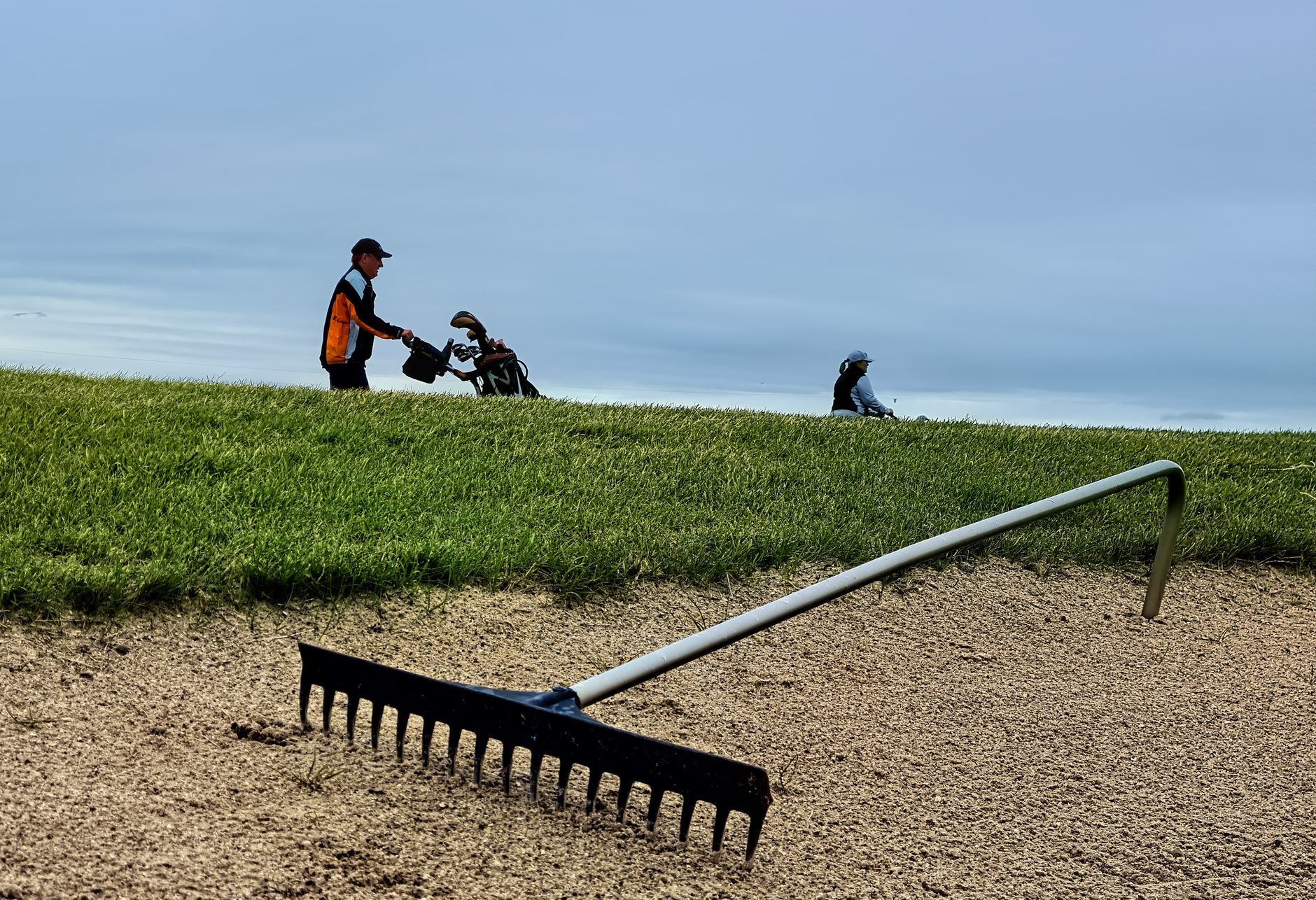
Seat hours are only half the question. The other half is what those hours could have bought on greens, tees and bunkers. List the tasks that routinely slip when the crew is on the mower, such as greens rolling frequency, bunker raking cycles, tee surface work or detail trimming, and record how many times each one was pushed back during the logged period.
Be honest about the counterfactual. If the crew would have been short anyway, the mower did not take those hours from greens. It took them from a labor gap that was already open. Write that down as its own line, because it changes what a robot or a new hire is actually solving for you.
A Carnegie Mellon student design project assumed a groundskeeping team spends 65 percent of its time mowing. That was a scenario in a design exercise, not a field study, so do not carry the figure into your own budget. Your log is a better source than any assumed share.
Where does a robot mower enter the math?
Once the log exists, you have a baseline to test against. Pilot autonomous mowing on a limited set of holes, track the returned hours with the same method, and check whether the recovered time landed on greens and bunkers or simply disappeared into other tasks. A pilot on a few holes lets a club test the log before committing more.
Service Robot Co. works as an OEM neutral robot integrator, so we compare mowers across manufacturers and match them to your turf rather than to one catalog. We lease the robots through financing, with one fixed payment quoted after a site assessment. We then deploy, integrate and train your staff, and service each unit under RoboCare, backed by regional service engineers in every state we service.
What else should superintendents weigh besides hours?
Hours are the headline, but quality matters to members. A USGA writeup on autonomous technology in course maintenance notes that labor savings sit alongside other benefits, such as straighter lines and tidier cleanup passes. Reported redeployments include crews moving to bunker work, detail mowing and course improvements that had been put off.
Smaller operations with a lean crew have less slack to absorb a breakdown. Record downtime in the same log, so lost hours show up beside the hours a robot or a seat returned. A net figure is more honest than a gross one.
Frequently asked questions
Want a robot working for you?
Tell us the job and the site. We will recommend the robot, quote the lease, and keep it serviced.
Sources
- Pitch Care: Gullane reclaims 40 hours a week using Toro robotic mowers
- Greenkeeping EU: Gullane autonomous mower report
- Golfdom: GCSAA labor survey summary
- Golfdom: April 2025 article on the golf labor shortage
- USGA Green Section Record: A golfer's guide to autonomous technology in course maintenance
- Carnegie Mellon University MRSD student project: system summary