

Key takeaways
- Geofence holds on bunker lips before edge trimmers start work.
- Keep robots off wet sand the same morning crews rake bunkers.
- Hand-trim crews need a clear radio call before holds release.
- Log which holes stay paused so starters avoid early play conflicts.
- Service Robot Co. maps bunker buffers during fairway robot deployment.
Why do bunker edges conflict with fairway robots?
Bunker lips sit where fairway robots already run tight overlap. When crews edge sand, hand trim lips, or blow debris, they step into the same GPS corridor the robot uses at dawn.
A fairway unit does not know a trimmer is kneeling on the lip. It follows map and schedule unless you program a hold. That is why border conflicts show up as near misses, sand spray on reels, or angry calls from the shop before the first tee time.
Clubs that automate fairways still edge bunkers by hand or with small walk-behind units. The work is episodic but predictable: weekly rotation, tournament prep, or post-storm repair. Planning holds around those windows keeps both programs on calendar.
Players rarely see the conflict until sand appears on fairway collars or a robot stops mid-loop. Maintenance sees it earlier as overlapping footprints on the lip and fresh wheel lines in soft sand.
Which fairway panels need bunker border holds?
Flag any hole where the robot path crosses within a few feet of a bunker lip on the playing side. Corner bunkers beside landing zones are the highest risk because trimmers work facing the fairway.
Shared carry bunkers with narrow strips of turf between sand and robot track need holds even when the lip looks wide. Wheels drift on slopes; a trimmed edge can drop lower than the map assumed.
Document holds per nine, not just per bunker. A crew finishing hole seven may still need hole eight paused if sand is wet and footprints cross the robot entry line.
Use the same yardage markers your walk-through crew already references. Naming holds by hole and side (left fairway bunker, greenside right) keeps radio traffic short at dawn.

How should hand-trim windows line up with dawn robot starts?
Run bunker edge work before fairway robots on affected holes, or hold robots until trimmers radio clear. Mixing both without a sequence creates the conflicts members notice first.
On tournament weeks, shift robot starts on held holes to after the bunker crew logs out. Healthy holes on the other nine can still mow on the normal dawn schedule.
Post a one-page morning script in the maintenance shop: which holes are trimmed today, expected clear time, and who approves releasing the hold.
When back-to-back groups start early, even a ten-minute overlap between trimmers and robots can force a full loop abort. Sequencing is cheaper than reprogramming maps after a sand strike.
What happens when sand is wet on bunker lips?
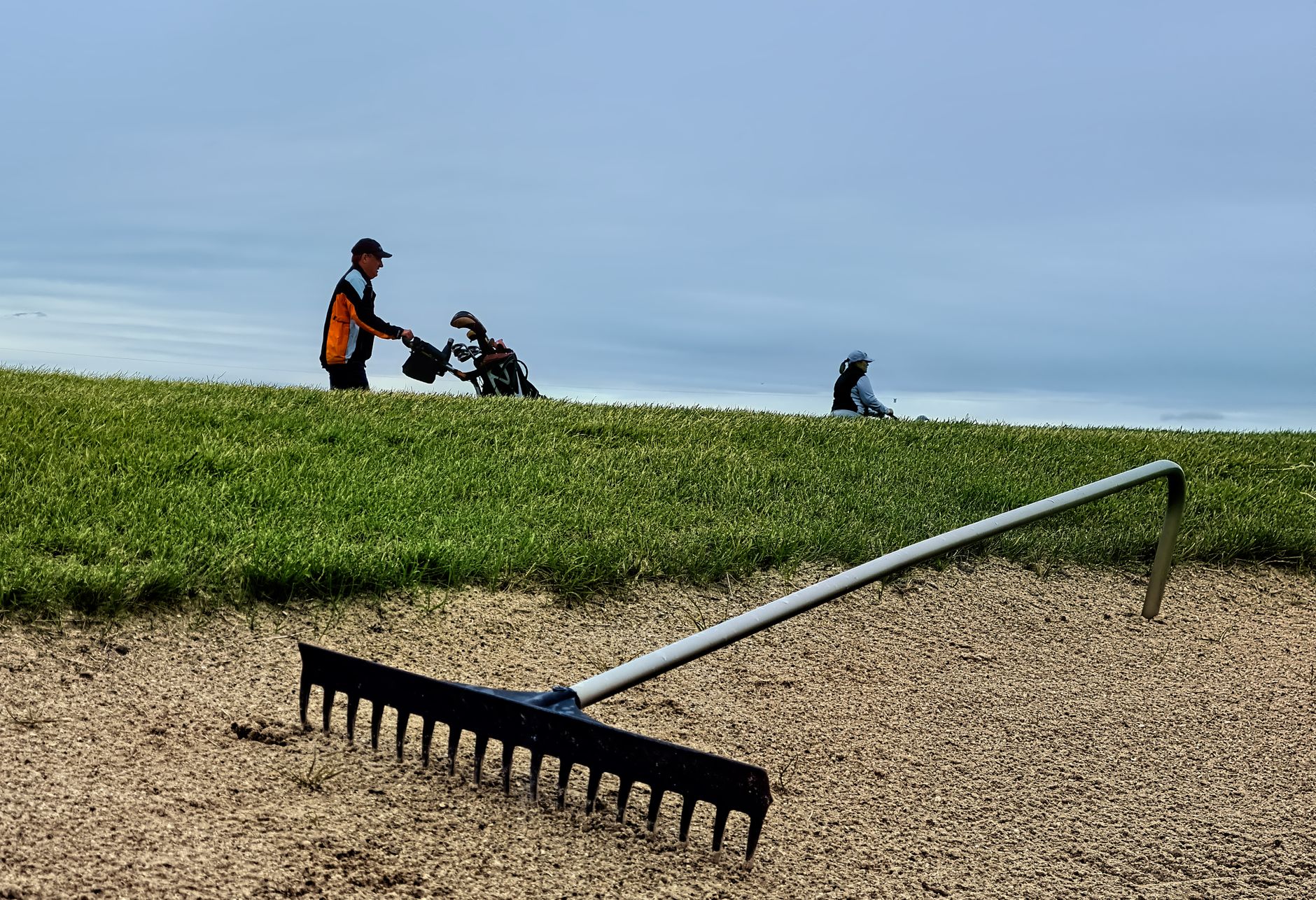
Wet sand sticks to robot brushes and tracks into fairways. Holds should stay active until sand is firm enough that rakes leave a smooth lip and footprints do not sink at the edge.
Irrigation overspray onto faces is a common reason sand stays soft into mid-morning. Coordinate with the irrigation tech before blaming the robot map.
If a pop-up hits during a robot pass, treat the panel like a fresh trim day: inspect the lip, rake if needed, and keep the hold until the edge is dry.
Morning dew on faces can look firm from the cart path while the lip still smears under a tire. Kneel at the robot entry point and test sand before you release.
How do stray clippings and blower debris affect robots?
Edge trimmers throw clippings onto fairway collars where robots pick them up on the next pass. Heavy debris can clog brushes and leave windrows that look like scalping.
Blowers pointed across robot paths move sand grains onto turf. A quick blower check after bunker work should face away from the autonomous strip or run before the hold releases.
Assign one person to walk the robot corridor after bunker maintenance on held holes. Two minutes of debris pickup prevents a long explain call to the golf chair.
Photograph the corridor once per month on your highest-traffic bunker holes. The series helps you justify wider buffers when the club debates map changes.
When can normal fairway loops resume after bunker work?
Release holds when trimmers confirm clear, sand is firm, and no equipment sits on the lip. The superintendent or assistant should sign off, not the robot vendor.
Run the first recovery pass at normal height unless the lip work included aggressive edge lowering. If lip height changed, update the map offset before full speed returns.
Tell the pro shop which holes were held so starters can set tee markers away from soft edges if players still see footprints.
Compare robot telemetry after release. Frequent emergency stops on the same lip mean the buffer is too tight or the trim schedule needs to move off dawn fairway windows.

How should crews communicate holds to starters?
Starters need hole numbers and expected clear time, not GPS file names. A whiteboard near the first tee beats a text thread that nobody reads at 6 a.m.
If holds slip because of weather, update starters before sunrise play reaches the affected hole. Members forgive delays when staff can state a reason.
Log actual clear times each week. Patterns show whether bunker rotation or robot scheduling should move earlier in the season.
Winter schedules with fewer trim days can tempt crews to skip holds. Keep the protocol year-round so spring automation does not relearn bad habits.
How does an integrator map bunker buffers at deployment?
Service Robot Co. walks bunker lips with your superintendent before the first season of autonomous fairway mowing. We mark buffer zones where the robot should slow or stop short of sand.
Deployment includes named geofences for recurring trim days and a hold playbook tied to your bunker rotation. Financing and OEM-neutral selection stay in the same project so you are not juggling vendors during a member guest week.
RoboCare service covers regional engineers in every state we cover, so a stuck hold or sensor fault does not idle the fleet while bunker prep runs behind schedule.
Buffer mapping is not a one-time CAD exercise. When bunkers are rebuilt, re-walk lips before the first autonomous pass on that hole.


