Key takeaways
- A bag room needs a zone map that follows cart lanes, rain gear and the counter, not one generic route.
- Run the robot in the lulls after bag drops, not during them.
- Published quiet-mode figures for commercial scrubbers are thin, so measure the room before you commit to hours.
- IFR's 2025 figures describe the professional service robot sector, not caddie shacks.
- Start with one leased unit and a site assessment, then scale only when the route log supports it.
Can a floor robot keep a caddie shack clean between bag drops?
Yes, provided the robot runs in the gaps and its route respects the room. A caddie shack and bag room pick up grit from cart wheels, sand and grass on bag feet, mud and water from wet rain gear, and drink spills near the counter. Those arrive in waves, each time a group checks in or a cart rolls back from the course.
A floor robot works the hard-floor passes between those waves. The plan has three parts: a zone map that separates the cart lane, the rain gear wall and the counter; a route the robot repeats the same way on every run; and a schedule that keeps it moving during lulls rather than during bag drops. None of this is exotic, but each part is easy to skip.
For most clubs the practical start is one compact unit, a site assessment, and a trial period before the room settles on a schedule. Our side of that work is covered in the sections below.
Where does the mess land in a bag room?
Debris is not uniform, so the map should follow the traffic. Most of the grit arrives on cart wheels and collects along the cart lane. Wet rain gear drips at the hook wall and pools near the door. Clippings and sand fall around the bag stands, and spills gather at the service counter.
Each of those spots needs a pass, but not the same pass at the same moment. Treating the room as one open floor is the most common reason a first route feels wasteful.
How do you map a bag room around carts and bags?
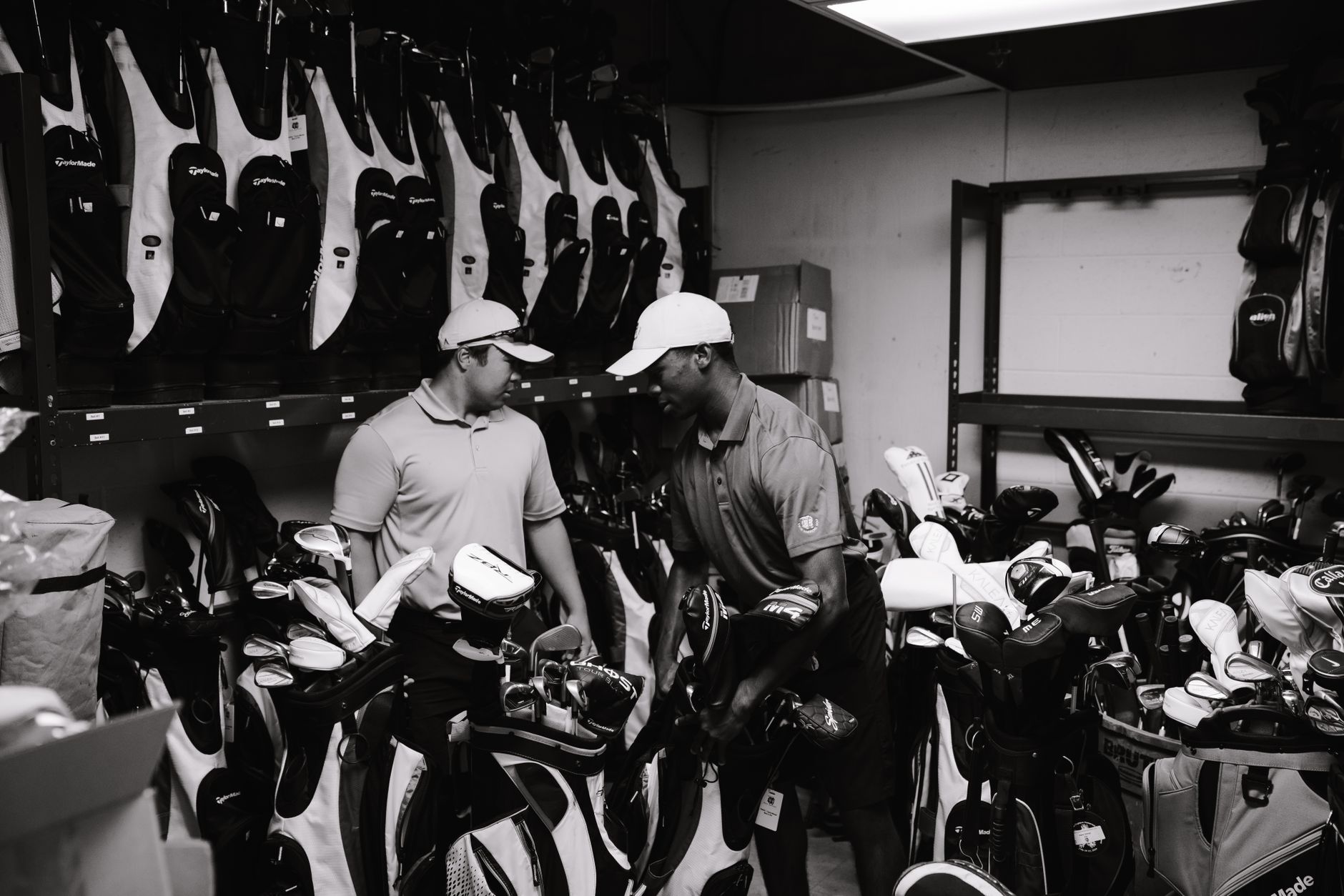
Mapping is the first real job. A site assessment records door thresholds, floor drains, mat edges, and fixed fixtures such as bag racks and the counter. Cart storage is the tricky part, because carts move. Treat the usual cart lanes as walkable zones rather than permanent walls, and decide where carts park during a run.
Thresholds and rubber mats are where small robots most often stall. Check every transition from hard floor to mat, and every raised sill, before the first run. A stop at a threshold is a safe outcome, but a stop during a bag drop costs the caddie master time. The mapping visit should include a walk-through with the staff who work the room.
Which robot size suits a tight bag room?
Compact units suit most caddie shacks, since aisles between bag racks are narrow and often shared with carts. Larger ride-on scrubbers cover open floor faster but need room to turn, and a ride-on is operated by a person rather than running autonomously. Tornado's BD 26/27 ride-on scrubber, for example, is listed by its vendor at 69 dB and marketed for daytime cleaning in tight spaces.
For autonomous units, read the vendor's own positioning closely. An OrionStar vendor blog, checked in November 2026, says Avidbots' Neo 2W is generally positioned for after-hours deployment rather than quiet daytime desk areas. A caddie shack sits between those two cases, so test the unit in the room before settling on hours.
When should the robot run without disturbing the caddie master?
Timing matters more than top speed. The caddie master needs quiet while checking players in, handing out bags and managing carts, so runs belong in the windows between those peaks. Three windows usually work:
Noise is the question every operator asks, and published answers are thin. We did not find a published night or quiet-mode decibel rating for a commercial scrubber. One vendor blog reports 45 dB in dust-mop mode and 55 dB in standard scrubbing for an unnamed model, which we could not verify. A vendor blog on consumer robot vacuums describes a gap of 10 to 15 dB between quiet and maximum settings, but that is not verified for commercial scrubbers.
Measure the room yourself. Run a real route on a normal day, with the caddie master's input, and log where the robot slowed, waited or stopped.
- Straight after the final morning bag drop, before afternoon cart traffic starts.
- A mid-afternoon lull, if the course clears and the room stays quiet for an hour or more.
- After the room closes, with carts parked and rain gear hung up.
How does a bag room robot keep running through a busy season?
A route that works in week one can fail by week six if the robot is not serviced. Brushes, squeegees and batteries wear, sensors need cleaning, and the charging dock must sit on a dry spot away from the bag drop line. Staff should check the unit daily and keep a route log the caddie master can read in seconds.
This is where a service plan earns its place. Under RoboCare, our service plan, regional service engineers handle on-site dispatch and remote triage, so a fault is diagnosed before someone walks to the room. Because we are vendor neutral, the robot is picked for this room, and one partner, one number covers it from deployment through repair.
What does a lease look like for one bag room?
We lease robots only, through financing on a 3-year lease. You receive one fixed lease payment, quoted after a site assessment, so the cost of the floor program is known before the first run. Many clubs start with one leased unit in the caddie shack and add a second only after the route log shows the room needs it.
A phased deployment keeps the room open. Mapping and trial runs fit into the quiet windows described above, and go live support covers the first weeks, when staff are still learning how the robot moves through the room. For operators weighing commercial cleaning robot leasing, the route log is the best evidence to bring to the table.
Where does cleaning sit in the wider service robot market?
Professional service robots are growing quickly. According to the International Federation of Robotics, global shipments rose 24% to almost 250,000 units in 2025. Professional cleaning ranked third with a 12% share, and floor cleaning was the main application. Transportation and logistics was the largest application, with 117,500 units sold, according to trade press citing IFR.
Those are sector figures, not caddie-shack figures. IFR's numbers come from a sample of 238 producers out of 1,001 manufacturers and are not projected to the whole industry, so use them for direction rather than as a forecast for your room.
Frequently asked questions
Want a robot working for you?
Tell us the job and the site. We will recommend the robot, quote the lease, and keep it serviced.
Sources
- International Federation of Robotics (IFR) news release on 2025 professional service robot sales
- Supply Chain 247, citing IFR on transportation and logistics robot sales
- Thomasnet product release on the Tornado BD 26/27 ride-on automatic floor scrubber
- OrionStar blog on commercial scrubber noise and positioning
- Narwal blog on robot vacuum noise levels