Key takeaways
- Delivery robots can run recurring campus mail loops, but the building leg, not the sidewalk, decides whether a route works.
- Elevator control works through vendor APIs and direct links, and the right method depends on the building.
- A lost elevator link must trigger a defined safe state, and that behavior should be written down before the first run.
- Starship is ending its US campus operations, so vendor continuity belongs in every campus contract.
- Start with one loop and one building, and keep a log of every exception.
Can delivery robots handle campus mail runs?
Yes, on routes that are mapped, predictable, and able to reach a door and an elevator without a person stepping in. A delivery robot can carry recurring mail and packages from a campus mailroom to office buildings, but only when the building leg works. Where it does not, a human courier usually remains the better choice.
The hard part is rarely the walk across the quad. According to Food Service Director, Starship entered higher education in 2019 and had partnered with more than 60 colleges and universities, a figure the company reported itself. Outdoor travel is the familiar part. Getting through the building and up to the right floor is the real test.
Why the building leg is harder than the sidewalk
A mail run that ends at a building door is a different job from one that stops at the curb. The robot must be admitted, call a car, ride to the correct floor, and leave the cab with the package intact. Each step adds a dependency that a sidewalk route never has.
Pilots show how the work is being attempted. In Oita, Japan, Nippon Otis and robotics firm FIG tied a service robot to an existing elevator for mail delivery. The robot calls and rides the elevator to designated floors, and facial identification limits package pickup to authorized people, according to Elevator World. That report describes a pilot and gives no figures or status.
In Dubai, a pilot at a commercial building in Dubai Digital Park has Talabat and QuikBot robots take food orders from riders to customers' doors by elevator. It covers building access, elevator travel, and navigation to doors, according to Khaleej Times. The results were not confirmed, so treat it as a demonstration of the route rather than proof of the outcome.
How do robots call and ride elevators?
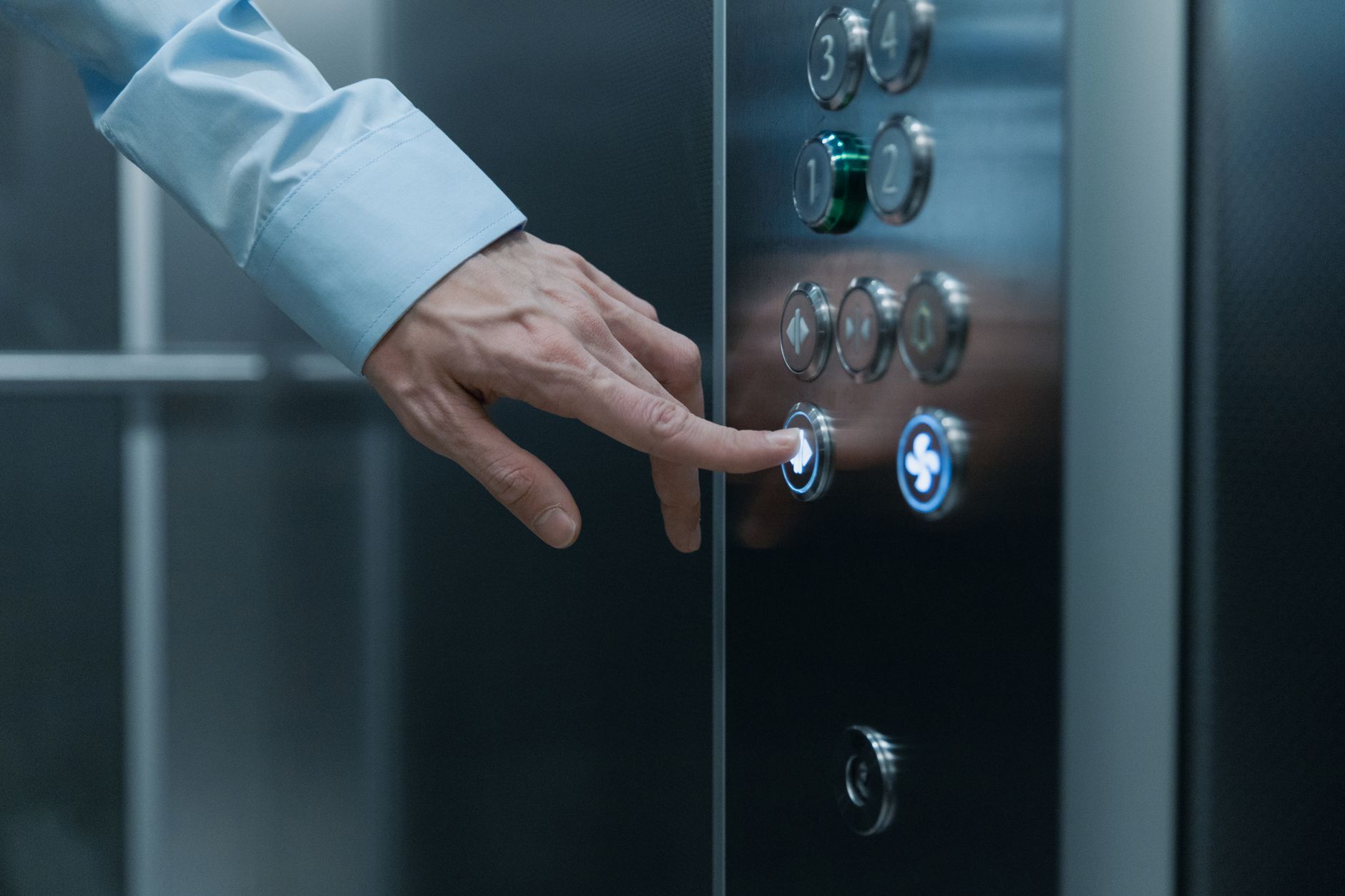
Elevator control runs through an interface the elevator system exposes. Otis Integrated Dispatch is an API that connects most autonomous service robots to elevators through the cloud or a local connection. It works at the elevator group level, so robots from different providers can share the same cars, according to Elevator World. That description comes from the manufacturer side, so confirm it against your own elevator equipment.
Pudu Robotics tested cloud integration between its FlashBot delivery robot and Nippon Otis elevators. The robot then used elevators for deliveries without human interaction, as reported by trade press. A 2022 Osaka hotel pilot used the same API to link AIM Technologies robots to Otis elevators. The robots called cars, selected floors, entered and exited cabs, and finished deliveries unaided.
Other buildings are harder. An Aalto University thesis case study says elevator communication can use a PLC, an IO card, or an API, with the choice set by the environment, and that a robot can also press the physical buttons. A vendor article adds that some elevators have open APIs while others need custom relay board interfaces. That article is vendor reported and has not been independently verified.
What should happen when the elevator link drops?
A robot that loses its link has to behave safely while it cannot see the cabin or the doors. One vendor article says such a robot must assume doors may close and the elevator may move, so its stopping and waiting rules have to be set before the first run. A 3L3C blog post describes elevator integration as a state machine with timeouts, permissions, and contingency plans. That is a sensible checklist, although the post is unverified.
Recipient control belongs to the same design. The Oita pilot used facial identification to limit pickups to authorized people, which means a mailroom route needs a verification step at the destination floor, not only a path to it. We found no peer reviewed study on API based door and elevator integration for delivery robots, so the evidence here is mostly pilots and vendor material.
What the Starship exit means for campus operators
As of November 2026, reports from June 2026 say Starship is ending its US university campus operations and redeploying more than 1,200 robots from its US campus fleet toward grocery and food retail in cities, according to Retail Tech Innovation Hub and Food Service Director. Campus status therefore depends on the individual school and its vendor, and it should be confirmed rather than assumed.
For a mailroom manager, the lesson is contractual, and it says nothing about robot quality. A route that depends on one vendor's fleet can end on that vendor's timeline. Before any campus route goes live, ask who services the units, what happens if the vendor leaves the segment, and how quickly a replacement reaches the site.
When does a human courier still work better?
A courier usually wins when volume is low or irregular, when a route climbs stair flights or crosses elevator banks that cannot be integrated, when items need a signed chain of custody, or when a rush delivery must reach a named office at a fixed minute. Robots fit repeated, predictable loops, and most standing mail runs are exactly that.
For many campuses the honest answer is a mixed model: robots on fixed loops between a mailroom and the buildings they serve, with couriers handling exceptions and anything that needs a person's hand at the door. Keep the exception log, because it shows which routes deserve a robot and which never will.
How should a campus pilot start?
Start with one loop, one mailroom, and one building. Time the robot against the courier running the same route, and record trips completed without staff help, elevator waits, and exceptions per week. Expand only after the exception log shows a stable pattern rather than a good first week.
Service Robot Co. is a full service commercial robot integrator for US businesses. We are vendor neutral, so we choose robots across manufacturers, then lease, deploy, integrate, train, and service each unit through a nationwide US engineer network. Our offer is a three year lease with one fixed lease quote after a site assessment, and that assessment is where the route, door, and elevator survey happens.
What to ask before approving a campus robot
Before a campus approves any mail route, the answers below should be in writing.
- Which elevator interface does the building use: API, PLC, IO card, or button presses?
- What does the robot do while the elevator link is down?
- How is each recipient verified at the destination floor?
- Who services the units on site, and how fast is a replacement delivered?
- What is the exit plan if the vendor leaves the campus segment?
Frequently asked questions
Want a robot working for you?
Tell us the job and the site. We will recommend the robot, quote the lease, and keep it serviced.
Sources
- Elevator World: Oita Prefectural Government Office pilot
- Elevator World: Otis API connects robots and elevators in Japan
- Elevator World: Delivery robot integrated with Japan elevator
- Aalto University thesis on elevator integration for robots
- ULearn Robotics: elevator integration for delivery robots
- Retail Tech Innovation Hub: Starship pulls delivery robots from US campuses
- Food Service Director: Starship exits college and university segment
- Khaleej Times: Talabat and QuikBot delivery robots in Dubai high-rise buildings