Key takeaways
- A veterinary ER can support robotic floor care, but only in open, repeatable lanes outside active treatment clusters and cage-front congestion.
- Vet hospitals demand more than routine floor shine. AAHA calls for daily hard-floor disinfection, immediate cleanup of body fluids, and cage cleaning right after use.
- Traction matters as much as sanitation. AAHA senior-care guidance stresses grip on floors, scales, tables, kennels, and cages because many patients are geriatric, painful, or unstable.
- The best fit is usually a commercial cleaning robot rental or autonomous floor scrubber rental backed by fast service, clear SOPs, and a human spill-response layer.
Can a robot really clean a busy veterinary ER?
Yes, but only with tight boundaries. A cleaning robot can work in a veterinary emergency hospital if it is assigned the right territory, the right hours, and the right handoff rules. It should own repeatable hard-floor routes such as main treatment corridors, lobby-to-triage paths, pharmacy-adjacent lanes, and larger open support areas. It should not be treated like a roaming substitute for every sanitation task in the building.
That distinction matters because vet ER sanitation is harsher than many people assume. According to AAHA infection-control guidance, hard floors in veterinary practices should be cleaned and disinfected daily, again after potentially infectious patients, and again whenever feces, urine, or body fluids are present. AAHA also says kennels and other high-contact surfaces should be cleaned and disinfected between every patient. In other words, the floor machine is only one layer in a much denser cleaning program.
So the practical answer is this. A robot can carry a meaningful share of routine floor care, especially overnight cleaning with no operator, but it cannot replace the staff actions tied to spills, cage turnover, isolation judgment, and surface-specific disinfection. In a vet ER, the robot succeeds as disciplined infrastructure, not as a magic janitor.
Why is a veterinary ER tougher than other healthcare sites?
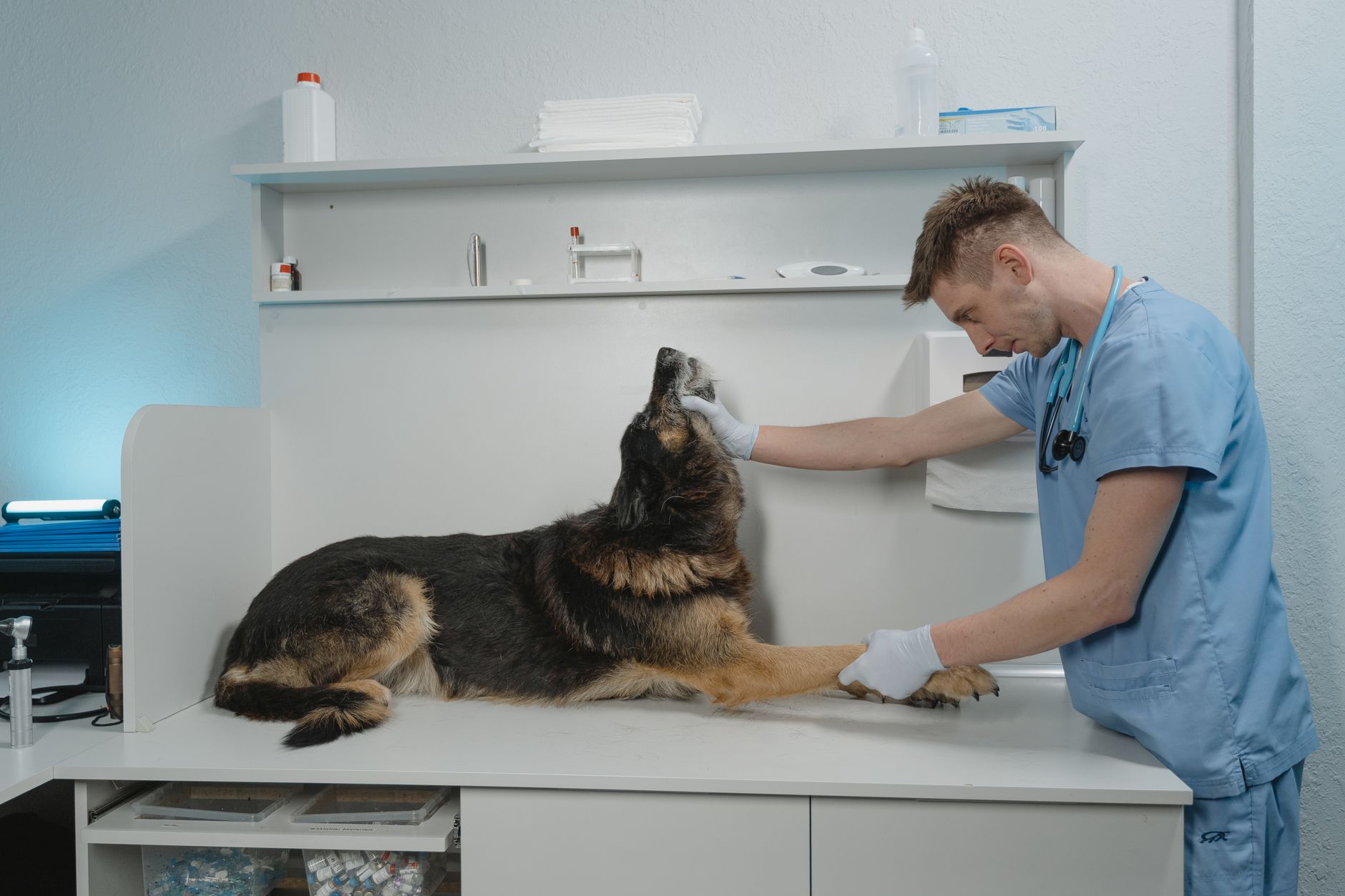
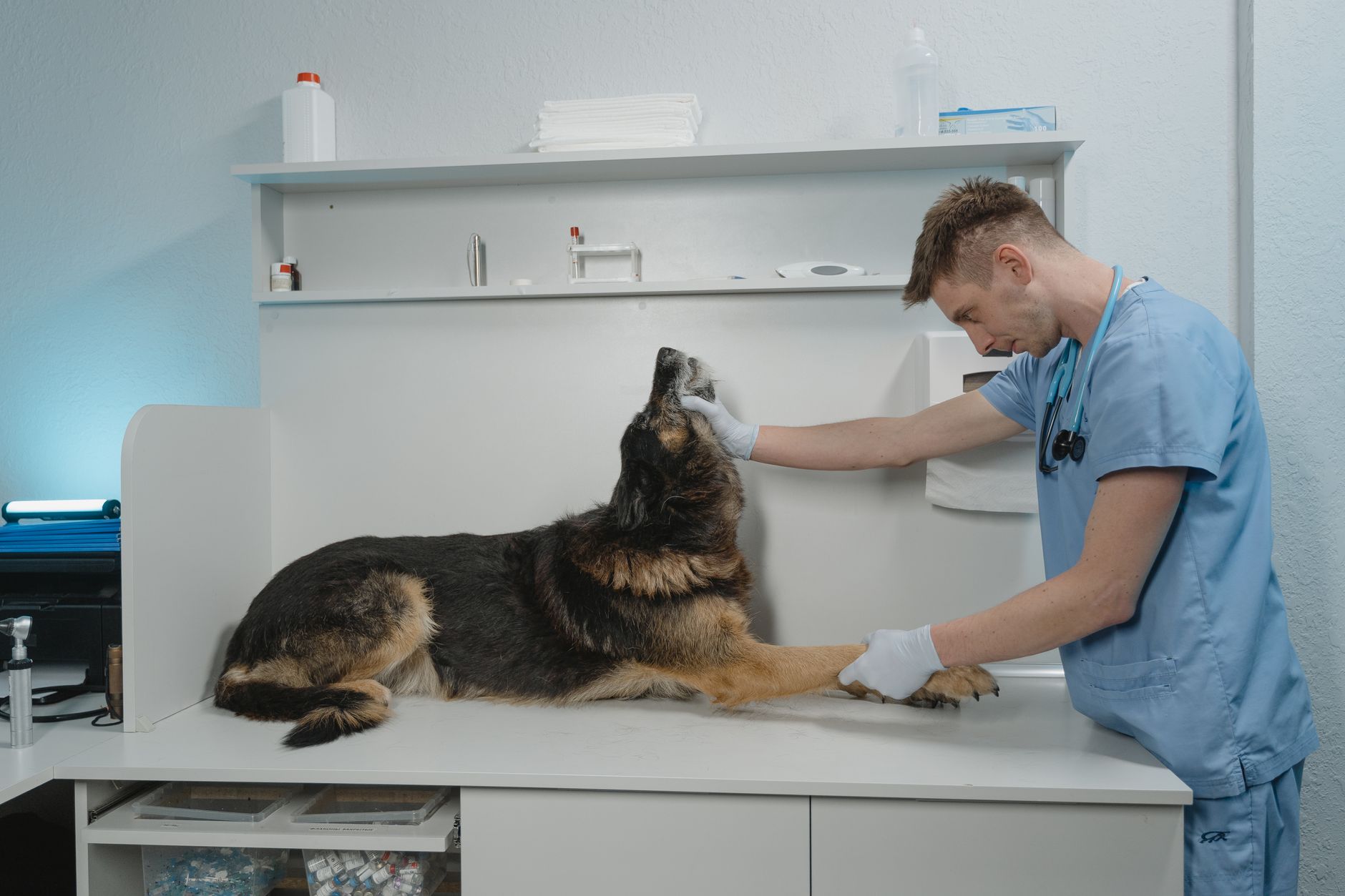
Animal emergency hospitals combine the sanitation burdens of healthcare, boarding, and a wet, high-motion workplace. Hair drifts. Leashes cross paths. Gurneys, carts, and crash traffic reroute quickly. A dog shaking off after treatment can spray more contamination in two seconds than a quiet medical office creates in half an hour.
The patient mix also changes the floor problem. AAHA notes that senior pets make up 44 percent of the pet population, and its senior-care guidance says floors, scales, tables, kennels, and cages need good traction and grip. In an ER, that is not a comfort extra. Slippery finishes can make a weak dog splay out, turn a fearful patient into a handling risk, and complicate recovery for animals coming off sedation or surgery.
Then there is the operating rhythm. AAHA reported in December 2024 that one large U.S. veterinary operator had only 59 hospitals in one chain and 49 in another offering 24-7 emergency service as of May 2024, while still carrying hundreds of emergency veterinarian openings and more than 1,200 open credentialed technician positions. When staffing is that tight, cleaning has to work around live care, not the other way around.
What can a robot handle well on these floors?
The best robotic fit is the repetitive middle of the job. That means broad hard-floor lanes that need consistent scrubbing, detergent application, recovery, and repeatable overnight passes. If the route can be mapped, cleared, and supervised by SOP, a floor scrubbing robot can remove a substantial amount of dull manual mileage from the shift.
CDC environmental-services guidance is useful here even though it is written for human healthcare. The agency notes that newly cleaned floors are rapidly recontaminated by shoes, wheels, and body substances. That is exactly why a vet ER benefits from routine autonomous passes. The value is not achieving a mythical once-and-done sterile floor. The value is resetting contamination load again and again in the zones where traffic never really stops.
A robot also helps when the hospital has to preserve technician time for animal care. If a mapped machine can cover the same treatment-adjacent corridor every night, your staff can stay with cages, catheter checks, intake support, and discharge flow. That is where a robot as a service model or commercial cleaning robot rental starts to make operational sense, especially when maintenance is included and the site wants no upfront capital shock.
- Open treatment corridors with predictable overnight traffic
- Larger central nursing or support lanes after peak movement drops
- Lobby and reception floors once client volume thins
- Back-of-house hard-floor loops between pharmacy, lab support, and storage
- Non-isolation routes where the machine can run without crossing active spill cleanup
Where does the robot struggle or stop?

Cage fronts are the obvious trouble spot. AAHA's cleaning protocol says exam rooms and cages should be cleaned and disinfected immediately after use, with bedding, hair, feces, and other organic material removed before wet cleaning and disinfection. That is a highly variable, object-dense, judgment-heavy task. A robot scrubber is not the right tool for it.
The same goes for spills. CDC cleaning guidance says blood and body-fluid spills must be cleaned and disinfected immediately. In a veterinary ER, that can mean urine, vomit, diarrhea, blood, and treatment runoff appearing without warning in the live care zone. A robot should yield to that response protocol, not attempt to absorb it into its normal route.
Hair is another operational snag. AAHA specifically recommends electrostatic wipes for loose fur and dust on many surfaces, and its cleaning protocol tells teams to dry-clean loose organic material before wet cleaning. If the facility leaves tumbleweeds of fur in corners, around kennel banks, or under carts, the machine may drag debris, clog recovery systems, or need more frequent intervention than the staff expected.
This is why vet ER deployments need a human response layer from the start. The robot handles scheduled floor care. Staff handle live contamination, cage turnover, corners, edges, and the awkward moments that define animal medicine.
How do traction flooring and disinfectants change the buying decision?
A vet ER floor is rarely chosen for gloss alone. It may be sealed concrete, textured resilient flooring, or another finish picked for slip resistance, cleanability, and chemical tolerance. AAHA's senior-care guidance is clear that animals need better grip in treatment spaces and even inside kennels and cages. So any robot that leaves a slick film, over-wets the floor, or struggles on high-traction surfaces is the wrong machine for this environment.
Disinfectant dwell time matters too. AAHA's sample cleaning protocol says disinfectants generally need 5 to 10 minutes of contact time, depending on label instructions and target pathogens. That pushes the conversation beyond simple scrub width or battery life. The hospital has to know whether its floor-care process is detergent only, scrub and recover followed by manual disinfectant, or a compatible one-step chemistry approved by the site infection-control lead.
The safest procurement question is not, can this robot clean floors. It is, can this robot clean our floors, on our chemistry, at our traction level, without compromising patient footing or disinfection SOPs. That is exactly why vendor neutral robot integrator support matters more here than brand loyalty.
What does a workable overnight deployment look like?
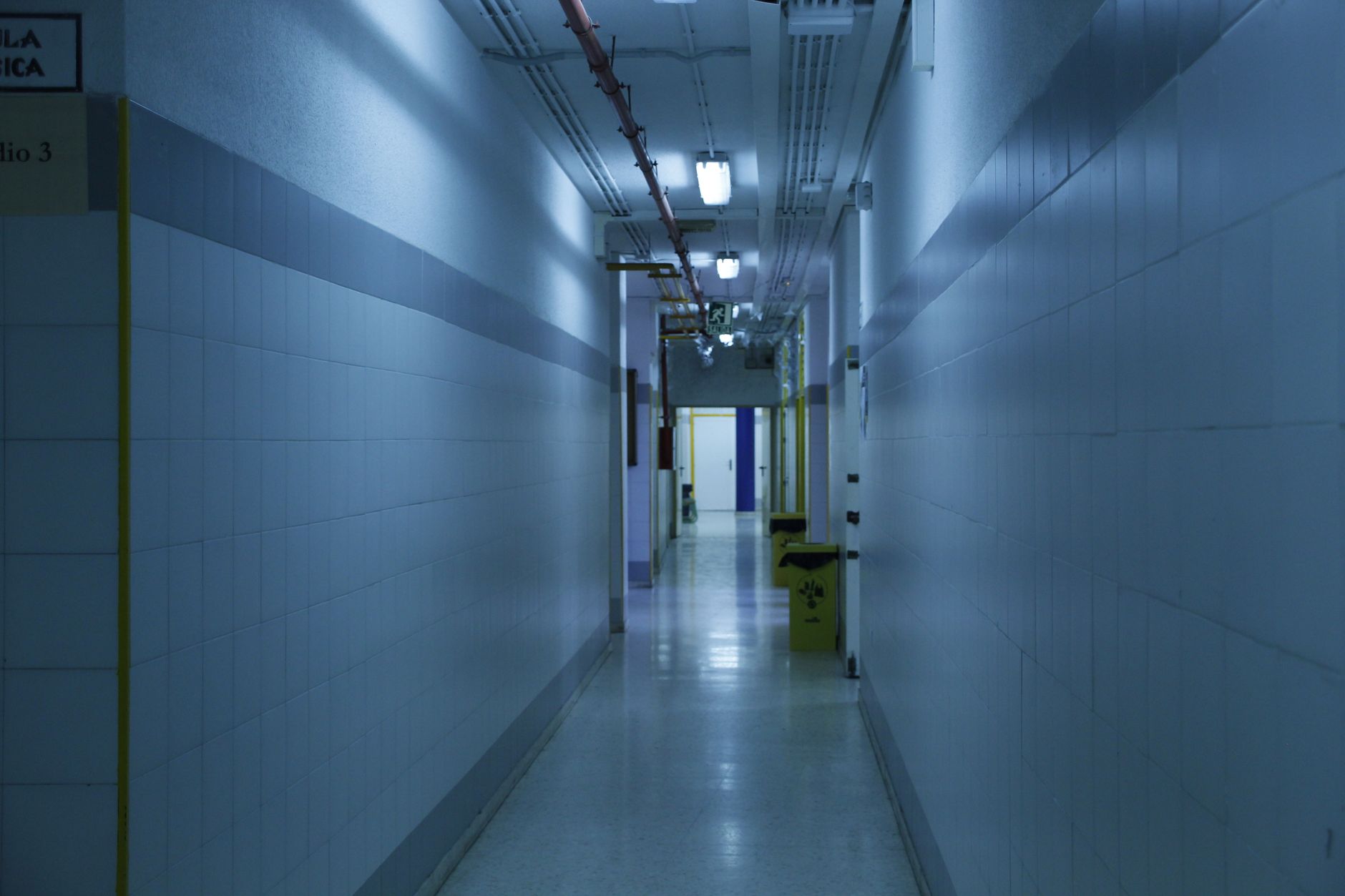
Start narrower than you think. In a busy animal ER, the first route should usually avoid isolation, cage banks, and the highest-acuity treatment knots. Pick one or two open loops that matter every night and that stay geometrically stable even when the caseload is ugly. The goal of the pilot is not to prove universal autonomy. It is to prove clean, safe, repeatable coverage under live hospital conditions.
A strong pilot usually has four elements. First, pre-shift floor prep, including cords, bowls, loose mats, and wheeled clutter. Second, a spill-escalation rule that immediately removes the robot from a contaminated area. Third, a traction check on the exact floor finish and slope conditions the site uses. Fourth, a service plan for brushes, squeegees, filters, and recovery performance before the hospital learns the hard way at 3 a.m.
This is where Service Robot Co. fits naturally. We act as one partner for the full lifecycle: site assessment mapping, robot deployment and integration, training, financing, and service through a nationwide U.S. engineer network. For a specialty site like a veterinary ER, that OEM-neutral approach matters because the right machine is the one that fits the floor, traffic pattern, and cleaning chemistry, not the one attached to a single catalog.
- Map only the routes that stay clear enough to run most nights
- Keep active treatment islands and cage-cleaning work outside the robot mission
- Define a stop-and-page rule for urine, blood, vomit, or isolation contamination
- Test traction and recovery on the exact floor finish before go-live
- Set overnight refill, charging, and recovery-tank checks as written SOPs
Is the labor case real in a vet ER, or is this just novelty?
The labor case is real, but it is specific. The robot does not replace veterinary technicians, assistants, or hospital attendants doing patient-facing sanitation. It reduces the repetitive floor miles that pull those people away from treatment support. In a hospital that is already short on overnight labor, that distinction is valuable.
AAHA's December 2024 reporting on emergency-care shortages shows why. Emergency hospitals are competing for overnight clinicians and support staff, and some communities are still dealing with reduced access or long drives for after-hours care. In that environment, even modest time reclaimed from routine floor care can matter, provided the robot is reliable and the workflow is honest.
The payback case is strongest when the facility already knows its nightly square footage, the frequency of repeat passes, and the burden of reactive cleanup on the same crew. A floor robot is not cheaper than an unstaffed cage ward, because those jobs are not interchangeable. It is cheaper than asking scarce overnight staff to walk the same scrub route manually every shift while higher-value work piles up around them.
For some operators, the preferred commercial path is a floor scrubber monthly lease, commercial robot rental, or month to month robot lease rather than a hard purchase. That can be sensible in specialty healthcare because it lets the hospital prove route fit, service expectations, and staff acceptance before locking in a longer commitment.
What should a hospital ask before it pilots one?
The first question is not about autonomy. It is about sanitation protocol. If the hospital cannot clearly separate routine floor care from immediate spill response, isolation cleaning, and cage turnover, the robot will disappoint because the site is asking one machine to solve four different jobs.
The second question is about route stability. A vet ER with constant overnight treatment traffic can still be robot-ready if the open lanes stay open enough, often enough. If every corridor becomes parking for pumps, oxygen cages, and crash carts after midnight, the floor may still need automation someday, but not yet.
The third question is support. This is a site where downtime and weak service turn quickly into distrust. Hospitals should ask about remote triage, on-site dispatch, replacement timing, and who owns the chemistry and traction validation. A free site assessment is not sales theater here. It is the difference between a serious deployment and an expensive hallway ornament.
- Which routes stay open at least most nights between late evening and early morning?
- Which floor finishes and disinfectants are approved by hospital leadership today?
- How will spills and infectious-case detours be flagged to the robot operator or supervisor?
- Who cleans the machine after exposure risk, and under what SOP?
- What service coverage exists if the robot fails on a weekend or holiday?
The bottom line for veterinary emergency hospitals
A cleaning robot can work in a busy veterinary ER. It just cannot be dropped in with retail assumptions. The hospital has to respect the realities of fur, fluids, frightened animals, traction-sensitive patients, cage turnover, and nonstop overnight traffic.
When the deployment is scoped correctly, robotic floor care is useful. It keeps repeatable hard-floor routes on schedule, reduces manual miles, and gives scarce overnight staff more room to stay with clinical work. When the deployment is scoped badly, the machine ends up parked because the hospital expected it to solve contamination events and clutter that were never routable in the first place.
For operators considering a commercial cleaning robot rental, autonomous floor scrubber rental, or longer-term robot leasing for business, the smart move is a veterinary-specific pilot. Prove route fit. Prove traction. Prove service. Then expand. That is how specialty healthcare automation earns its place.