Key takeaways
- Robots can improve restroom readiness, but they do not replace the full day-porter role in a Class A tower.
- The strongest robot fit is recurring rounds, floor touchups, and documented checks during predictable traffic cycles.
- Humans still win at refills, stall recovery, fixture wipe-down detail, and judgment-heavy exceptions.
- Peak-day office traffic is back in premium buildings, so restroom reset plans need to match Tuesday-through-Thursday surges, not weekly averages.
- The best operating model is usually a mixed one: robot coverage for repeatable work and porter coverage for consumables, messes, and guest-facing recovery.
Short answer: yes, but only for part of the job
A robot can handle part of a restroom reset program in an office tower, especially the repetitive part. Think scheduled rounds, floor cleaning passes near entries and sink zones, and documented rechecks after lunch or commute rushes. That can reduce missed rounds and give building teams more consistent coverage on busy days.
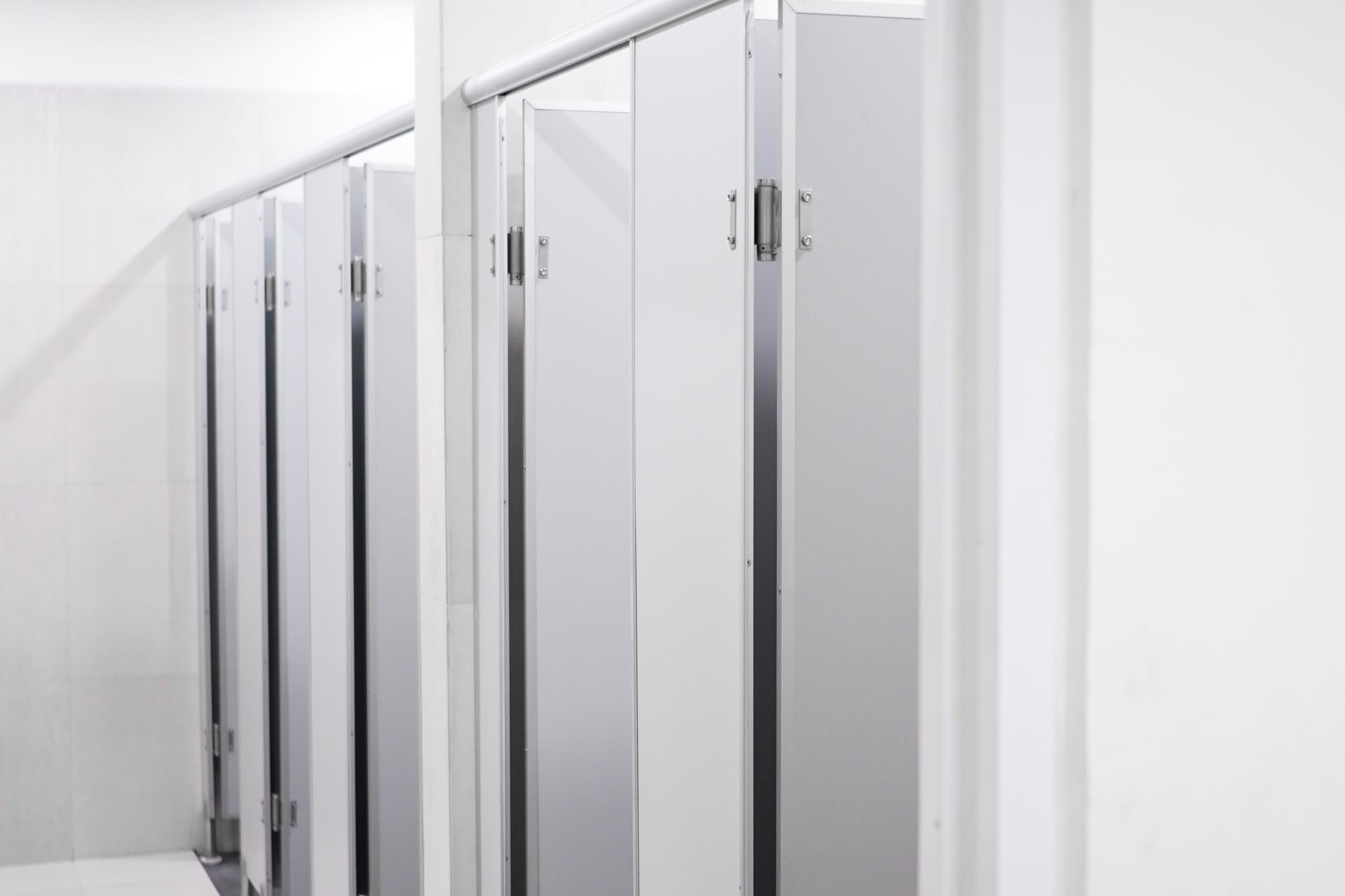
It cannot handle the whole assignment. Restroom readiness is not just a floor-care problem. It includes empty or jammed dispensers, wet counters, clogged fixtures, odor complaints, trash overflow, and the small judgment calls that decide whether a restroom feels Class A or neglected. Those are still human tasks.
So the real comparison is not robot versus porter in the abstract. It is which parts of the reset loop are repetitive enough to automate, which parts still require hands and judgment, and how to combine both without creating service gaps.
Why restroom readiness is a different operating problem from lobby floor care
Lobby cleaning is visible and broad. Restroom resets are tighter, more frequent, and much less forgiving. A polished lobby floor can stay acceptable for hours. A restroom can move from fully presentable to visibly off-spec in one rush if soap runs out, paper towels stack up at the bin, or water pools around the sink bank.
That matters more in premium office stock. CBRE's 2026 U.S. office outlook says the gap between prime and non-prime performance is near a record high, and downtown prime vacancy was 14.5% versus 13.6% in prime suburban buildings as of Q3 2025. In other words, the buildings still winning tenants are competing on experience, not just square footage.
Restrooms are part of that experience. Bradley Company's 2026 Healthy Handwashing Survey found that 86% of U.S. adults expect a business's restroom quality to reflect the quality of its goods and services, and 85% report a negative impression of a facility with a dirty restroom. For a tower owner or property manager, that turns restroom resets into a brand and retention issue, not a back-of-house chore.
What the manual day-porter model still does best
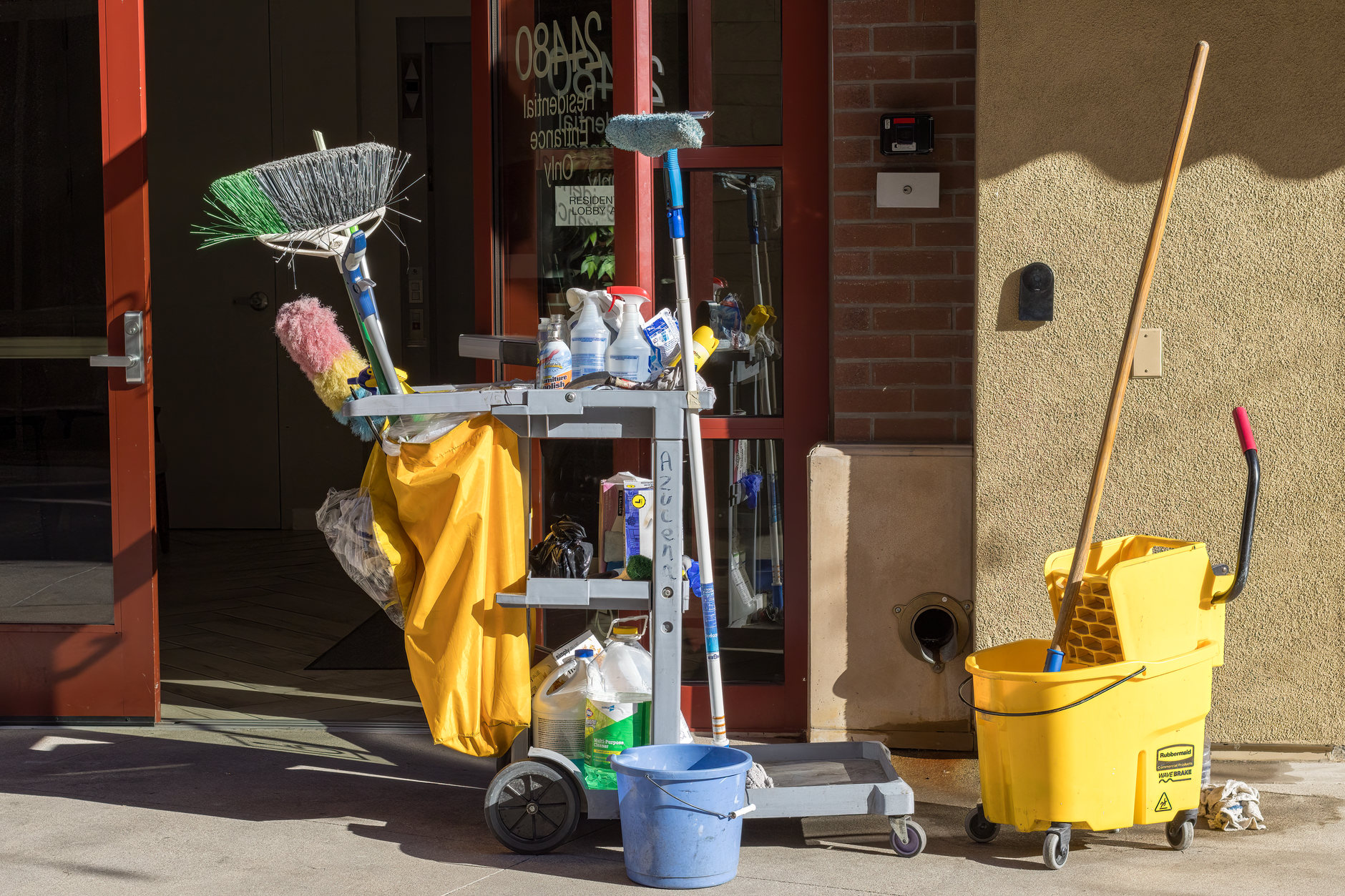
A good day porter is flexible in ways automation still is not. They can spot a low soap level before it becomes an outage, restock several consumables in one pass, clear a paper jam, wipe mirrored splash zones, address an odor complaint, and decide that one stall needs isolation while the rest of the room stays open.
Manual coverage also handles the exceptions that drive most tenant complaints. OSHA's restroom guidance requires employers to maintain restrooms in a sanitary condition with soap, towels or dryers, and accessible toilet facilities. OSHA also says a maintenance schedule must include servicing, cleaning, and replenishment of supplies. That replenishment step is exactly where human coverage remains indispensable.
The weakness in porter-only coverage is consistency. Rounds can slip when radios light up, elevators run slow, or one spill pulls a porter to another floor. In a tower with uneven traffic by hour and by day, restroom quality often drops not because the team lacks skill, but because the work arrives in bursts.
Where robots actually help in recurring restroom workflows
Robots are strongest where the task is repeatable, schedulable, and easy to verify. In restroom programs, that usually means floor-focused touchups around the entry apron, common sink approach, and circulation zone outside the stalls. It can also mean recurrent patrols that confirm a round happened when it was supposed to happen.
CDC guidance for community facilities says high-touch surfaces should be cleaned regularly and that high-traffic areas may need more frequent cleaning or disinfection in addition to routine cleaning. Restroom fixtures are explicitly on CDC's high-touch list. A robot does not solve every high-touch requirement, but it can keep the recurring cadence from collapsing when the building gets busy.
The hidden value is discipline. Robots do not forget a 1:30 p.m. pass because an elevator bank spill appeared on another floor. They run the programmed route, generate logs, and make it easier for supervisors to see whether coverage is real or assumed. In premium office operations, that reliability can matter as much as raw labor savings.
- Scheduled post-rush floor touchups in and around restroom approaches
- Repeatable rounds across multiple floors where missed checks are the main failure mode
- Digital proof that a route was completed on time
- Support coverage on peak attendance days without adding another floating porter route
Where robots still fall short inside the restroom
Consumables are the obvious limit. Toilet paper, hand soap, paper towels, liner changes, and feminine hygiene supplies still require a person. If the operating problem is frequent stockouts rather than missed rounds, a robot will not fix the root cause.
Detail recovery is another limit. Wet counters, mirror spotting, debris around trash openings, fixture smudges, and the unpleasant one-off incidents that happen in any busy tower all call for human intervention. So do closed-stall conditions, plumbing issues, and guest-sensitive moments where discretion matters.
There is also a practical routing issue. Many office restrooms have narrow stall aisles, door swings, queueing at sink banks, and privacy considerations that make full autonomous coverage inside every room less attractive than operators first assume. A robot may improve the reset loop without being the thing that physically enters every stall-side zone.
What peak-day office traffic does to the math
The office is not empty. Kastle's current Barometer says it tracks more than 300,000 users across 3,400 buildings and 60,000-plus businesses in 47 states. Its latest weekly report shows a 56.5% 10-city average, but that average hides the more important operational fact for office towers: traffic is concentrated.
Kastle also reports that Tuesday is the peak day, and one recent 2026 update showed A+ rated buildings reaching 95.5% occupancy on that day. That is why restroom resets cannot be staffed or automated off the weekly mean alone. The service load shows up in pulses, especially midweek and around arrival, lunch, and afternoon meeting turnover.
This is where robots earn their keep most honestly. Not as a magical substitute for janitorial labor, but as a way to keep repeatable checks from bunching up exactly when the porter team is already chasing the highest-friction calls.
How a mixed robot-plus-porter model should be built
The right model usually starts with task separation. Put the robot on scheduled, documentable, floor-adjacent work and put people on consumables, fixture care, trash, and exception handling. Do not buy or deploy around the fantasy that a restroom can be treated like an uninterrupted open corridor.
Next, match the schedule to building reality. A Class A tower should map peak restroom demand by day and hour, then assign robotic rounds to the moments that most often get missed. Human coverage should then be reserved for the tasks only a human can close. That is a better design than having porters and robots redundantly touch the same low-value work.
This is where an OEM-neutral integrator matters. Service Robot Co. does not force a single manufacturer's answer onto every site. The company evaluates the facility, selects the right equipment across manufacturers, then finances, deploys, integrates, trains, and services it through a nationwide U.S. engineer network. For operators trying to cover many towers or mixed portfolios, one lifecycle partner is cleaner than stitching together equipment, support, and field service from several sources.
What building teams should ask before they pilot one

Start with the failure mode, not the machine. Are tenants complaining about dirty floors near restroom entries, empty supplies, inconsistent checks, or after-rush appearance drift? Each problem points to a different operating fix, and only some of them are good robot candidates.
Then look at service design. Who restocks. Who responds to exceptions. How are rounds verified. What happens if a robot misses a route or a restroom is too crowded for a scheduled pass. A credible pilot answers those questions before go-live, because restroom quality fails in the handoff points.
Service Robot Co. is built for that kind of practical deployment. As a full-service commercial robot integrator for U.S. businesses, it can structure robot leasing for business, commercial cleaning robot rental, lease rental or sale, and maintenance included programs around the building's actual workflow, then back it with deployment support and nationwide service. That matters more in restroom operations than flashy autonomy claims, because the win condition is boring consistency, day after day.
The practical verdict for Class A office towers
A robot can handle restroom resets in an office tower, but only the repeatable slice. It is valuable for recurring checks, timed touchups, and keeping a documented cadence on floors where coverage tends to slip. It is not the right answer for consumable restocks, stall recovery, or the judgment-heavy work that defines guest perception.
For most Class A towers, the best answer is a blended model. Let automation take the repetition. Let porters take the exceptions. If the program is designed around actual peak traffic and clear task boundaries, robots can raise consistency without pretending to replace the human standard that premium restrooms still require.
That is the sober view operators need. Not hype, not dismissal. Just a realistic division of labor that fits how office towers actually run.