
Key takeaways
- Use quiet floor robots for routine cleaning between appointments and broader floor care after closing.
- Treat every suspected blood spill or sharp as a stop-and-escalate event for trained personnel.
- Validate disinfectant labels, wet contact times, materials, and robot dispensing before deployment.
- Keep robot routes, docks, and failure-stop positions outside required accessible circulation space.
- Require human inspection and signoff because a completed route does not prove a clinically acceptable result.
Where does a floor robot fit in daily operations?
Quiet cleaning robots can support blood donation centers by handling repeatable floor work during gaps between appointments and completing larger routes after closing. Their best role is routine sweeping, vacuuming, or scrubbing on mapped floors. They do not replace trained staff, blood-spill procedures, chair disinfection, sharps response, or final inspection.
During operating hours, a compact robot can cover the lobby, refreshment area, public corridors, and other low-risk zones when donor traffic permits. Donation bays should usually be cleaned only during a deliberate opening between donors, with staff confirming that tubing, personal belongings, stools, and mobile equipment are clear of the route.
After closing, the robot can run a broader floor-care plan while employees handle recliners, armrests, counters, touchscreens, privacy partitions, and other high-touch surfaces. This division gives the machine the repetitive square footage and keeps clinical judgment with people. Overnight cleaning with no operator still requires an on-call escalation path and a morning release check.
How should cleaning change between appointments and after close?
Between appointments, speed matters less than restraint. Short routes should stay outside occupied donor stations, yield early to people, and avoid crossing active collection lines. Sound, alert volume, brush noise, and turning behavior should be tested in the real room because a calm donor environment is part of the operating requirement.
After close, teams can reposition approved chairs and carts to expose predictable lanes, then run a mapped scrub or vacuum cycle. The route should progress from cleaner public areas toward more soiled clinical zones, with separate assignments where the facility’s infection prevention plan calls for them. The robot should finish before staff conduct the final visual inspection.
The CDC says floors in general outpatient areas should be cleaned at least once daily, unless the specific care area requires another frequency. It also characterizes routine floors as low-touch surfaces that normally need cleaning rather than blanket disinfection. A donation center should therefore build schedules from risk and soil, not assume that more chemical is always better.
What happens when the robot encounters blood or a sharp?
A suspected blood spill is never an ordinary autonomous cleaning task. The robot should stop outside the affected area, mark the event, and alert trained personnel. Staff then secure the space, check for sharps, use required personal protective equipment, remove visible material, dispose of contaminated waste correctly, and apply the facility-approved disinfectant.
OSHA requires surfaces contaminated by blood or other potentially infectious material to be decontaminated immediately or as soon as feasible. It also requires a written cleaning schedule based on the location, surface, soil, and work performed. Potentially contaminated broken glass must be collected by mechanical means, not by hand and certainly not by a floor robot’s brush deck.
CDC guidance distinguishes small spills under 10 mL from larger spills over 10 mL when hypochlorite is selected. It describes a 1:100 dilution for a small spill on a nonporous surface and a 1:10 first application for a larger spill, followed by terminal disinfection at 1:100. Facilities must follow their exposure-control plan, current product label, and infection prevention leadership rather than treating those ratios as universal robot settings.
If a robot drives through blood, isolate it as potentially contaminated equipment. OSHA requires contaminated equipment to be examined and decontaminated before servicing or shipping unless decontamination is infeasible. Brushes, squeegees, wheels, tanks, underside seams, and recovered liquid all need a documented disposition before the unit returns to service.
How do chair layouts affect navigation?
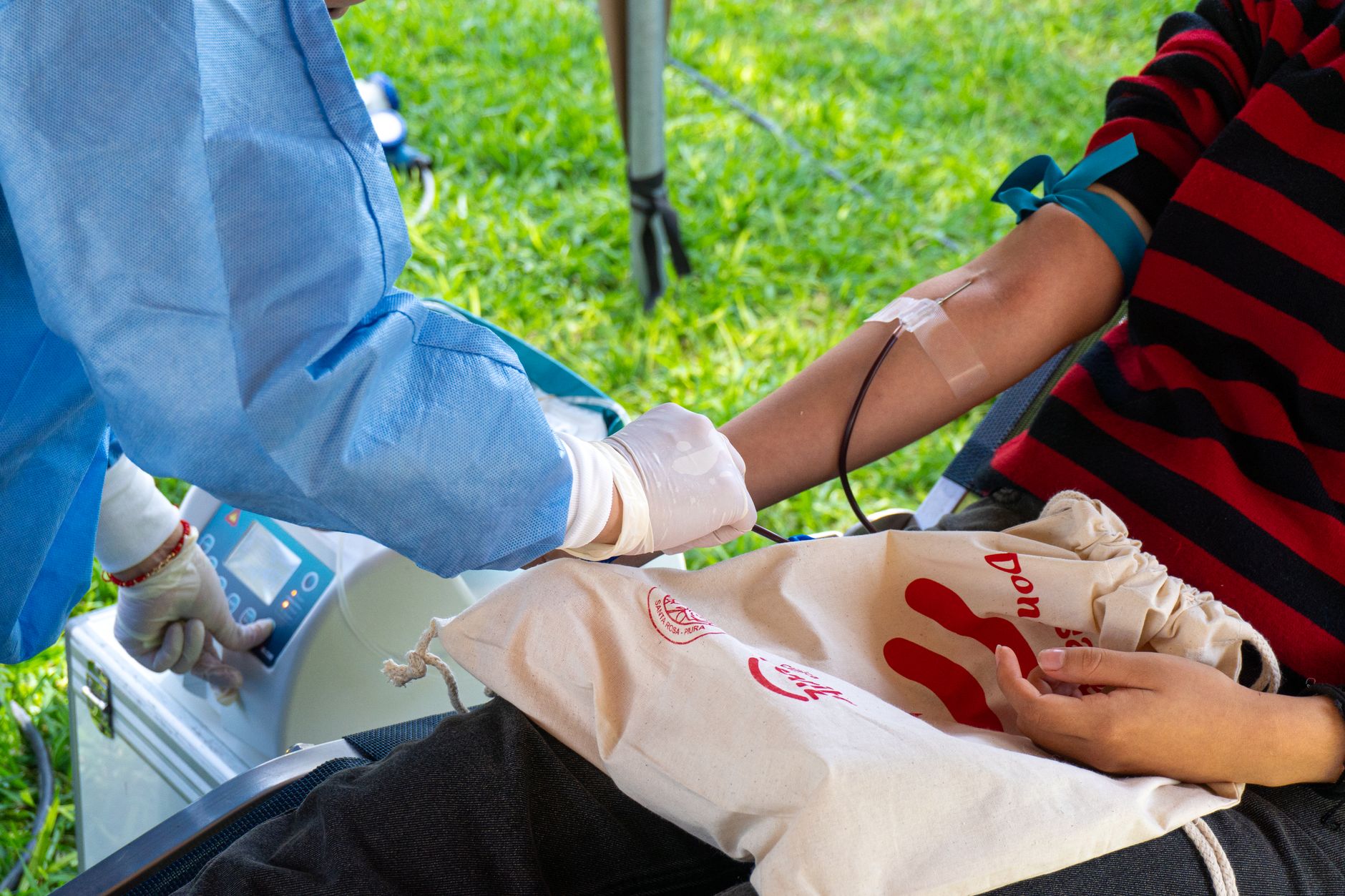
Donation chairs create narrow, changeable geometry. Reclined backs, extended footrests, rolling stools, privacy screens, donor bags, and collection equipment can alter the route within minutes. Site assessment mapping should capture the room in its busiest valid arrangement, not only in a staged after-hours configuration.
Build no-go zones around every collection station and give the robot stable travel lanes rather than asking it to thread between occupied recliners. Staff should have a simple way to pause a route when a chair moves. Charging docks and waiting points belong away from exits, handwashing access, crash-cart paths, and confidential interview rooms.
The 2010 ADA Standards generally require an accessible route at least 36 inches wide and specify 60-inch turning spaces in applicable locations. Those measurements regulate accessible circulation, not robot body width. The operational rule is still clear: travel, parking, and failure-stop positions must not consume required clear space or leave a stalled machine where a donor using a mobility device cannot pass.
Can the robot use the center’s disinfectant?
Compatibility has two separate tests. First, the chemical must be appropriate for the pathogen, surface, and use site. Second, the robot’s tanks, seals, hoses, pumps, brushes, squeegees, wheels, and floor finish must tolerate that product at the labeled concentration. Passing one test does not establish the other.
EPA List S identifies registered products with label claims against HIV, hepatitis B, and hepatitis C. Claims are pathogen-specific. EPA also says the surface must remain visibly wet for the full labeled contact time, with reapplication if it dries early. A robot dispensing a thin film cannot claim disinfection merely because an approved product entered its tank.
Before deployment, document the exact product, dilution method, floor types, approved robot components, application rate, wet contact time, ventilation precautions, and rinse requirements. Run a controlled patch test and inspect for residue, discoloration, loss of traction, seal swelling, and finish damage. Keep manual blood-spill chemistry separate unless the full automated application has been validated against the label.
How can donor privacy be protected?
Donation centers handle sensitive health histories, eligibility responses, identification, and collection records. FDA guidance recognizes self-administered donor questionnaires and direct oral questioning, which makes screening areas especially poor places for unnecessary camera or microphone capture. Map those rooms while vacant, then geofence them during donor interviews.
HIPAA does not automatically apply to every robot or every donation organization. When an operator is a covered entity or business associate and robot systems create, receive, maintain, or transmit electronic protected health information, HHS Security Rule duties can apply. Remote support, cloud logs, images, audio, and telemetry therefore belong in the privacy and security review.
Choose the least data-intensive navigation that works. Disable recording that is not required, mask sensitive zones, restrict access, set short retention periods, encrypt necessary data, and record vendor support sessions. Post-cleaning coverage reports should identify zones and timestamps, not donors. Privacy is easier to preserve when it is designed into the route before go-live support begins.
Why is human verification still required?
A robot’s completion report proves that software marked a route complete. It does not prove that every edge was reached, visible soil was removed, the proper wet contact time occurred, or a fresh spill did not appear afterward. Human verification closes that gap.
The opening checklist should include a visual floor inspection, review of exceptions and blocked zones, confirmation that no wet or slippery areas remain, and inspection of the robot for contamination or damage. Any blood-related alert needs a separate spill record and supervisor release. Missed chair bases, corners, thresholds, and refreshment-area residue should generate a corrective task.
CDC’s outpatient guide calls for training before personnel perform environmental cleaning, annual training, added training when equipment or protocols change, demonstrated competency, and routine audits with feedback. Apply that discipline to robot deployment and integration. Train staff to start, pause, recover, inspect, document, and escalate, then audit the combined human-machine process rather than the machine alone.
How should a donation center buy or lease the right robot?
Start with a commercial robot demo on the actual floor. Measure route completion, interventions, edge misses, turning clearance, traction, sound during donor care, chemical delivery, cleaning quality, and recovery after an obstruction. A robot pilot program should also rehearse a suspected blood spill, a found sharp, a privacy-zone breach, and a stalled unit in a circulation path.
Service Robot Co. is an OEM-neutral commercial robot integrator for U.S. businesses. We select the robot that fits your floor across manufacturers, then handle financing, deployment, integration, training, and service through a nationwide U.S. engineer network. The center gets one vendor for the full lifecycle and one accountable path when operations, hardware, or service need attention.
Procurement can include a commercial cleaning robot lease, purchase, or monthly payment program based on the center’s operating model. Compare an autonomous floor scrubber lease with ownership using the same scope: deployment, consumables, remote triage, on-site dispatch, RoboCare™ service, training, and replacement arrangements. Contract language should define uptime reporting, privacy duties, contamination handling, and human response responsibilities before launch.