Key takeaways
- Most robot mowers mulch clippings back into the turf and do not clear walks or drives by themselves.
- A robot can take the open-turf passes, but edges, curbs and pavement still need hand or powered cleanup.
- Sequence the hard surfaces last so debris moves once, not twice.
- Treat labor savings as a site test, since the public figures we found are contractor estimates and session reports.
Short answer for crew leads
Most robot mowers leave their clippings on the lawn, so they do nothing for the walk, curb or drive after a cut. A few collecting models exist, but the reviews we checked describe trade-offs in speed and noise, and none describes clearing hard surfaces to a client's standard.
In practice, the robot takes the open turf and the crew finishes the edges, curbs and pavement. The order of that hand work decides how many times the debris gets moved.
Where clippings collect after a robot cut
Robot lawn mowers mostly mulch rather than collect. According to a FJ Dynamics blog post, cuts are small and frequent, so the clippings are usually fine enough to stay on the lawn. That is useful for turf health, and it means a mulching robot leaves the walk, curb and drive covered in whatever the mower did not reach.
The exception is a collecting model. A PCWorld review of the Anthbot N8 reports that it collects clippings and clears leaves. The reviewer calls it slower and louder than typical models, and says its sweeping mode does not truly sweep up debris. Read that as a caution about marketing terms, not a verdict on the category.
What a robot mower cannot finish on hard surfaces
One guide states that robot mowers cannot edge a sidewalk or blow debris off a driveway. That sets the boundary. Anything that sits on pavement, in a gutter line or against a curb face is still hand or powered work.
Vendors are working the gap. Yarbo markets an automated leaf blower for driveways and complex terrain, but that is vendor-reported product copy. Verify the claim on your own surfaces before you schedule a crew around it.
How to sequence blowing and sweeping after a mow
Our research pass found no source describing how commercial crews sequence blowing and sweeping after a robotic cut. What follows is field practice, and the order should be tested on your site before it goes onto a route card.
- Let the robot finish the open turf first, then check low spots for clumps the mulching pass left behind.
- Run a bagging pass along the pavement edges while the crew mows. One guide says a bagging mower cuts cleanup time dramatically, though it gives no measured figure.
- Blow walks and curbs from the lawn side toward the drive, so debris moves once and lands where the collection point sits.
- Sweep the driveway last. For a small surface, a push sweeper such as the 26-inch Scotts model works, and one guide pairs it with a detachable 3.6-bushel hopper bag that empties by a pull. Empty the hopper before the crew leaves the site.
Where an autonomous cut takes passes off the crew
On open turf, a robot can absorb the repetitive passes that otherwise fill a crew's morning. The labor case is easy to state. A Landscape Management article cites one contractor's estimate that 70 percent of a landscape contractor's direct labor cost is associated with mowing. That is one estimate, not a survey, so treat it as a question to put to your own crew logs.
Equipment makers are responding to commercial demand. Husqvarna has introduced two robotic mowers developed for green space managers and landscaping companies, according to its press release. GCM also reported on a 2025 GCSAA Conference session where Dan Meersman, a GCSAA Class A director of grounds, described operational lessons from deploying 35 robots across facilities. That was a session summary, not survey data, so it shows what operators are asking, not how many hours were saved.
Where hand cleanup still sets the finish clients see

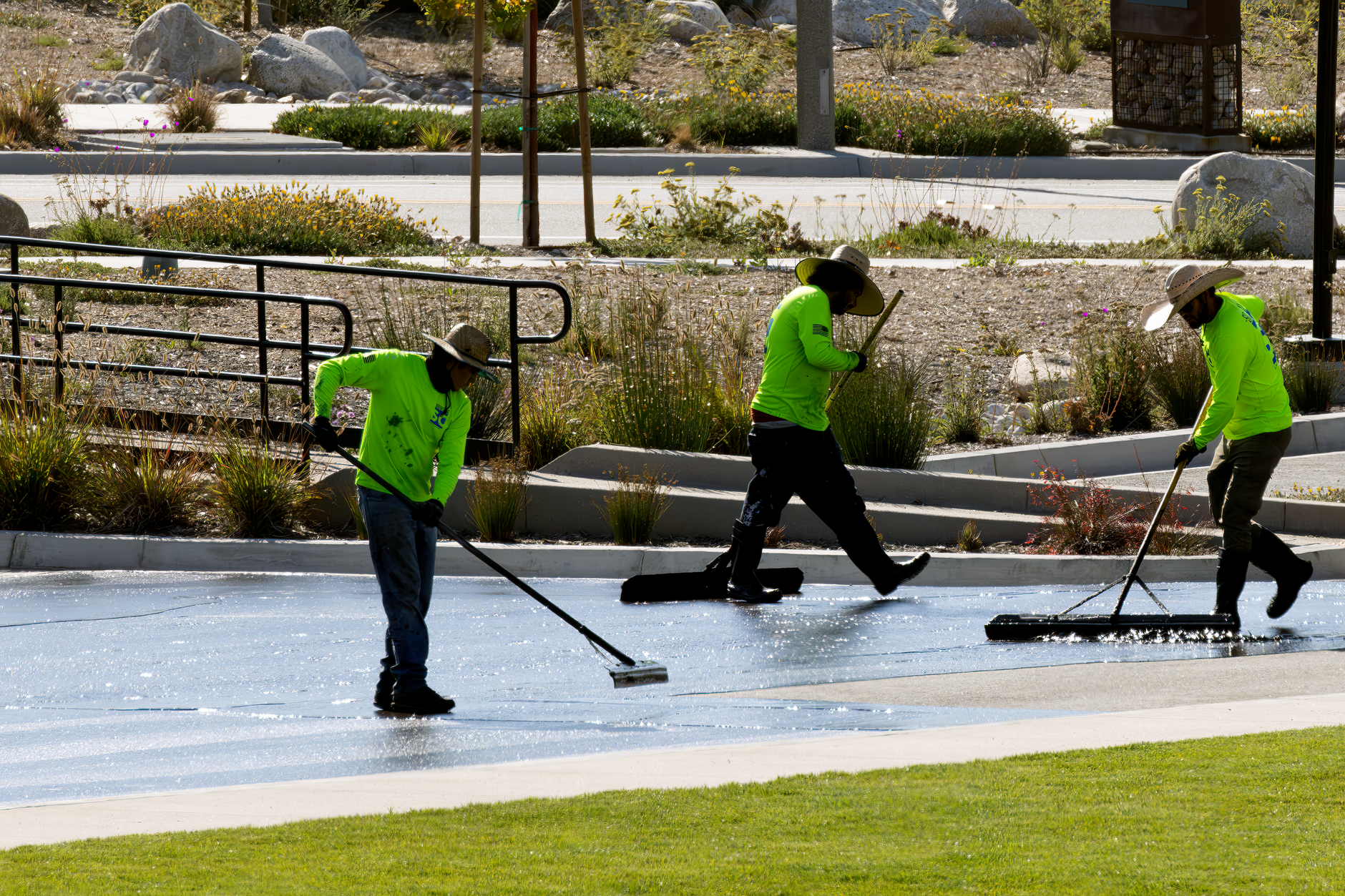
Clients judge a mow by the lines they can see: the curb face, the drive gutter and the corners behind a planting bed. Those are the places a robot does not reach, so a blower or trimmer must finish them. An open lawn with clippings left on the walk reads as an unfinished job, however fast the turf was cut.
That is why the hand pass defines the finish. Keep it on the route card as a planned task, not an afterthought at the end of the day.
Scoping a mixed robot and crew route
Service Robot Co. is a full-service commercial robot integrator for US businesses. We are OEM-neutral, so we select the right robots across manufacturers for each site, then handle robot leasing, deployment, integration, training and service through a nationwide US engineer network. Our lease runs three years with one fixed lease payment, quoted after a site assessment. For a grounds contractor, that means one partner and one point of contact for the mowing route, instead of a separate vendor for each machine.
Start the site assessment by mapping open turf, edges and hard surfaces separately, because that mix determines how many crew passes a robot actually removes. Ask for a robot demo on one property before you commit a fleet to a full route.
What the sources do not settle yet
None of the material we found reports a measured cleanup time for a robot mow followed by hand work, and no survey figure on autonomous mowing crews surfaced. The contractor's 70 percent estimate and the 35-robot session are useful signals, but neither measures a sequence on a real route.
Pilot the route on two or three sites with the same crew, log the hand minutes spent on edges, curbs and drives, and compare those logs before changing how the crew is staffed.
Frequently asked questions
Want a robot working for you?
Tell us the job and the site. We will recommend the robot, quote the lease, and keep it serviced.
Sources
- FJ Dynamics blog: do robot lawn mowers pick up the grass
- PCWorld: Anthbot N8 review
- JourneymanHQ guide on robot mower limits
- JourneymanHQ guide on push sweepers and bagging mowers
- Yarbo leaf blower product page
- Husqvarna press release on professional robotic lawn mowing
- Landscape Management: autonomous robotic mowers and the labor crisis
- GCM: session on autonomous mowers at the 2025 GCSAA Conference