Key takeaways
- On open turf the mower cuts, and the crew member watches, stops and records.
- Keep people and pets out of the zone, and stop the unit the moment anyone enters.
- Test the emergency stop before every start, and pull the unit if it does not respond.
- Remote alerts tell the lead, but someone on site still has to confirm the cause.
- Log every stop and near miss, because repeated entries are what justify a layout change.
What does a crew member actually do during a run?
On open turf, the mower does the cutting. The crew member does everything around the cut: setting the unit out, keeping the zone clear, watching the route, answering stops and writing down what happened. Most of the job is attention, though it is physical attention, because you have to stand where you can see the machine.
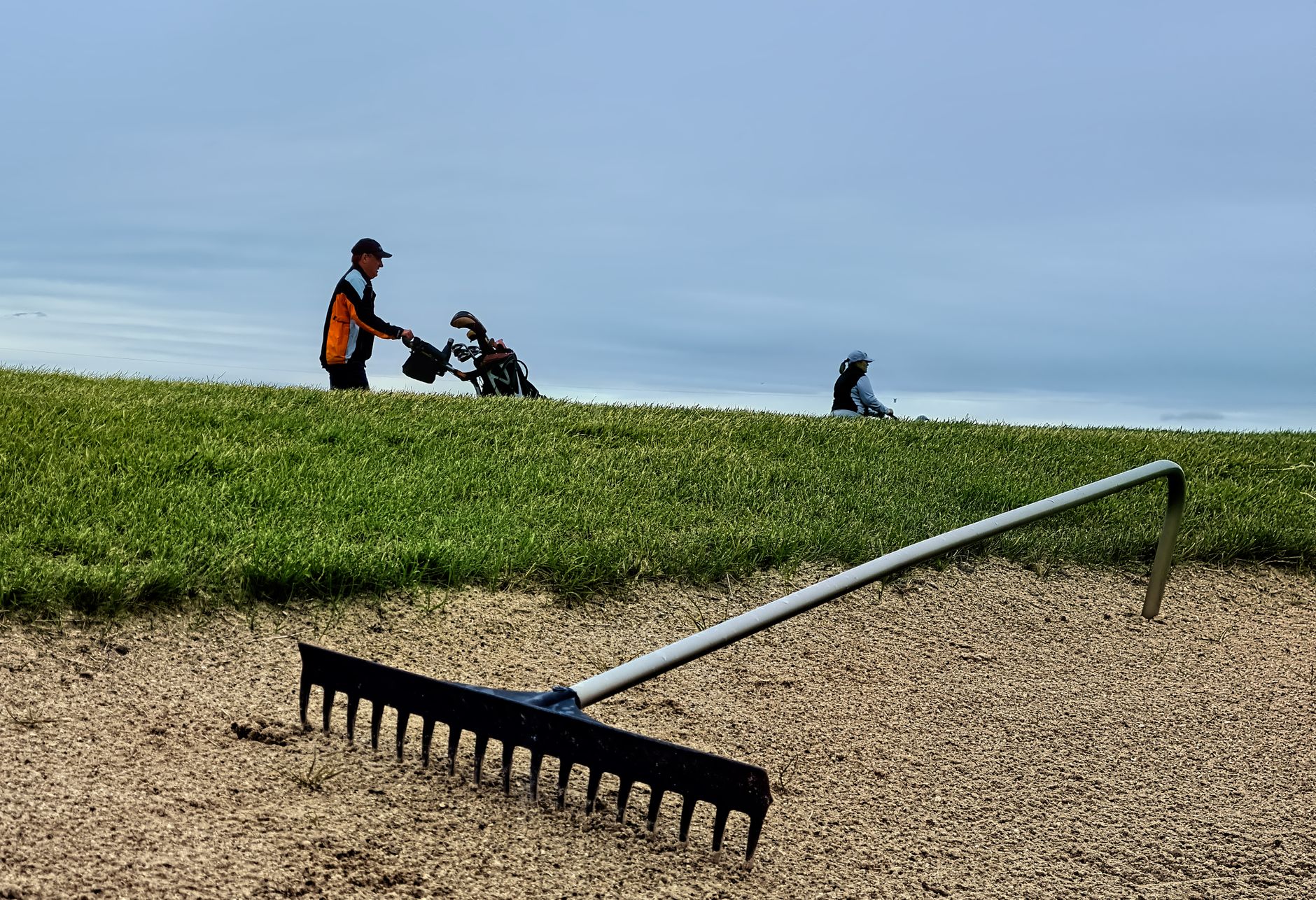
Field reports from the 2025 GCSAA show describe the same split. In one Kress and Firefly setup, as reported by GCMonline, three employees each drove a unit to an assigned hole, started it there, and set its direction and speed. The unit then ran in autonomous mode while the employee raked greenside bunkers by hand and spot-checked fairway bunkers.
That split matters for planning. Hand work and supervision compete for the same person, so decide before the run which tasks wait until the unit is parked.
How close do you have to stay?
Owner manuals are plain on this point. Robomow guidance says to keep bystanders, children and pets away while the mower runs, under the watch of a responsible adult. A separate Robomow guide advises against unattended operation when pets, children or people may be nearby.
In practice that means a fixed watch position with a clear line to the unit and to the edges of the zone. If you have to walk behind the mower or step into a bunker to see it, you have lost that line. Tell the lead, and have the run paused or the position changed.
Do not look for a mower-specific standard to settle the question. The only standard named in the manuals reviewed was EN 60335-1:1994, cited in a Friendly Robotics manual, and it is a general household appliance standard, not one written for robotic mowers.

Who and what do you watch for?

Watch for people first: golfers, walkers, maintenance staff, and anyone who has wandered in from a service road. Robomow guidance says to stop the mower if anyone enters the area. Treat that as the default, not a judgment call made mid-run.
Pets need the same discipline. Animals move quickly and unpredictably, and children may approach a machine out of curiosity. Manuals warn that the blade can throw debris and cause serious injury, so an animal or person at the edge of the cut is a stop, not a warning.
Loose objects are the other concern. A hose, a tool or a dropped bag becomes debris the moment the blade reaches it, so a walk-through before each start catches what would otherwise become a hazard.
What do you do when the mower stops or sends an alert?
Remote monitoring helps the lead, but it does not replace a person on site. Toro's GeoLink fairway mower, described in GCSAA coverage from Walnut Creek, Colorado, can be monitored and controlled by phone, tablet or computer, and it automatically texts the supervisor if an issue arises. Someone still has to walk to the unit, confirm the cause and decide if a restart is safe.
At The Belfry, 16 Husqvarna CEORA units ran on the Brabazon Course during the 2026 Husqvarna British Masters as part of overnight maintenance. Director Angus MacLeod said the team could track the whole cutting operation, according to Golf Business News. Tracking the operation is one job; reading each alert and clearing it on the ground is another.
Respond in a fixed order. Stop the unit with its emergency stop, confirm people and animals are clear, read the alert, and fix only what you have been trained to fix. Anything beyond that goes to the lead, and the unit stays parked until the lead says otherwise.
What belongs in a supervision routine?
A routine works when it is short enough to repeat every time. The steps below are a starting point for a crew's own checklist. Adapt them to the manufacturer's manual and to what the lead has approved for the site.
- Before the start: walk the route, clear loose debris, confirm the mapped zone matches the site, and test the emergency stop.
- At the start: clear people and pets from the zone, take your watch position, and confirm the zone is clear before the unit leaves its station.
- During the run: keep the unit and the zone edges in sight, and stop the unit if anyone or anything enters.
- After the run: log the run, record every stop, alert, near miss or unusual sound, and report to the lead before the next start.
When do you stop the mower and call the lead?
Call the lead, and do not restart the unit, when any of these conditions appear. Keep the list on the crew board so no one has to recall it under pressure.
- Anyone or any animal enters the mowing zone or moves toward the cut edge.
- The emergency stop does not halt the blade and wheels, or the STOP button does not respond. Manuals warn against using the unit in that state.
- The blade throws debris, shows damage, or the unit makes a new noise or vibration.
- The unit leaves the mapped area or stops on ground it cannot clear.
- The same alert returns after a restart, or you cannot identify its cause.
- Anyone running or watching the unit has not finished the training the system requires.
How should you log issues so the lead can use them?
A useful log entry records the time, the location on the route, what the unit was doing, what you saw, what you did and whether the unit restarted. Keep it factual. 'Stopped near the drain on the back nine, goose crossing, restarted after the zone cleared' helps far more than 'bad run'.
Repetition is what turns notes into decisions. One stop tells you about a moment; several stops at the same drain or cart path tell the lead to re-map that section or change the watch position. The Walnut Creek crew judged its mower best as supplemental fairway support, and a judgment like that depends on records like these.
Where do training and a lease partner fit in?
Training comes first. Toro's GeoLink crew had to finish an online course before running the mower, according to GCSAA coverage. The unit has a seat, so an operator can also drive it manually, which means the crew should know both modes before the first autonomous start.
Service Robot Co. is an OEM-neutral integrator. We pick the right robots across manufacturers, then finance, deploy, integrate, train and service every unit through a nationwide US engineer network, with one partner for the whole lifecycle. We lease commercial robots on a 3-year lease, with one fixed payment quoted after a site assessment.
For a supervision crew, that means the site map, the training plan and the service contact are settled before the first run, not after the first stop.
Frequently asked questions
Want a robot working for you?
Tell us the job and the site. We will recommend the robot, quote the lease, and keep it serviced.
Sources
- Robomow user guide, supervision and bystander guidance
- Robomow RK user guide, 2021 (emergency stop and debris warning)
- Friendly Robotics RL800 Robomower manual
- GCMonline: autonomous mowers at the 2025 GCSAA show
- GCMonline: Kress and Firefly profile, 2025 GCSAA coverage
- Golf Business News: Toro and Reesink autonomous fairway mower
- Golf Business News: The Belfry and Husqvarna British Masters, 2026