Key takeaways
- A cobot fits the transfer step between forming and the rack, not the boiling itself.
- The one reported line places 24 bagels on a board every 7.5 seconds, a vendor and founder figure to test against your own pace.
- Wet dough calls for washdown-rated arms and food-safe, drainable grippers, and the rating must be verified for the exact model.
- Sanitation is a schedule the shop keeps in a log, not a single end-of-day wipe-down.
- Cobot safety depends on the collaborative mode, payload, washdown rating and layout, not on the label alone.
Where does a cobot fit between the boiler and the tray rack?
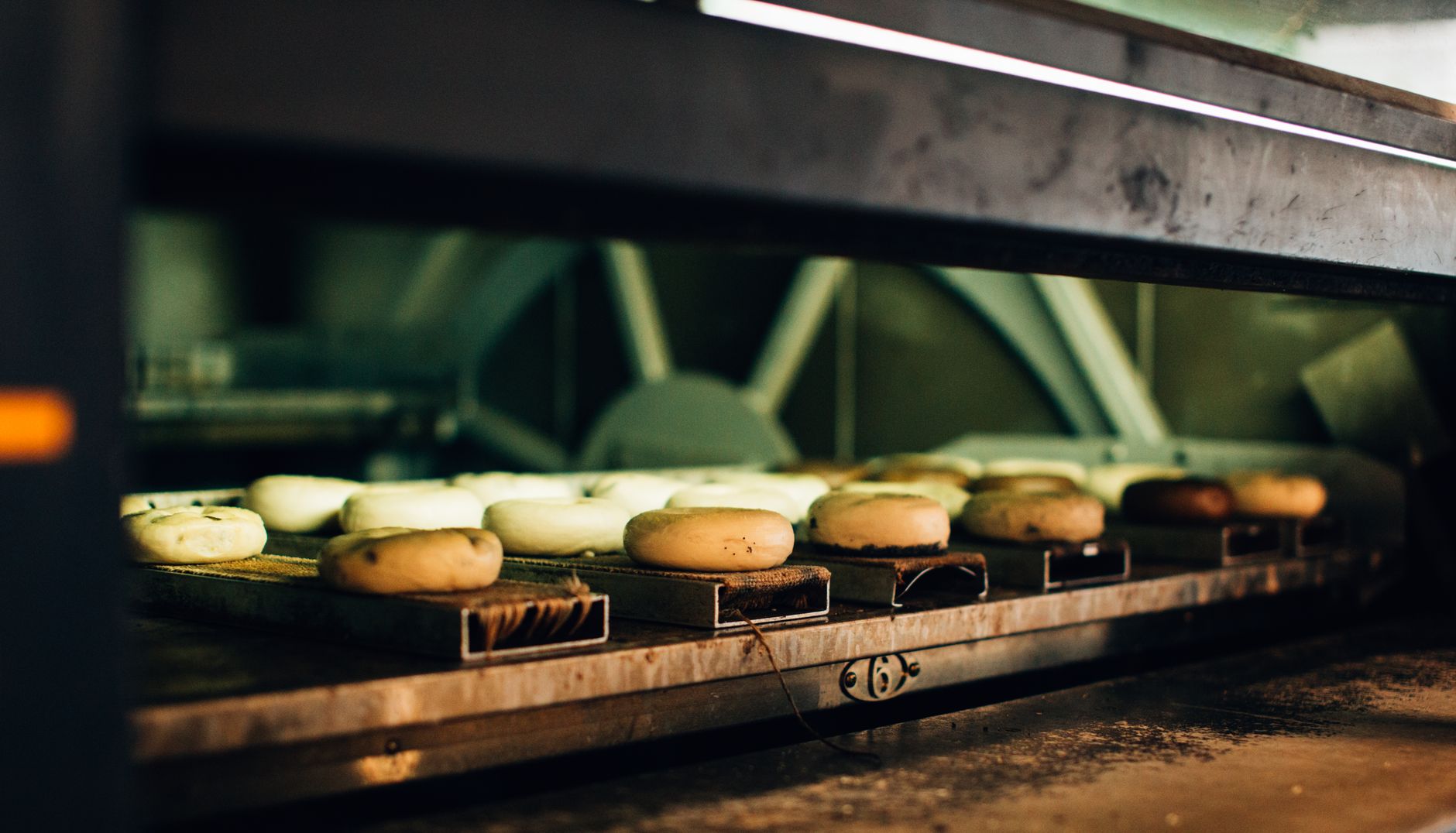
The short answer is that a cobot fits the transfer work, not the boil. In the bagel line that Packworld profiled, a Boichik Bagels cell in Berkeley, California, uses an Apex Motion Control Baker-Bot 10 cobot to lift sheet-pan-sized boards of formed dough off the end of the line and set them on speed racks.
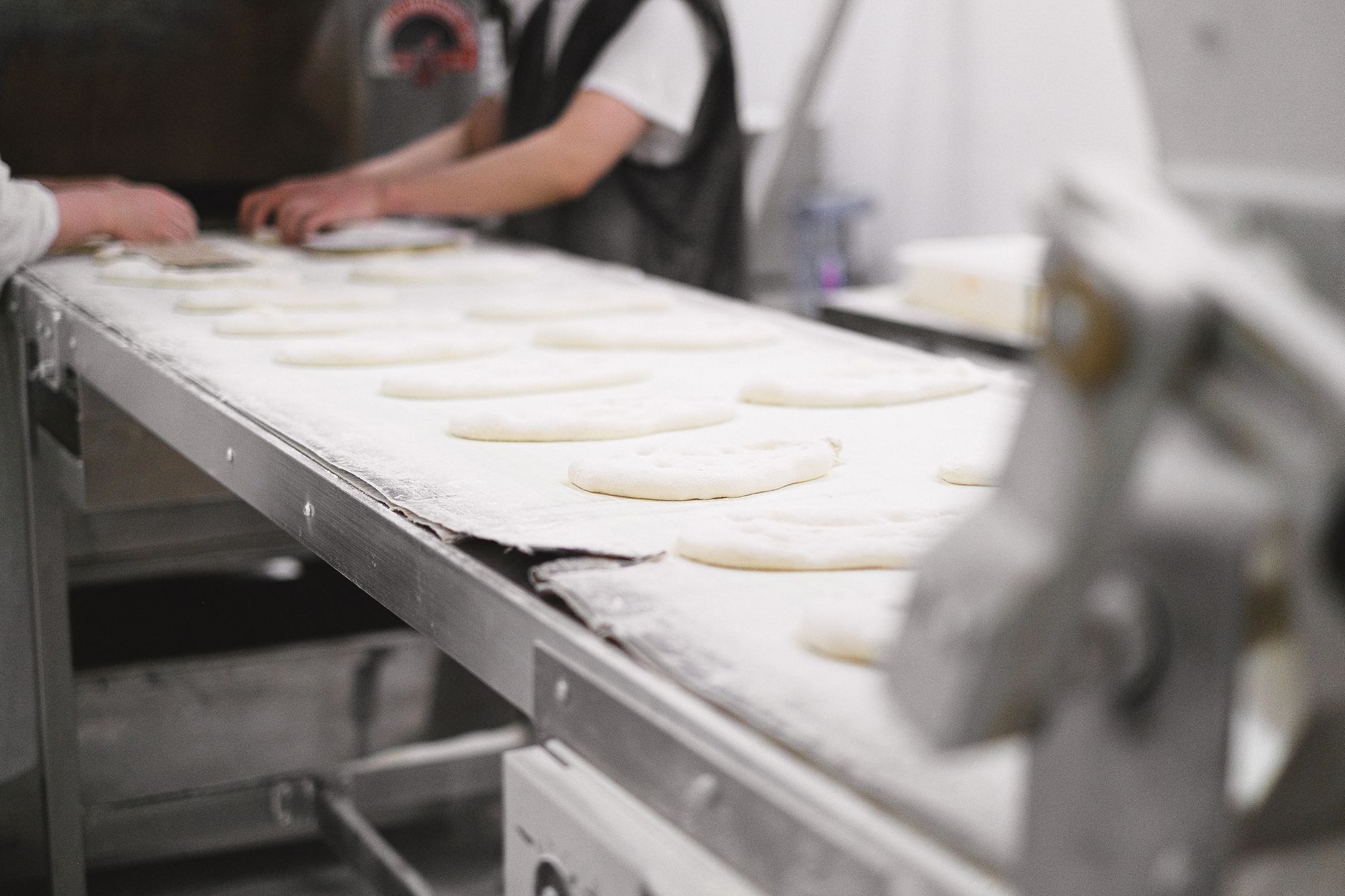
The reported pace is the number that matters most. According to the same article, the line puts 24 bagels on a board every 7.5 seconds, and the founder said one person would otherwise be needed for that job, two at full speed. Both figures come from the vendor and the founder, not an independent test, so use them as a starting benchmark for your own timing study.
Apex says that once a pan holds 8 to 10 bagels, it moves on to proofing and then to frying or boiling on other equipment. The cell therefore sets the rhythm of the transfer step, while the boiler sets the ceiling on product per hour. Placing the cell means finding the point where formed product leaves the line and has a clear path to the rack.
Why do short, repeated moves suit a cobot cell?
Bagel transfers are short, repeated and nearly identical. A board travels from a known position to a known rack slot dozens of times in a shift. That kind of motion suits a fixed arm with taught positions better than a person who keeps bending, lifting and turning through a rush.
Apex also says its tray handling applies to cookie, bagel, dough and cracker production, a vendor claim worth testing against your own products. A cell tuned for one board size can struggle when the shop changes pan dimensions, so ask whether grippers and rack positions can change without a full re-teach of the arm.
How do you handle wet dough without contaminating the cell?
Wet dough is the hard part. Boards come off the line sticky and wet, and every surface the dough touches becomes a food-contact surface. Start with the ingress rating. A machinery parts guide says robots in high-pressure washdown areas need IP69K, while foam-cleaned areas need IP65 or IP66. That guide is not independently verified, so check the rating against the manufacturer's data sheet.
The same guide says end effectors should use food-safe, smooth and drainable materials with sealed actuators, and that mounting frames should meet the same hygienic standard. Water pooling in a gripper cavity is a contamination route, so ask exactly how the gripper drains.
Hygienic claims are strong on paper and thinner in the record. FANUC's September 2025 PACK EXPO release describes an IP69K hygienic delta robot with stainless housing that handles washdown up to 1500 psi, and says its NSF H1 food-grade lubricant needs more frequent service, typically on a one-year interval. That is a delta robot, not a cobot. We found no cobot-specific IP69K certification and no EHEDG or 3-A test result, so request the test report for the exact model before you lease it.
Which safety rules govern a cobot beside staff?
ISO/TS 15066:2016 supplements ISO 10218 and covers four collaborative modes: safety-rated monitored stop, hand guiding, speed and separation monitoring, and power and force limiting. It gives maximum force and pressure values for 29 body areas, based on a University of Mainz study of 100 subjects.
Power and force limiting suits a line where staff work near the same zone, but a low payload does not make an arm risk-free. A Universal Robots compliance officer, quoted in an engineering.com piece, said exactly that. Dough boards, rack edges and wet floors add hazards that an arm's rating does not cover.
Confirm whether the standard has been revised or folded into a newer ISO 10218 edition before you write it into a specification. We did not confirm its current status for this article.
What sanitation steps does the cell need?
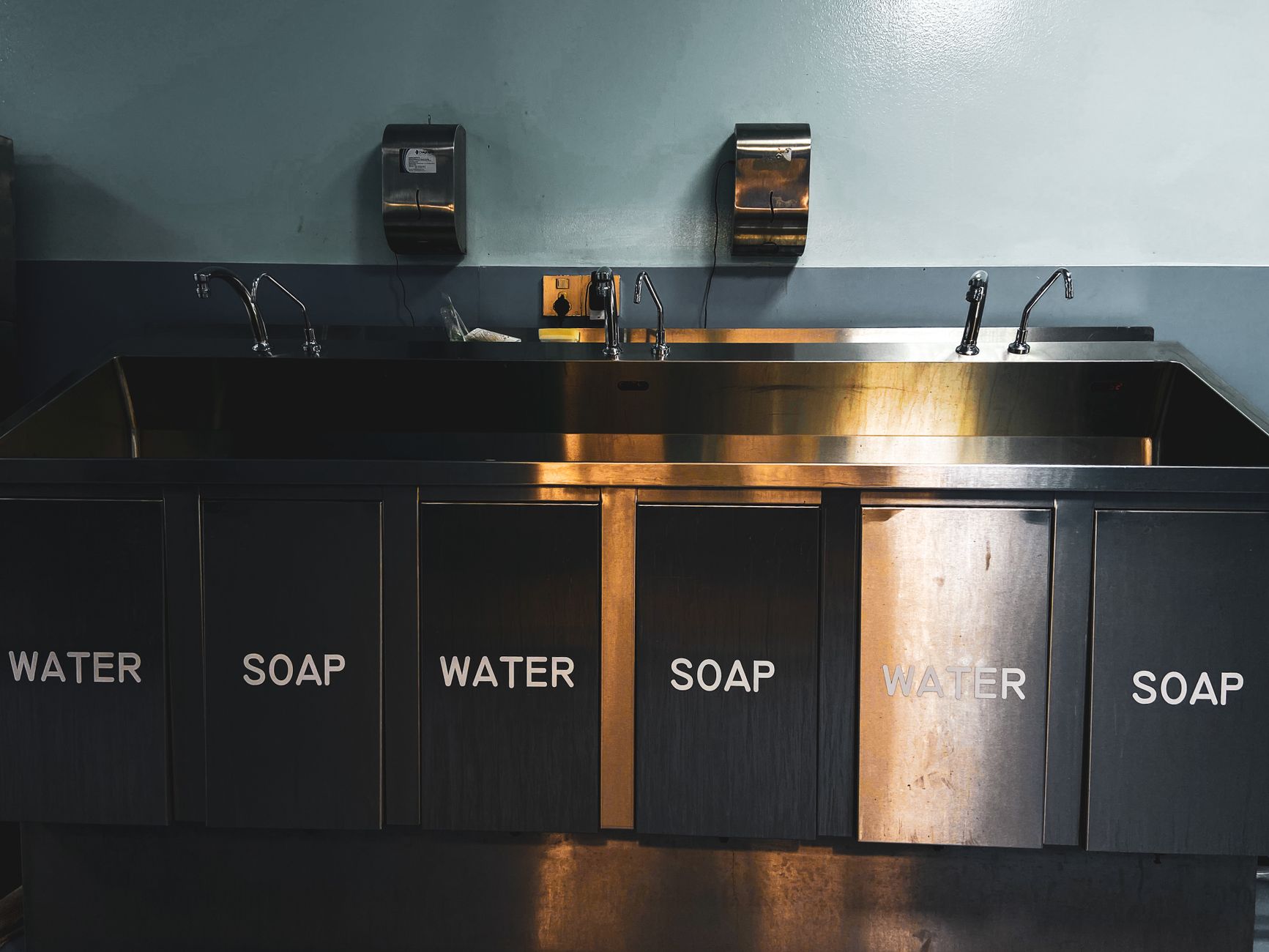
Sanitation is a schedule, not a single wipe-down. According to a Xenia summary of the FDA Food Code, food-contact surfaces used with time and temperature controlled foods are generally cleaned and sanitized at least every four hours, under section 4-602.11. Cooking equipment follows a 24-hour cycle under section 4-602.12, and sanitizing follows cleaning by chemical concentration and contact time, or by hot-water immersion, under section 4-501.114.
A Kentucky equipment guide adds a trigger: clean and sanitize when switching from raw foods to ready-to-eat foods. A shop that also prepares sandwiches or toppings should treat that switch as a stop point for the arm and gripper. The four-hour figure comes from a vendor summary, so confirm the interval against the food code your local regulator has adopted.
A practical cell log should capture at least these items:
- Gripper and end effector removed and cleaned at each sanitation interval
- Rack wheels and guide rails washed down with the rest of the line
- Sensor lenses and camera housings wiped and checked for film
- Sanitizer concentration and contact time recorded for each cycle
Where do cobots stop short on a bagel line?
Several limits matter. The arm does not boil. In the reported example, boiling and frying stay with other equipment, so a cell improves only the transfer step. If the boiler is the bottleneck, a faster arm will simply queue product upstream.
Dough is variable. Board weight, stickiness and shape shift with hydration and proof, and a gripper tuned on Monday can slip by Friday. Expect a tuning period and write down a clear rule for rejected boards before go-live.
Labor claims need care too. The founder told Packworld that no one lost a job to the cobot and that jobs improved, which is one owner's account. Measure your own staffing before you rely on it in a budget.
How does Service Robot Co. approach a bagel-line cell?
We are OEM-neutral, so the arm, gripper and washdown rating are chosen for your line rather than from a single catalog. We run a site assessment, then quote one fixed lease payment on a 3-year lease. Robot deployment and integration follow, with training on the sanitation log and service under RoboCare™ from regional service engineers in every state we service.
Go-live support matters most in the first weeks, when dough variability shows up. On-site dispatch covers faults during that period, so a sanitation question or a jammed rack does not wait for the next visit. One partner and one number for the whole lifecycle keeps that chain short before the morning rush.
Frequently asked questions
Want a robot working for you?
Tell us the job and the site. We will recommend the robot, quote the lease, and keep it serviced.
Sources
- Packworld: Boichik Bagels builds up business with help from a cobot
- NHK Machinery Parts: Robotics and cobots in hygienic zones
- Gazette: FANUC America food-grade robotics at PACK EXPO Las Vegas
- ISO: ISO/TS 15066 news release
- Automate: ISO/TS 15066 explained
- Engineering.com: Universal Robots compliance officer interview
- Xenia: Master cleaning schedule for food safety
- Kentucky Cabinet for Health and Family Services: Food service equipment guide