Key takeaways
- A cobot can take repeatable sanding passes on a blank, while the shaper keeps the shape decisions.
- No public surfboard shop cobot case turned up in our review, so treat any cell as a site trial.
- Dust extraction has to be built into the sanding tool and tested on your own foam.
- Foam dust is a health project first, since one consumer source says most surfboard foams are TDI-based.
- The OSHA silica limit is written for silica, so it does not settle the foam question on its own.
Can a cobot take over sanding in a surfboard shaping room?
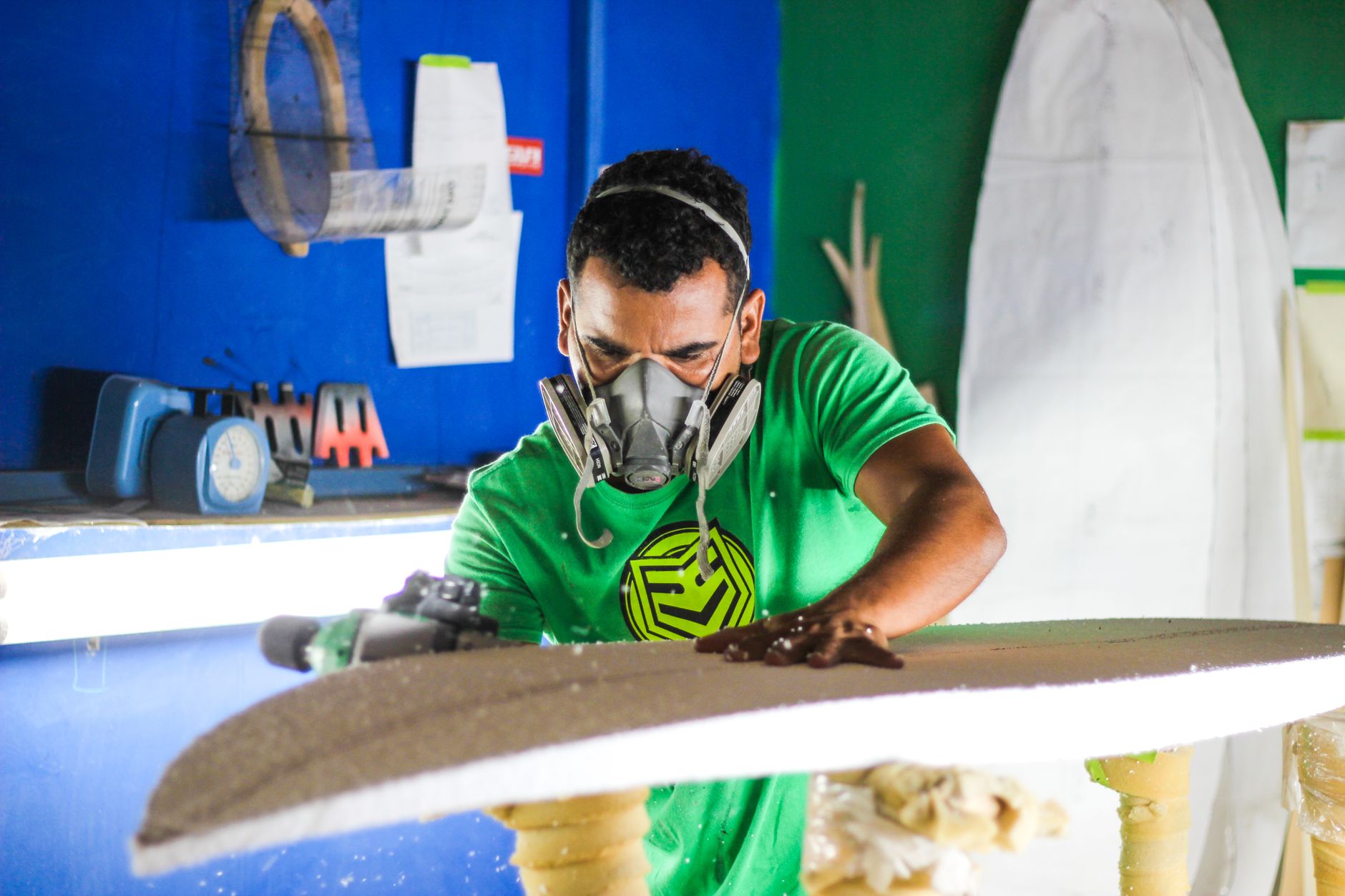
A cobot can take the repeatable sanding passes in a surfboard shaping room, and a skilled shaper keeps the decisions that define the board. The division is clearer than it sounds. A robot arm holds a sander to a programmed path, a light feed and a steady speed. A shaper reads the foam, the rocker and the rail by eye and by hand.
We did not find a public case of a cobot shaping or sanding surfboards. The closest public evidence comes from fiberglass, composites and woodworking sanding. Any surfboard cell is therefore a trial to plan and measure, not a configuration to copy from a catalog. The sections below show where that trial should start, how dust extraction fits, and where the shaper stays in charge.
Which sanding passes are repeatable enough for a cobot?
Repeatability is the test. A pass that runs the same path, at the same pressure, over a surface the robot can locate is a candidate. A pass that depends on a shaper's read of a blank that changed overnight is not. The strongest first candidates are flat or gently curved passes that happen after the rough shape is set.
- Flat deck passes on a blank once the rough shape is set and the surface is even
- Scuff passes on a sealed or glassed surface before a finish coat
- Repeat passes on a fixed jig or template where the tool path never changes
- Rail passes only after a trial confirms the tool holds a steady line along the edge
What do sanding cobot examples show about dust?
Dust control is designed into the sanding tool, and the public material confirms that. A Talen Robotics sanding cobot brochure lists Mirka dust extraction with a Universal Robots arm and vacuum table. GEBE2's collaborative sanding robot lists optional dust extraction. Both documents are undated trade material, so read them as product descriptions, not performance tests.
Vendor claims are sharper. A Qviro blog reports that a Fanuc CRX cobot programmed with AI cut dust by 90 to 95 percent at Performance Composites, a composites maker. The post is a vendor blog, and we did not open the full case, so the figure is a claim to test on your own floor, not a measured result.
Universal Robots and Viam announced a robotic block-sanding system for fiberglass yacht work on November 26, 2025. Fiberglass is the nearest task to surfboard finishing, which makes it the most relevant public reference so far.
Why does foam dust need its own health plan?

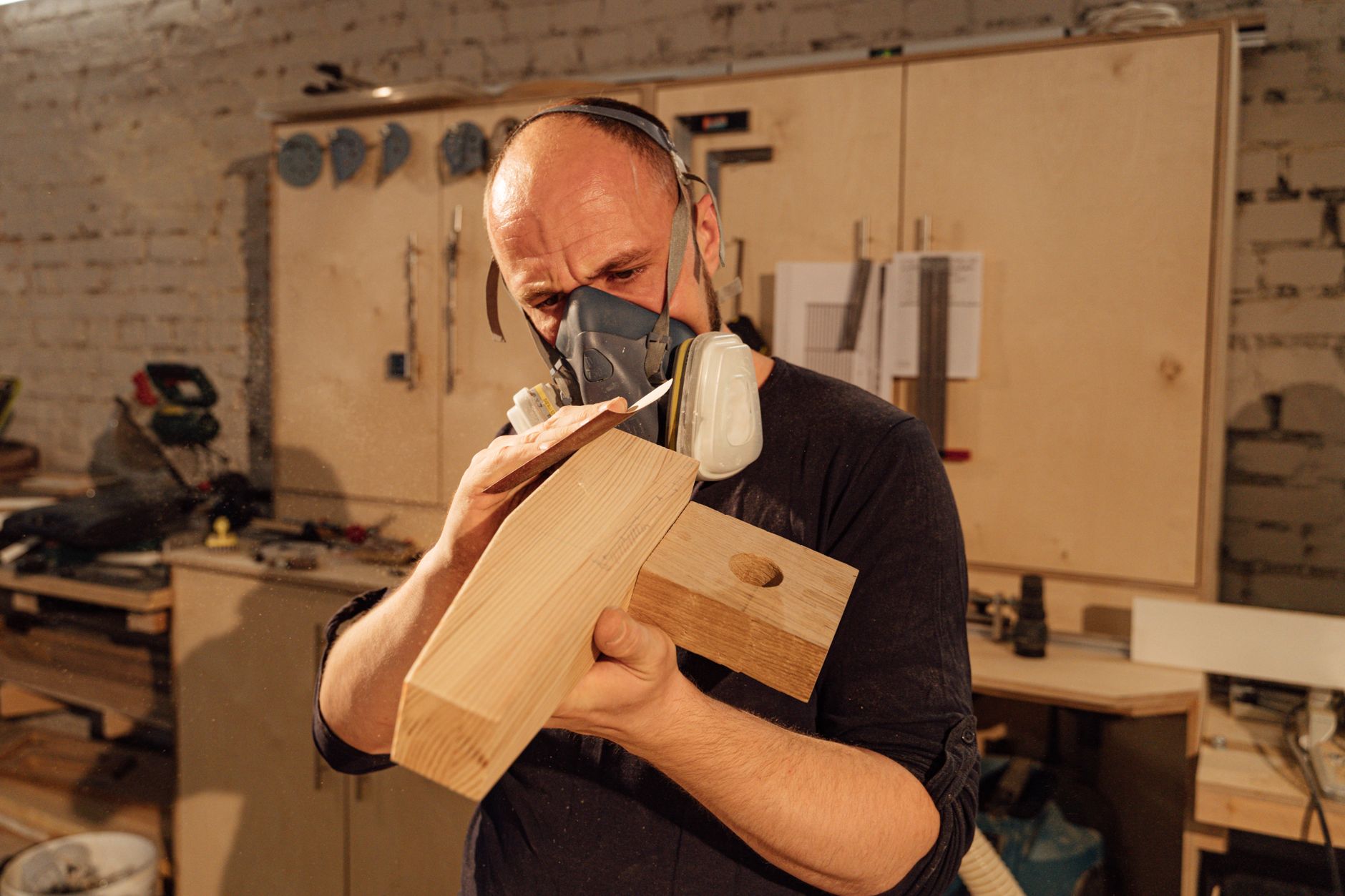
Foam dust is the health question in this room, and it differs from wood or resin dust in ways a shaper should check on the product sheet. Surfer Today states that most surfboard foams are TDI-based, with MDI also used, and says the health risks of TDI are becoming clearer. That source is consumer advocacy, not a regulator, so use it to frame questions rather than as the final word.
A safety data sheet for a different foam product says isocyanate can irritate eyes, skin and airways, and can cause sensitization. The same type of sheet notes that foam products create inhalation hazards mainly when sawing, sanding or machining releases airborne dust. EPA's archived consumer page on spray polyurethane foam also raises sensitization, though that covers spray foam, not shaping blanks.
The practical lesson is to move dust at the source rather than rely on the person at the board. Capture at the sander, not a shop vac after the fact, is the design that matches the sheet's warning about airborne dust.
What does the OSHA silica limit cover?
OSHA's respirable crystalline silica standard, at 29 CFR 1910.1053, sets a permissible exposure limit of 50 micrograms per cubic meter as an 8-hour time-weighted average. The action level is 25 micrograms. Those are the figures to know for silica.
The standard covers silica. It does not automatically cover foam dust, and shaping blanks do not necessarily contain silica. Check the product sheet for each foam, glass layer or filler in your room before applying any limit. The rule text we checked is the 2016 version, and we did not confirm whether it has changed since.
Where does the skilled shaper still lead?
A cell can hold a path. It cannot hold a board's intent. Outline, rocker, rail profile and tail flow come from a shaper reading the blank and thinking about the rider who will ride it. Those decisions are the craft, and they are where a shop's name lives.
Shapers also catch what a program does not expect: a soft spot, a dent from handling, a fin box that has moved, or a tail that needs a different angle. A person stops the cell, reads the surface and adjusts. Keep stop authority with the shaper and write it into the procedure, so the cell never runs past a problem nobody saw.
How should a small shop plan a sanding cell?
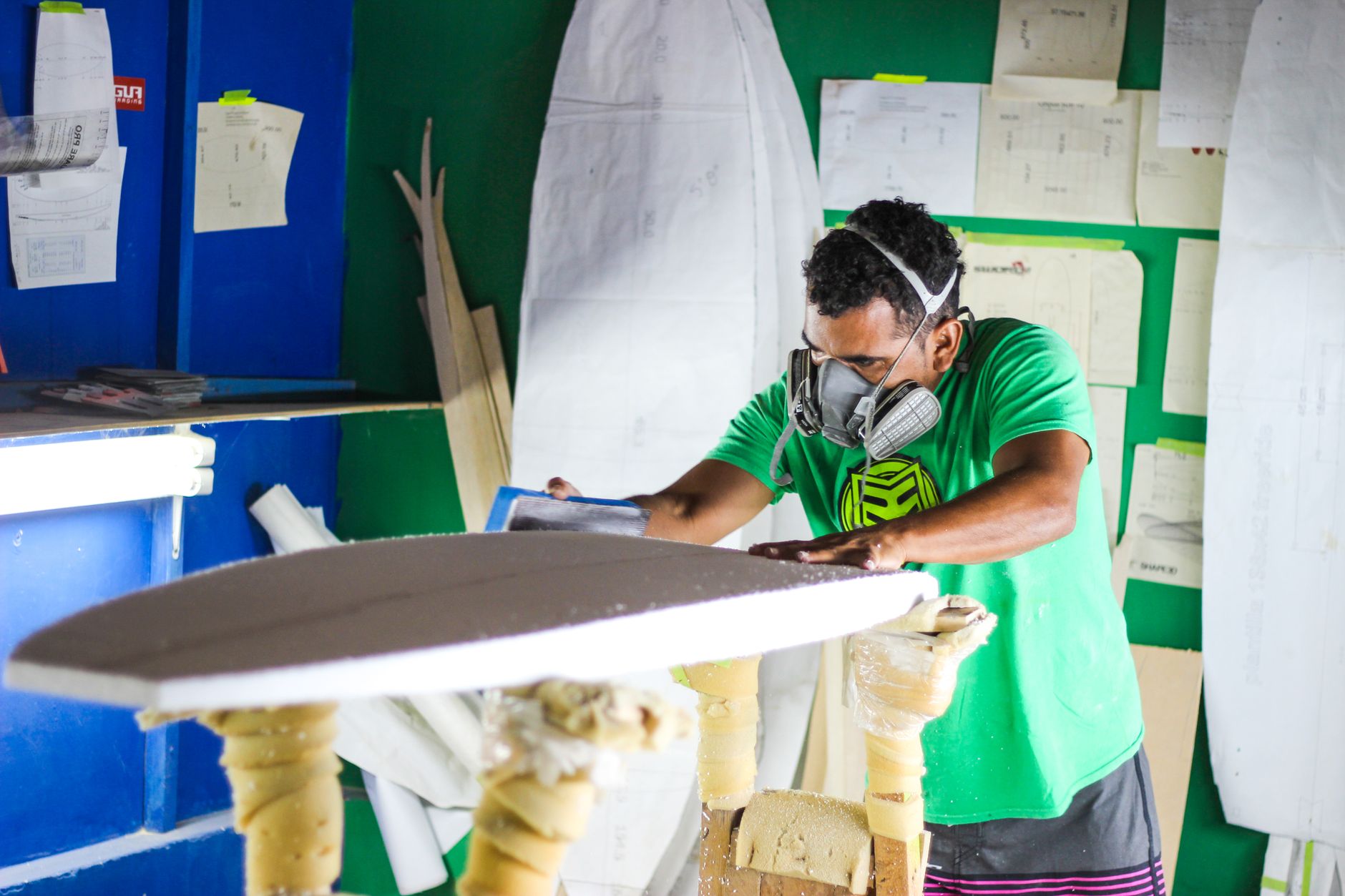
Start with one zone and one pass, run on scrap blanks, and measure what the extraction catches before any production board goes through. Ask the vendor for capture testing on your foam, not only a brochure figure. Log dust readings and surface results on every trial run, so the decision to scale rests on your own numbers.
Choose respiratory protection only after the foam's safety data sheet and your safety advisor have reviewed the task. The guidance we found conflicts. One rigid-foam sheet says a particulate respirator may control nuisance dust during sanding, while forum advice favors HEPA-rated filters. Our review did not find a NIOSH or OSHA assessment of particulate filters against isocyanate vapor, so treat that question as open.
How does a lease and integrator fit a small shop?
Service Robot Co. is OEM-neutral. We pick the right robot across manufacturers, then lease it through financing on a 3-year lease, with one fixed lease payment quoted after a site assessment. We deploy and integrate the cell, train the people who run it, and service each unit under RoboCare, our service plan, backed by regional service engineers.
For a shaping room, the integration work that matters most sits at the extraction point and the stop conditions. One partner and one number across the lifecycle keeps those details with the same team from the first trial through the service calls that follow.
Frequently asked questions
Want a robot working for you?
Tell us the job and the site. We will recommend the robot, quote the lease, and keep it serviced.
Sources
- OSHA, 29 CFR 1910.1053 Respirable crystalline silica
- Surfer Today, The health risks of surfboard shaping materials
- Qviro, AI and robotics solve sanding challenges
- Robotics and Automation News, Universal Robots partners with Viam
- Talen Robotics sanding cobot brochure
- GEBE2 Collaborative Sanding Robot
- Foam product safety data sheet (EnergyShield CGF PanelCast)
- EPA, Health concerns about spray polyurethane foam (archive)