
Key takeaways
- August 2026 marked a shift from pilot language to permanent-service language, especially in pharmacy delivery.
- The winning launch pattern is narrow first: one campus, one service line, one catchment area, then expansion.
- Site selection now matters more than aircraft specs. Pharmacy adjacency, airspace simplicity, and clean handoff workflows decide success.
- The strongest use cases are not flashy. They remove repeatable road miles from medication, lab, blood, and supply movement.
- Health systems need one operator for the whole lifecycle, from site assessment mapping to go-live support and ongoing service.
What actually changed this year
Medical drone delivery stopped looking like a publicity pilot in 2026 and started looking like an operating model. The clearest signal came on August 3, 2026, when Cleveland Clinic announced a long-term prescription medication drone delivery program in Cleveland’s east-side suburbs. According to Cleveland Clinic, the service had already completed its first deliveries, covers patients within a five-mile radius of the Beachwood Administrative Campus, and is optional with no extra cost to eligible patients.
That matters because the announcement was not framed as a demo day. It was framed as an extension of an existing pharmacy home delivery service. In plain operational terms, that is the shift. Health systems are no longer asking if drones can fly. They are asking which medications, which sites, which patients, and which workflows belong in a durable service line.
The same pattern shows up elsewhere. On March 26, 2026, Advocate Health said its planned hospital drone network could eventually handle more than 100,000 deliveries a year across three markets. On July 1, 2026, BayCare said it would build a regional healthcare drone network for medications, lab samples, and critical supplies. On August 3, 2026, Tampa General Hospital announced a whole-blood drone program aimed at trauma response. Different payloads, different timelines, same message. The healthcare use case has matured from novelty to network design.
Why pharmacy fulfillment is the first durable use case
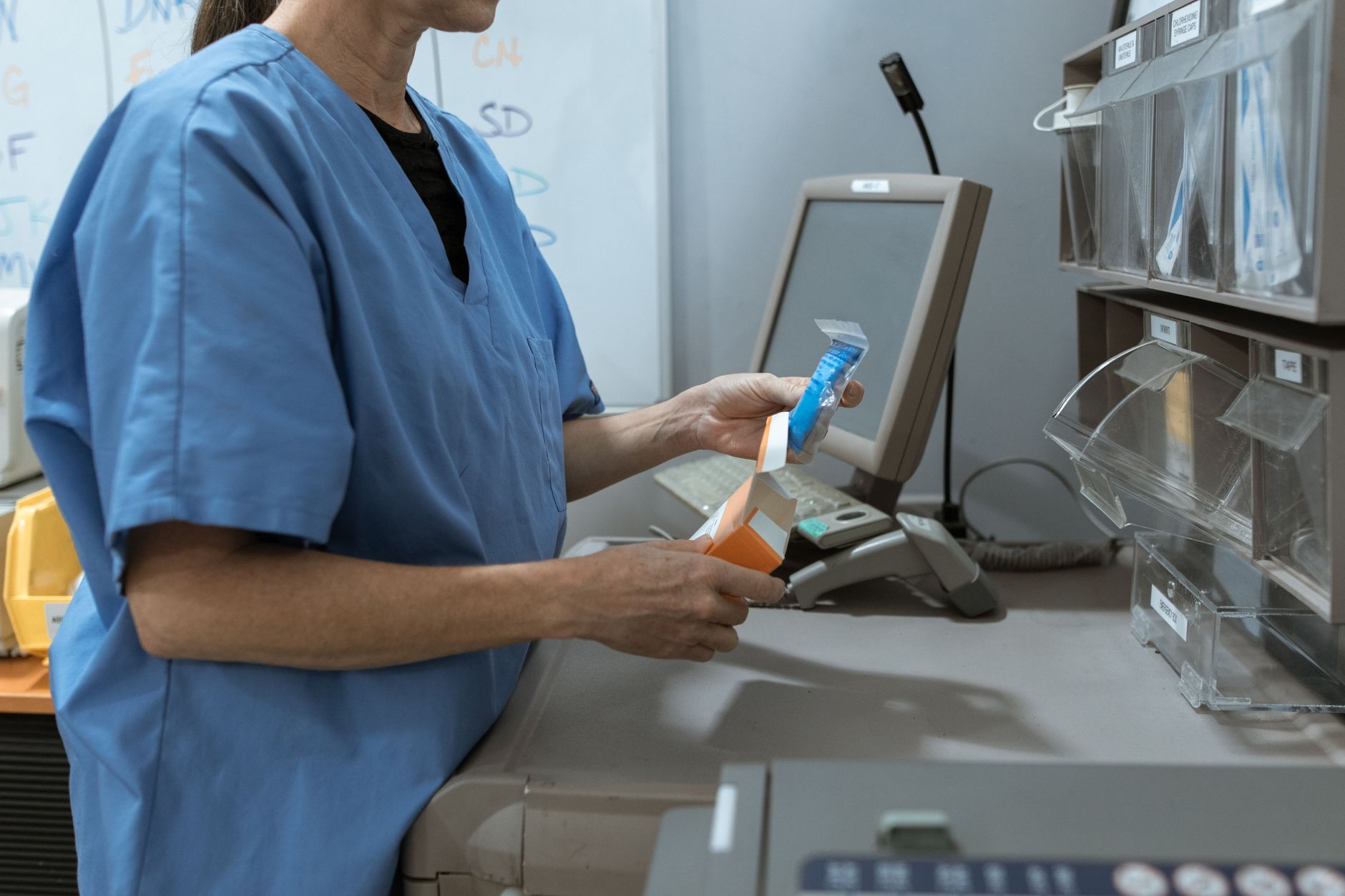
Pharmacy works because the workflow is already disciplined. Orders are verified, packaged, labeled, released, tracked, and documented. Drones slot into that chain more naturally than many other hospital logistics tasks because the handoff can begin at one controlled origin point, usually a pharmacy or adjacent staging area, and end at a patient home or another care site with clear chain-of-custody rules.
Cleveland Clinic’s August 3 release is useful here because it shows what a durable pharmacy launch really looks like. Eligible patients are drawn from an existing home delivery program, notifications run through the patient portal, controlled substances are excluded at launch, and the aircraft do not land in the yard. Instead, the package is lowered while the aircraft remains aloft, which reduces landing-zone complexity for suburban homes.
Upstate University Hospital offers another practical signal. In its April 3, 2026 update, Upstate said it had already made more than 7,200 prescription deliveries since 2023 from its outpatient pharmacy to discharging patients and area homes. That kind of cumulative volume matters more than a ceremonial first flight. It suggests that pharmacy teams can standardize eligibility, dispatch timing, and exception handling well enough to keep the service running beyond a one-off trial.
What should operators learn about site selection
The biggest lesson from 2026 is that site selection is not a real-estate afterthought. It is the operating model. Cleveland Clinic began from the Beachwood Administrative Campus and limited the first phase to a five-mile service area. That tells operators to start with a geography they can defend operationally: dense enough to matter, small enough to control, and close enough to the pharmacy workflow that handoffs do not become a new bottleneck.
Upstate’s April 3 release adds a second lesson. Its new pathology facility is being built with a dedicated drone bay for recharging and maintenance. That is a reminder that launch sites should be chosen for what happens on the ground as much as what happens in the air. You need staging space, secure packaging, charging access, maintenance access, weather procedures, and a clean path to the originating department.
BayCare’s July 1 announcement points in the same direction. The system plans to start in the St. Petersburg and Clearwater area before expanding across Tampa Bay in 2027. That is a hub-first strategy, not a blanket map. The right first site is usually the one where pharmacy density, patient distribution, staff readiness, and airspace manageability line up at the same time.
- Choose a launch site beside an existing high-discipline workflow, usually outpatient pharmacy or lab dispatch.
- Prefer an initial radius small enough to support repeatable service and measurable service levels.
- Design for ground operations: staging, charging, maintenance, packaging, and staff handoffs.
- Exclude edge cases early, such as controlled substances or difficult drop environments, until the base model is stable.

Last-mile patient service now has a clearer shape

For patients, the win is not the aircraft. It is the service promise. A prescription arrives without another car trip, another queue, or another delay caused by local traffic. Cleveland Clinic made that explicit by treating drone service as a faster extension of home delivery rather than a separate premium product. That framing matters because patient adoption rises when the service feels like a simpler version of something they already use.
The best 2026 examples also keep the patient-facing offer narrow and intelligible. Cleveland Clinic limits initial eligibility to certain medications and communicates through MyChart. That reduces confusion and keeps support teams from handling a flood of exceptions. In other words, the patient experience improves when the operator is willing to say no to some cases at launch.
Tampa General’s August 3 announcement broadens the lesson beyond the home. Its whole-blood program aims to get blood to trauma scenes in under three minutes across a 70-square-mile area. That is still last-mile service, just in clinical time rather than consumer convenience time. The core principle is the same. Put the aerial route on the segment where minutes matter most and road transport is least reliable.
What regulation says, and what operators should infer
The regulatory backdrop also changed enough to support serious planning. According to the Federal Aviation Administration, Phase 1 of the BEYOND program logged 70,563 total flights, including 48,383 beyond visual line of sight flights. Phase 2 began in 2025 under the FAA Reauthorization Act of 2024 and runs through 2029. That does not mean every health system can launch tomorrow, but it does mean the operating evidence base is much deeper than it was a few years ago.
The FAA is also explicit that Part 135 certification is the path for carrying another party’s property for compensation beyond visual line of sight in package delivery operations. For healthcare operators, the takeaway is straightforward. Drone service is not a gadget procurement exercise. It is an aviation operation joined to clinical logistics. Program design has to account for certification, procedures, maintenance, and continuous compliance from the start.
That is one reason many hospitals will not want to assemble a fragmented stack of vendors. The safer route is a lifecycle partner that can evaluate the use case, sequence the rollout, integrate the workflow, train staff, and manage ongoing service expectations. In adjacent automation programs, that is exactly where a vendor neutral robot integrator earns its keep, and the same discipline applies here.
How this fits a broader hospital automation roadmap
A health system does not need drones everywhere to justify a program. It needs the right automation in the right lane. Some facilities will want drone delivery for suburban pharmacy reach, while others will get more immediate value from an indoor medication transport robot, meal tray transport, or hospital delivery robot rental for campus routes that never leave the building. The mistake is forcing every transport problem into the same machine category.
This is where Service Robot Co. fits naturally. For U.S. operators that need one vendor for the whole lifecycle, the company acts as a full-service commercial robot integrator: OEM-neutral selection, financing, deployment, integration, training, and service through a nationwide engineer network. In practice, that means a hospital can evaluate drones as one lane of a larger automation plan without being pushed toward a single manufacturer’s answer for every job.
That OEM-neutral posture matters more in 2026 than it did in earlier pilot cycles. As aerial delivery, indoor AMRs, hospital disinfection robot programs, and other service robotics categories mature at different speeds, operators need a partner that can recommend the robot that fits the workflow, not the workflow that fits the robot.
What should a health system do in the next 90 days
First, identify one service line with repetitive transport pain and disciplined data. Outpatient pharmacy is the obvious candidate because order volume, address patterns, service windows, and exception reasons can all be measured quickly. If the answer is not pharmacy, lab specimens or critical supplies may still qualify, but the workflow has to be tight enough to support repeatability.
Second, define the first geography before you discuss fleet size. Cleveland Clinic’s five-mile starting radius is a good example of restraint. A smaller initial catchment makes it easier to validate order cutoff times, dispatch cadence, patient communication, weather holds, and failed-delivery procedures. Broad maps make good headlines. Tight maps make good operations.
Third, treat the launch like a service design exercise, not a hardware install. That means site assessment mapping, SOPs for handoff and exception handling, patient messaging, clinical escalation rules, and a service plan for uptime. If you already use a robot deployment and integration partner elsewhere in the system, this is the moment to connect the aviation program to that same operational discipline.
The real lesson from 2026 is boring, and that is why it matters
The most important change this year is not that drones look futuristic. It is that the strongest programs look ordinary in the best possible way. They start from an existing workflow. They define eligibility. They launch from a specific site. They limit geography. They decide what is out of scope. Then they expand.
That is exactly how long-term hospital automation succeeds. Not with a dramatic pilot that never settles into daily operations, but with a narrow first use case that proves its worth shift after shift. Cleveland Clinic’s August 3, 2026 announcement crystallized that reality. Medical drone delivery has entered the phase where operators should study process design, not just aircraft capability.
Frequently asked questions
Sources
- Cleveland Clinic Aug. 3, 2026 drone delivery launch
- Advocate Health Mar. 26, 2026 network announcement
- BayCare Jul. 1, 2026 drone network announcement
- Tampa General Aug. 3, 2026 whole-blood drone program
- SUNY Upstate Apr. 3, 2026 expanded drone operations
- FAA BEYOND program overview
- FAA package delivery by drone under Part 135
Service Robot Co. is not affiliated with, sponsored by, or endorsed by the companies mentioned in this article.