Key takeaways
- A robot mower on fire station grounds works only inside a mapped boundary around apparatus doors, aprons and drive lanes.
- Write pause rules in three parts, trigger, stop and restart, and drill them with a parked truck.
- A reference airport rescue checklist sets apron widths of 12 feet for one vehicle and 28 feet for multiple vehicles, so confirm against your local code.
- Training yards and detail edges stay with the crew because a mapped boundary cannot follow ground that changes through the day.
- Most 2026 fire station mowing bids we found name no robots, so the station has to write robot terms into its own scope.
Can a robot mow fire station grounds around apparatus doors?
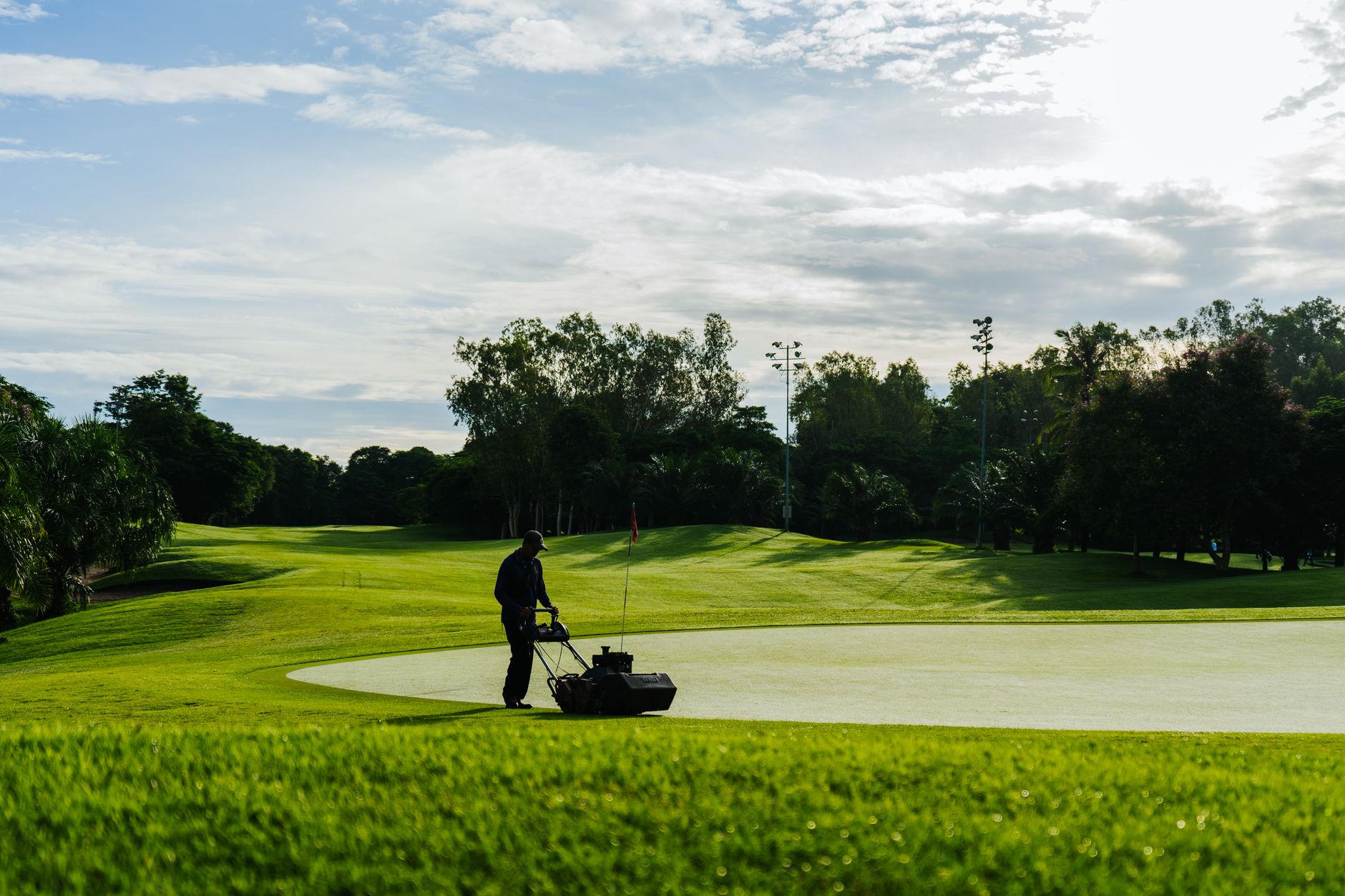
Yes, on the open lawn, and only inside a boundary the station draws and tests before the first pass. A robotic mower can cut the turf between the drive lanes and the training yard on a fixed schedule, but it has to stop short of the apparatus doors, the apron and any lane a truck may need at a moment's notice.
The working rule is simple to state and hard to keep. The robot never sits on ground an engine might need, and it leaves the moment a truck starts to move. The rest of this article is a method for making that rule hold at three in the morning with nobody watching the lawn.
Which areas belong on the exclusion map?
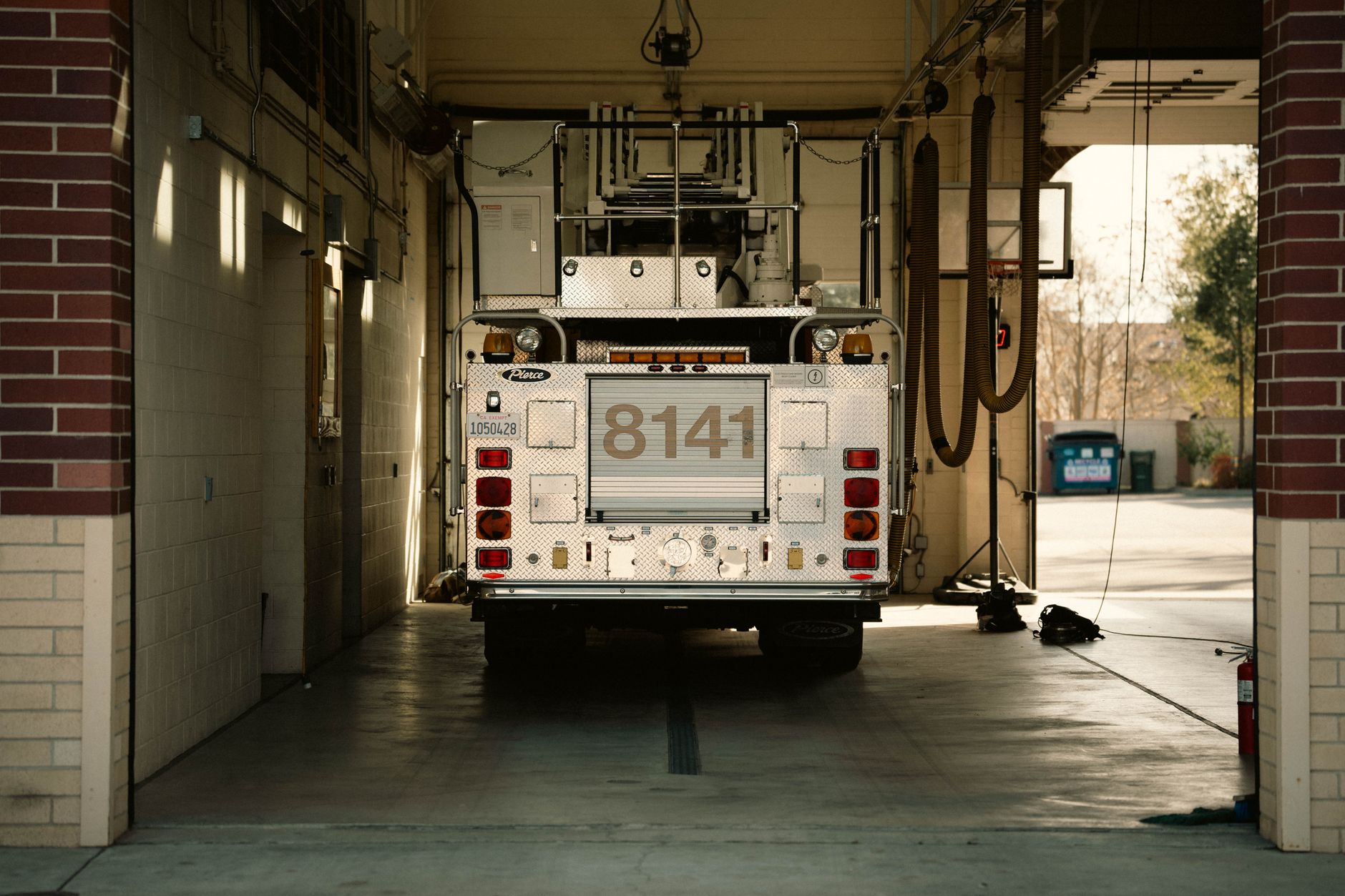
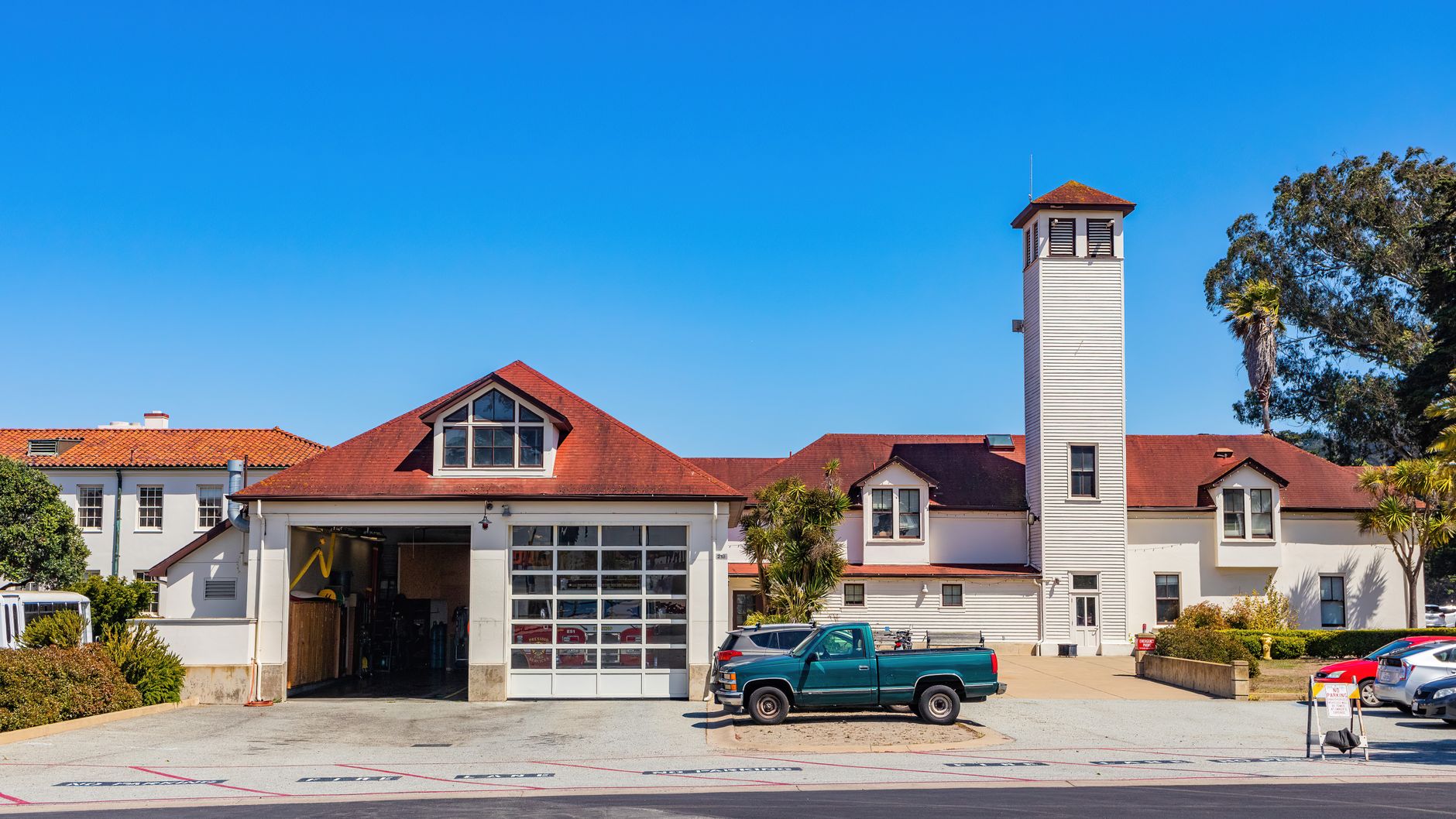
Start with the apron. An airport rescue station checklist in our research asks whether aprons slope away from the bays and whether concrete bollards guard door openings from backing vehicles. It sets apron width minimums of 28 feet for multiple vehicle stations and 12 feet for single vehicle stations, with striping at least 1.5 times vehicle length.
That checklist covers airport rescue stations under FAR 139, so treat its figures as a reference to check against your local fire code and station standard, not as a municipal rule. The Unified Facilities Criteria describes drive through bay doors of about 18 by 18 feet and says the approach slope should let vehicles enter and exit without bottoming out or impeding driver sightlines. The same sightline concern argues for keeping the boundary off the approach slope itself.
Drive lanes come second. Mobile, Alabama defines a fire apparatus access road as one that gives apparatus access from a fire station to a facility or building. Map the lane that reaches the street first, then any turnaround the crew uses behind the station.
How do exclusion zones get built and checked?

Husqvarna's stay out zone guidance, checked in November 2026, says zones can be drawn on a lawn and should be kept clear of the charging station and guide wire. The same page warns against relying on software zones alone to keep a mower out of a pool or street, and advises a physical barrier at least 15 cm high.
Toro's exclusion zone help article, also checked in November 2026, lists hazards such as pools, retaining walls, flower beds and fire pits, and warns that an unmapped hazard could cause a fall or damage. Door aprons belong on that list as their own category, because the truck is the hazard that moves.
Build the map on foot, not from a drawing. Walk the apron with the apparatus in its usual parked position, mark each door opening and the backing path, then set the boundary at the outer edge of that path. Test the boundary with a truck actually parked there before the mower runs unattended.
What pause rules fit an emergency vehicle move?
A pause rule tells the robot what to do when a truck moves. None of the sources in our research sets a required response time for fire station grounds, so the timing belongs to the chief and the crew. Write the trigger, the stop and the restart as three separate rules, then drill each one.
- Trigger: a bay door opening, an engine start or the station alert tone, whichever the crew can detect first.
- Stop: the mower halts where it stands, clear of the apron and drive lanes, and does not finish its pass.
- Restart: only a crew member clears the unit to resume, and only after the apparatus is back in its bay.
Which turf stays with the crew?
Some ground should never go to a robot, even with a clean boundary. Keep the training yard, the hose drying area and any spot used for hydrant work or equipment staging with the crew. Those surfaces change through the day, and a mapped boundary cannot follow them.
Hand work also keeps the edges a mower cannot trim cleanly, such as strips against the apron, the beds around the flagpole and any tight corner by a building wall. A robot holds an edge only as well as its map. The crew keeps the detail, and the robot takes the open lawn between the lanes.
What do municipal bids say about robots on fire station grounds?
Very few bids mention robots. Several 2026 fire station mowing solicitations, including one from Clayton, New York, use standard contract language and name no robotic equipment. Tuscaloosa, Alabama's council committee, by contrast, backed a robotic mower contract with My Goat Inc. for city maintained areas.
Write the robot terms into your own scope. A bid can require an exclusion map as an attachment, a stated stop and restart procedure, a log of pauses and a named contact for faults. The bids we found do not yet carry those terms, so the station has to supply them.
Who supervises a station that never closes?
A fire station runs around the clock, so supervision belongs to the crew on shift. The crew reviews the map before the first pass, decides whether a robot runs on a windy day, and checks the pause log at shift change.
Faults still need a fast answer when nobody is standing on the lawn. RoboCare, our service plan, covers the units we deploy and is backed by regional service engineers in every state we service. Ask how the fault contact works at three in the morning before the first unit arrives, not after.
How does a station start small with a vendor neutral integrator?
Service Robot Co. is a full service commercial robot integrator for US businesses. We are OEM neutral, so we select the robot for the grounds rather than defending one maker's catalog. We lease robots through financing on a three year lease, with one fixed lease payment quoted after a site assessment that produces the exclusion map.
Start with one leased unit on one zone, then add units only after the pause rules hold through a full week of truck moves. Ask how spare unit coverage works before the first pass, since one mower down on a holiday weekend leaves the open lawn uncut.
Frequently asked questions
Want a robot working for you?
Tell us the job and the site. We will recommend the robot, quote the lease, and keep it serviced.
Sources
- SafetyCulture ARFF station apparatus bay checklist
- Unified Facilities Criteria, fire station bay doors and approach slopes
- City of Mobile Fire Department access road requirements
- Husqvarna support: creating stay out zones
- Toro help center: exclusion zones
- City of Sanford, NC municipal notice on robotic mowers
- City of Clayton, NY 2026 lawn care bid
- Tuscaloosa, AL robotic mower partnership with My Goat Inc.