Key takeaways
- Grit reaches a trailer floor through its door, so entry control does the cheapest and most important job.
- Set cleaning frequency by construction phase, since demolition, drywall, and painting each leave a distinct mess.
- A compact floor robot fits the repeated sweep and scrub on hard flooring, not every task a crew handles.
- Put janitorial duties for the trailer term in writing before any cleaning contract starts.
Can a floor robot keep a jobsite trailer presentable?
Yes, for a defined part of the work. A compact floor robot can take over the repeated sweeping and scrubbing that a weekly mop crew handles on hard flooring, provided the trailer has a mapped route, a charging spot near the entry, and a routine for clearing debris before each run. It does not take over the deep clean after painting, the desk wipedowns, or the judgment a person brings to a spill.
The cheaper fix comes first. Most of what makes a trailer floor look rough arrives on boots at the door. Control that, and the robot and the crew both have less to undo.
Why does grit collect so fast in a site trailer?
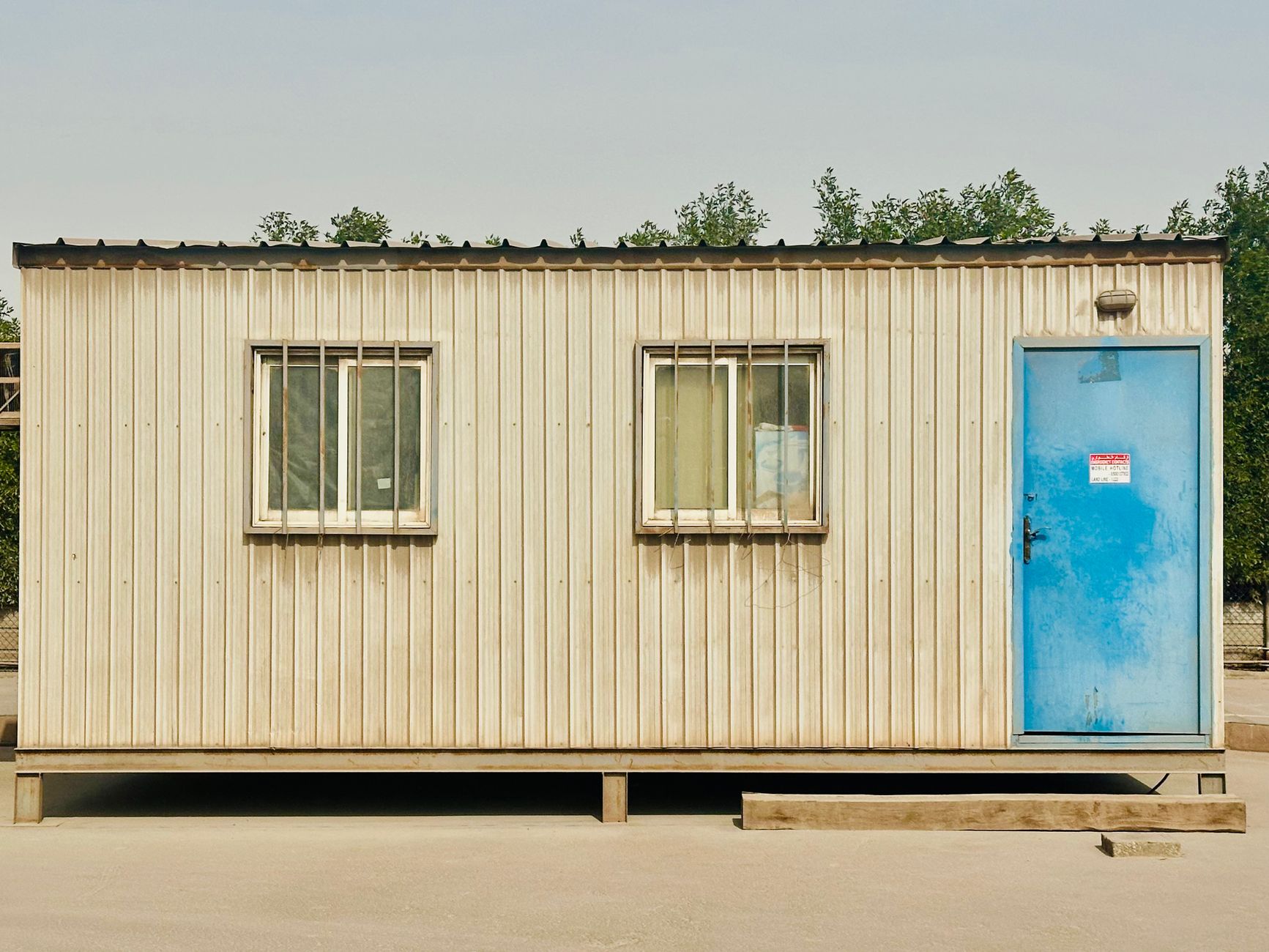
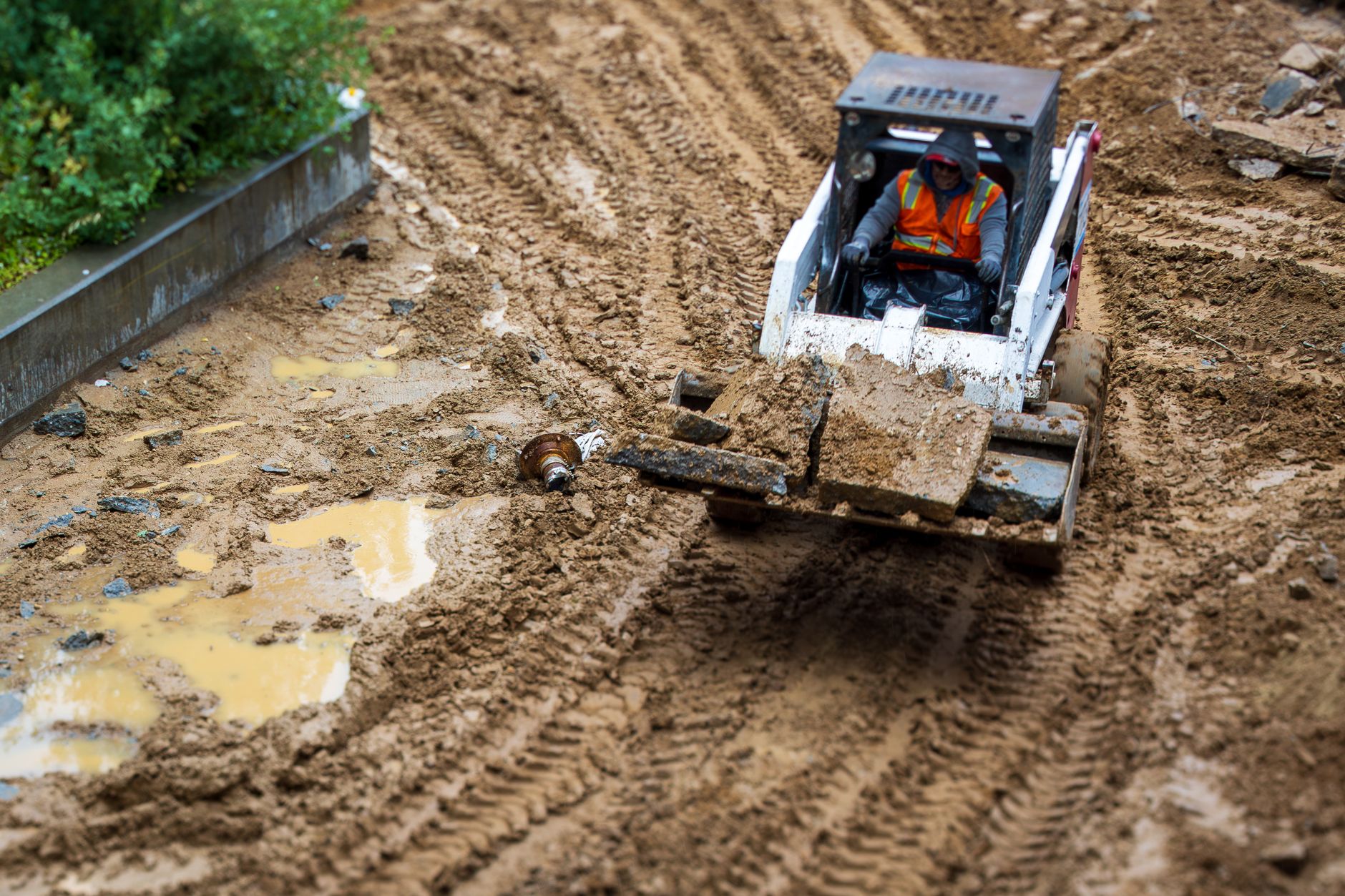
A trailer sits at the edge of active work. Crews step off gravel, concrete, and mud with material still clinging to their soles, and a trailer floor is small enough that nearly every boot lands in the same few spots.
Dust behaves differently from mud. It rides in on clothing and settles on hard surfaces between passes, so a sweep that looks adequate at lunch can leave a visible film by late afternoon. The fix is frequency, not one heroic clean.
Jobsites themselves have started to automate this. According to Korea Herald and Asia Economy coverage, Lotte Construction deployed autonomous cleaning robots for dusty floors at an Incheon residential project in July 2026, after a proof of concept with TXR Robotics. The reports say traditional site cleaning meant collecting debris by hand and vacuuming dust, which exposed workers to high dust levels.
How do you stop grit before it reaches the floor?

Start at the threshold. A vendor blog post from Surface Protection says boot scrapers and brushes at trailer doors cut the dirt that reaches interior floors. The post is marketing material, so treat the claim as a direction rather than a measured result.
Then add an indoor mat. First Mats advises that an indoor mat should catch finer particles and absorb moisture after heavy outdoor dirt has been removed. That is undated vendor guidance, but the sequence makes sense: scrape first, then catch what the scraper missed.
How often does a trailer floor need cleaning?
A commercial cleaner's guide to construction site offices recommends daily and weekly service, plus a deep clean after major phases such as demolition, drywall, or painting. That is a vendor recommendation, not an independent standard, and I found no independent standard for trailer floor cleaning frequency.
Treat that schedule as a starting point and tune it to the phases on site. Demolition and drywall leave heavier debris, painting leaves fine dust and drips, and a quiet finishing phase may need little more than the regular pass. Match the robot's run schedule and the crew's deep clean to whatever phase the trailer is in.
Where does a compact robot fit inside a trailer?
Compact floor robots suit trailers with mostly hard surfaces and a route that can be drawn in advance. The Junkman BDR 01 from Bright Dream Robotics, launched in 2021, is described in a design award listing as scanning and mapping a site, building cleaning routes, and using an onsite charging station. I checked that listing as of November 2026. It describes design rather than performance, so it tells you what the machine is built to do, not how well it does it.
Lotte's deployment follows the same logic. Its robots work from a preprogrammed site map and move through designated sections without a person steering them. For a trailer, that means naming zones such as the entry, the open office, and the meeting room, then sending the robot through them in order.
The limits are real. Wet mud clumps, loose cables, and raised thresholds are the usual trouble spots, and a person should clear heavy debris before each run. Check threshold heights and the charging spot during the site survey, not after the first failed run.
When can a robot replace a weekly mop crew?
A robot earns the weekly slot when several conditions hold at once. Check these before you change the schedule:
- Floors are mostly hard surface, with few raised thresholds between zones.
- Traffic repeats on a predictable pattern, so one route serves most days.
- A powered charging spot stays free near the entry.
- Someone clears heavy mud and loose debris before each run.
- The job is the repeated pass, not the deep clean after painting.

How does Service Robot Co. set up a trailer floor robot?
Service Robot Co. is an OEM neutral integrator for US businesses. We choose the robot that fits the floor, then lease, deploy, integrate, train, and service it through a nationwide US engineer network. On a trailer, the work starts with a site assessment that maps the zones, checks thresholds and charging, and sets the route.
Our offer is a lease, not a sale. The lease runs for a term of three years, and one fixed payment is quoted after the site assessment, so the number reflects the actual trailer and route rather than a guess.
What should you settle in writing before a trailer cleaning contract starts?
The research behind this article did not settle who handles janitorial upkeep during a trailer term, or how cleanliness compares across providers. Vendor claims about on-call support exist, but they are not independent evidence of performance.
So put the answers into the agreement before anything runs. Who performs the scheduled pass, who clears mud and heavy debris, who responds when the robot stops, and what the deep clean after each construction phase covers. Those four answers decide whether a trailer stays presentable on a bad week.
Frequently asked questions
Want a robot working for you?
Tell us the job and the site. We will recommend the robot, quote the lease, and keep it serviced.