Key takeaways
- A crew-hour audit on one route shows where the day really goes before any robot is placed.
- Aspire's 61% labor figure is vendor-reported and drawn from Aspire's own user base.
- Trimming, edging and bed work stay with people, and they are the details clients inspect.
- Redeployed hours should land on walk-through details, because those details drive renewals.
- Service Robot Co. offers robot leasing only, with one fixed lease payment quoted after a site assessment.
Where do crew hours go once a robot mows the open turf?
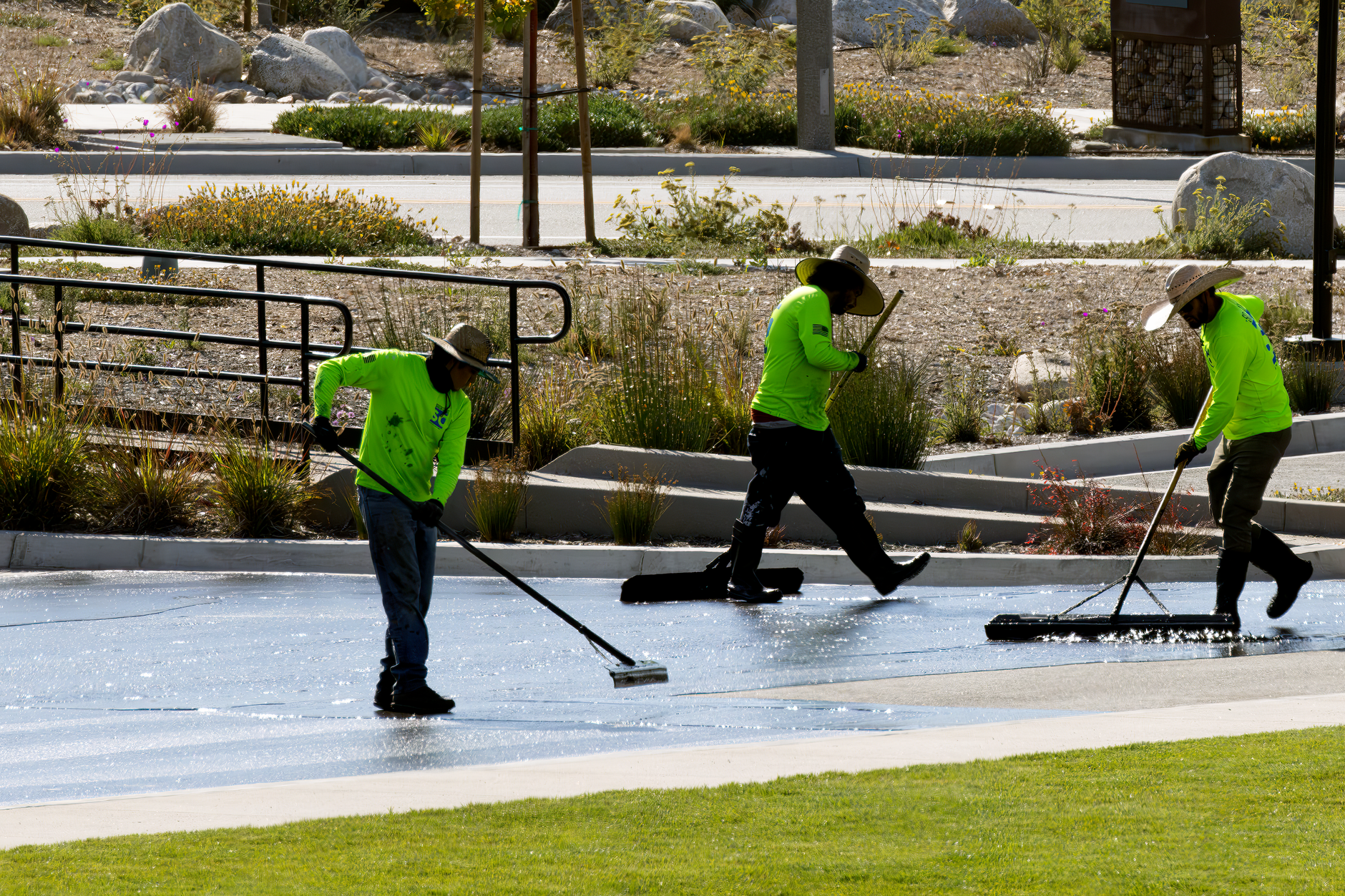
On a supervised route, a robotic mower takes the open turf that once filled most of a mowing day. The crew stays on the job and moves onto the work clients actually walk the property to check: trimming along walks, edging against beds, bed refresh and cleanup that leaves hard surfaces clean.
The sequence matters. Before any mower goes on a route, log one existing route across several visits, sort every crew minute by task and find out where the hours really go. Most of the decision is already in that log.
The gain comes from redeploying people, not from removing the crew. Vendors and trade writers describe it that way, and the detail work below explains why the reallocation has to be checked against what clients see.
What do the 2026 labor figures actually say?
Aspire's community post says 61% of Aspire users cite labor efficiency improvements as a top profit driver in its 2026 landscaping trends research. Aspire also says the research involved over 1,000 landscape professionals. Aspire sells landscape software, so this is its user base speaking, not an independent industry count.
Aspire's report guide carries the title Why Busy Isn't Always Profitable, and that title is the useful part. A crew kept busy on the wrong work can keep hours full without lifting margin. A labor figure tells you efficiency matters. It does not tell you which hours to move.
Why does edge and bed work stay with people?

One 2026 industry piece reports that robots do not handle edge work around beds, hardscapes, tree wells and signage, which still needs a person with a string trimmer. That detail comes from a search summary for this article, not a full reading, so treat it as a trade observation and confirm it on your site.
Turf Magazine describes robotic mowers as a way for commercial landscapers to handle labor shortages and free staff for higher-value tasks. The emphasis is on redeployment. The crew moves to the edge line the mower cannot reach.
NALP cautions that results depend heavily on how the technology is implemented. The same mower on two sites with different boundaries, obstacles and supervision can produce two very different days.
How do you audit one route before changing anything?
Start with a route you already run. The audit needs three things: a task log, a clear split between open turf and detail work, and a record of what the client checks at walk-through.
- Log every crew minute by task: open mowing, trimming, edging, bed work, blowing and cleanup, plus travel and waiting.
- Record loading, transit and setup separately, since travel often hides inside the mowing total.
- Mark each open-turf block by boundary clarity, slope and obstacles, so you know which areas a mower could take.
- Flag detail lines by location: bed edges, walks, hardscape borders, tree wells and signage zones.
- Circle every task named in a client complaint or walk-through note.
- Average the figures across several visits so one unusual day does not set the plan.

Which hours move first, and what stays with the crew?
Move the largest open-turf blocks first, since they return the most crew time for the least disruption. Keep edging and bed work with people, and schedule them into the hours that opened up. Do not shift a task just because a robot can reach it. Shift it when the result still looks finished to the client.
Expect a supervision role. Someone on the crew needs to check the mower's route, watch for debris and stop a unit when a boundary looks wrong. A 2026 item on Landscape Management advises setting new performance metrics before deployment, which is the surest way to confirm the reallocated hours show up in finished work.
Why does detail work keep renewals?

Renewals often turn on the walk-through, not the mowing log. A property manager sees crisp edges along a walk, clean bed lines and a swept entry before anyone reads a timesheet. Those signs tell the client the contract is being cared for.
That is why reallocated hours should land on detail work. Open turf mowed well still matters, but it seldom earns the conversation. Trimming, edging, bed refresh and cleanup do, because they are what the client inspects and remembers.
Where does Service Robot Co. fit into this rollout?
Service Robot Co. is a full-service commercial robot integrator for US businesses. We are OEM-neutral, so the mower is picked for the route rather than for one manufacturer's catalog. We finance, deploy, integrate, train and service each unit through a nationwide US engineer network, so one vendor covers the whole lifecycle. That matters because one 2026 industry piece says service networks for specialized robotic mowers remain thinner than those for traditional mowers.
We offer robot leasing only, on a 3-year lease with one fixed lease payment quoted after a site assessment. That assessment maps the turf, the boundaries and where the mower will run, so the crew knows which hours can move before lease terms are set. Start with one route and one quote.
Frequently asked questions
Want a robot working for you?
Tell us the job and the site. We will recommend the robot, quote the lease, and keep it serviced.
Sources
- Aspire community post on 2026 Landscaping Technology Trends Report
- Aspire 2026 Landscaping Technology Trends Report guide
- Applause, Robotic Mowing in Commercial Landscaping
- Turf Magazine, The Rise of Robotic Mowers Free Your Landscaping Staff for Higher-Value Tasks
- NALP blog, 2026/05/15
- Landscape Management, autonomous mowers tag page