Key takeaways
- A deli is a fixed equipment zone, so the map matters more than the scrub pattern.
- Slicers, display cases and cords each need a named rule before the robot leaves the dock.
- Wet zone limits should follow your own equipment instructions and food safety plan, not a generic number.
- The night lead check takes minutes once it is routine, and the log shows it was done.
- Grocer deployments show scale, but we found no verified outcome for a deli floor.
Can a robot scrub a deli floor after close?
Yes, but only inside a zone someone has mapped, cleared and signed off. A grocery deli is one of the most crowded floors in the store. It holds a slicer that does not move, display cases that cannot be nudged and cords that run exactly where staff stand. A scrubber that handles an open aisle well can still damage the slicer base, catch under a case or drag across a cord.
The research behind this article did not turn up published guidance on slicer clearances, wet zone limits or deli night checklists. What follows is operating logic for the night lead, paired with what grocery and vendor sources do say. Treat it as a starting point for your own store procedure, not a substitute for the equipment maker's instructions.
Why is a deli harder than an open aisle?
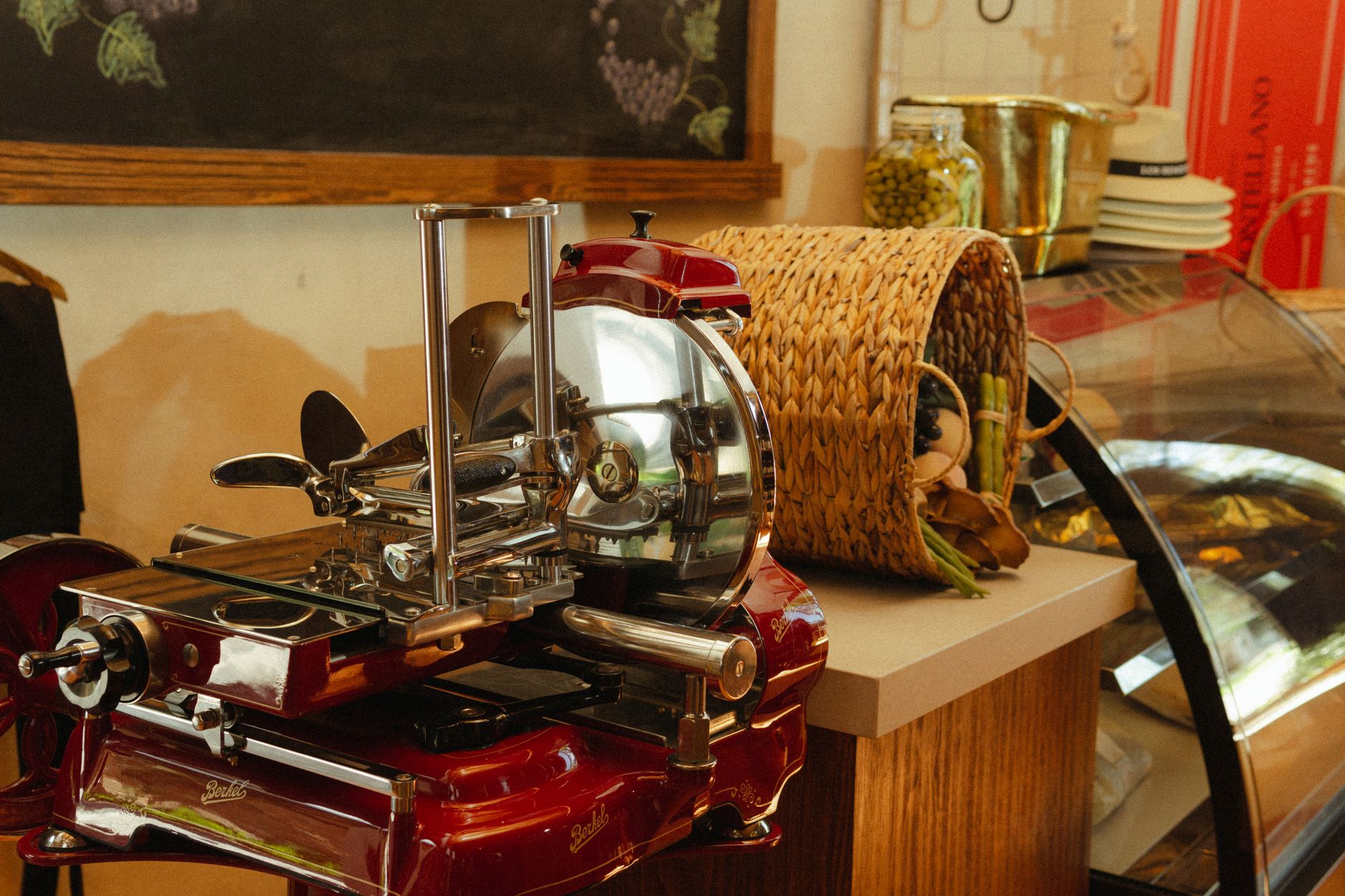
A deli packs three hazards into a small footprint: fixed machines with guards and carriages, low cases with kick plates and glass, and power or scale cords that cross the floor. Each one changes where a robot can turn, how long it can stay in a lane and what happens when a low edge is misread.
The floor also carries what the department produces. Brine, oil, meat juices and fine product dust collect in the same corners at close, so the scrub pattern has to deal with grease as well as ordinary dirt. One OrionStar guide says actual coverage depends on floor condition, water settings, brush pressure, route design and how much manual intervention is needed. That is why a deli route is never a copy of a sales floor route.
How do you map fixed equipment before the first run?
Walk the deli with the robot's route in mind, not the store plan. Record each slicer footprint, including carriage travel and any guard that swings open. Note each display case's front edge and base, and every cord, power strip and scale lead that crosses the floor. Mark where staff stand to prep, because that is where a cord gets stepped over and moved.
Then decide which lanes stay closed. A closed lane is safer than a clever one. Remap after every fixture reset or new case, since the map from last week is not the floor of tonight. Mapping also raises privacy questions. The same OrionStar guide notes that autonomous scrubbers may capture incidental personal data during navigation, so check the data settings and compliance requirements for mapping and cloud features before the first map is saved.
What wet zone limits should a deli set?
Set them from your own sources, not from a number in an article. Your equipment maker's manual, your food safety plan and your local health rules decide how much water can reach a slicer base, where a squeegee may push fluid and how long a wet patch may stay before someone walks it. The research for this piece did not verify a universal figure, so this article states none.
Two operating choices help in practice. Where the equipment manual allows it, use lower water and brush settings in lanes near the slicer and cases. Run the deli last in the route so the wettest work does not get tracked into dry aisles. Then require a dry check before staff return to the prep line.
What should the night lead check before the robot runs?
This is the walk we would ask a night lead to complete before release. Each line is a yes or no, and anything marked no holds the robot at the dock.
- Slicer powered down, blade guard in place and locked out according to store procedure
- Display case doors closed, with loose price cards and trays cleared from the floor edge
- Cords lifted, rerouted or taped where the route crosses, and unneeded scale leads unplugged
- Cart lanes and pallet jacks parked outside the planned route
- Spills and grease reported and cleaned before the robot is released
- Dock path and charging area clear of boxes
- Map matches the current layout, with no fixture resets since the last check
- Sensors wiped and battery charged for the planned run
- A named person who knows how to stop the robot and who to call
What have grocers reported about robots in stores?
Tesco is the largest public example in the research. Coverage dates the announcement to June 2026 and the 600 store milestone to July 2026. ICE provides training, maintenance and ongoing support across all 600 locations, and the robots supply cleaning data and performance reports that let teams check that routines were completed. Those are Express convenience stores, so the layout lessons do not transfer cleanly to a full size deli.
Kaufland began a pilot in five German stores, reported October 17, 2025. It said it would measure cleaning quality, battery runtime and automatic fresh water exchange, and study how shoppers react. One report says the robots clean sales floors during opening hours and stop or change route at obstacles. No pilot outcome or rollout decision was found, so read it as a test, not proof.
How much weight do vendor numbers deserve?
Vendor material is useful for process and weak for proof. Tennant describes a grocer that deployed its T380AMR with the BrainOS Clean Suite in nearly 90 stores, and it reports annual value across more than 100 locations. Those figures are vendor reported and were not independently verified. A RobotLAB retail page says autonomous scrubbers run nightly with consistent quality, which is marketing copy.
Older news shows the limit of old evidence. Walmart tested overnight autonomous scrubbers at five stores near Bentonville, reported in 2017, and this research found no current status for that program. Read every claim with its date and its author in mind.
Where does a Service Robot Co. lease fit?
Service Robot Co. is an OEM neutral integrator for US businesses. We pick the robot that fits the zone rather than a single brand's catalog. For a deli, the work starts with a site assessment that maps the slicer footprint, case edges, cord runs and wet zones. That assessment leads to one fixed lease quote over a three year lease. Integration, staff training and go live support follow, and every unit is serviced through a nationwide US engineer network.
Start small. One overnight zone with a closed lane list and a logged night check tells you more than a full store plan on paper. We can scope that first zone with you before any lease decision is made.
Frequently asked questions
Want a robot working for you?
Tell us the job and the site. We will recommend the robot, quote the lease, and keep it serviced.
Sources
- Retail Gazette: Tesco sends robot cleaners into 600 Express stores (June 2026)
- Retail Gazette: Tesco hits 600 store milestone in cleaning robot rollout (July 2026)
- Retail Tech Innovation Hub: Tesco rolls out ICE autonomous cleaning robots across Express stores
- Lebensmittelpraxis: Kaufland tests cleaning robots in five stores (October 2025)
- Retail TouchPoints: How Schnuck Markets harnessed robots to take cleanliness to the next level
- Tennant: T380AMR grocery retailer case study (vendor reported)
- OrionStar: AI robots guide on autonomous scrubber coverage and data
- RobotLAB: Retail robots page (vendor marketing)