Key takeaways
- Foam pits stay with a hand crew: inspection, cube brushing and debris checks come first.
- Mats need spot cleaning after each use and a deeper clean at least weekly, without pressure washing.
- Sprung floors follow the manufacturer's care sheet, including the cleaner and slip resistance rules.
- Open hard floor runs between equipment groups are the realistic robot zone, once every edge is mapped.
- A lease quote follows a site assessment that marks no go zones before any robot runs.
Can a robot clean a gymnastics gym floor?
In part, yes. In our reading of the care guidance we reviewed, a floor robot can take the open, flat areas of a gymnastics gym, while foam pits, landing mats and sprung floor edges stay with a hand crew. Where the line falls depends on what the surface is made of, where it meets equipment, and what the floor maker says about after care.
We did not find a public source that measures robot performance on gymnastics floors. The sources here describe manual care, so the robot scope in this article is our own framing. Treat it as a starting point for a site assessment, not a promise about any one floor.
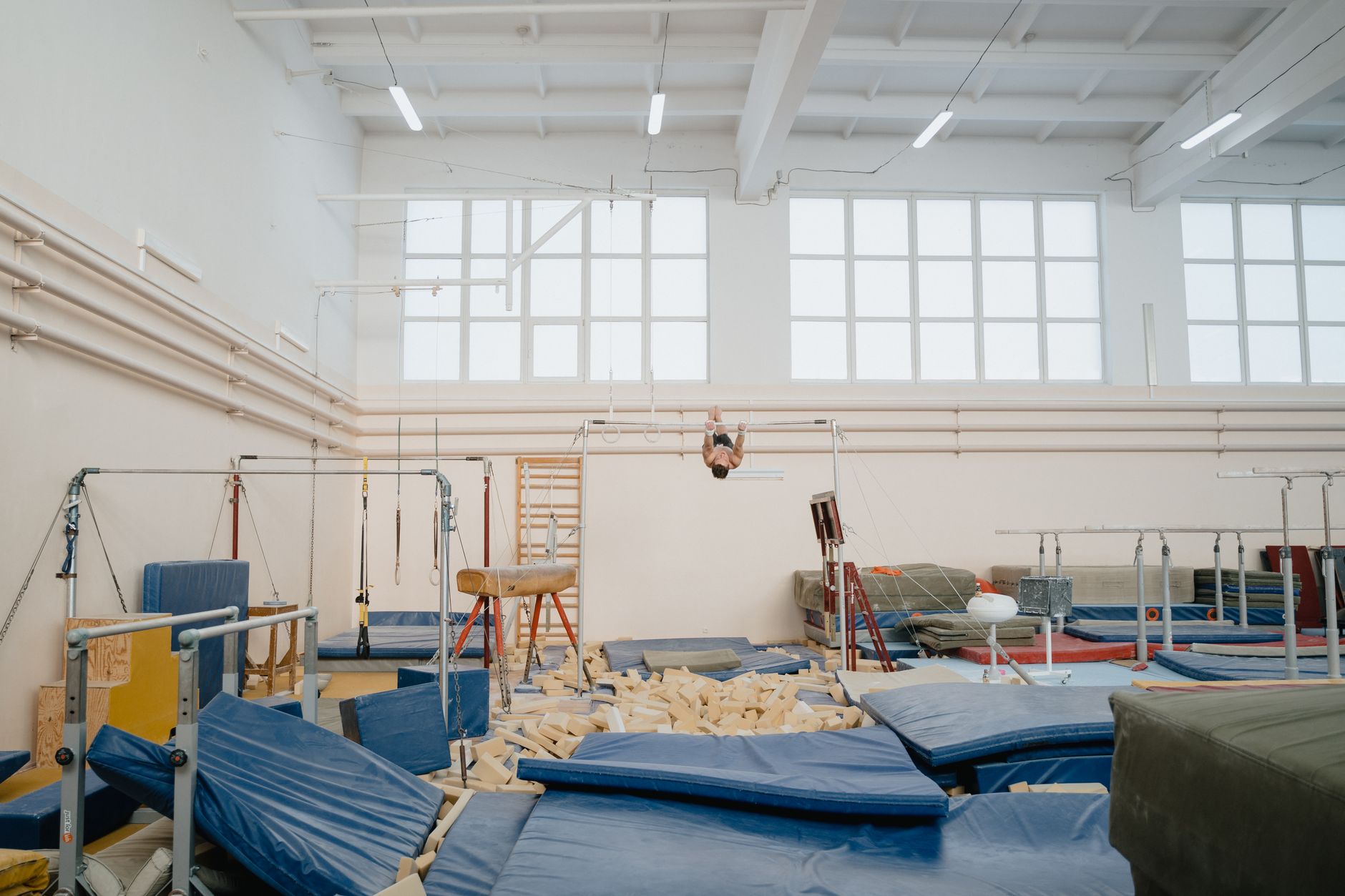
Foam pits are the hardest case and the one most owners worry about. Mats need a short routine by hand, and a sprung floor needs the maker's rules before anyone, human or machine, makes a pass.
Why foam pits stay with a hand crew
A 2016 USA Gymnastics member guide says uncovered foam cubes shed particles through friction against each other. It warns that those particles can be inhaled if they are not removed, and it recommends brushing each cube individually to take off loose foam. That is slow, close work, and it is the main reason we keep pit care on the manual side of the schedule.
The upkeep steps in a gym supply blog are routine: inspect the foam, remove damaged cubes, and refresh foam as needed. A gymnastics equipment safety checklist asks that no hard objects, lost equipment or debris sit inside the pit. Someone has to look for those items by hand before the pit opens, because a floor pass does not replace that look.
Covers help with dust. A pit cover patent says covers reduce dust buildup and make wiping down easier. A cover is a useful layer, but it still needs inspection underneath.
How often do foam pits need a deeper clean?
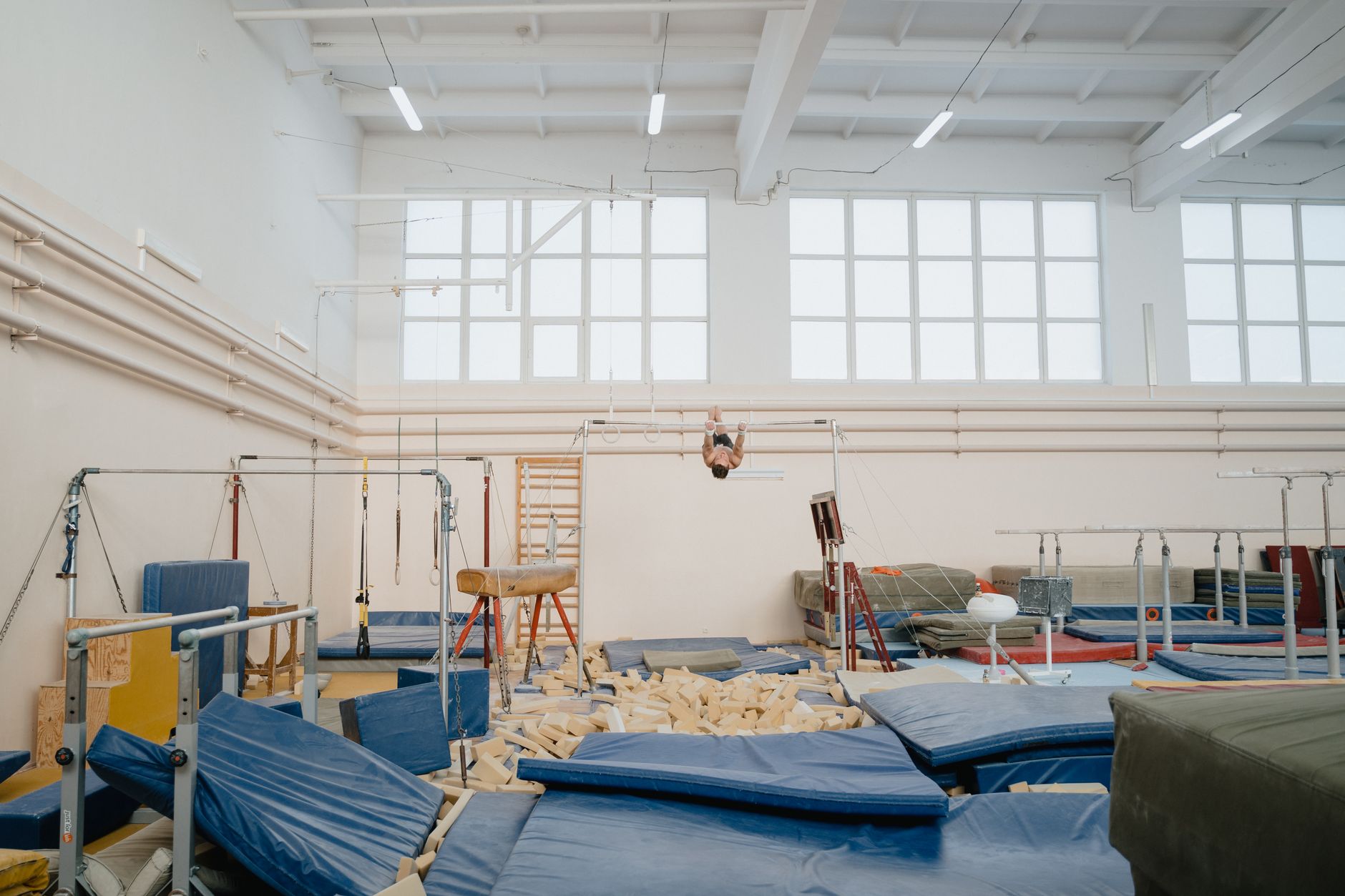
No standard sets this, and the figures in circulation are anecdotal. The trampoline park patent cited above says most attraction foam pits are cleaned about once a month. A gym forum thread describes pit cleaning a couple of times a year.
Those two figures are a long way apart, which is the point. Set your interval from the manufacturer's guidance, your traffic and what each inspection finds, and write it down so the crew can see whether it still fits.
What sprung floor care rules say
A DYNAMIK technical sheet on synthetic sprung sports floors says upkeep protects performance and lifespan. It directs owners to the manufacturer's after care instructions for product specific steps, and it ties correct cleaning to slip resistance within EN 14904 requirements.
System designs differ, so the installer's sheet governs your floor. Several sports floor guides recommend a neutral pH cleaner for periodic deep cleaning on vinyl, rubber and polyurethane surfaces. One of those vendor pages is undated, so confirm the product with your floor maker before you copy the step.
For any robot, that means the cleaner, the water load and the number of passes must match the floor maker's sheet. If a cleaner is not named there, that gap is a question to settle before the first run, not after it.
Mats and the weekly deep clean
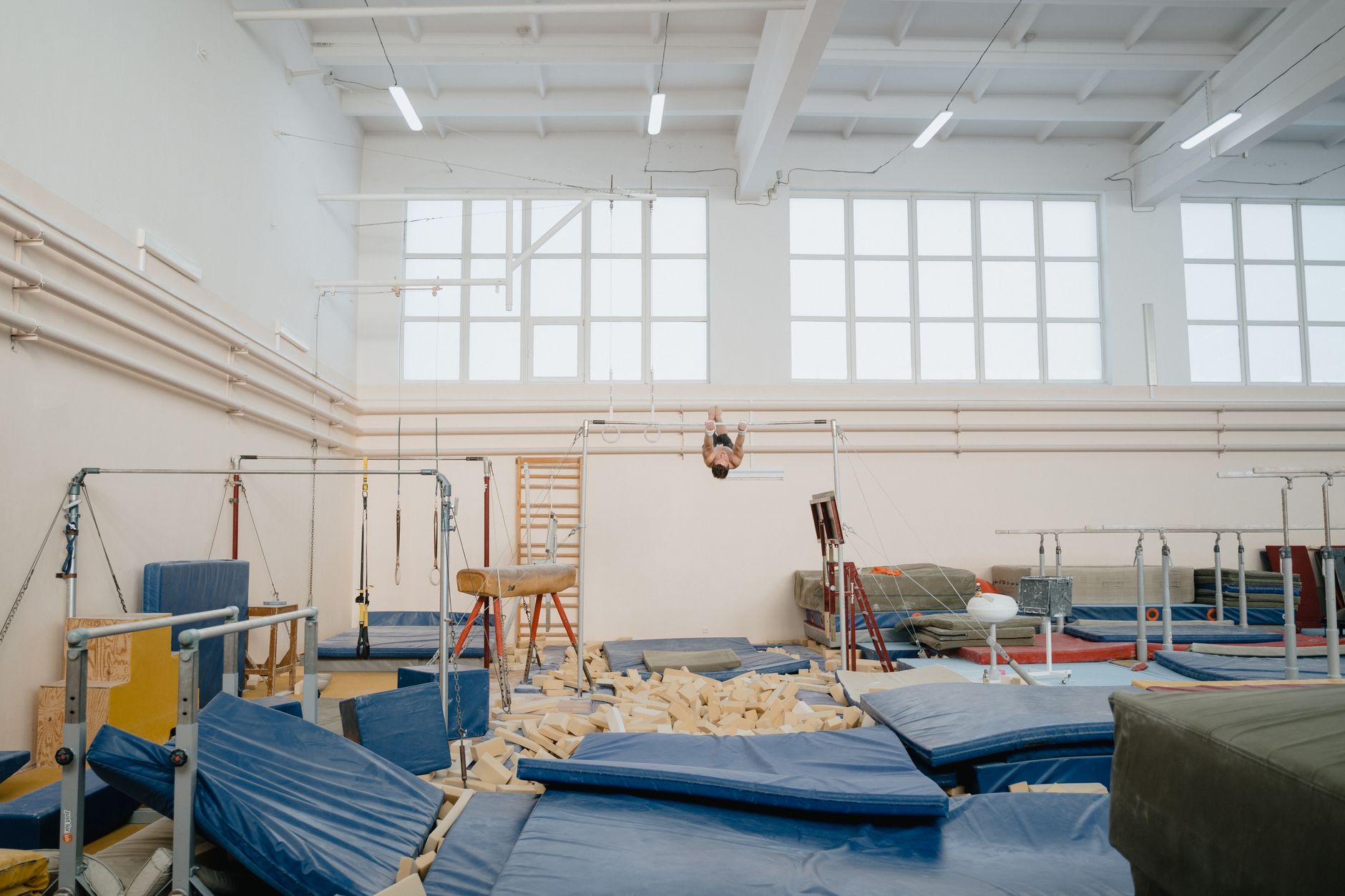
A gymnastics mat guide advises spot cleaning after each use and a deeper clean at least weekly. It warns against pressure washers because they can damage foam. Spot cleaning depends on what a coach sees on the mat, so it stays with the crew.
Mats also shift between sessions and leave edges and seams a robot must route around. Map every mat edge as a no go boundary rather than as open floor, even when the mat looks flat and parked against a wall.
Which open floor areas a robot can take
In our framing, the realistic robot zones are the open runs of hard or sealed floor between equipment groups, the approach lanes toward the spring floor, and perimeter walkways where no pit, mat edge or equipment footprint sits. The route is only as good as the map behind it, so the floor must be walked before the first run.
Each edge, seam, pit opening and equipment footprint needs a boundary the robot respects. Service Robot Co. handles this part of the job. We are an OEM neutral integrator, so the robot type follows your floor rather than a single catalog. Our site assessment maps the edges and equipment first, and then we quote one fixed payment for a 3 year robot lease, with deployment, training and RoboCare service behind it. Our regional service engineers cover every state we service.
That sequence is what a gym cleaning robot lease should look like: assess, map, quote, then run. A fitness center cleaning robot plan is only as sound as its no go boundaries, so start there.
Splitting the night between robot and crew
A workable split gives the open runs to the robot and keeps the pit, mat spot cleaning, sprung floor edges and any washdown on the crew's list. Write that split into the plan before the first night, so the first run is not also the first test.
Overnight floor care works best when the room is set back to a known state at close: pit covers secured, mats parked, equipment clear of the runs. Log each week's pit inspections, damaged cubes pulled and any edge the robot approached too closely. Those logs show whether your chosen interval still fits the floor.
Frequently asked questions
Want a robot working for you?
Tell us the job and the site. We will recommend the robot, quote the lease, and keep it serviced.
Sources
- DYNAMIK synthetic sprung sports floor care sheet
- USA Gymnastics member guide on foam pit care (2016)
- US11865432B2 pit cover patent
- Gym supply blog on smart cleaning solutions
- Miller Sports gymnasium floor maintenance guide
- Gymnastics mat cleaning guide
- Gymnastics equipment safety checklist
- Gym forum thread on pit cleaning