Key takeaways
- Yes, cleaning robots can fit branch banks, but the best use case is the public lobby and vestibule, not every square foot in the building.
- Hard floors, stable carpet edges, and predictable branch layouts matter more than raw square footage.
- Open-hours use is possible, but most banks get the cleanest result by scheduling autonomous scrubbing before opening and keeping daytime work light and quiet.
- Security rules change the rollout plan. Anything near cash handling, vault access, alarm procedures, or evidence-preservation zones needs branch-specific boundaries.
- A bank should think in repeatable branch clusters, not in one-off units. A pilot proves fit, then similar branches turn it into a real fleet program.
Is a cleaning robot actually practical in a small branch bank?
Yes, often it is. A branch bank does not need warehouse scale to justify robotic floor care. It needs a lobby layout the machine can repeat, hard-floor square footage worth automating, and traffic patterns that let cleaning happen without turning the branch into an obstacle course.
That makes branch banking a narrower use case than big-box retail or logistics. The robot is not there to roam everywhere. Its job is to keep the public-facing floor consistent at the entrance, queue area, teller approach, and other hard-surface zones that show wear first and get judged hardest by customers.
The national branch footprint is still large enough to matter. The FDIC said on September 19, 2025 that its annual survey covered more than 76,000 domestic offices operated by more than 4,400 FDIC-insured institutions as of June 30, 2025. That is a lot of branches, but also a lot of repeated floor plans. Repetition is what makes automation useful.
What kind of branch layout works best?
The best candidates are compact branches with a simple front-of-house path: vestibule, lobby, queue, teller line, maybe a waiting nook, and a limited number of furniture islands. The robot does well when it can run one predictable route instead of weaving through brochure stands, temporary signs, and chairs that move every hour.
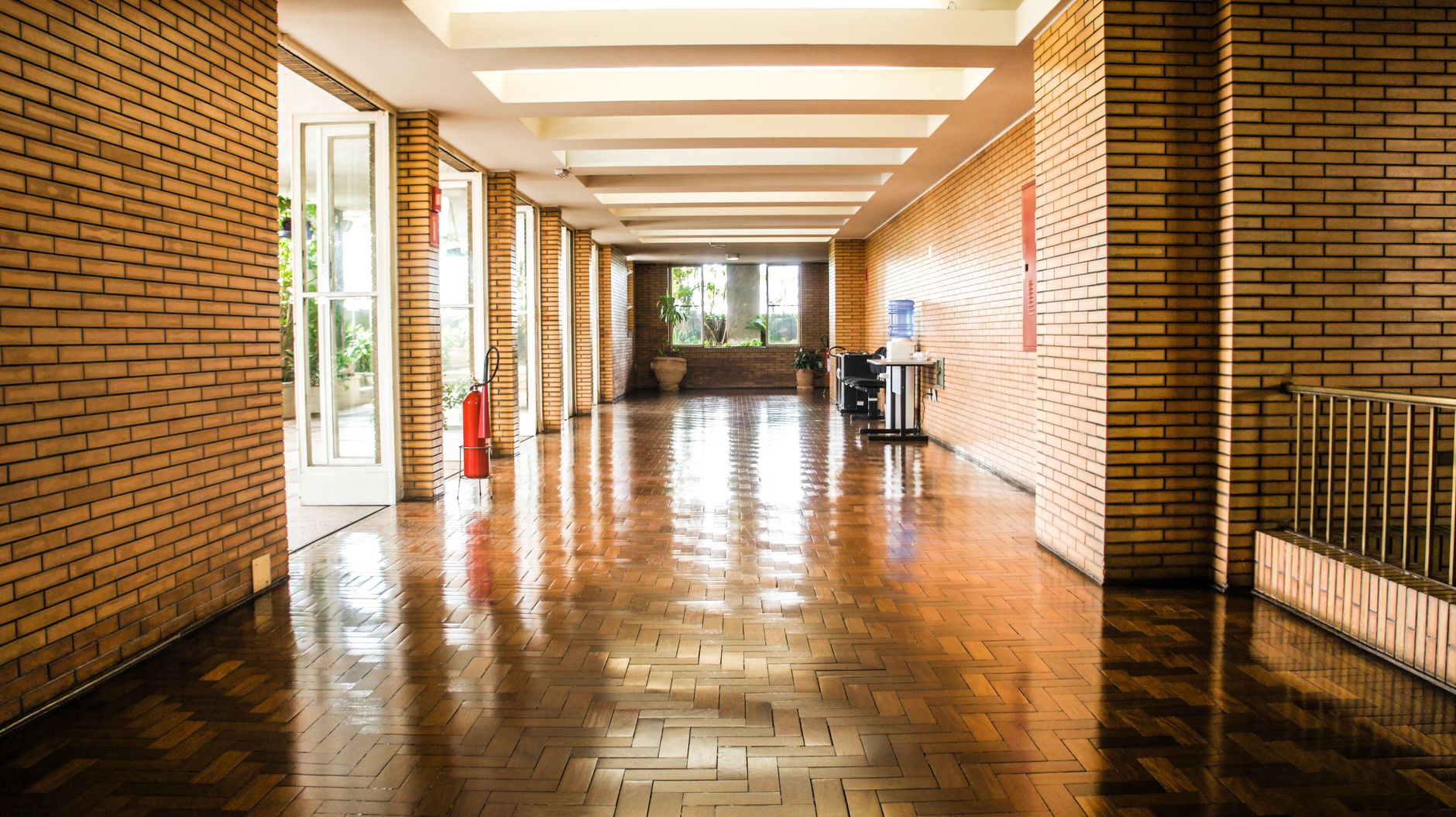
Hard floors matter most. A robot meant for floor care earns its keep on tile, LVT, polished concrete, stone, and similar surfaces that collect grit and tracked-in moisture. In many branches, the visible problem is not deep cleaning. It is the daily drift from clean to dull between the front door and the teller area.
Small size by itself is not a deal breaker. In fact, smaller branches can be easier to standardize if several of them share the same vestibule depth, door swing, floor material, and furniture spacing. The branch that struggles is the one with too many one-off quirks.
Do vestibules and carpet transitions make robot cleaning unrealistic?
Not unrealistic. Just less forgiving. Vestibules are where branch banks pick up grit, water, salt, and leaf debris first, so they are usually the first area operators want a robot to touch. They are also where poor transitions, loose mats, and threshold lips cause the most trouble.
The ADA rules are a useful reality check here. The U.S. Access Board says carpet or carpet tile on accessible routes must be securely attached, have pile height of 1/2 inch maximum, and have exposed edges fastened with trim. It also says changes in level can be vertical up to 1/4 inch, must be beveled between 1/4 inch and 1/2 inch, and anything above 1/2 inch must be ramped. Those are accessibility rules, but they are also practical robot-readiness rules.
In plain terms, a branch with curled entry mats, proud transition strips, or abrupt threshold changes is not robot-ready yet. Fix the floor condition first. If the vestibule is stable and the carpet edge treatment is clean, a robot can usually handle the hard-floor portion and hand off carpet detail to other tools or crew routines.
- Good fit: low-profile entry mats, beveled transitions, wide approach paths, and one obvious cleaning loop.
- Poor fit: buckled mats, multiple loose runners, steep lips at the vestibule, and narrow turns around promotional fixtures.
- Best practice: treat the vestibule as a mapped zone with its own pass pattern, not as an afterthought tacked onto the lobby route.

Can a robot work while the branch is open to customers?
Sometimes, but that should not be the default promise. Branch banking is a conversation-heavy setting. Customers are often stationary, lines form in bursts, and the social tolerance for cleaning equipment in a financial setting is lower than it is in a supermarket. A robot that is technically capable of daytime operation can still be the wrong operational choice if it distracts from service.
The cleaner answer for most banks is a split schedule. Let the robot do the main scrub or vacuum pass before opening, then use daytime operation only for light touch-up windows, weather-driven entry cleanup, or a short pass in low-traffic periods. That keeps the robot visible enough to be useful, but not so visible that it competes with teller interactions.
Labor math still matters. The Bureau of Labor Statistics reported in its May 2025 wage release that the median hourly wage for janitors and cleaners, except maids and housekeeping cleaners, was $17.71. That does not mean a robot replaces a person one-for-one. It means banks should compare robot use against recurring low-value floor time, especially the repetitive entry-lobby work that must happen every day regardless of staffing pressure.
How quiet is quiet enough for a bank lobby?
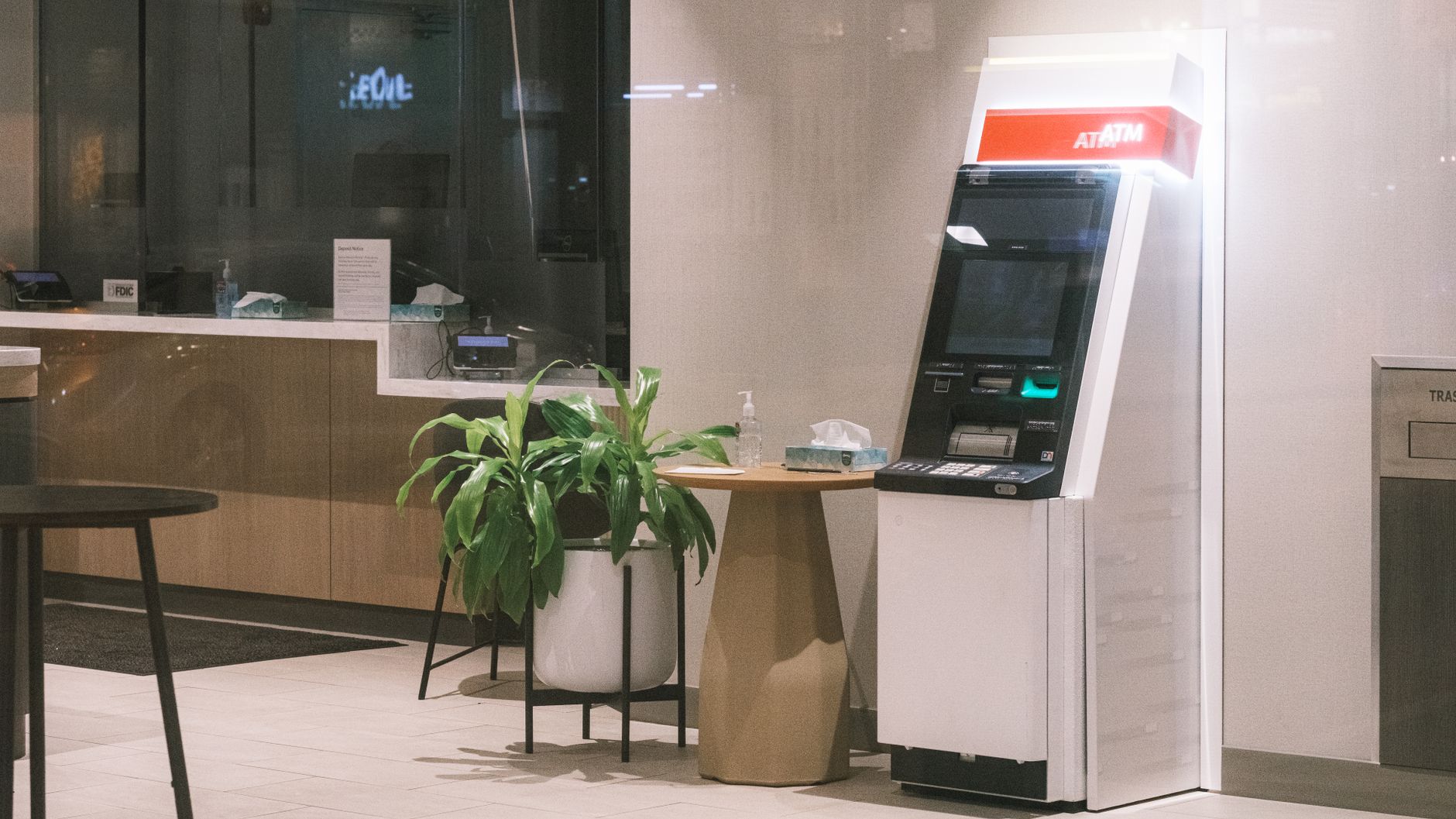
In a branch bank, quiet enough means the machine should fade into the background of teller conversations and card-reader beeps, not dominate them. Buyers often ask for a hard noise number first. The better first question is operational: can this machine run near a customer conversation without making staff hesitate to keep talking at normal volume?
That is why banks should validate daytime use on site, not on a spec sheet alone. Test it at the entrance, in the queue, and near desks where private conversations happen. A machine that is acceptable in an empty demo room can feel much louder in a compact branch with hard wall reflections and low ceilings.
The practical standard is simple. If the branch manager wants the robot gone after ten minutes, it is not quiet enough for open hours. Use before-open scheduling instead. Most banks do not need to force a daytime use case just because a machine can technically operate then.
What changes because banks have security-sensitive zones?
A lot. Banks are not ordinary retail floors. The Federal Reserve's bank security procedures require a written security program for each banking office, along with procedures for opening and closing, safeguarding valuables, preserving evidence, training employees, and maintaining devices such as cameras, tamper-resistant locks, alarms, and protected cash areas. That means floor care automation has to fit branch security practice, not the other way around.
In practical terms, the robot belongs in public and semi-public floor zones unless the bank deliberately expands scope. Teller lines, customer waiting areas, entry vestibules, and open office corridors are usually easier. Areas tied to vault access, cash carts, safe rooms, evidence retention, alarm workflows, or after-hours lockup procedures need explicit rules and often hard geofences.
That is also why deployment discipline matters. The branch security officer, facilities lead, and operations team should agree on no-go zones, charging location, recovery steps if the machine stops, and who can move it after hours. A robot that cleans well but creates ambiguity around branch opening or closing is not ready for rollout.
- Map and fence off cash-handling back rooms unless the bank has a specific reason to automate them.
- Keep charging and parking out of emergency egress paths and away from customer sightlines that raise unnecessary concern.
- Write recovery steps into opening and closing SOPs so the robot never becomes an unplanned security exception.
What about slip risk on wet days and tracked-in debris?
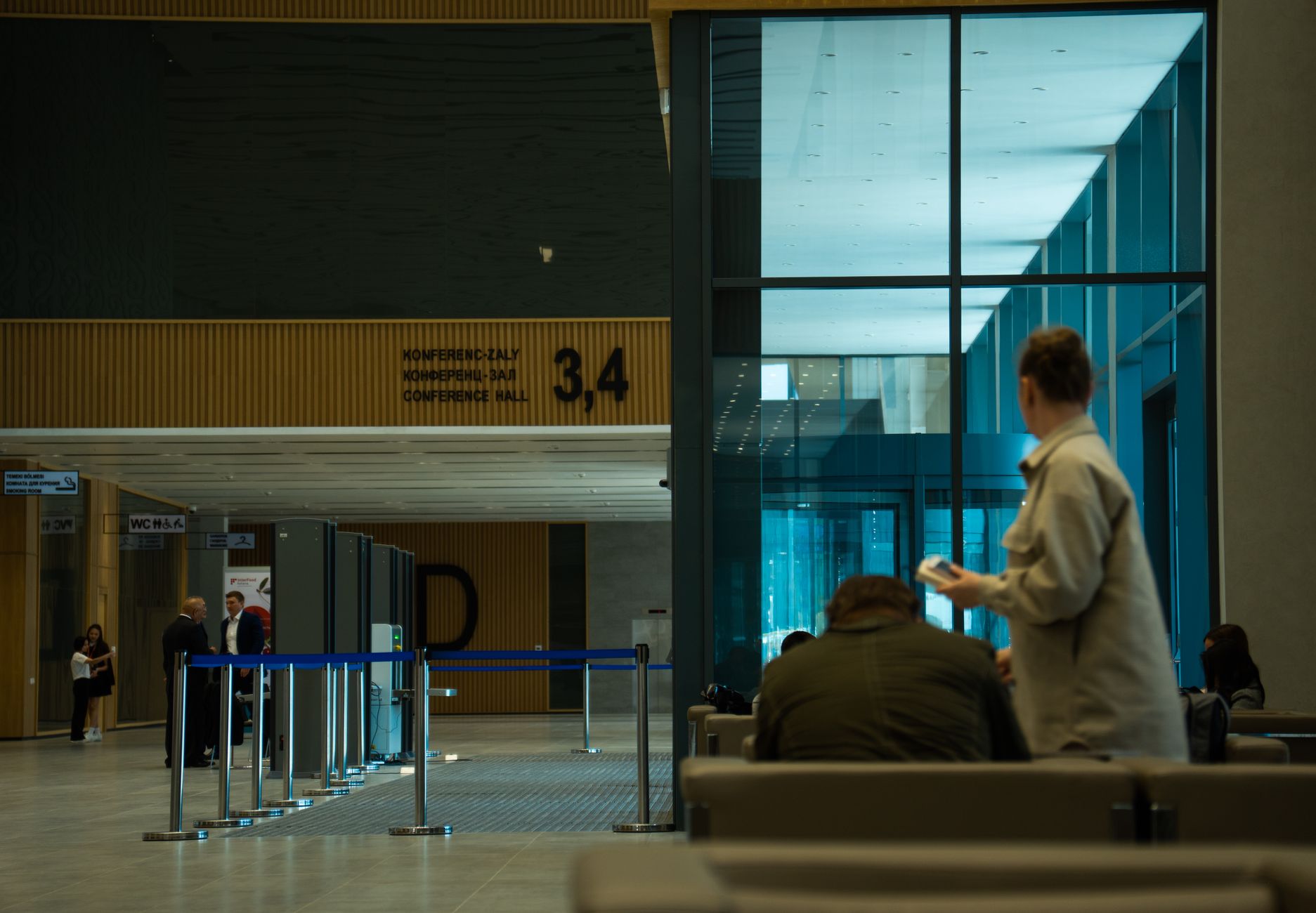
This is one of the strongest arguments for automation in branch lobbies. Entry floors degrade fast in rain, snow, and heavy foot traffic. OSHA noted in its walking-working surfaces rulemaking that falls on the same level accounted for 68 percent of falls resulting in lost-workday injuries in general industry. For a bank, the issue is not just janitorial quality. It is liability and customer perception at the front door.
Robots help most when they make floor care more consistent, not heroic. The win is that the branch gets the same pass every day, especially in the first ten to twenty feet inside the entrance where moisture and dirt load up first. Consistency is what manual routines often lose when staff are covering other tasks.
That said, no robot excuses bad matting, poor drainage, or neglected transition strips. The branch still needs a sound wet-weather playbook. Automation works best as part of that playbook, not as a substitute for it.
How many branches justify a real fleet program?
The honest answer is that the trigger is similarity, not an arbitrary national count. One branch is a test. A small cluster of look-alike branches in one market becomes a program. A broader set of repeatable layouts across regions becomes a fleet.
This is an inference from the constraints above, not a published industry threshold. If a bank can reuse the same map logic, floor-care SOP, charge location, and staff training across multiple branches, the economics improve quickly because deployment stops being custom every time. If every branch is a one-off, the fleet case stays weak even at a higher branch count.
A good decision frame is to group branches by floor type and front-of-house pattern first. Banks usually find that only some branches belong in wave one: the ones with hard floors, stable vestibules, predictable traffic, and enough repeatability to standardize support. That is how a pilot turns into policy instead of staying a novelty.
Where Service Robot Co. fits in a bank rollout
Branch banks usually do not need one manufacturer's answer copied everywhere. They need the right fit for each branch class, then one operating model across the estate. That is where an OEM-neutral integrator matters. Service Robot Co. evaluates the site, matches the robot to the floor and traffic pattern, finances the project, handles deployment, trains the branch team, and services the units through a nationwide U.S. engineer network.
That matters even more in banking because the job is not only to put a machine on the floor. It is to make sure the machine fits opening routines, security boundaries, day porter handoffs, and multi-site support. One partner for assessment, rollout, service, and fleet changes keeps the branch operator out of the middle when the program moves from trial to standard practice.