Key takeaways
- Budget robots at the portfolio level first, then assign units by property tier, labor pressure, and vacancy risk.
- Common-area cleaning usually deserves the first line item because it touches every asset and is easiest to standardize.
- Anchor disruption should trigger a reserve pool for temporary cleaning, patrol, and re-merchandising coverage instead of a one-off buy.
- Parking patrol belongs in the budget when overnight coverage gaps, incident response, or insurance scrutiny are already forcing security spend.
- Robot financing for small business and larger owners alike works best when deployment, service, and replacement are budgeted together, not split across departments.
What is the right way to budget robots across a mall portfolio?
Start with a portfolio envelope, not a single property spreadsheet. Regional mall operators should budget robots the way they budget roofs, paving, and life safety work: by asset tier, by recurring operational burden, and by where performance is drifting. That means setting one multi-year pool for common-area cleaning, one flexible reserve for anchor disruption and backfill, and one optional pool for parking patrol where overnight risk or labor gaps are already expensive.
A single-site ROI sheet misses the way mall portfolios actually behave. One property may be healthy, another may be carrying an anchor box that just went dark, and a third may be stable but understaffed on overnight cleaning. Your robot plan should move capacity across those realities. The best budgets are part operating plan, part capital framework, and part contingency playbook.
That is why many owners now prefer robot as a service, monthly payment programs, or a lease rental or sale structure over a one-time equipment buy. The point is not financial fashion. The point is keeping deployment, training, maintenance included coverage, and replacement capacity inside one controllable portfolio line item.
Why does the single-site ROI model break down in enclosed mall portfolios?
Because malls are not uniform boxes. According to Macerich's 2025 annual report, roughly 60 percent of its mall store and freestanding store space was in spaces under 10,000 square feet, while larger non-anchor spaces were too inconsistent in size and configuration for meaningful apples-to-apples comparison. That is exactly the budgeting problem. A robot that fits one floor plate, traffic pattern, and staffing model may be a poor match elsewhere in the same portfolio.
Property economics are uneven too. Simon reported 96.4 percent occupancy and retailer sales of $799 per square foot for the trailing 12 months ended December 31, 2025. CBL reported portfolio occupancy of 90.0 percent at December 31, 2025, with same-center occupancy for malls, lifestyle centers, and outlet centers at 88.6 percent. Those are both mall portfolios, but they do not support the same robot timing, risk tolerance, or payback expectations.
So stop asking one blunt question: does this site justify a robot? Ask the sharper one: which operating burden is repeated across enough sites that a fleet budget beats ad hoc hiring, vendor patchwork, and deferred service? That is the threshold where commercial robot rental, robot leasing for business, or a phased purchase starts to make portfolio sense.
Where should the first budget dollars go?
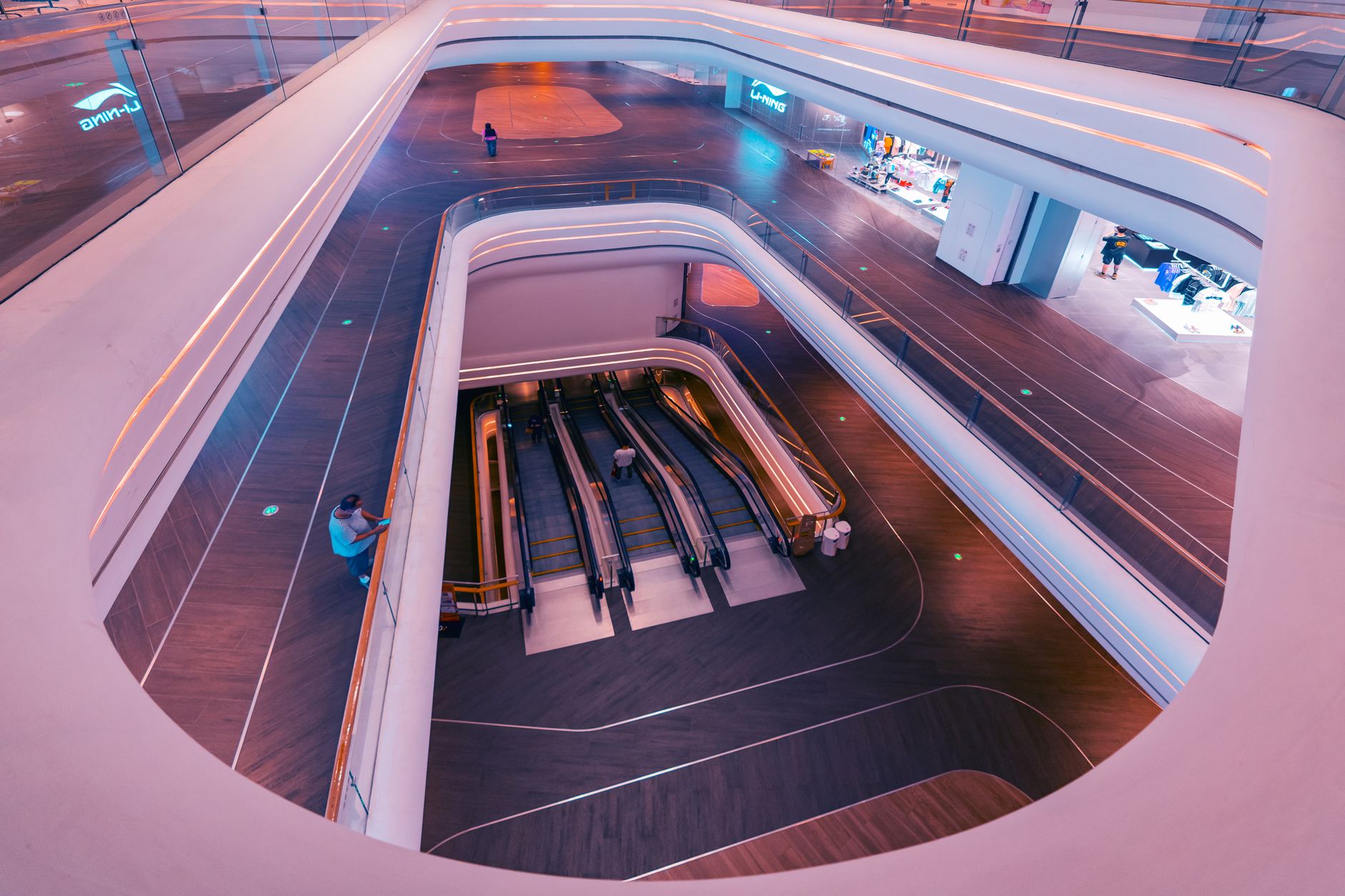
For most regional operators, the first dollars belong in common-area floor care. It is the broadest use case, the easiest to standardize, and the one least dependent on tenant mix. The labor baseline is also clear. The U.S. Bureau of Labor Statistics says janitors and building cleaners had a median hourly wage of $17.27 in May 2024, with about 351,300 openings projected each year from 2024 to 2034. In other words, the work is persistent, repetitive, and hard to staff consistently at scale.
That makes commercial cleaning robot rental and autonomous floor scrubber rental attractive as a portfolio tool rather than a gadget. A common-area program lets you standardize mapping, charging, training, and service response across several assets. It also gives you cleaner benchmarking, because you can compare labor hours displaced, floor coverage, missed shifts, and service events across multiple malls instead of debating one manager's anecdote.
Budget this category as the base layer of the fleet. If you are comparing robot leasing vs buying, ask which structure gives you the cleanest path to overnight cleaning no operator coverage, spare unit coverage, and on-site dispatch when a unit goes down. The right answer is usually the one that keeps uptime responsibility with the integrator, not with your property teams.
How should anchor vacancies change the budget?
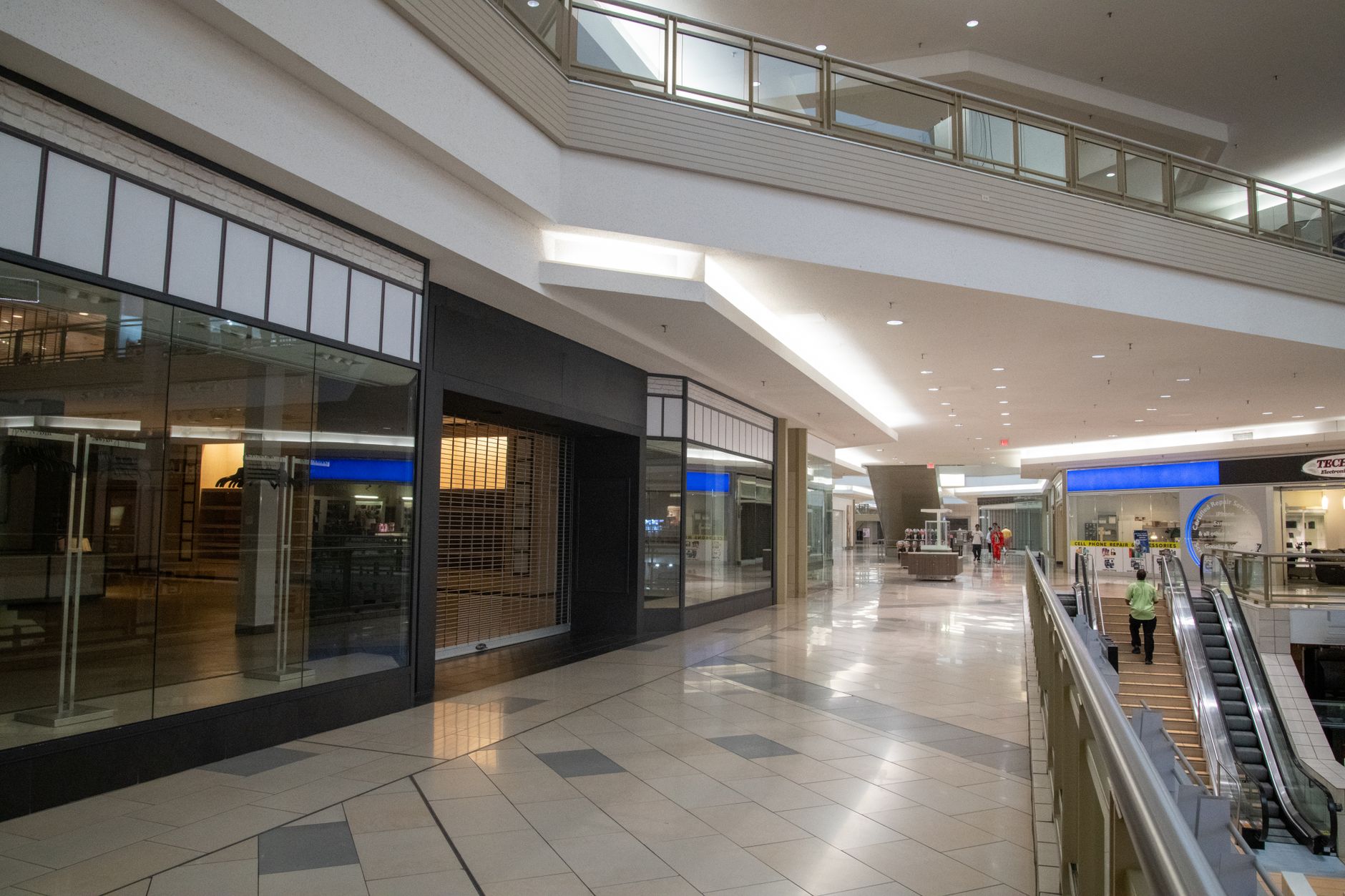
Anchor disruption should not automatically trigger a permanent robot purchase for the affected site. It should trigger a reserve allocation. Macy's said in February 2024 that it planned to close about 150 underproductive locations through 2026, and by its May 2025 proxy statement it had already removed 64 of those stores in fiscal 2024. For mall owners, that kind of churn means some properties will suddenly need more patrol visibility, more turnover cleaning, more wayfinding support, or temporary back-of-house runs long before a redevelopment plan is settled.
Build an anchor-vacancy reserve that can move. Use it for temporary commercial robot demo programs, short pilot deployments, or robot rental monthly coverage tied to a defined operating problem. A dark box that becomes a seasonal activation hall needs a different robot mix than one headed for medical, entertainment, or self-storage conversion.
The discipline here is simple. Do not strand a permanent unit at a property whose floor plan, tenanting, and traffic pattern may change twice in 18 months. Use flexible fleet capacity first, then convert to a permanent assignment once the new use is stable.
What numbers matter most for common-area cleaning budgets?
Focus on three. Cleanable square footage, cleaning window, and recovery cost when a night is missed. Those numbers are more useful than vendor brochure output. According to Macerich, portfolio tenant sales per square foot for spaces under 10,000 square feet reached $881 for the trailing 12 months ended December 31, 2025, up from $837 a year earlier. In productive centers, presentation standards rise with sales productivity. Missed overnight work is not just a labor issue. It becomes a leasing and shopper-experience issue.
A practical budget model splits the cleaning fleet into base coverage and surge coverage. Base coverage handles predictable nightly routes in main corridors, food-adjacent common areas, and event recovery. Surge coverage handles holiday traffic, weather tracking, remodel dust, and vacancy turns. That is where floor scrubber monthly lease or month to month robot lease structures can be useful, because they let you carry less idle capacity in the off-season.
This is also the point where Service Robot Co. tends to fit well. A vendor neutral robot integrator can match different floor profiles across manufacturers, then handle robot deployment and integration, remote triage, training, and emergency response nationwide under one service model. For a regional operator, that one partner one number arrangement is often more valuable than squeezing a little more utilization out of a single brand standard.
When does parking patrol deserve its own line item?
Parking patrol deserves a separate budget when overnight coverage is already thin, incidents are forcing extra rounds, or a property has large low-visibility areas that cameras do not cover well enough on their own. The labor comparison is not imaginary. The U.S. Bureau of Labor Statistics reports a median annual wage of $38,370 for security guards in May 2024, and $36,080 in retail trade specifically. Security guards also commonly patrol parking lots, monitor alarms, and work night shifts, according to BLS.
That does not mean every mall should buy or lease a patrol unit. It means properties already paying for repetitive exterior rounds should test whether autonomous patrol robot coverage can absorb routine visibility work while people focus on incidents, escorts, and tenant calls. Budget it as a security productivity tool, not as a replacement fantasy.
Use a separate parking line because the service pattern is different from cleaning. Exterior exposure, weather tolerance, lighting conditions, charging logistics, and incident escalation all change the service burden. If you blend parking patrol into the cleaning budget, you will hide the real support cost and misread the results.
How should owners handle weak properties versus strong properties?
Strong assets usually justify standardization. Weak assets justify flexibility. Simon's 2025 figures show what stable, high-productivity centers can support: 96.4 percent occupancy, $60.97 base minimum rent per square foot, and $799 retailer sales per square foot. CBL's 2025 results show a different posture, with 90.0 percent portfolio occupancy and same-center NOI growth of 0.5 percent for the year. Both portfolios can use robots, but they should not budget them the same way.
In stronger centers, lock in repeatable use cases and fleet standards. In weaker or transition assets, favor service robot rental, try before you buy pilots, and shorter terms with clear off-ramps. The goal is to avoid trapping capital in a property that may still be re-tenanting, resizing, or changing its operating hours.
A good rule is to assign permanent units only where three things are true: the route is stable, the labor task is chronic, and local management will actually use the system. Everywhere else, budget flexible fleet capacity first.
What should sit inside the budget besides the robot itself?
The complete number is always bigger than the machine line. Include site assessment mapping, integration work, charging and storage prep, staff training, go live support, remote triage, software, replacement coverage, and field service. If those costs are hidden in other departments, the robot program will look artificially cheap at approval and artificially disappointing six months later.
This is why many owners prefer a full-service commercial robot integrator instead of buying units piecemeal from different manufacturers. Service Robot Co. is OEM-neutral, which matters in mall portfolios because the right robot for polished interior corridors may not be the right fit for parking patrol or back-of-house transport. One vendor for financing, deployment, integration, training, and nationwide service keeps accountability in one place and makes portfolio reporting much cleaner.
If you want the finance version of the rule, here it is: budget outcomes, not hardware. If a structure gives you commercial cleaning robot rental, security patrol robot rental, maintenance included service, and a credible emergency robot replacement path, it is closer to the real operating cost than a cheap unit price with fragmented support.