Key takeaways
- Choose AMRs when routes change often, call-offs are uneven, and dispatches cannot wait for the next milk run.
- Choose tugger trains when demand is repetitive, stops are dense, and a fixed cycle can feed many points with little variation.
- The wrong comparison is robot feature list versus tow capacity. The right comparison is flow pattern versus operating model.
- Safety and labor still matter. Warehousing and storage recorded a 4.8 total recordable case rate in 2024, according to the U.S. Bureau of Labor Statistics.
- A neutral integrator can test both models against your actual routes, software, staffing, and uptime needs before you commit.
Which one should most facilities choose first?
Most plants and warehouses should not start by asking which vehicle is more advanced. They should start by asking how their material actually moves. If your replenishment pattern is stable, your pickup points are tightly clustered, and every hour looks broadly like the last, tugger trains usually remain the cleaner answer. If requests arrive unevenly, routes keep changing, and the next move depends on live conditions, AMRs usually earn their keep faster.
That is the short version. Tugger trains are built for rhythm. AMRs are built for variation. A tugger route shines when you can design a dependable milk run with repeatable stop density and predictable cycle times. AMRs pull ahead when the transport problem behaves more like dispatching than bussing, with priorities changing by the hour and loads appearing in different places.
The mistake is common. Teams get dazzled by navigation, sensors, and fleet dashboards, then automate a flow that was never dynamic enough to need them. Others keep a fixed tugger loop in place long after the operation has become too volatile for a rigid schedule. The better choice comes from route variability, dispatch frequency, and pickup density, not from marketing language.
What problem does a tugger train solve best?
Tugger trains are at their best in repetitive internal logistics. In assembly and warehouse supply loops, they move carts or containers through a planned circuit, feeding a known set of destinations on a known cadence. Research on in-plant milk runs describes this model as well suited to repetitive just-in-time supply of small containers and bins, with routing, scheduling, and loading planned around a recurring cycle.
That operating model has real strengths. One driver can serve many stops in a single run. Traffic is legible. Staging rules are easier to standardize. The route itself becomes part of the plant routine, which helps supervisors spot exceptions quickly. If every aisle-side stop is expecting material every 20, 30, or 60 minutes, a train often beats a swarm of individual dispatches.
Pickup density matters here. The more drops and returns you can pack into one loop without waiting, the better the train economics look. A fixed route also works well when line-side buffers are carefully designed and the cost of arriving slightly early is low. In that environment, predictability is the feature.

When do AMRs beat a milk run?
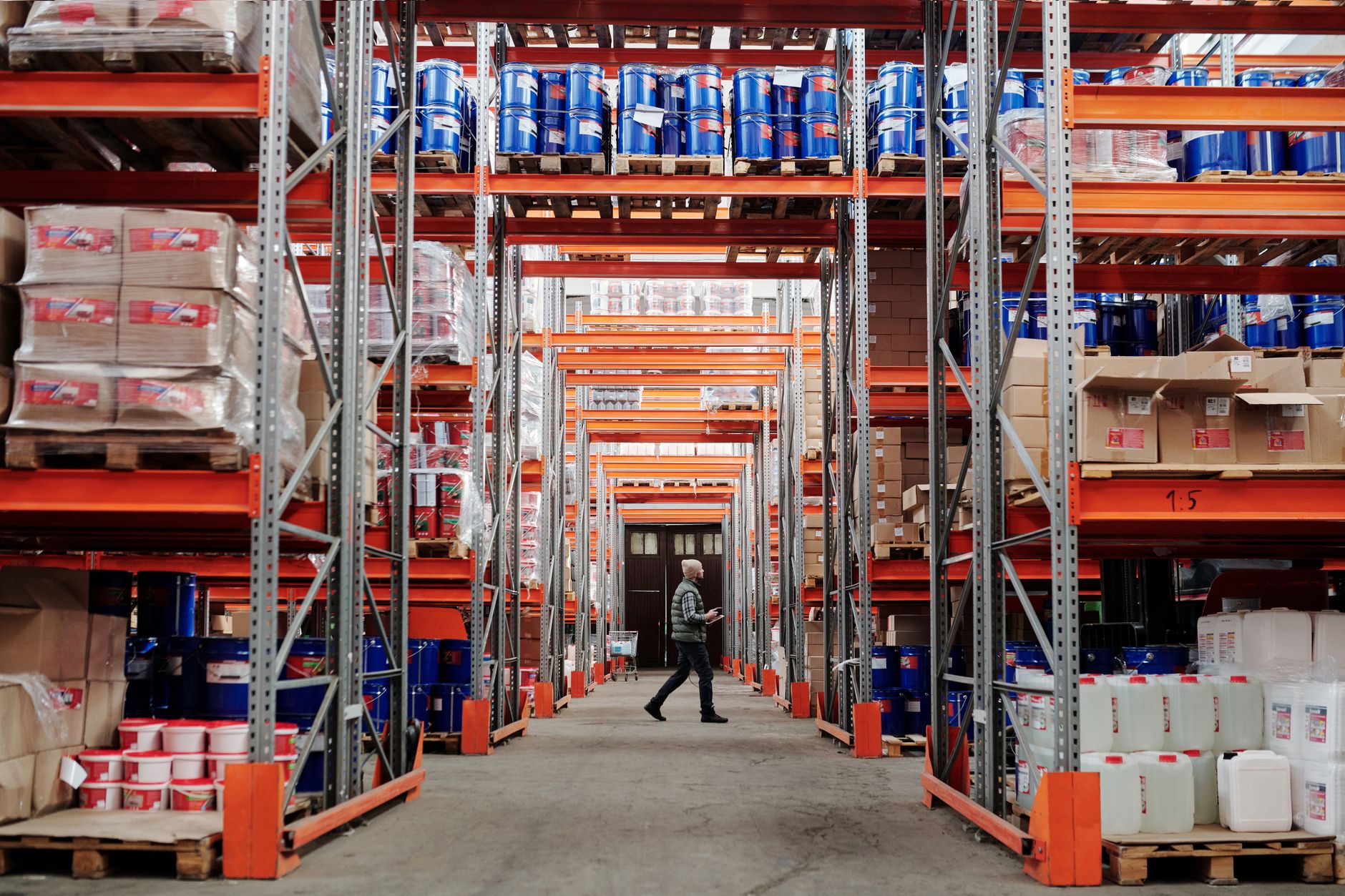
AMRs win when the transport task is no longer governed by a simple clock. Academic reviews of intralogistics AMRs describe their advantage this way: they operate in dynamic environments and can decentralize routing, scheduling, and dispatching decisions so the system reacts to changes in real time. That matters when a blocked aisle, a rush order, a machine interruption, or a sudden shortage changes the next best move.
A good rule of thumb is this. If the work is asynchronous, AMRs usually deserve a hard look. If one department calls every eight minutes, another every 40, and a third only during shift change, forcing all three onto one fixed tugger loop can create either waiting or excess inventory. AMRs let you send transport only when the request is real.
They also fit layouts that keep moving. Plants re-slotting work cells, warehouses changing pick faces, and mixed-use facilities adding new handoff points often struggle to keep a static route efficient. AMRs are not magic, but they tolerate change better. That flexibility is exactly why recent literature ties AMR adoption to more changeable plant layouts and dynamic manufacturing conditions.
How do route variability, dispatch frequency, and pickup density change the answer?
These three variables decide more projects than payload or top speed. Route variability asks how often origins, destinations, and preferred paths change. Dispatch frequency asks how often transport requests occur and how evenly they arrive. Pickup density asks how many useful stops can be combined into one trip without waste.
High variability plus uneven dispatch frequency is AMR territory. Low variability plus dense, repeatable stops is tugger territory. The gray area sits in the middle, where facilities often benefit from a hybrid design: a scheduled tugger loop for base load and AMRs for exceptions, urgent replenishment, and off-cycle returns.
Think operationally. If your tugger passes half its stops just in case, you are paying for schedule rigidity. If your AMRs spend the shift making short, repetitive calls between the same fixed points, you may be paying for flexibility you do not need. The correct answer often appears once you map one week of real trips, not one idealized day.
- Choose AMRs when more than a small share of trips are expedites, routes change by shift, or handoff points are added and removed often.
- Choose tugger trains when stops are fixed, demand can be sequenced, and each loop serves many nearby points with minimal idle time.
- Consider a hybrid when one stable route handles base demand but the operation still produces frequent exceptions.
What do safety and labor data say about the decision?

Material flow decisions are never just about throughput. They are also about exposure. OSHA notes that in warehousing, the most common injuries are musculoskeletal disorders from overexertion and workers being struck by powered industrial trucks and other materials handling equipment. OSHA also highlights pushing, pulling, heavy lifting, awkward postures, and repetitive motion as persistent hazards in warehouse work.
The 2024 numbers underline the point. According to the U.S. Bureau of Labor Statistics, warehousing and storage posted a total recordable case rate of 4.8 per 100 full-time workers, with a 4.1 rate for cases involving days away from work, restriction, or transfer. General warehousing and storage was slightly higher at 4.9 total recordable cases. In the same year, transportation and warehousing recorded 865 fatal work injuries, and transportation incidents remained the deadliest event category across private industry.
That does not mean AMRs automatically beat tugger trains on safety. A well-managed tugger route can reduce ad hoc forklift traffic and make material movement more visible. But it does mean the bar is high. The winning design is the one that lowers needless travel, cuts manual push-pull exposure, reduces mixed traffic conflicts, and fits the real discipline level of the site.
How should you calculate the flow, not just compare equipment?
Start with one month of movement data. You need origin, destination, pickup time, delivery time, wait time, load type, and urgency. Then separate base-load moves from exception moves. Base load is the repeatable daily drumbeat. Exceptions are the unplanned pulls, shortages, quality holds, returns, and last-minute schedule changes that wreck elegant route charts.
Next, measure stop density and route stability. If a train can leave full, serve a compact sequence of stops, and return with empties on a repeatable cycle, model that first. If demand forces long waits between useful stops or frequent detours off the route, model AMR dispatches instead. Peer-reviewed warehouse research often finds travel is a huge share of labor. One recent review notes that travel time can account for about 50 percent of total picking time in manual order picking. That makes travel design too important to guess at.
Finally, test queueing and handoff discipline. AMRs can look excellent in a spreadsheet and disappoint on the floor if pickup points are sloppy and software events are unreliable. Tugger trains can look simple and fail because the route starves one area while flooding another. Good engineering happens in the flow map, the dispatch rules, and the staging design before it happens in the vehicle spec.
Where does Service Robot Co. fit in?
This is exactly where an OEM-neutral integrator matters. Service Robot Co. works with U.S. businesses as a full-service commercial robot integrator, which means the job is not to force one robot category into every transport problem. The job is to match the operating model to the flow, then handle financing, deployment, integration, training, and service through one nationwide U.S. engineer network.
For some sites that means an autonomous mobile robot rental, a material handling robot rental pilot, or a phased AMR fleet deployment tied to real dispatch data. For others it means proving that a fixed tugger concept should stay in place and automation should be aimed elsewhere. The practical advantage is one partner for assessment, integration, go-live support, and ongoing service instead of a patchwork of vendors defending their own hardware.
What usually goes wrong in these projects?
The first failure mode is automating exceptions while leaving the base flow messy. If line-side presentation is poor, returnables are unmanaged, and call logic is inconsistent, even a strong AMR deployment will look worse than it should. The second is forcing a milk run onto a process that no longer behaves like one. A fixed loop cannot stay efficient if the business keeps demanding instant off-route service.
Another failure is ignoring software and human discipline. Dispatch rules, queue priority, scan events, and pickup confirmation matter as much as drive performance. A transport system is really a control system wearing wheels. If the signals are noisy, the vehicles will simply make the mess move faster.
The last failure is buying too early. A robot pilot program or a try-before-you-buy phase is often the fastest path to clarity, especially for facilities weighing robot leasing for business, monthly payment programs, or no upfront capital structures. Transport automation is easier to justify when the operating pattern has been measured instead of assumed.
The practical decision rule
Choose tugger trains when the route is fixed, stop density is high, and the plant can live by cadence. Choose AMRs when demand is volatile, dispatches are asynchronous, and the layout keeps changing. If your operation has both conditions, use both. Base-load loops and exception handling do not need the same tool.
That is the real comparison. Not old versus new. Not simple versus smart. The question is which transport model fits the way material actually moves through your building. Make that call with real trip data, safety exposure, and software readiness in view, and the equipment choice gets much easier.
Frequently asked questions
Sources
- BLS Warehousing and Storage industry page
- BLS 2024 injury and illness rates by industry
- BLS 2024 fatal work injuries summary
- OSHA Warehousing overview
- OSHA Warehousing hazards and solutions
- MHI on 2025 supply chain talent gap report
- ScienceDirect review of AMRs in intralogistics
- ScienceDirect study on dynamic tugger-train material flow