Key takeaways
- Start with one transport loop, one payload class, and one shift before you touch multi-floor complexity.
- In a busy ED, exception handling matters more than peak autonomy because blocked paths, badges, and abrupt surges define the day.
- Infection control, EVS ownership, and staff communications must be designed into the pilot before the first run.
- Judge the pilot on throughput, intervention rate, and trust earned on the unit, not on demo-day novelty.
What does a safe ED robot pilot actually look like?
A workable emergency department pilot is narrow by design. Pick one repetitive transport job, fence the operating zone to a few connected spaces, give the robot a human fallback at every handoff, and define exactly what happens when the route is blocked, the elevator is busy, or a code is called. That is how you test automation in a crowded care setting without turning the unit into a science project.
This discipline matters because emergency departments already run under throughput pressure. According to the CDC, U.S. emergency departments handled about 155 million visits in 2022, and the Joint Commission tracks median arrival to departure time and admit decision to departure time as formal ED measures. A pilot that adds friction to those clocks is not a pilot. It is an operational defect.
The winning pattern is usually a small, high-frequency loop such as medication transport, supply replenishment, specimen movement, or meal tray transport between defined points. Start on one shift, prove the route, document the exceptions, and expand only after staff stop changing their behavior to accommodate the machine.
Why do emergency departments expose weak robot design so quickly?
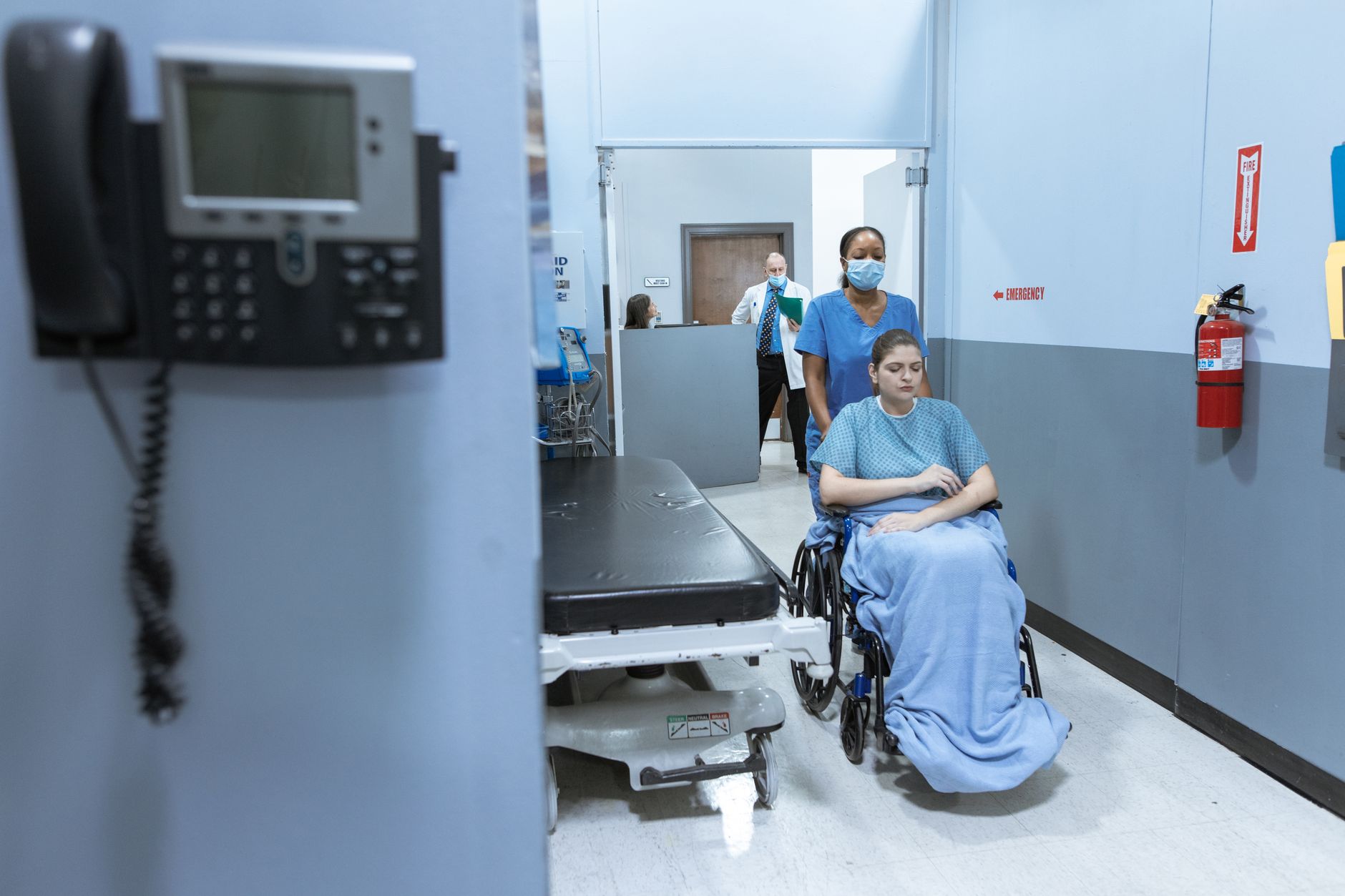
The ED is a harsh proving ground because the traffic pattern never stays polite for long. Hall beds appear. Family members cluster at doors. Portable imaging equipment parks in the wrong spot. A route that looked clean during a quiet site walk can collapse in five minutes when triage backs up and boarding spreads into the corridor.
The operational stakes are also unusually high. The Joint Commission summarized a 2023 study in which 94 clinician questionnaires linked ED boarding to burnout and high rates of perceived verbal or physical abuse, and participants overwhelmingly felt boarded patients received poorer care. In that environment, a robot does not get credit for being interesting. It earns its place only if it reduces low-value walking without creating one more thing the staff must manage.
That is why pilot design in the ED should favor repeatability over ambition. A single dependable loop with clear stop rules beats a flashy multi-floor trial that constantly asks nurses, techs, or unit clerks to rescue it.
Which workflow should you automate first?
Choose the route that is both frequent and boring. You want transport work that steals staff minutes all day, does not require clinical judgment in transit, and can tolerate a short pause if traffic surges. That usually points to closed-container deliveries, not anything that depends on bedside conversation, ad hoc detours, or patient-facing improvisation.
Avoid the temptation to start with the route executives notice most. The best opening pilot is often invisible to patients and deeply appreciated by staff. If the robot can remove dozens of repetitive trips per shift from nurses, ED techs, or support staff, the unit will feel the gain long before the hospital posts a case study.
- Good first candidates: medication transport between pharmacy handoff and ED med room, supply tote runs to fast-track or observation bays, specimen movement on a fixed path, and back-of-house meal tray transport.
- Poor first candidates: anything requiring isolation-room entry, uncontrolled public elevator travel, psychiatric hold area service, or handoffs that depend on one specific person being present.
- Pilot rule: one payload class, one route family, one shift, one escalation number.
How should infection control shape the pilot from day one?
Infection control cannot be a late signoff. The CDC says hospitals should build environmental cleaning around six core components, including training, setting-specific protocols, monitoring, and feedback. For a robot pilot, that means the unit needs a written cleaning method, assigned ownership, approved products, documented touch points, and a rule for when the machine is removed from service for contamination or uncertain exposure.
The same CDC guidance stresses that high-touch surfaces in patient-care areas need more frequent cleaning than low-touch surfaces. On a delivery robot, that usually includes the screen, latch, payload door, handle areas, and any manual override points. If nobody can answer who cleans those surfaces between runs, after a spill, and at end of shift, the pilot is not ready for go-live.
Good ED pilots also respect exclusion logic. Keep the robot out of active resuscitation zones, out of rooms under special precautions unless the workflow has been explicitly approved, and away from supply staging patterns that force staff to choose between infection practice and keeping the aisle open.
What must be proven about doors, elevators, and choke points?
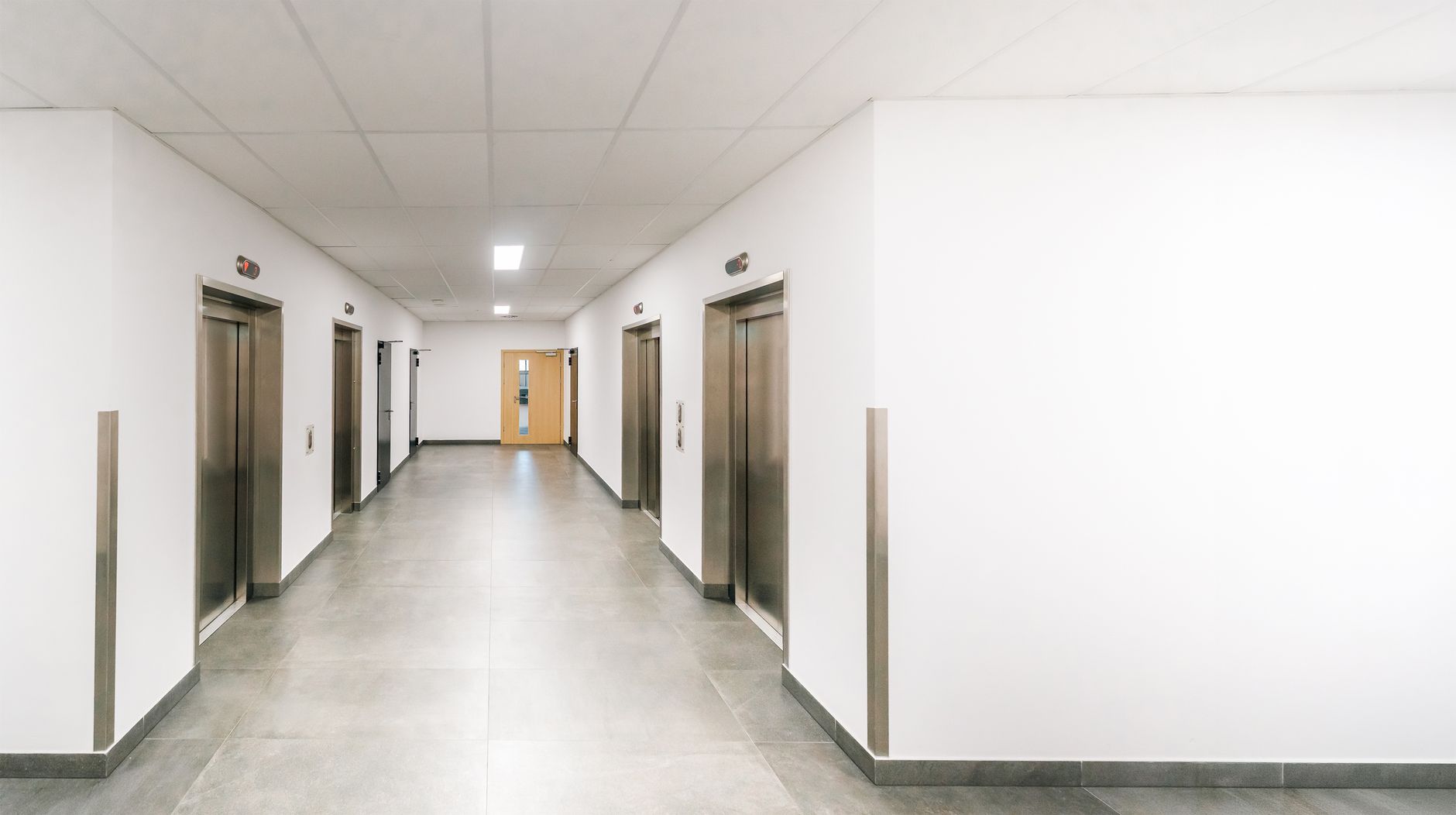
Most hospital robot pilots fail on building behavior, not navigation in open hallways. A robot may drive beautifully down a mapped corridor and still collapse operationally if it reaches a badge door, smoke barrier, or elevator bank and waits for a human every third trip. In an ED, that delay compounds fast because hallway space is already scarce and nobody has spare attention for babysitting.
Before launch, prove every physical and digital handoff on the live route. That includes door timing, badge logic, elevator dispatch, threshold clearances, queueing space at pickup and dropoff, and where the robot waits if its destination is temporarily occupied. The standard is not that the robot can complete the route once. The standard is that it can fail safely and recover cleanly during the ugliest half hour of the shift.
If multi-floor delivery robot behavior is part of the eventual vision, treat it as phase two. Busy emergency departments punish half-integrated elevator logic faster than almost any other indoor setting.
Which exceptions need a written playbook before the first autonomous run?
Assume the normal path will be disrupted. The playbook should tell staff what the robot does when a stretcher blocks the hall, a trauma alert closes access, a spill forces rerouting, a payload is delayed, the battery window narrows, or a patient or visitor interferes with the machine. Ambiguity is what turns a modest interruption into unit-wide irritation.
This is not theoretical. CDC and NIOSH guidance notes that violence in hospitals is most frequent in emergency rooms and waiting rooms, and identifies long waits and overcrowded waiting rooms as risk factors. In practical terms, your pilot has to account for abrupt human behavior, not just furniture placement. A robot that becomes stubborn, chatty, or stranded in a tense public area will lose staff confidence immediately.
- Hard stop events: code response, active decontamination, security event, environmental spill, blocked fire door, uncertain contamination, and any path obstruction lasting beyond the unit's preset threshold.
- Human fallback: who retrieves the robot, how payload custody is preserved, and how the missed run is logged.
- Recovery rule: after an exception, the robot returns to a defined safe waypoint or dock. It does not improvise through clinical traffic.
How do you earn staff trust instead of borrowing it?
Trust comes from fewer interruptions, not from training slides. Keep the launch team small and operational: charge nurse, ED manager, infection prevention, EVS, security, facilities, and one hands-on super user per shift. Give the unit one number to call, one laminated quick guide, and one sentence on what the robot is allowed to do today. That last word matters. Today. Scope creep kills trust.
Staff also need to see that the pilot respects their pace. Do not ask nurses to become dispatchers. Do not ask techs to debug navigation. Do not ask unit clerks to explain the robot to every family member in the waiting area. The machine should absorb friction, not export it.
This is where a full-service partner matters. Service Robot Co. acts as a vendor neutral robot integrator for U.S. operators, so the pilot can be designed around the route, infection rules, elevator reality, and support model instead of around one manufacturer's preferred demo script. For a hospital delivery robot rental or robot pilot program, that usually means tighter site assessment mapping, clearer go live support, and one service path when the unit needs attention.
What should the first 30 days of the pilot measure?
Measure operational truth, not presentation metrics. A crowded ED does not care that the robot completed a clean hallway route at 2 p.m. during a quiet demo. It cares about how the machine behaved during shift change, boarding spikes, and a messy Tuesday night when the department was short on patience and long on interruptions.
A credible scorecard should combine throughput, reliability, and adoption. Track completed runs, median run time, human interventions per 100 runs, blocked-path events, aborted missions, contamination removals, charging compliance, and any delay the robot caused at pickup or dropoff. Then pair that with short staff feedback by role. If nurses feel the machine added work, the pilot is not working, even if the autonomy graph looks pretty.
For hospitals that do not want capital exposure on day one, a service robot rental or robot leasing for business structure can make sense because it keeps the trial bounded. The useful version is not cheap commercial robot rental rhetoric. It is a controlled pilot with maintenance included, remote triage, on-site dispatch, emergency robot replacement if promised, and a documented exit path if the route never stabilizes.
Frequently asked questions
Sources
- CDC NCHS ED Visit Rates 2022
- Joint Commission Emergency Department Measures
- Joint Commission on ED Boarding Impact
- CDC Surface Risk in Healthcare Facilities
- CDC Environmental Cleaning Procedures
- CDC Environmental Services Guidance
- CDC NIOSH Violence Hazards in Hospitals
- CDC NIOSH Workplace Violence in Healthcare