Key takeaways
- Start with one block, not the whole course: map a pilot area, run it beside your crew, and add holes as hours free up.
- Roughs and fairways both work in the sources. One club profiled by Golf Course Management runs 22 robots in the rough and three on 30 acres of fairways, and each needs different cut heights.
- Choose pilot holes with open sky, wide corridors and gentle grades, and expect to redraw the map more than once.
- The robots leave bunker surrounds and rough edges to a trim mower and a person nearby, so plan the monitor role and the shop power before the first pass.
- Toro says one supervisor can run several mowers from the property and is alerted by text when a machine needs help.
- Service Robot Co. picks the machine, leases it on a 3-year lease with a $1 buyout, deploys it, trains your staff and services it.
How do you roll out autonomous mowers at a golf course with a small crew?
Start small: pick one block of open rough or fairway, map it, run it beside your crew, then add holes as hours free up. Service Robot Co. picks the machine, leases it on a 3-year lease with a $1 buyout, deploys it and trains your staff. Roughs usually go first because they forgive more.
That is the short version of a rollout. The rest of this guide covers where to begin, how to choose pilot holes, what to fence off, who watches the machines, where they charge and what stays with your crew.
Should you use robotic mowers on roughs or fairways first?
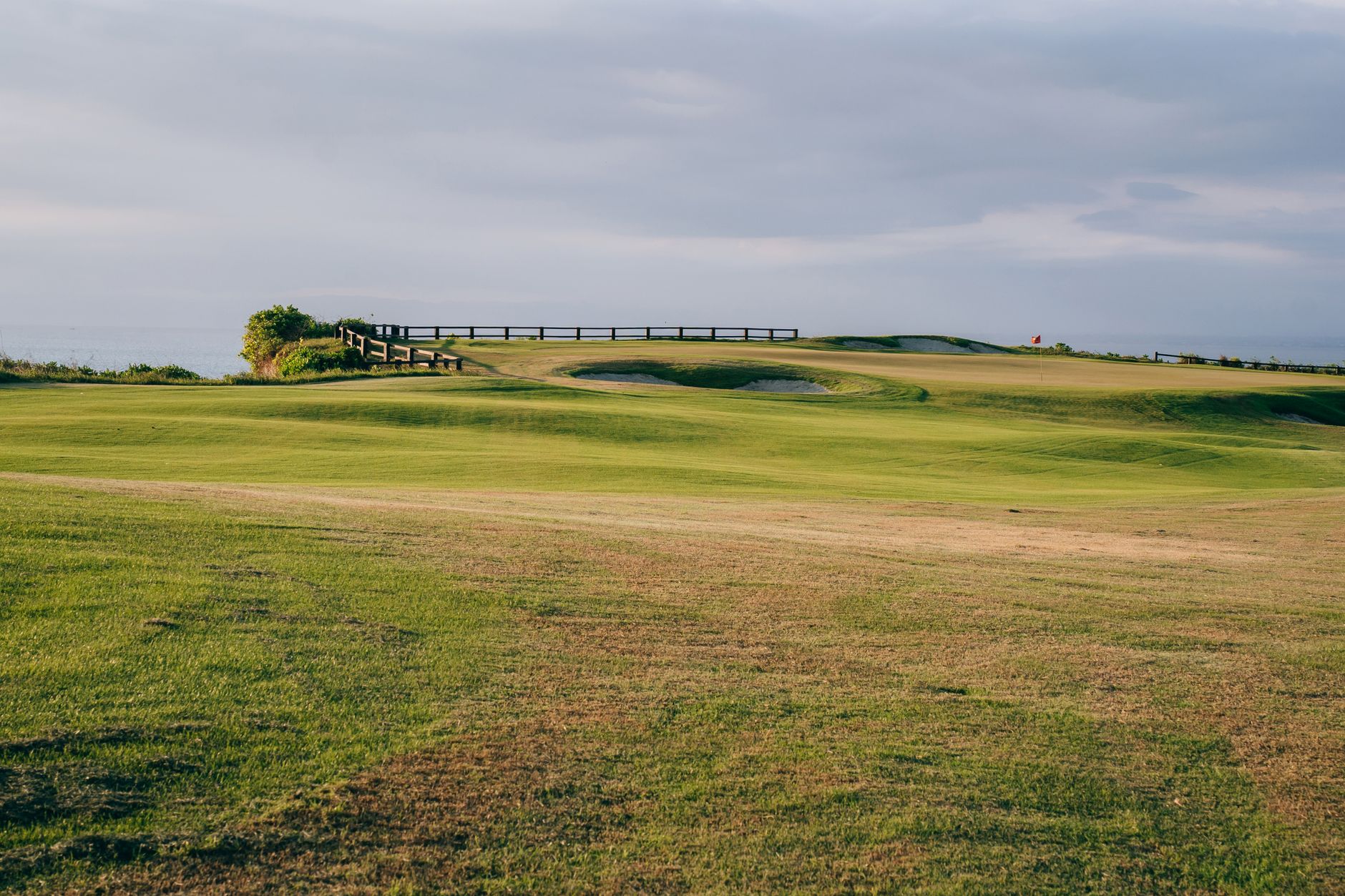
Both work, and clubs in the sources run both. Golf Course Management reported in November 2024 on a Southern California club that runs 22 Kress units in its rough three times a week during the March to October growing season, each mow covering 90 percent of 60 acres of rough. The same club runs three FireFly AMP mowers on 30 acres of fairways. Its director of agronomy called them not fully autonomous: an employee drives each mower to its hole, sets direction and speed, and the machine then runs in autonomous mode, mowing from about 5 a.m. to 9:30 a.m.
Golfdom reported in September 2024 that four AMPs cover all 60 acres of fairways across 18 holes at the Black Desert Championship course in about four hours each night, with all mowing done in the dark to avoid interrupting play.
Cut height gives the practical split. Toro's Turf Pro brochure lists cutting heights from 0.75 to 3.9 inches, which suits rough. Toro's GeoLink fairway mower is listed at 0.25 to 0.75 inch, and FireFly's AMP-L100 flyer lists 0.25 to 1.5 inches. Fairway-height turf calls for the reel-style fairway machines, while rough height gives you more choice of machine.
Our advice for a small crew is to begin where the stripe expectations are lowest and the acreage is largest, which is usually rough, and move to fairways when the first block runs without someone walking beside it. A course whose crew hours disappear into fairway mowing may reverse that order.
Which holes should be the pilot?
Choose for the robot, not for the scorecard. The NALP's The Edge reported in May 2026 that contractor Timber Toste of Mow Bot Ltd favors large acreage and low-obstacle sites, and that dense tree canopies tend to be inefficient because the mowers make too many adjustments. MowScout's CEORA guide says heavy canopy can degrade the satellite fix and stall the mower. A pilot block should be the easy ground.
Expect to redraw the map. Toste said his team maps properties several times before getting a good workflow. FireFly's flyer says its newer 50/50 mowing patterns need no repeated mapping and no physically driven center line, which is the kind of claim to test on the pilot holes rather than assume.
Look for features like these in the first block:
- Open sky over the fairway and over the spot where any reference station will stand.
- Wide corridors with few pop-up heads, valve boxes or stakes sitting proud of the turf.
- Grades that clear the maker's slope rating inside the work area, not only at the boundary.
- A hard-surface route to the shop, so a crew member can move a machine quickly.
- A hole you can shorten or close for one morning during the first supervised pass.
How do you keep robots away from sprinklers, bunkers and slopes?
Mark the hazards before you mark the paths. FireFly's flyer describes exclusion zones for permanent features, naming bunkers, lakes and native areas, that the mower will never enter or cross autonomously. Toro's brochure says working perimeters and no-go zones are set in the app. Greenzie's documentation, as of April 2023, warns that small obstacles that do not stand up out of the grass may not be detected, which is why any sprinkler head or valve box that sits proud of the turf needs fixing, marking or a zone.
Slopes need a number. Husqvarna lists 20 percent inside the work area and 15 percent at the boundary for its CEORA 546 EPOS, and Toro lists 30 percent for its Turf Pro 500 and 45 percent for the 500S. Neither FireFly's flyer nor Toro's GeoLink page lists a rating for its fairway reel mower, so ask for one in writing. Our companion guide on how autonomous mowers handle slopes, wet grass and obstacles has the full list of published ratings.
Who watches the robots when the crew is small?
Someone does, and the sources say so plainly. Toro's page says one supervisor can operate multiple mowers while on the property and gets a text if manual intervention is needed. MowScout describes the Scythe M.52 as supervised autonomy that stops to request a human assist. Toste told the NALP's The Edge that a technician is on site monitoring when a mower is in autonomous mode, and that his goal is a two-person crew running two robots across 20 to 25 acres a day.
At the California club, the employee who starts a fairway mower hand-rakes the greenside bunkers and spot-checks the fairway bunkers while it runs, so the monitoring time does useful work. The director of agronomy told Golf Course Management that mowing hours fell from about 2,200 a year to about 300 hours of trim mowing.
Name one monitor each morning, give that person a fault card and a phone number, and decide who receives the text alerts. Training for that role belongs before the first pass, not after the first fault.
Where do the robots charge, and does the shop have the power?
At the California club, the units live and charge at the maintenance facility, and employees drive them out to their assigned holes. Toste told the NALP that not every shop has the electrical capacity to expand, and his crew charges two M.52 mowers overnight on a 240 volt connection. FireFly's flyer lists a charge in as little as 2.5 hours and up to 25 acres per charge.
A small crew should count machines against outlets before committing to a fleet size. Charging at the shop overnight means the mowers start the morning full, and it also means the shop panel has to carry all of them at once. Golf Course Management quoted a Kress executive saying charging stations and electrical requirements are among the common questions.
What work stays with your crew?
The robots do not finish the job. The California club leaves the rough perimeter and the areas around bunkers to a 48-inch rotary trim mower, about 12 hours over two days for 4 acres, according to Golf Course Management. MowScout's CEORA guide says edging, trimming, bunker surrounds and fine detail still need people. FireFly's February 2025 update added Fairway Mode, which saves boundaries so the mower turns in the rough or within the fairway, and Golfdom says FireFly expects that to reduce clean-up passes.
Greens and tees stay with your skilled crew, and so does bunker work. The hours the robots return are most valuable there: raking, detail, and the hand work members notice.
Ask each maker who supports the machine in year three, not only at delivery. How a company sells and supports matters as much as what the machine can do.

Want help picking the right robot? Talk to us
Service Robot Co. is OEM-neutral. We walk your course, pick the right machine for the roughs or fairways you want to start with across manufacturers, lease it on a 3-year lease with a $1 buyout at the end, deploy it, train your crew and service it, with 24/7 support with 10-minute specialist triage, regional service engineers in every serviced state, three check visits a year and a 12-month warranty.
Book a free site assessment and we will help you choose the pilot holes. Our golf course pages at servicerobotco.com/industries/golf-courses and servicerobotco.com/industries/golf-courses/fairway-mowing cover fairway and rough programs in more detail.
Frequently asked questions
Want a robot working for you?
Tell us the job and the site. We will recommend the robot, quote the lease, and keep it serviced.
Sources
- Golf Course Management, Autonomous mowers on display at 2025 GCSAA Conference and Trade Show
- Golfdom, Black Desert Championship to use autonomous fairway mowers (September 24, 2024)
- FireFly Automatix, AMP-L100 autonomous fairway mower flyer (2026)
- Golfdom, FireFly Automatix unveils autonomy software update for AMP mowers (February 12, 2025)
- Toro, Turf Pro 500/300 and Range Pro 100 brochure and specifications (rev. 03/25)
- Toro, GeoLink autonomous fairway mower page
- Toro, autonomous mowing overview
- MowScout, Scythe M.52 guide (updated July 2, 2026)
- MowScout, Husqvarna CEORA commercial guide (updated July 2, 2026)
- National Association of Landscape Professionals, What Contractors Need to Know Before Going All-In on Robotics (May 15, 2026)
- Husqvarna, CEORA 546 EPOS product page
- Greenzie University, Limitations and gotchas (as of April 2023)