Key takeaways
- Run every site through the same five steps: sky survey, fixed correction source, boundary map, supervised first mow and a written site card.
- Husqvarna's reference station manual asks for open sky above 10 degrees elevation, a mount at least 2.5 meters high and a fixed object that cannot move or rotate, with the mower within 500 meters.
- A German test found positioning drift when a reference station was not rigidly mounted, and stable running once it was fixed, so a station belongs to one place.
- A contractor quoted by the NALP says his team maps properties several times before it gets a good workflow, and not every shop has the power to charge a growing fleet.
- Makers differ on where corrections come from and who supports the site, so ask each one: station on site or network, and who answers when it stops.
- Service Robot Co. runs the same routine per site, picks the machine, and leases it on a 3-year lease with a $1 buyout.
How do you set up RTK robotic mowers across multiple client sites?
Set up every site the same five ways: survey the sky, fix the correction source in place, map the boundary, run a supervised first mow, and record a site card. Service Robot Co. runs that routine for each property and picks the machine that suits it. Most RTK problems turn out to be site problems.
A crew that mows five properties does not have five different problems. It has the same four, sky view, correction source, boundaries and power, in five different places. The steps below take them in order and attribute every limit to the page that states it.
What does RTK actually do for a robotic mower?
RTK stands for real-time kinematic positioning. An RTK robotic mower compares its satellite signal with correction data from a known fixed point, which is how it holds a line to within a couple of centimeters without a buried wire. MowScout's guide to the Husqvarna CEORA describes a local reference station that knows its own exact position and sends corrections to the mower, bringing accuracy to roughly 2 cm, with virtual boundaries drawn in software.
Other makers report similar figures. Golf Business News reported in March 2025 that Toro's autonomous mowers are accurate to 2 cm and need no boundary wires. Kress's KR174 page claims centimeter-level accuracy and says correction data comes from Kress's base station network. FireFly's case study with Point One Navigation says the AMP's corrections are accurate to within a single centimeter, and that standard GNSS can drift by several feet or more.
For a contractor the useful point is where the corrections come from. A reference station on the property ties the setup to that property. A network service ties it to coverage. Each choice changes what you do at the second, third and fourth site.
How do you survey a site before the first mow?
Start with the sky. Husqvarna's RS5 reference station manual asks that the sky be unobstructed in all directions above a 10 degree elevation angle at the station, and that the station be mounted at least 2.5 meters (8 feet) high. MowScout's CEORA guide says heavy tree canopy, deep tree lines, tall building shadow and dense overhead structures can degrade the fix, stalling the mower or knocking it offline, and suggests a wire-guided or vision-based system for heavily shaded sites.
The German test of the CEORA 544 EPOS on smartgeber.de, published in March 2026, lists narrow courtyards, dense tree tunnels and deep grandstands as problem spots, and offers two fixes: move the station or split the area into segments. The NALP's The Edge reported in May 2026 that contractor Timber Toste of Mow Bot Ltd favors large acreage, low-obstacle sites, sports fields, large open parks and dryland mowing, and that dense tree canopies tend to be inefficient.
A survey therefore ends in one of three results for each property: go, go in segments, or leave it to a manual mower. Write the result on the site card. Makers also handle a signal dropout differently. MowScout says the Scythe M.52 relies on vision and ultrasonic sensing as well as GNSS, so a brief dropout under a tree line will not strand it, and Kress's page says its mower switches to dead reckoning when the signal is blocked. The survey result and the machine choice belong together.

Where does the RTK reference station go, and why can't it move?
Husqvarna's RS5 manual is specific. Install the station on a fixed object that cannot move or rotate, a post or a wall, and not on a flagpole, because movement changes the correction data sent to the mower. A post should be 32 to 55 millimeters across. On a wall, the top of the station must sit above the wall and the wall must contain no metal. If a lightning rod is nearby, mount the station no higher than it. The mower must be within 500 meters, and the full range applies only with a clear line of sight.
The German test on smartgeber.de found the same lesson in the field. When the reference station was not rigidly mounted, the test showed positioning drift, and after a firm mount the system ran stably. The page recommends a rigid and theft-proof mount, and notes that GPS tracking in the fleet app helps locate a mower while anchor bolts and fencing remain worthwhile.
Two consequences follow for a multi-site contractor. First, a station belongs to a place. Because the manual caps the distance at 500 meters, a station at one property cannot serve a property across town, though Husqvarna's product page says one station can serve several machines at the same time. MowScout adds that larger or obstructed sites may need additional reference stations, and that the CEORA kit needs a commercial dealer for the site survey, setup and service.
Second, makers differ. Toro's brochure lists an RTK base station as an accessory beside the Turf Pro, while Kress describes network-supplied corrections. Before you commit a client site to a machine, ask which model it is and who mounts, powers and maintains the station.
How do you map boundaries at each client site?
Mapping methods differ by maker. MowScout says you drive the outside of a Scythe M.52 mow zone once, the mower remembers that boundary and plans 360-degree coverage inside it. The smartgeber.de test says the CEORA needs no boundary wire: boundaries, lanes and no-go zones are defined virtually in the app, changes take minutes rather than days, and temporary no-go zones can be set as calendar windows for events. Toro's brochure says working perimeters, no-go zones, mowing patterns, cutting height and transport paths are set in the app.
Not every machine is wire-free. A 2023 Mowing Magic review reports that ECHO's TM-2000 uses a perimeter wire, that ECHO uses its own network of professional installers rather than letting customers lay it, and that wire distances must be exact.
Expect to map more than once. Toste told the NALP's The Edge, "We seem to map properties several times before we get a good workflow." He added that the on-site technician must map each property to decide what gets mowed autonomously and what stays manual. Budget a second visit per site, and keep the first map as a draft.
Mark the thin obstacles during mapping. Greenzie's documentation, as of April 2023, advises marking items such as guide wires with cones or removing them during the perimeter mow, because small things that do not stand up out of the grass may not be detected.
Does your shop have the power to charge a multi-site fleet?
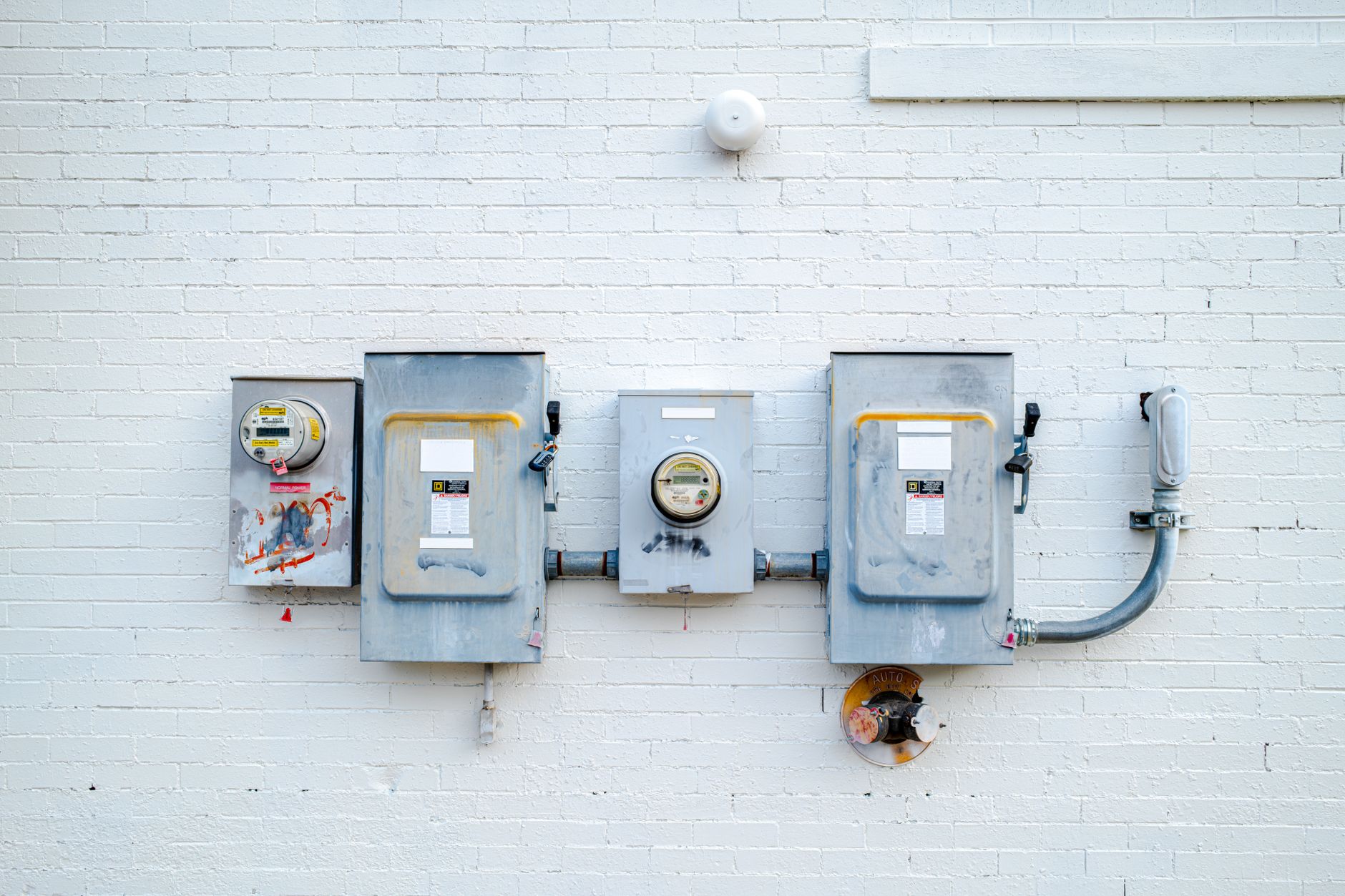
Toste told the NALP that not every shop has the electrical capacity to expand. His crew charges two M.52 mowers overnight on a 240 volt connection and is testing battery storage in an electric truck. As a fleet grows, shop power needs grow with it, and that limit is easy to miss while the first machine charges happily from one outlet.
Charge times in the documents are modest. FireFly's flyer lists a charge in as little as 2.5 hours and up to 25 acres per charge for its fairway mower. In a 2023 test, Mowing Magic found a full charge of ECHO's TM-2000 gave about 2 hours of run time on mostly flat turf and took just under 1.5 hours. Golf Course Management quoted a Kress executive saying charging stations and electrical requirements are common questions.
The plan for each site is one of two. Either the mowers return to the shop every night and travel to the property, which needs shop power and a trailer, or a charger lives at the client site, which needs power there and a plan for theft. Husqvarna's reference station manual adds a small detail worth copying: put the power supply under a roof, out of sun and rain, with a residual-current device on the outlet.
What still needs people, and who answers when a mower stops?

MowScout's CEORA guide says edging, trimming, bunker surrounds and fine detail still need people. Toste's crew handles weeding, trimming and plant health while the robots run, and his goal is a two-person crew with two robots covering 20 to 25 acres a day. MowScout describes the M.52 as supervised, stopping to request a human assist when it meets an obstacle it cannot clear.
Support models differ more than specifications do. MowScout's CEORA guide says the machine needs a commercial dealer for survey, setup and service, and that thin commercial coverage in a region is a real support risk. Greenzie's documentation says its support is staffed 7am to 7pm Eastern, by phone and text, and that technicians can usually diagnose remotely. Toro's page says the supervisor gets a text when a machine needs help. Ask each maker what happens at six on a Saturday morning at site four.
Service Robot Co. is one vendor for the whole job. We pick the right machine for each property across manufacturers, lease it on a 3-year lease with a $1 buyout at the end, deploy it, train your crew and service it, with 24/7 support with 10-minute specialist triage, regional service engineers in every serviced state, three check visits a year and a 12-month warranty.
Want help picking the right robot? Talk to us
If you are adding robotic mowing to a landscaping contract, bring the property list. We will walk the sites, survey the sky, decide where a station or network corrections make sense, and map which areas go to the robot and which stay manual. Book a free site assessment with Service Robot Co. and leave with a site card for each property.
Our overview of mowing robots lives at servicerobotco.com/solutions/lawn-mowing-robots, and our golf pages start at servicerobotco.com/industries/golf-courses.
Frequently asked questions
Want a robot working for you?
Tell us the job and the site. We will recommend the robot, quote the lease, and keep it serviced.
Sources
- MowScout, Husqvarna CEORA commercial guide (updated July 2, 2026)
- MowScout, Scythe M.52 guide (updated July 2, 2026)
- National Association of Landscape Professionals, What Contractors Need to Know Before Going All-In on Robotics (May 15, 2026)
- smartgeber.de, Husqvarna CEORA 544 EPOS test (March 2026)
- Husqvarna, EPOS RS5 reference station operator's manual (installation chapter)
- Husqvarna, EPOS RS5 reference station product page
- Husqvarna, EPOS RS1 reference station operator's manual (2024)
- Toro, Turf Pro 500/300 and Range Pro 100 brochure and specifications (rev. 03/25)
- Golf Business News, Toro rolls out autonomous mower fleet with Reesink (March 14, 2025)
- Kress, KR174 robotic lawn mower product page
- Point One Navigation, FireFly Automatix case study (February 5, 2025)
- Mowing Magic, review of ECHO commercial turf mowers (November 2023)
- Greenzie University, Limitations and gotchas (as of April 2023)
- Greenzie University, Basic troubleshooting for autonomous mowing
- FireFly Automatix, AMP-L100 autonomous fairway mower flyer (2026)
- Golf Course Management, Autonomous mowers on display at 2025 GCSAA Conference and Trade Show
- Toro, autonomous mowing overview