Key takeaways
- IFR recorded 610% year-over-year growth in diagnostic and medical laboratory robot sales within its 2024 supplier sample, not across the entire market.
- Laboratory robots handle or process specimens, while hospital courier robots transport materials between departments.
- Validation, specimen identity, LIS connectivity, exception handling, and recovery procedures matter as much as robotic motion.
- Successful projects redesign workflow and facilities around the testing process instead of dropping a robot onto an unchanged bench.
The surge is real, but the headline needs context
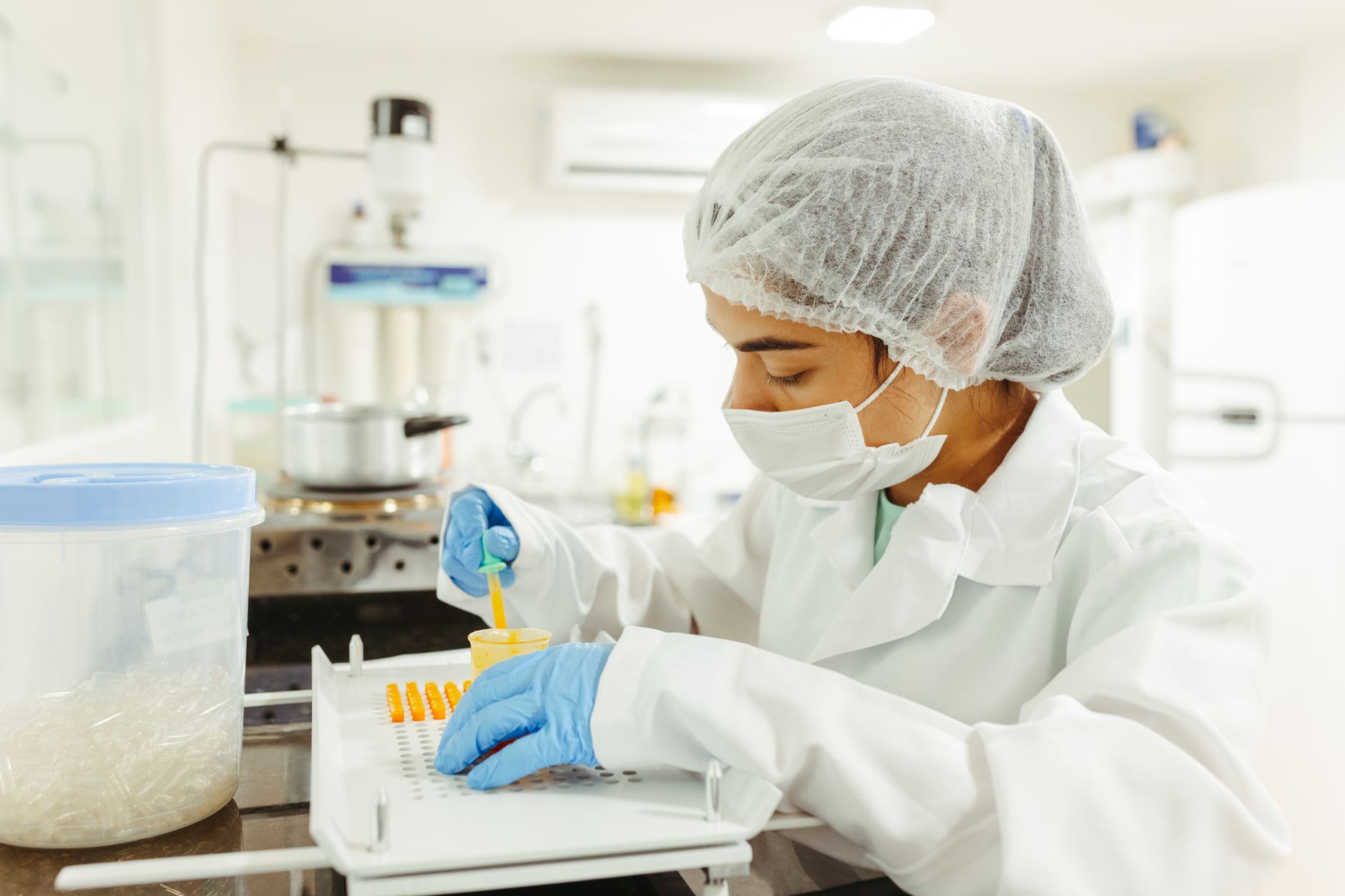
Medical laboratory robots are expanding rapidly because diagnostic organizations are automating the chain of work inside the lab. These systems identify, prepare, divide, route, test, recap, and store specimens. They differ fundamentally from hospital courier robots, which carry medications, meals, linens, or specimens between locations without performing laboratory analysis.
On October 7, 2025, the International Federation of Robotics reported that 2024 sales of robots for diagnostics and medical laboratory analysis increased 610% year over year. That extraordinary figure is a strong adoption signal, but it is not a projection for the entire global market. IFR says its report is based on a sample of 294 service robot suppliers, the sample changes annually, and comparisons between separate report editions are strongly discouraged.
The broader medical category also grew sharply. According to IFR, about 16,700 medical robots were sold in 2024, 91% more than in 2023. The practical message is not that every laboratory suddenly automated. It is that specimen processing and diagnostic robotics moved from a specialized niche into a conspicuous growth category.
What counts as a medical laboratory robot?
IFR separates robotic diagnostics from medical laboratory analysis. Its diagnostic class covers robotic diagnostic systems and can include devices with limited autonomy. Its laboratory analysis class covers sufficiently autonomous robots that handle or process samples in medical laboratories.
Hospital transportation sits elsewhere in IFR's classification. A hospital delivery robot lease may support specimen logistics from a collection point to a receiving window, but it stops at the laboratory boundary. A lab robot acts on the specimen or its testing workflow through functions such as pipetting, centrifugation, aliquoting, plate handling, analyzer loading, or storage retrieval.
That boundary matters for procurement. A courier project concentrates on routes, doors, elevators, handoff security, and traffic safety. Laboratory robotics adds patient-result risk, contamination controls, instrument interfaces, traceability, assay constraints, and regulatory evidence. Calling both machines healthcare robots hides two very different deployment programs.
Which workflows are being automated?
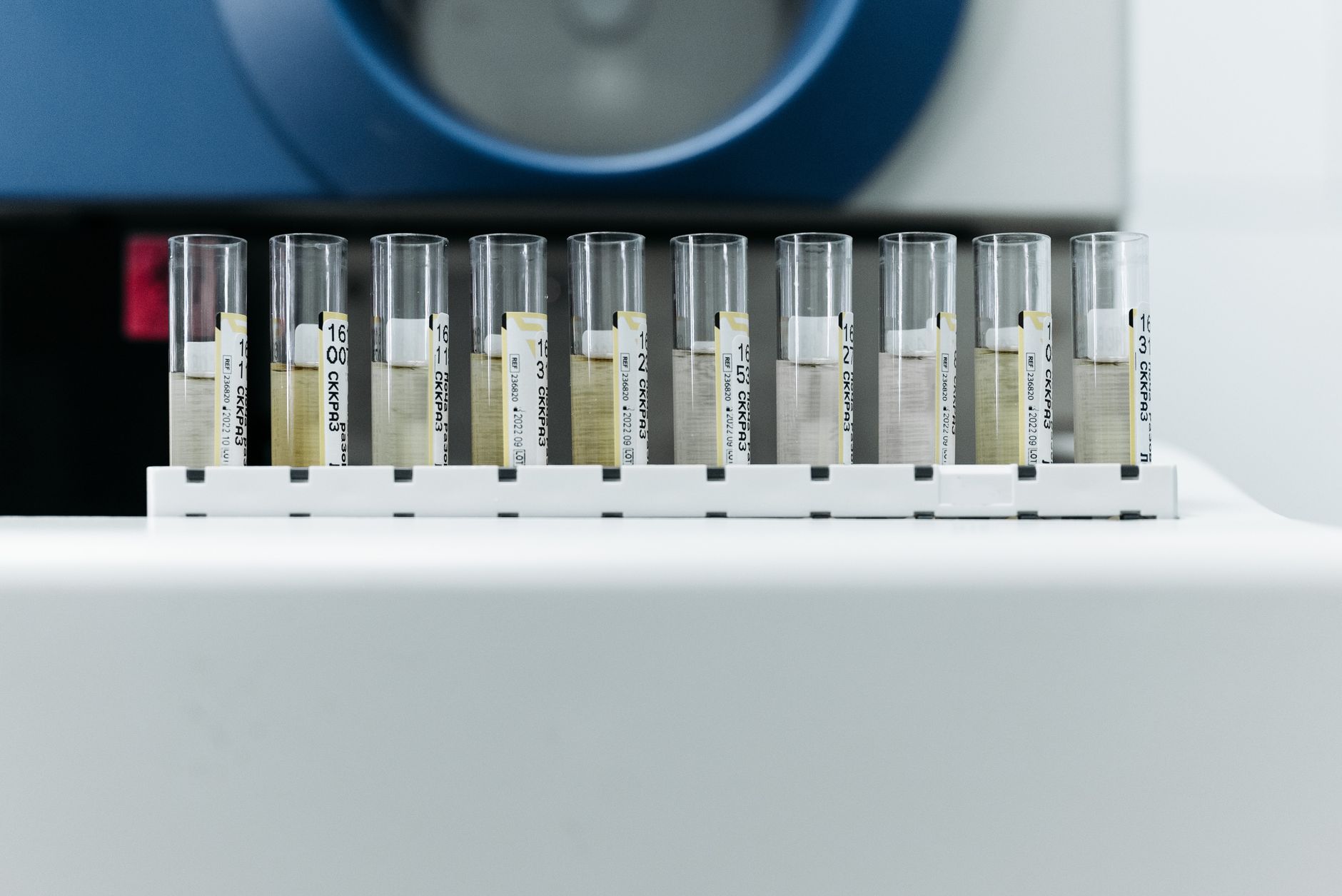
The richest opportunities occur where high specimen volume meets repetitive, rule-driven handling. The FDA's clearance summary for a modular laboratory automation system describes barcode identification, centrifugation, decapping, aliquoting, transport between modules, analyzer delivery, recapping, and storage. That is a connected production line for specimens, not merely a robot arm beside an analyzer.
Automation can span the pre-analytic and post-analytic stages, while analyzers perform the measurement itself. A well-designed cell preserves the association among patient, order, container, aliquot, test, result, and storage location at every transfer.
- Receipt and accessioning: read identifiers, verify container type, and route acceptable specimens.
- Preparation: centrifuge tubes, remove caps, create barcoded aliquots, and organize plates or racks.
- Analyzer feeding: sequence specimens by test order, urgency, stability window, and instrument availability.
- Result-side handling: recap, reseal, archive, retrieve for reflex testing, or direct material to approved disposal.
- Specialized analysis: automate liquid handling, staining, imaging, colony work, molecular preparation, or other repeatable protocols.
- Exception routing: isolate unreadable labels, insufficient volume, clots, leaks, incompatible containers, or failed quality checks for human review.
Throughput gains depend on the assay and workflow
Robotic capacity can be dramatic when a protocol is stable and repetitive. CDC documented one laboratory robot that performed a SARS-CoV-2 antibody workflow from sample loading through detection at more than 3,600 samples per day, compared with about 400 samples per day for a public health scientist working manually.
That ninefold comparison belongs to one defined CDC workflow. It is not a universal benchmark for lab robots. Actual output depends on incubation time, liquid classes, plate geometry, analyzer cycle time, quality-control frequency, repeat testing, specimen mix, and the percentage of samples diverted to an exception queue.
The correct capacity model follows the bottleneck. Faster pipetting creates little value if centrifuges, incubators, analyzers, manual review, or result authorization remain saturated. Buyers should measure productive specimens per hour, turnaround-time percentiles, repeat rates, unattended runtime, and the labor required to clear exceptions, not just the robot's advertised motion speed.
Why is validation the real implementation workload?
Clinical laboratory automation cannot be accepted solely because its motions repeat accurately. The laboratory must show that the complete configured system performs as intended with its specimens, assays, instruments, software, environment, and staff. Installation qualification and operational checks are only the beginning.
CMS guidance for unmodified FDA-cleared or approved test systems requires the laboratory to verify accuracy, precision, reportable range, and reference intervals for its patient population before routine patient reporting. The laboratory director must review and approve the verification. Modified or laboratory-developed configurations can carry broader establishment requirements, so scope should be set with the laboratory's regulatory and quality leaders.
Validation also has to challenge failure paths. Test protocols should cover barcode no-reads, mismatched orders, insufficient volume, abnormal tube geometry, unavailable analyzers, communication loss, power interruption, blocked tracks, carryover concerns, and safe recovery after an emergency stop. Every outcome needs an audit trail, an accountable reviewer, and an approved manual fallback.
Changes do not disappear after go-live. New assays, altered volumes, software updates, relocated equipment, replacement instruments, revised interfaces, and facility changes can trigger documented impact assessment and partial or full revalidation. This continuing burden is one reason robot deployment and integration needs durable ownership rather than a handoff at installation.
Integration reaches beyond the mechanical interface
A laboratory robot must know what the specimen is, which work was ordered, where it may travel, what has already occurred, and what should happen next. That requires disciplined connections among the laboratory information system, automation controller, middleware, analyzers, electronic health record, identity services, and quality records.
The FDA has recognized guidance for validating a laboratory information system's ability to store, retrieve, and transmit data dependably. HL7's FHIR specification likewise separates the test request, specimen, atomic observations, and diagnostic report. Those distinctions are useful design checks even when an installed instrument interface uses another messaging standard.
Interface testing should include more than a successful order and result. Teams must verify cancellations, duplicate orders, add-on and reflex tests, corrected results, critical flags, units, reference intervals, timestamps, downtime queues, replay behavior, and patient merges. A message that arrives is not necessarily a message that retained its clinical meaning.
Cybersecurity and access control belong in the same design. Service accounts need restricted permissions, clocks must stay synchronized, logs require retention, remote access must be governed, and software versions need change control. The robot is part of the laboratory's information system once it can influence specimen routing or result provenance.

How does the facility change?
Automation changes the room around it. Tracks, enclosures, loading stations, storage modules, service clearances, reagent staging, and exception benches compete for space. The layout must preserve safe staff circulation and provide a manual bypass when a module is offline.
Utilities deserve early engineering. Depending on the equipment, a project may require conditioned power, backup power, network drops, water, drains, compressed air, exhaust, cooling, and added environmental monitoring. Heat output and maintenance access can invalidate an attractive floor plan after equipment is selected.
Biosafety risk also changes with the task. CDC advises repeating biological risk assessment when instrumentation or facilities change and identifies mixing and centrifugation as potential aerosol-generating activities. Closed processing, sealed rotors, containment, directional airflow, splash control, decontamination access, and clean-versus-contaminated traffic patterns should follow the specimen hazards and protocol.
A good site assessment maps five flows before equipment placement: incoming specimens, outgoing specimens, people, consumables, and waste. It also tests how oversized racks, rejected tubes, spills, decontamination, service visits, and emergency egress work in the physical space. The shortest robot route is not automatically the safest laboratory layout.
The business case is built on flow, not headcount alone
Laboratory robotics can reduce repetitive handling, expand unattended processing, and make specimen routing more consistent. It may also reduce ergonomic exposure from pipetting, uncapping, rack movement, and repeated reaches. Yet a credible business case counts the people still required for accessioning, quality control, maintenance, exception review, interpretation, and authorization.
Baseline data should include specimen arrivals by hour, test mix, manual touches, queue time, turnaround-time percentiles, recollection and repeat rates, overtime, instrument utilization, and downtime causes. Model normal days and surge days separately. Average daily volume can conceal the short arrival peaks that actually determine staffing and capacity.
Financing can match deployment risk. A commercial robot demo or robot pilot program can prove container compatibility, throughput, interface behavior, and staff response before expansion. Leasing, robot leasing for business, monthly payment programs, or a purchase may each fit, but regulated validation work and internal labor must remain visible in every comparison.
One lifecycle owner reduces operational gaps
Laboratory automation commonly crosses equipment makers, software teams, facilities contractors, biosafety staff, clinical leadership, and information technology. Without clear ownership, a mechanical fault can become an interface dispute while specimens wait. Acceptance criteria, escalation paths, spare strategy, remote triage, on-site dispatch, and change-control duties should be assigned before go-live.
Service Robot Co. acts as an OEM-neutral, full-service commercial robot integrator for U.S. businesses. The company selects equipment across manufacturers, then supports financing, deployment, integration, training, and service through a nationwide U.S. engineer network. For a laboratory buyer, that one-vendor lifecycle can reduce the coordination burden around site assessment mapping, go-live support, maintenance planning, and commercial robot repair service.
The laboratory still owns clinical validation, regulatory compliance, assay performance, result authorization, and its quality system. The integrator's role is to make the robot program operationally supportable and to coordinate the technical parties. That division of responsibility should be explicit in the statement of work.
Start with one bounded workflow whose volume, errors, exceptions, and turnaround time are already measured. Prove specimen integrity and data integrity under normal and failed conditions. Expand only after the pilot shows stable recovery, trained staff, service readiness, and a measurable improvement in the total testing process.
Frequently asked questions
Want a robot working for you?
Tell us the job and the site. We will recommend the robot, quote the lease, and keep it serviced.
Sources
- IFR World Robotics 2025 service robot release
- IFR medical and service robot definitions
- FDA laboratory automation clearance summary
- CMS CLIA interpretive guidelines
- CDC automated antibody testing workflow
- CDC Total Testing Process framework
- CDC biological risk assessment guidance
- HL7 FHIR DiagnosticReport specification