Key takeaways
- Robot mowers suit the open turf in park common areas, while crews keep corners, edges and resident requests.
- Walk the lot lines with the park before the first pass, because the mower only respects the boundary you give it.
- Stay out zones around signs and utility boxes can be switched on or off but not scheduled, so name who flips them.
- Quiet hours and local noise rules set run times, and a quiet rating does not replace either one.
- Keep the charging station and guide wire outside every stay out zone so the mower can return to charge.
Can a robot mower handle a mobile home park lawn?
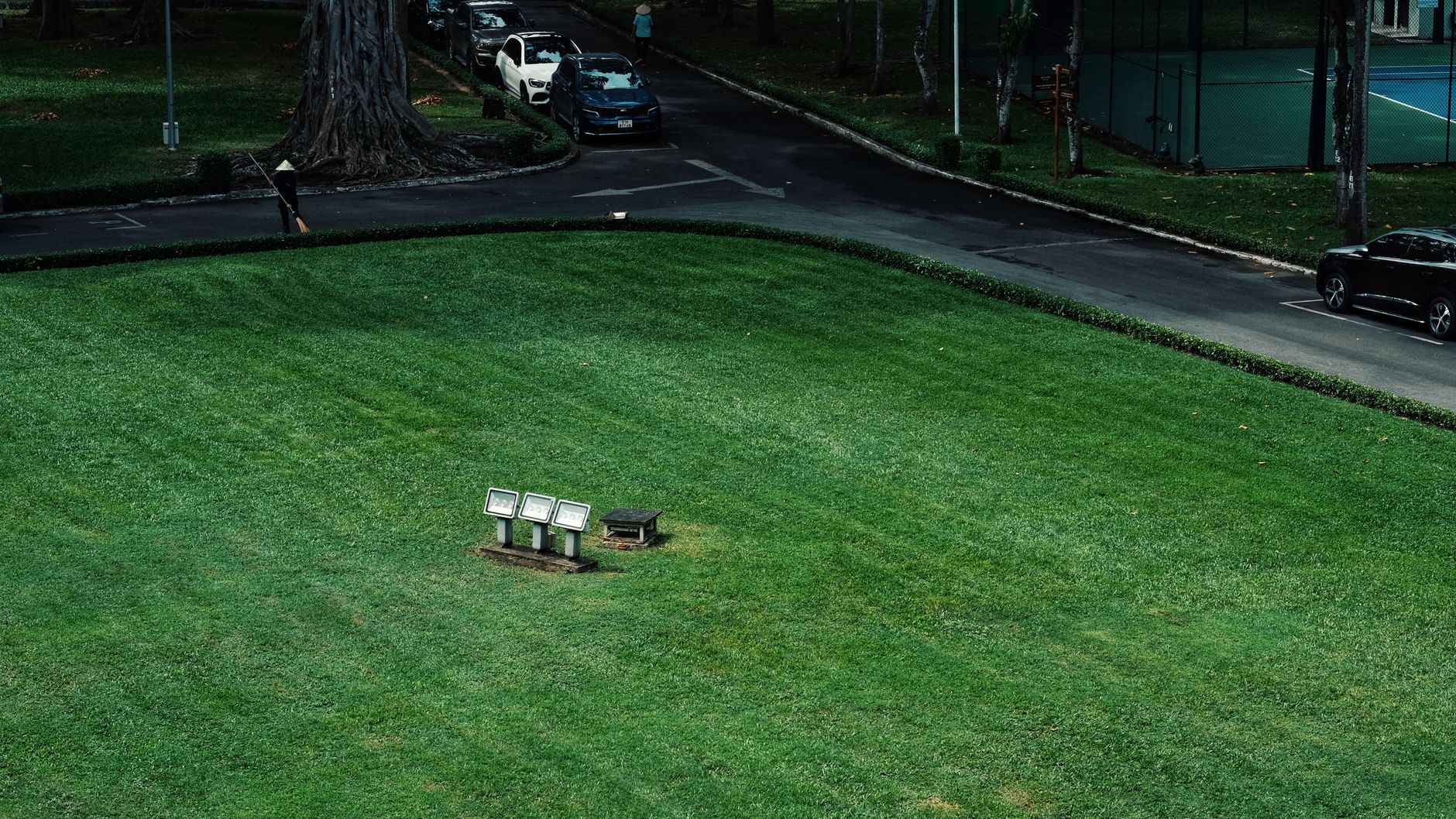
Yes, for the open turf. A robot mower can run the wide lawn ground in a park's common areas and entrance strips between lot lines, leaving the corners, the tight edges beside each home and any resident request to a crew member with a trimmer. The mower handles the open ground, and people handle the details.
Success depends on planning more than on the machine. Lot lines, signs, utility boxes and quiet hours decide where the mower can go and when it runs. Settle those before the first pass, not after the first complaint.
How do you map lot lines before a robot mows?
Start by walking the boundary with the park manager and marking where the common area ends and each lot begins. A boundary wire or a saved map sets the work area, so the line you give the machine is the line it respects. Husqvarna advises keeping long sections of boundary wire inside a zone so the mower can route around them, which means the wire should sit where the mower can turn comfortably instead of hugging a fence post.
Lifehacker Australia describes one mower mapping several neighboring properties and a street as separate areas, which shows how a map can be divided into sections. Division helps a park separate the common lawn from the lot strips. Still, have the park confirm each boundary by hand, because a setting or a consumer article does not replace a walk with the manager.

How do stay out zones protect signs and utility boxes?
Park signs, utility boxes and similar fixtures are the obstacles that matter most. A stay out zone lets you fence them off inside the work area. Husqvarna says these zones can be switched on or off but cannot be scheduled, so someone has to change them on the days a sign is replaced or a utility crew arrives.
Keep the charging station and guide wire outside every zone. Husqvarna warns that a zone covering either can stop the mower from returning to charge, and a mower stranded on a lawn needs a visit. Walk each zone with a crew lead once the map is saved, and recheck after any utility work.
How should passes fit around quiet hours?
Quiet robot mowers still answer to local rules. Navimow, a manufacturer, says quiet robotic mowers are subject to local quiet hour rules, and some local codes set decibel limits measured at a property line or a set distance. Read the ordinance for the park's city or county before setting run times, because the limit may be measured at the lot line rather than at the mower.
A quiet rating does not replace a schedule. An article aimed at HOA neighborhoods notes that even quiet mowers draw complaints when they run during posted quiet hours. Ask the park manager which hours residents treat as quiet, rather than guessing from the posted rules alone.
For cadence, OxMaint, a property management vendor page, suggests common areas daily, perimeter strips every other day and slopes twice a week. The page does not explain how those intervals were set, so treat them as a starting point and adjust after a few weeks of observed turf growth and resident feedback.
What still needs a crew member?
Terrain sets the limit more than an area rating does. A Honda New Zealand retailer page for commercial robotic mowers says slopes, obstacles and terrain matter more than a manufacturer's maximum area for commercial grounds. Raised entrance beds, drainage swales and short retaining edges are the places to check on a park walk.
Corners, the strips along each home, and trimming around posts and steps stay with the crew. So do resident requests that need a person to listen, check a spot or clear a problem the mower left behind. Plan crew time for these tasks as a fixed part of each visit, not as leftover time.

What rules and safety guidance were not found?
The research for this piece did not locate mobile home park rules, resident safety guidance or lot line practice written for robot mowers on these sites. Independent commercial deployment data for parks was not found either. Treat the advice here as a planning checklist, not a rulebook.
Before any run, get the park's written rules, confirm the local noise ordinance, notify residents in writing and ask the park owner whether the lot lines match the recorded plat. Note any residents who walk common lanes at set hours, and route the mower so it stays out of their path. A walk through with the manager often exposes gaps that a map misses.
What does a park precedent show?
A Husqvarna case study reports that St Michaels Caravan Park in Warwickshire, UK, runs three Husqvarna robotic mowers, according to park owner Brian Griffiths. That account comes from the vendor, and it describes a UK site, so read it as one park's experience rather than a benchmark for US parks.
It still shows a useful pattern: several mowers working one park, with the owner controlling the schedule. A US park can start with a single common area and add zones once the first season shows where the turf and residents need the most attention.
How Service Robot Co. approaches a park site
Service Robot Co. is an OEM neutral integrator for US businesses. We choose the mower that fits the site across manufacturers, lease it through financing, deploy and integrate it, train the crew, and service every unit under RoboCare. The offer is a 3 year lease with one fixed lease payment quoted after a site assessment that walks the lot lines, zones and quiet hour windows described above.
Regional service engineers in each state we service handle on site dispatch and remote triage, so a park manager works with one partner and one number. Those are the points we settle on the site walk, before any lease quote is written.
Frequently asked questions
Want a robot working for you?
Tell us the job and the site. We will recommend the robot, quote the lease, and keep it serviced.
Sources
- Husqvarna support: what a stay out zone is and how to create one
- Husqvarna UK support: creating stay out zones with AIM technology
- Navimow: what time can I legally mow my lawn
- Freshly Charged: quiet robotic lawn mowers for HOA neighborhoods
- Husqvarna case study: St Michaels Caravan Park
- OxMaint: robotic lawn care for property management
- Lifehacker Australia article on mowing multiple properties
- City Honda NZ: large property commercial robotic lawn mowers