Key takeaways
- Nurse walking is measured in miles per shift, and those miles are staff hours you can count.
- A trip log turns distance into minutes, and minutes into a robot estimate.
- Only non urgent trips between units belong in the robot math.
- Test every vendor hours claim against your own log, not against the headline.
- Ask for the baseline behind any time saving before you trust the number.
Is nurse walking time a real cost?
Yes. Published studies measure it in miles per shift, and that walking is paid staff time spent carrying supplies, specimens, linens and meals between rooms, wings and floors. It rarely appears on a labor report because no one logs it.
A distance figure alone does not yet give you hours. You need a trip log that records who carried what, where it went, how long it took and whether it could have waited. Once that log exists, you can estimate how many staff hours a delivery robot could cover, and you can test a vendor claim against the same numbers.
This article lays out the measurement method, the figures researchers have reported, and a way to check any claim before you commit to a lease.
How far do nurses actually walk on a shift?
The 36 hospital time motion study run with Ascension Health, Kaiser Permanente and Purdue University is one of the larger measured sources in the research notes. As summarized by Healthcare Design Magazine, nurses walked about 2.4 to 3.4 miles on 10 hour day shifts and 1.3 to 3.3 miles on night shifts. We reviewed that summary, not the full paper.
Smaller studies land in a similar range using other methods. Pedometers worn by 20 nurses in a Slovenian perioperative ICU averaged about 4.4 km on an 8 hour shift and about 6.5 km on a 12 hour weekend day shift, according to a 2024 Preventive Medicine Reports study. An older ICU poster counted steps for 17 nurses and found an average of about 10.7 km per 12 hour shift, with nurses caring for two patients walking more than those caring for one.
A design case described in the same magazine reports that planning for ProMedica Toledo Hospital reportedly cut nurse shift walking from about 3 miles to 1.5 miles. That is a planning figure, not a measured one, but it points to where to look first: the hallway layout.
Be wary of round numbers. A widely repeated estimate of about five miles per shift appears in a Fortis blog post, and the research notes flag its source as not rigorous. Use figures like that as a reason to measure, never as the measurement.

Why does a distance number still not give hours?
Distance is a proxy. Walking speed, detours around equipment, elevator waits and patient load all change how long a given mile takes. Two units with similar mileage can carry sharply varying trip counts, which is why the reported ranges spread so widely across layouts and methods.
What you need is minutes per trip, multiplied by trips per shift, sorted by category. A supply run to the next wing and a bedside call are not the same job. Only the first kind belongs in a robot estimate.
How do you log trips over a normal week?
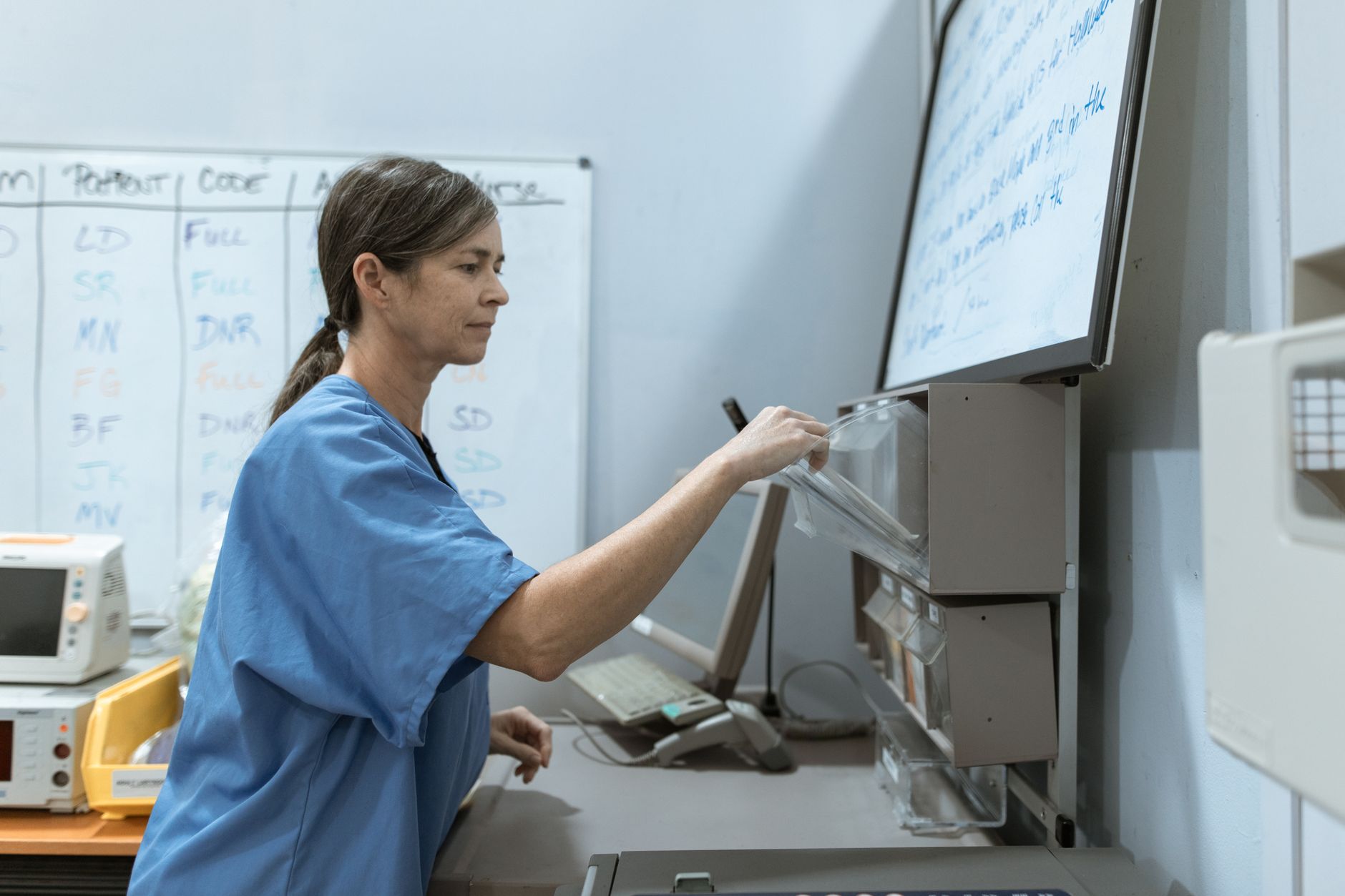
Pick one unit and log several day shifts and several night shifts, since the studies above show that walking varies with shift length and time of day. Keep the sheet at the station, have the charge nurse or tech record each carry as it happens, and log the full shift. Where you can, wear a pedometer on one or two staff members as a cross check.
- Start and end time, recorded to the minute
- Origin and destination, by room, wing, floor, lab or supply room
- Item class: supply, specimen, linen, medication, meal tray or other
- Who carried it, and whether a second person joined
- Urgent or scheduled, and if a patient or family member was waiting
- Elevator or stairs used, with any wait at the elevator
How do you turn the log into robot hours?
Sort the log first. Count only trips that are non urgent, run between units or to shared areas, carry an item a robot can plausibly hold, and follow a route that can be mapped. Total those minutes for each sampled shift, then scale across a typical week.
Be honest about what a robot removes. A staff member still loads and unloads, still signs for specimens and still answers the call when the robot arrives. Subtract those handoff minutes from the coverable total. What remains is your estimate, and it should be written as a range, not as one hopeful figure.
Count route capacity separately. A robot runs one trip at a time along mapped corridors, so a busy hour can produce more requests than any single unit can serve.
What have delivery robots measured so far?
The clearest recent figures come from a Taiwan ICU program presented as a 2026 ISPOR poster. Comparing zone based robot deployment with usual care, nurses' active logistics time fell from 111.34 minutes per day to 20.43, an 81.6 percent reduction, and daily walking distance fell by 1,505 meters.
Treat that as a directional result. It comes from one site and is a conference abstract, not a verified benchmark for your hospital. Your unit's layout, elevator access and trip mix will decide how closely your results resemble it, so start with the zone that holds your busiest corridor.
How do you test a vendor hours claim?
Ask for the baseline first. A claim that a robot saves a set number of steps or hours means little until you know which trips were counted, across how many shifts, and how staff time was measured, including handoffs, waits and charging.
Then rebuild the claim with your own log. Apply the vendor's assumed minutes saved per trip to your coverable trips. If the result sits far above your numbers, the gap becomes your question for the vendor, and a reason to pilot one zone before scaling.
Watch for steps or miles quoted without a method behind them. Those are marketing figures until someone can explain how they were measured.
How Service Robot Co. puts the numbers to work
Service Robot Co. is an OEM neutral integrator for US businesses. We pick robots across manufacturers that fit the routes in your log, then lease, deploy, integrate, train and service every unit through our nationwide US engineer network. You work with one partner and one number for the whole lifecycle.
Our offer is a three year robot lease, with one fixed robot lease payment quoted after a site assessment. Site assessment mapping follows the corridors and elevators your log describes, and a robot pilot program can start with one leased unit on one route before any wider commercial robot leasing decision.
Frequently asked questions
Want a robot working for you?
Tell us the job and the site. We will recommend the robot, quote the lease, and keep it serviced.
Sources
- Healthcare Design Magazine, summary of the 36 hospital nurse time motion study
- Preventive Medicine Reports 2024, pedometer study of perioperative ICU nurses (DOAJ record)
- Critical Care, ICU nurse step counter poster
- ISPOR 2026 poster on an automated delivery robot program in a Taiwan ICU
- Fortis blog, nurse workplaces of the future