Key takeaways
- Harbor Links began autonomous on-course food and beverage delivery on April 24, 2025, described as a first for a US golf course.
- Fairway delivery succeeds when routing respects cart paths, pace of play, and ranger coordination, not when robots chase straight-line GPS.
- Temperature-controlled compartments matter as much as navigation because warm snacks and cold drinks share the same golfer expectation.
- Buy-or-lease financing and a single integrator reduce the risk of bolting campus tech onto a course without mapped holds.
What actually changed at Harbor Links in 2025?
Harbor Links Golf Course in Port Washington, New York began autonomous on-course food and beverage delivery on April 24, 2025, according to coverage in The Golf Wire and Golf Business News. Brooke Management Group partnered with Robot.com, formerly known as Kiwibot, to run self-driving units across the course and driving range.
The robots carry orders in secure, temperature-controlled compartments so snacks and drinks arrive in the condition golfers expect at the turn. Kelley Brooke of Brooke Management Group told The Golf Wire the project adapted campus-style delivery technology to a golf environment after work that began in 2024.
For a public course operator, the headline is not novelty alone. It is proof that golfers will order from a mobile unit when pacing, safety, and handoff feel familiar. Copying that outcome still takes local mapping, staff training, and clear rules about where robots may and may not travel.
Golf Business News reported the service operating since late April 2025 with units moving food and drinks throughout the course without interrupting play when routes are managed well. That detail matters because many pilots fail when convenience for the kitchen creates friction on the fairway.
Why is fairway delivery harder than campus or hotel loops?
College quads and hotel corridors offer repeating geometry, limited vehicle traffic, and predictable foot traffic patterns. A golf course adds slopes, wet turf, maintenance windows, and groups spread across eighteen holes with no shared hallway.
Golfers also judge service by pace of play. A delivery robot that blocks a fairway or slows a foursome creates complaints faster than a late sandwich. Operators need holds around tee boxes, greens, and maintenance activity, plus a plan for ranger intervention when play stacks up.
Robot.com told The Golf Wire it had more than 500 autonomous robots deployed across food delivery, warehouse logistics, advertising, and facilities management as of mid 2025. That scale in other venues does not remove course-specific mapping work. It only shows the hardware side can be mature while the golf routing layer remains bespoke.
Weather is the quiet variable. Morning dew, afternoon heat, and sudden storms change traction and visibility on paths that looked fine during a Tuesday site walk. Build seasonal adjustments into the route packet instead of treating the first spring map as permanent.
How should routing and pace-of-play holds be planned?
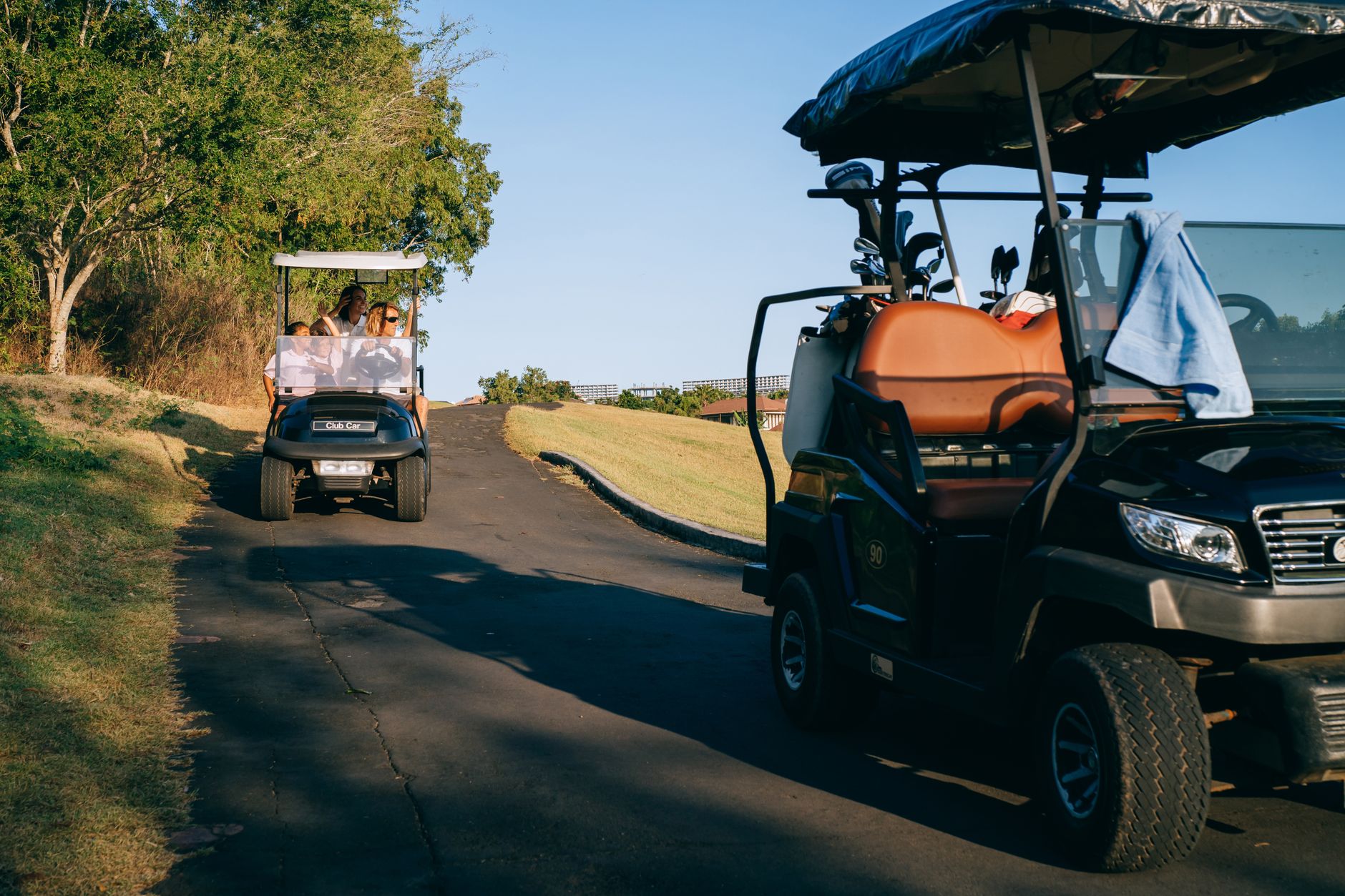
Start from cart paths and hard surfaces, then document every exception. Harbor Links scaled delivery across the course and range, which implies repeated crossings between paths and play areas. Each crossing needs speed limits, audible alerts, and ranger authority to pause a unit.
Map maintenance schedules next. Mowing, irrigation checks, and bunker work change where robots may travel on a given morning. Superintendents should receive the same daily route packet rangers use so nobody discovers a robot path mid spray window.
Build pace-of-play holds around peak tee times, league nights, and tournaments. A hold is not a failure. It is the operating norm on a busy Saturday. The goal is predictable pauses, not heroic last-second detours around a backed-up par three.
Document how robots interact with range balls and practice areas. A driving range with continuous play needs separate meeting points so golfers do not chase a unit across active stalls.
- List cart-path segments robots may use without entering fairways.
- Mark no-go zones around greens, bunkers, and active maintenance.
- Assign rangers a single pause command and a clear escalation path to the snack bar team.
- Re-map after tree work, cart-path repairs, or storm debris that shifts sight lines.
What food safety and handoff details do golfers notice?

Temperature-controlled compartments address the basics golfers feel in their hands. Warm items should stay warm, chilled drinks should stay cold, and lids should survive a short roll across uneven path sections.
Handoff must be obvious. Order notifications should tell golfers which path edge to meet, especially on holes where sight lines are limited. Staff should train on opening compartments quickly so groups do not linger in cart traffic.
Town of North Hempstead leaders publicly backed the Harbor Links project as a public-private effort, according to The Golf Wire. Political support can help with permitting and community questions, but it does not replace written food handling procedures your health department expects.
Label allergens clearly in the ordering flow. Mobile delivery does not remove liability when a golfer with a nut allergy receives the wrong sleeve because the kitchen rush matched the wrong ticket to a compartment.
Which staff roles shift when robots run food to the fairway?
Kitchen and snack bar teams still own prep quality and order accuracy. Robots remove the repeated walk across holes, not the craft of assembling an order correctly.
Rangers and starters become traffic controllers for both people and machines. They need authority to pause routes, redirect golfers to a safe meeting point, and log incidents without a long phone chain.
Front desk and pro shop staff field questions from members who have never ordered from a mobile unit. A short script on how to order, where to wait, and what to do if play is slow prevents frustration from landing on the robot instead of the process.
IT and facilities staff own connectivity on paths far from the clubhouse. Weak signal at a distant green turns a simple status check into a ranger drive. Survey Wi-Fi or cellular coverage during mapping, not after launch day complaints.
How do buy, lease, and integration choices differ for a course?
Harbor Links partnered directly with Robot.com for the launch, while Brooke Management Group handled the operating relationship. Many courses will prefer a vendor-neutral path that compares delivery platforms against their cart paths, kitchen layout, and financing constraints before anyone signs.
Service Robot Co. acts as a full-service commercial robot integrator for US businesses, selecting units across manufacturers, then financing purchases or leases, deploying, training staff, and servicing through a nationwide engineer network. For golf food delivery, that model matters when you want one partner to coordinate mapping, charging, and service instead of juggling a robot brand, a cart-path consultant, and a separate finance desk.
Financing spreads capital across monthly payments, which helps seasonal properties match cash flow to peak rounds. Buying outright can make sense when you already run year-round traffic and want full control of resale or redeployment after a pilot season.
Compare total cost of ownership across charging infrastructure, spare batteries, and service response time. A lower monthly lease payment loses appeal if every charger install requires a custom trench across a cart path you cannot close during member play.
When should you pilot before scaling across the property?
Run a narrow pilot on a loop that includes one snack-friendly hole, the driving range, and the path back to the kitchen. Harbor Links went broad, but your pilot should prove ranger workflows and order volume before you commit to full-course coverage.
Measure minutes saved per order, complaint rate, and pause frequency during weekend tee sheets. Those three numbers tell you to expand routes or tighten holds based on data, not enthusiasm.
Plan charging locations where power and security match your closing routine. A robot that cannot return to dock on a late twilight nine becomes a manual retrieval task nobody wants.
Set a written exit criteria for the pilot. If pause rates stay high after four weekends, fix mapping before you add units. Fleet size is not a morale booster when every Saturday still needs three ranger interventions.
What should you copy, and what should stay local?
Copy the discipline: temperature-controlled payloads, mapped paths, ranger pause authority, and a public debut date you can stand behind with real operations data. Harbor Links tied its launch to April 24, 2025, which gives other operators a concrete benchmark for how long adaptation took after 2024 planning.
Do not copy routes from Port Washington onto your terrain. Slopes, tree cover, and maintenance culture change every site. Treat Harbor Links as evidence that golfers will use fairway delivery when the experience feels safe and fast, then invest in mapping that fits your soil and schedule.
If you want outside help, bring an integrator before you promise members a fleet. A free site assessment should cover paths, kitchen handoff, financing options, and the service plan that keeps units running when a charger fails on a busy Saturday.
Tell members what success looks like in plain language: faster turns, fewer missed orders, and rangers who can still protect pace of play. Harbor Links framed the launch as modernizing a public facility. Your story should match how your golfers actually use the snack bar today.
Frequently asked questions
Sources
Service Robot Co. is not affiliated with, sponsored by, or endorsed by the companies mentioned in this article.