Key takeaways
- A floor robot can clean a hospital cafeteria's dining floor after the last dinner service, with staff and the prep kitchen kept out of its path.
- Map the dining room and servery as separate zones, and keep the prep kitchen and dish room off the route.
- Measure chair-leg gaps and the tightest aisle before choosing a model, because vendors publish minimum widths.
- Sweep before scrubbing, and clear trays, carts and spills before the robot starts.
- Overnight robot runs fill a gap that often goes unfilled, but they do not replace the hands-on cleaning EVS teams still own.
Can a floor robot clean a hospital cafeteria after dinner?
Yes, when the floor is mapped, cleared and bounded. An autonomous scrubber or sweeper can work the dining room, the aisles and the servery lane after the last dinner service, while the kitchen and staff areas stay closed to it. The robot takes the repetitive floor pass. Detailed cleaning stays with people.
The task matters because it is the one that slips. Upstate University Hospital's Upstate IMT group in the Syracuse area is piloting an Avidbots Kas unit, nicknamed "Moptimus Prime", for overnight floor scrubbing. The university's March 2026 news item says the task often gets deferred when EVS staff are stretched thin.
Kettering Health describes a division of labor that fits this model. Its EVS teams use autonomous floor-cleaning machines for routine routes, while staff still handle detailed cleaning and equipment upkeep.
Why a cafeteria floor is harder than a corridor
A corridor mostly carries foot traffic. A cafeteria carries grease that works into grout, crumbs that collect under chair legs, sticky spills near the beverage station and tray traffic that returns at odd hours. The surface is less uniform, and the obstacles change from shift to shift.
Those obstacles should shape the machine choice and the pass order. Set the sweep-then-scrub sequence and the cleaning chemistry during a site assessment, not after the robot is already on the floor.
How to draw the zone map before the first run
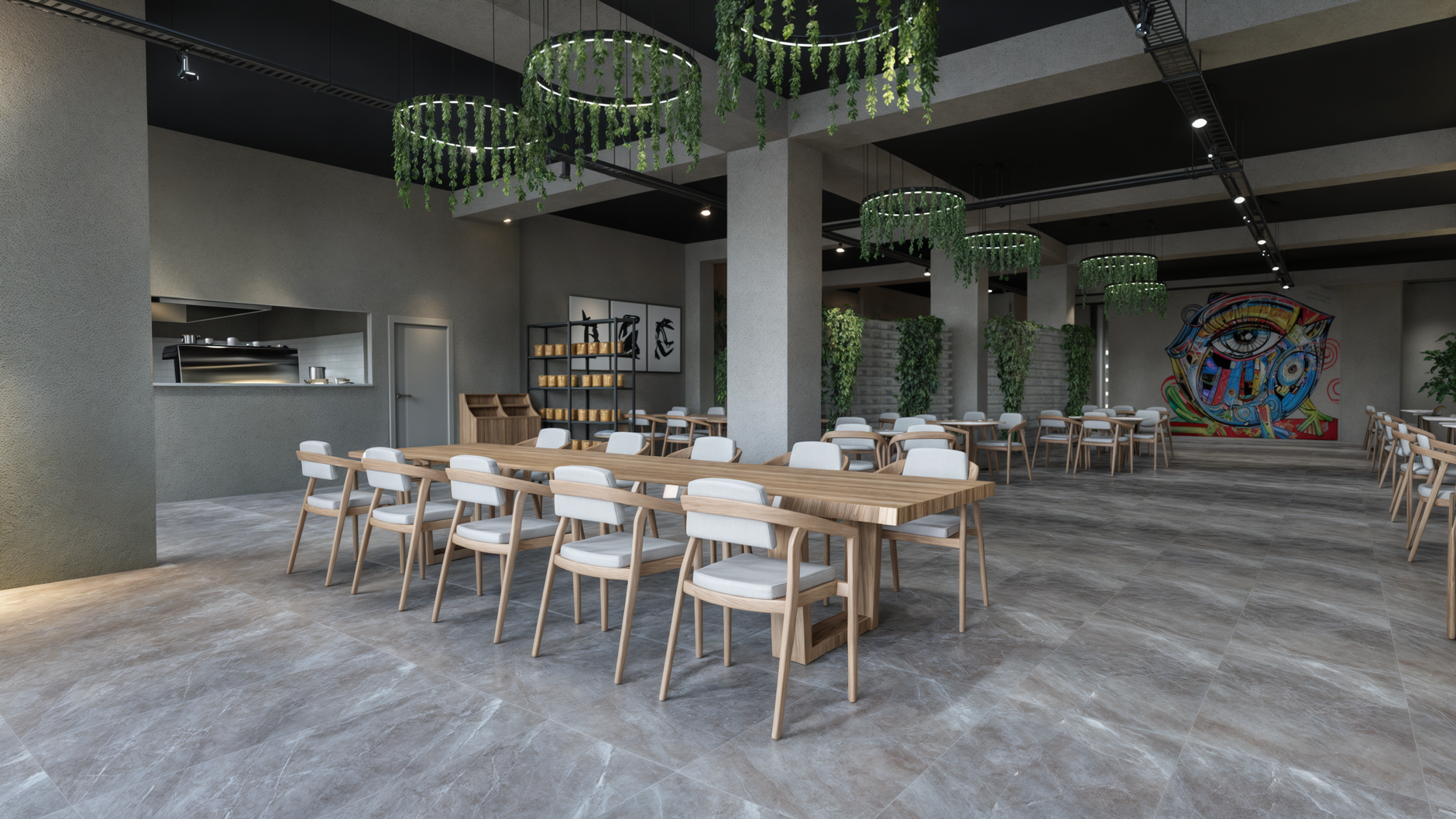
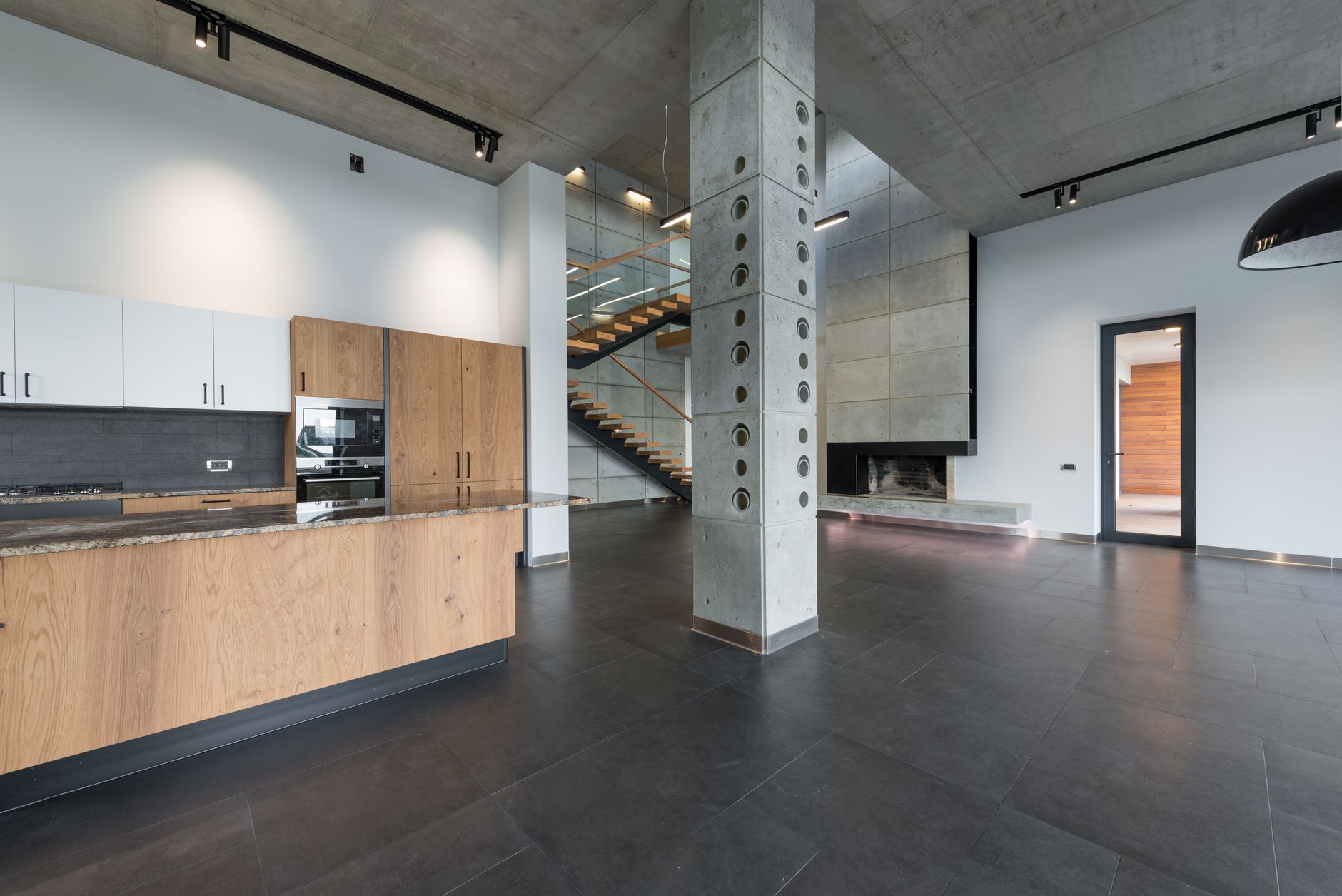
Break the cafeteria into zones: the open dining room, the aisles between table blocks, the servery lane, the entrance vestibule and the tray return drop-off. Mark the prep kitchen, dish room, restroom corridors and any patient-facing hallway as no-go or hand-off zones. Service Robot Co. builds the map during a site assessment, so it reflects the floor you actually have.
Aisle geometry is the first filter. OrionStar says its CleaniBot S55 Pro needs gaps wider than 700 mm between chair legs. Avidbots Neo 2W is described by vendor guidance as too large for narrow cafeteria aisles. Check the tightest table row, not the average row.
Vendor material names other hospital-suitable models. As of November 2026, these are the listings we reviewed:
- OrionStar CleaniBot S55 Pro: vendor-reported gap requirement of more than 700 mm between chair legs.
- Kärcher KIRA B 50: named in distributor material for mid-sized hospital wards and clinic corridors.
- ICE Co-Botics Cobi 18: named in distributor material for narrow spaces.
How should route timing work around the prep line?
Start the run after the last dinner tray leaves the servery and the hot line is shut down, so the robot never works around active prep. Sweep first to lift crumbs and loose debris, scrub the greasy zones next, and let the floor dry before staff cross it. Finish the dining room before the kitchen crew's end-of-shift mopping begins, not during it.
Runtime sets the window. A supplier page for battery walk-behind scrubbers used in hospitals says they typically run 3 to 4 hours per charge. That figure is for a manually pushed unit, not an autonomous one, so get the autonomous unit's runtime from its own specification.
Noise matters in a building that never fully sleeps. OrionStar states its overnight hospital cleaning benchmarks target noise under 65 dB. That is a vendor claim, so confirm it at the cafeteria during the quietest hour before you rely on it.
What checks should run before the robot starts?
The robot cannot judge what staff have left behind. Run a short written check with the closing lead before the first run in each zone, and repeat it whenever a zone layout changes.
- Trays, carts and bussing bins cleared from the dining room and servery.
- Chairs pushed in to the set positions on the zone map, with no legs crossing aisle lines.
- Wet-floor signs placed, and visible grease pools marked for hand cleaning.
- Floor drains and grease-trap covers confirmed closed or blocked off.
- Cords, mats, delivery pallets and portable racks moved out of marked routes.
- Kitchen doors closed and the prep zone confirmed off the robot's route.
- Exit paths and fire-door clearances unobstructed.
Why hospitals are adding floor robots now
Sales data points the same way. According to the International Federation of Robotics, as reported by Robotics Tomorrow, professional cleaning robots were the third-largest professional service robot segment in 2024, with sales up 34% to more than 25,000 units. Most are deployed for floor cleaning.
The same IFR data counted almost 200,000 professional service robot units sold in 2024, up 9%, based on a sample of 294 suppliers. Those are sales, not installations, and they span every sector. They show the category is growing, not how any single cafeteria will perform.
How Service Robot Co. approaches the cafeteria floor
Service Robot Co. is an OEM-neutral integrator. We choose the robot that fits the aisle, the floor and the schedule, then lease it to you on a 3-year lease with one fixed payment quoted after a site assessment. Our nationwide US engineer network handles deployment, training, service and on-site dispatch, so one team holds the zone map and the early logs.
Before any quote, we walk the cafeteria, measure the gaps, map the zones and agree the pre-run checklist with your closing lead. That step is what keeps the first night from turning into a rescue.
How to judge the first month
Review the run log every morning for the first two weeks. Look for skipped zones, repeated pauses and any spill the robot flagged, then compare those entries with the closing lead's notes. A pause at the same table row again and again usually points to a chair layout problem, not a robot fault.
Adjust the zone map before you widen the route. Keep the hand-cleaning list for greasy corners and equipment bases, as Kettering's model does, and keep the robot on the open floor where its hours pay off.
Frequently asked questions
Want a robot working for you?
Tell us the job and the site. We will recommend the robot, quote the lease, and keep it serviced.
Sources
- Upstate IMT news: Moptimus Prime overnight scrubbing pilot (March 2026)
- Kettering Health: autonomous machines support EVS teams
- OrionStar AI robots product page (443)
- OrionStar CleaniBot S55 Pro product page (258)
- ASBIS autonomous cleaning solution for a medical center
- Okum Supply: auto scrubbers for hospitals
- Robotics Tomorrow: IFR service robots see global growth boom (October 2025)