
Key takeaways
- Three units on fixed routes expose workflow gaps before a full fleet can sit idle.
- Map doors, elevators and corridors before the first robot moves, not after.
- Track trips, idle hours, staff touches and escalations from day one.
- Write stop and scale rules before go live, so momentum does not decide the outcome.
- Published hospital figures are mostly health system or vendor reports, so read them as their claims.
Why start a hospital robot rollout with three units?
A hospital that commits to a full fleet on day one usually learns too late which corridors, elevator banks and staff habits a robot cannot handle. Idle units, unclear handoffs and nurses who never trusted the machine all surface at once, and a full fleet multiplies every one of them. A phased hospital robot pilot is the better start: three units on defined routes, a fixed period of measurement, and a written rule for when to add more.
Three is a sizing choice, not a magic number. It is small enough that one nurse manager or environmental services lead can watch every trip, and large enough to expose elevator waits, charging gaps and handoff friction. Phased deployment with no shutdown of existing delivery also keeps the current runner process working in parallel while the robots prove themselves.
What do early VA robot results show?
Nextgov reported that early robot use at the Department of Veterans Affairs has shown mixed success, while enthusiasm remains, according to Acting Chief Innovation Officer Beth Ripley. Mixed is the honest word. The lesson concerns fit between machine and building, not whether robots can work in a hospital at all.
The older Madison case is the sharper warning. An OIG report dated September 30, 2016 describes staff acquiring two robots in September 2012 without first testing whether they could move through the hallways. According to Free Beacon, the robots were auctioned in March 2016. A hallway test is the first step any phased start should take.
Which routes should the first three robots run?
Choose routes by how often they repeat and how costly a stall would be, not by which hallway looks busiest on a floor plan. Defined routes give you a baseline, and a baseline is the only way to tell whether a later problem lies with the robot or with the workflow.
Start with repeatable runs such as supply, linen or meal tray transport. Leave chain of custody work, such as specimen runs, for a later phase, once the team has seen the robot perform on routine trips.
- One fixed origin and destination pair per robot, so every trip can be compared with the manual run it replaces.
- Two or three elevator stops at most in the first phase, since each stop adds a point where a trip can wait.
- Corridors and doors measured for width, threshold height and automatic door timing before go live.
- A named staff contact at both ends of every route, plus one person who clears a stuck unit.

How should the building be prepared before go live?
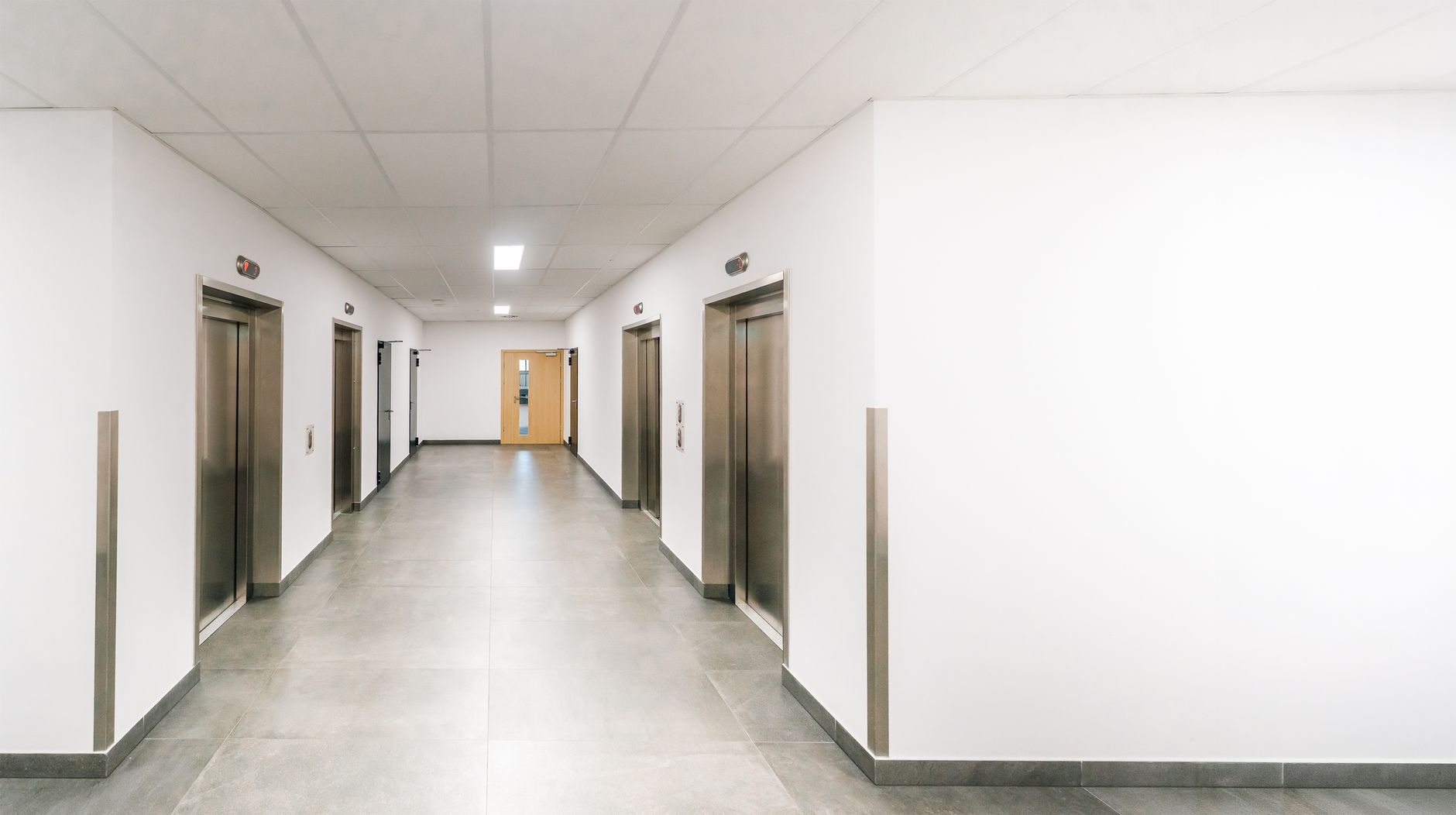
Site assessment and mapping come first. A proper survey records door hardware, elevator call behavior, floor transitions, wireless coverage and where units will charge. Many rollout failures trace back to one corridor nobody measured, and the fix is usually a route change rather than a different robot.
Staff roles matter as much as the map. Name one owner for each route, define who responds when a unit stops, and train the people who will receive the deliveries, not only the team that runs the robot.
Service Robot Co. runs this stage as part of one engagement: site assessment and mapping, one fixed lease quote after that assessment, then deployment, integration, training and go live support. We are OEM neutral, so we pick the robot that fits each route across manufacturers, and every unit is serviced through a nationwide US engineer network.
Which metrics belong on a pilot scorecard?
Track the measures that show whether a robot removed walking or simply moved it. Five core measures cover most hospital pilots: trip completion rate, trip time compared with the manual run, idle hours per unit, staff touches per trip and escalations to on-site help.
Staff touch time deserves the closest watch. A robot that completes a trip but needs a nurse to meet it, load it and reset it has shifted labor rather than returned it. That gap is where the VA's mixed results point, and it is the number a skeptical charge nurse will ask about first.
Review the log weekly, and keep fault types separate from staff touch counts, so one bad elevator does not hide a workflow problem.
What do published hospital results actually show?
Rochester Regional Health reports more than 100,000 Moxi trips across Rochester General Hospital and Unity Hospital since 2023, with the milestone reached in August 2026. The breakdown is about 75,000 trips at Rochester General and 25,000 at Unity. The health system also estimates more than 50,000 staff hours freed, and that figure is an estimate, not a measured total.
CBS News reports that a 528-bed hospital began using Moxi in 2023 and operates eight units. Counts like these show what a multi unit program looks like after years of use, which helps a phased team plan its second and third phases.
Vendor and industry data add scale context, read with caution. Diligent Robotics announced more than 100,000 autonomous elevator rides across US health systems in its Q4 2024 milestone, a figure the maker reported. IFR data shows professional service robot shipments rose 24% to almost 250,000 units in 2025, but IFR says its figures come from a supplier survey and are not projected to represent the whole industry, and hospitals appear only in passing.
How do you decide when to scale?
Write the scale rule before the first robot moves. Define the thresholds that justify adding units, the conditions that trigger a pause, and who signs off on each decision. A pilot without a stop rule tends to keep running on momentum, even when idle hours and escalations say otherwise.
A sound sequence is three units on the first route set, a review at a fixed interval, then expansion only to routes where the same measures held. Keep spare unit coverage so one down robot does not empty a route. Remote triage catches many faults early, and on-site dispatch handles the rest.
Scale the routes that met the rules, not the whole building. A phased hospital robot program grows by proof, which is slower on paper and far easier to correct when the workflow needs changing.
Frequently asked questions
Want a robot working for you?
Tell us the job and the site. We will recommend the robot, quote the lease, and keep it serviced.
Sources
- Nextgov: VA's early uses of robots have shown mixed success
- Free Beacon: VA spent robots report
- VA Office of Inspector General report, September 30, 2016
- Finger Lakes 1: Rochester Regional Health robots reach 100,000 hospital deliveries
- CBS News: hospital robots and Moxi
- Robotics Tomorrow: Diligent Robotics Q4 2024 milestone
- Australian Manufacturing: IFR global professional service robot sales rise 24% in 2025
- Automate: the service robot market is scaling, just not where the hype is